Blog

Fall, Seasons

Pumpkin Literacy Activities for Preschool

It’s finally October and I am so excited to share these new pumpkin centers with you!! Usually, I like to blog about my preschool activities after I’ve used them. But I am planning on using these one or two at a time all throughout the month and want to get them to you ASAP. So hot of the press, here are 7 pumpkin themed literacy centers to enhance your students’ phonemic awareness, alphabet knowledge, and handwriting skills.

Phonemic Awareness

I’ve noticed early literacy teachers are always on the lookout for phonemic awareness materials WITHOUT print. I designed two activities with this in mind: Pumpkin Rhyming Cards and Pumpkin Syllable Count Clip Cards.
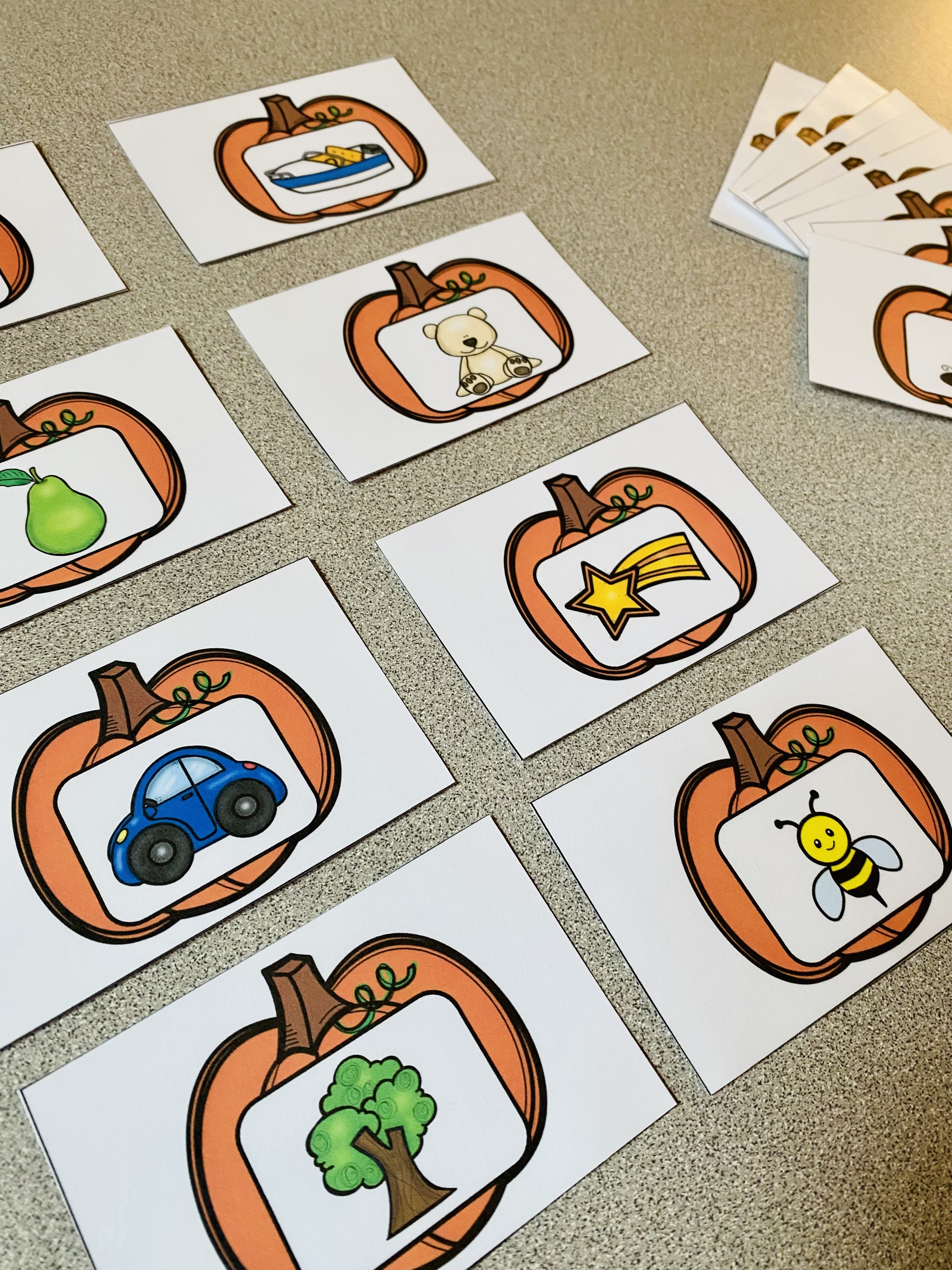
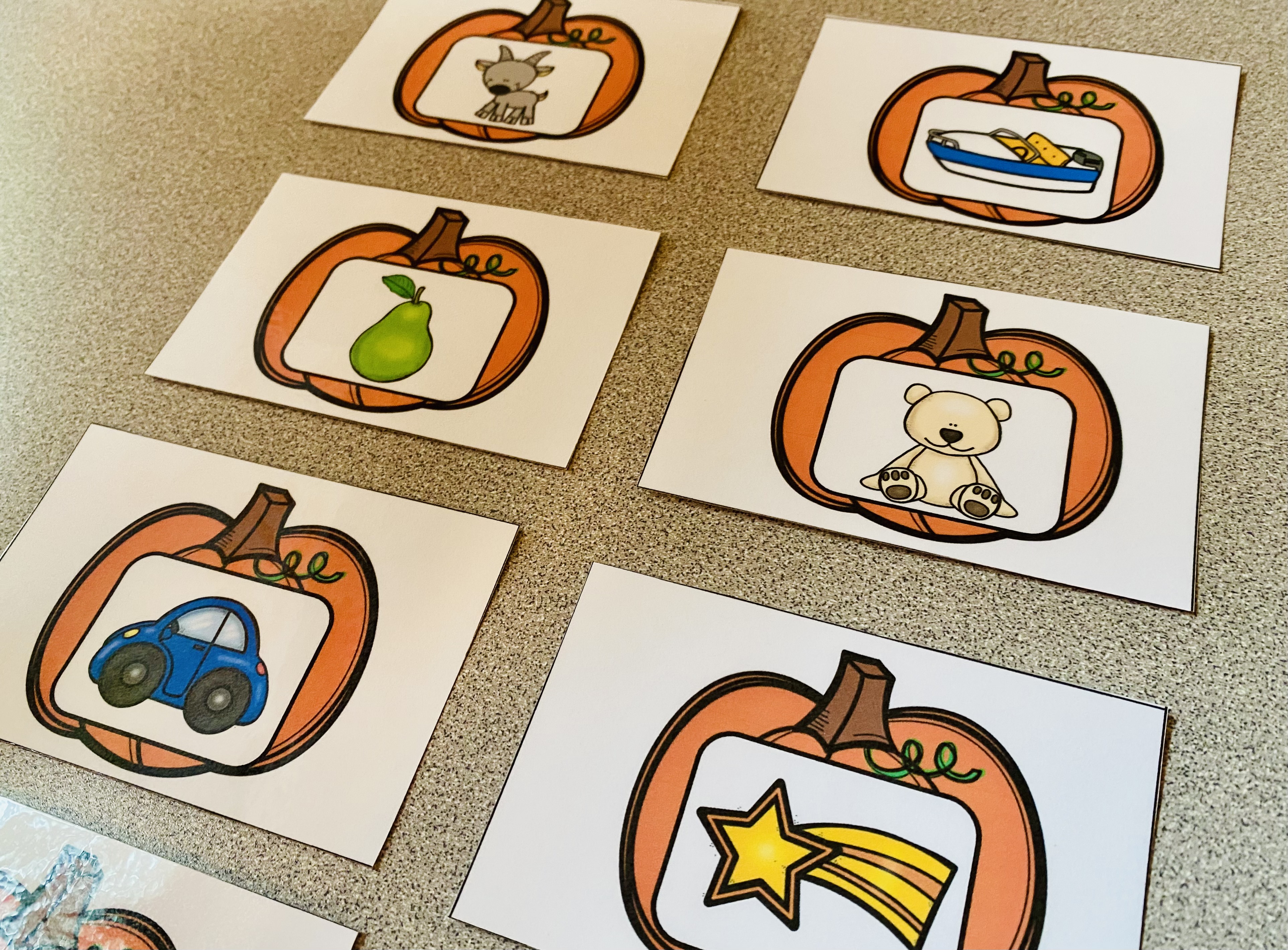
The rhyming cards include 8 sets of rhyming picture cards. Students can use these to play a game of Concentration. For my youngest players, I like to adapt the game by allowing them to leave their cards face up in their place. On the very first turn, the player flips two cards, and every turn after the players flip one card, collecting matches as they are discovered. This allows students to focus solely on the task of rhyming and not worry so much about remembering where the matches actually are.
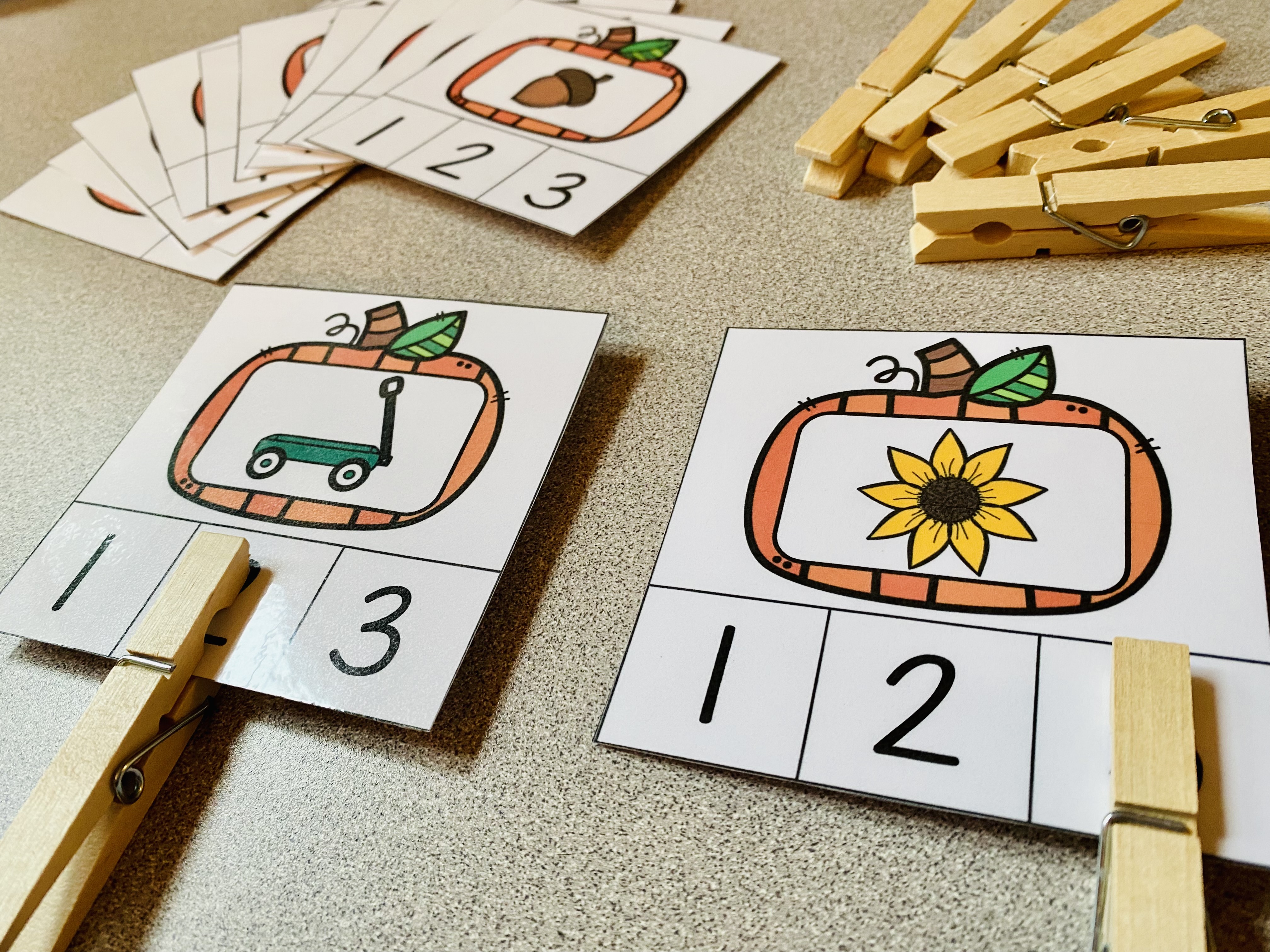
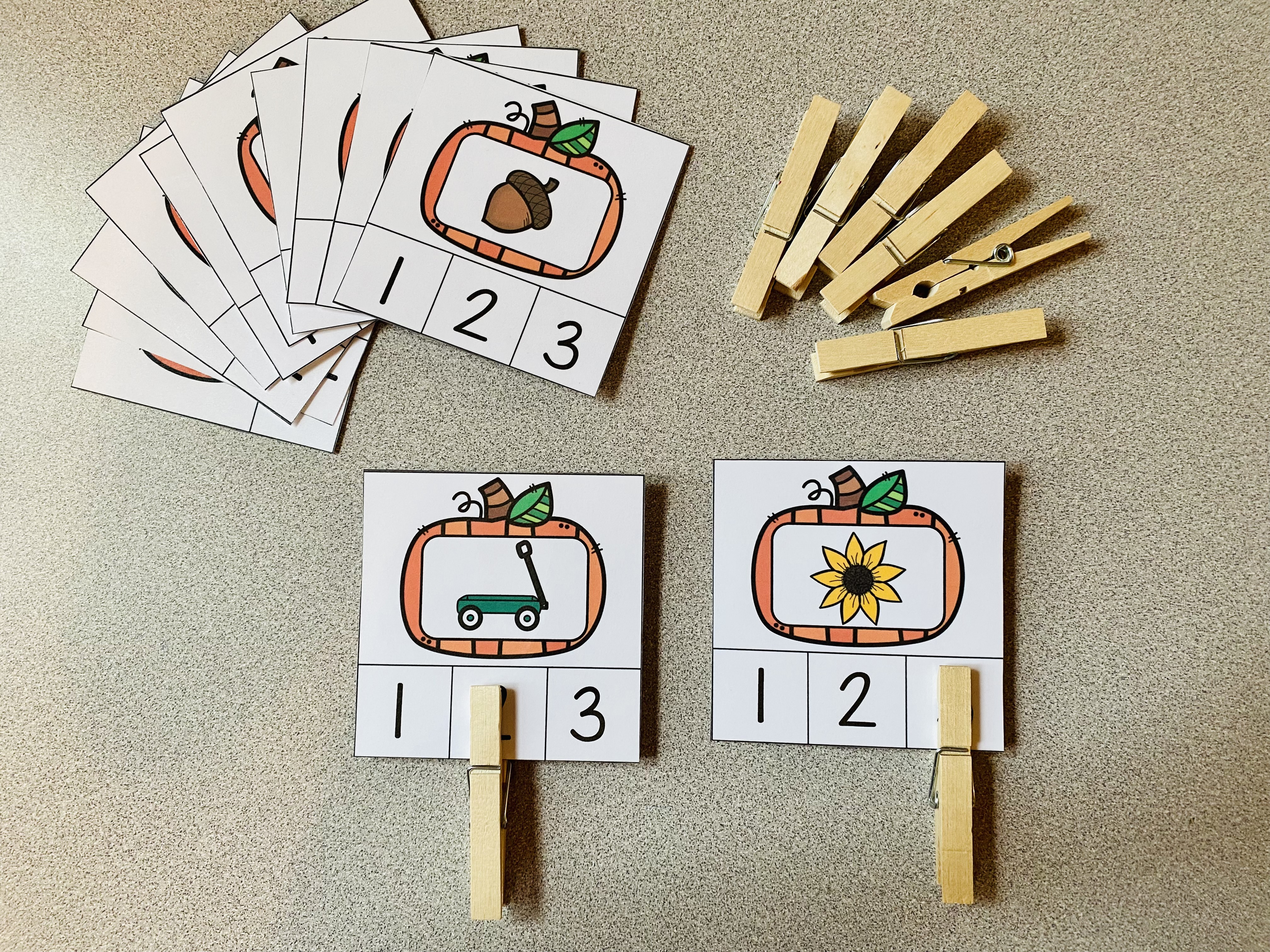
The syllable clip cards also have only pictures for students to say aloud and count the syllables as they say them. Once they’ve determined the number of syllables in the word, they can clip the corresponding number on the card. Then continue on through the cards until each one is complete. If students are having trouble counting out syllables, challenge them to say the word without opening their mouth and count how many times their air tries to “escape.” You can also have them put their hand in front of their mouth and notice the breath hitting their hand as they talk.

Alphabet Knowledge

A lot of parents assume that learning the alphabet is an “easy” task for kids and figure that they should catch on quickly because the alphabet is so basic. Well, if you think about it, learning the alphabet requires the ability to recognize uppercase and lowercase letters as well as recall the phonetic sound that each letter makes (and several letters make more than one). Added up, learning your ABC’s actually involves retaining 96 pieces of information. That is a tall order for little people!! Luckily, kids are like sponges, and when you make it fun, they soak it right up.
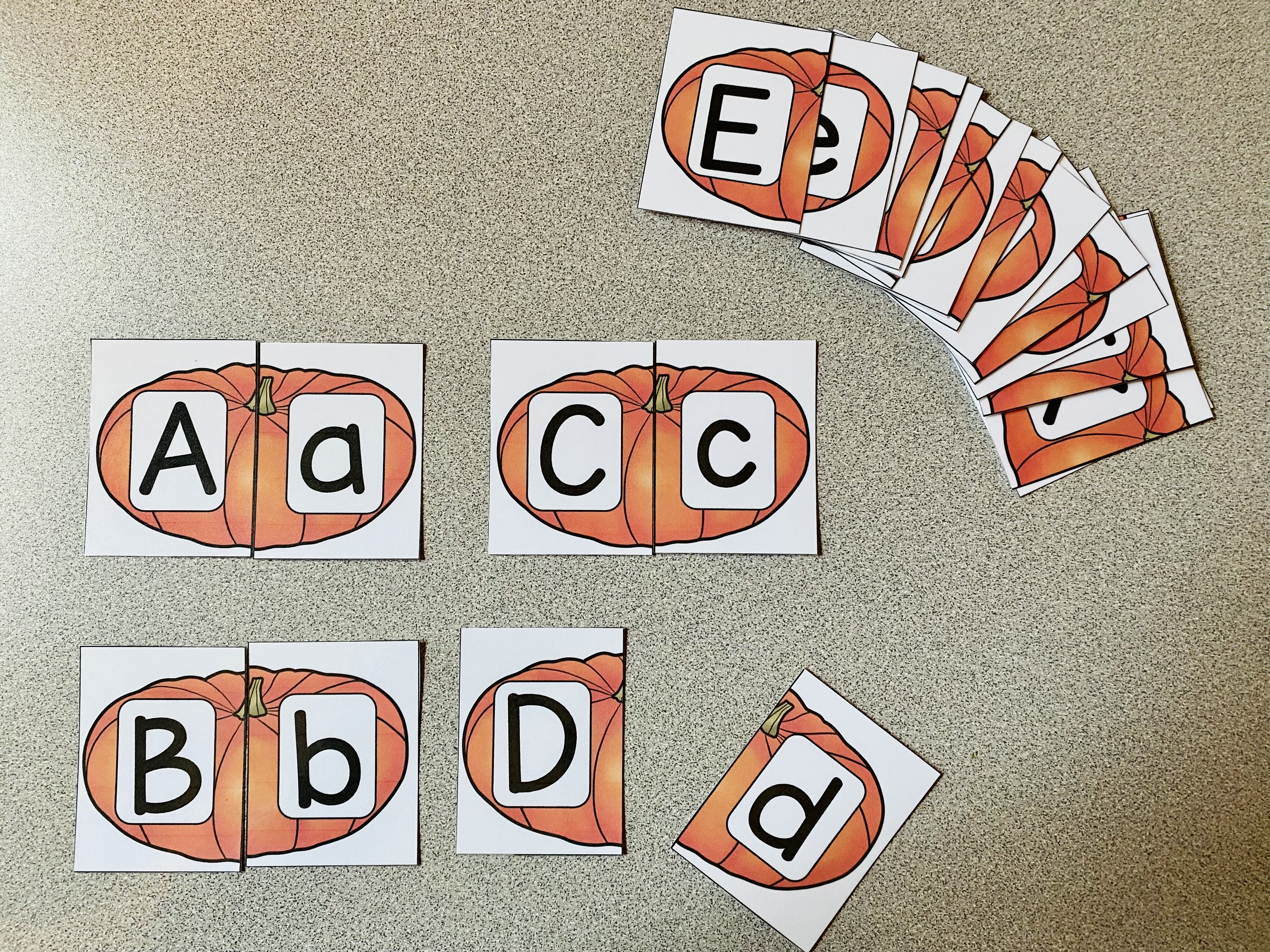
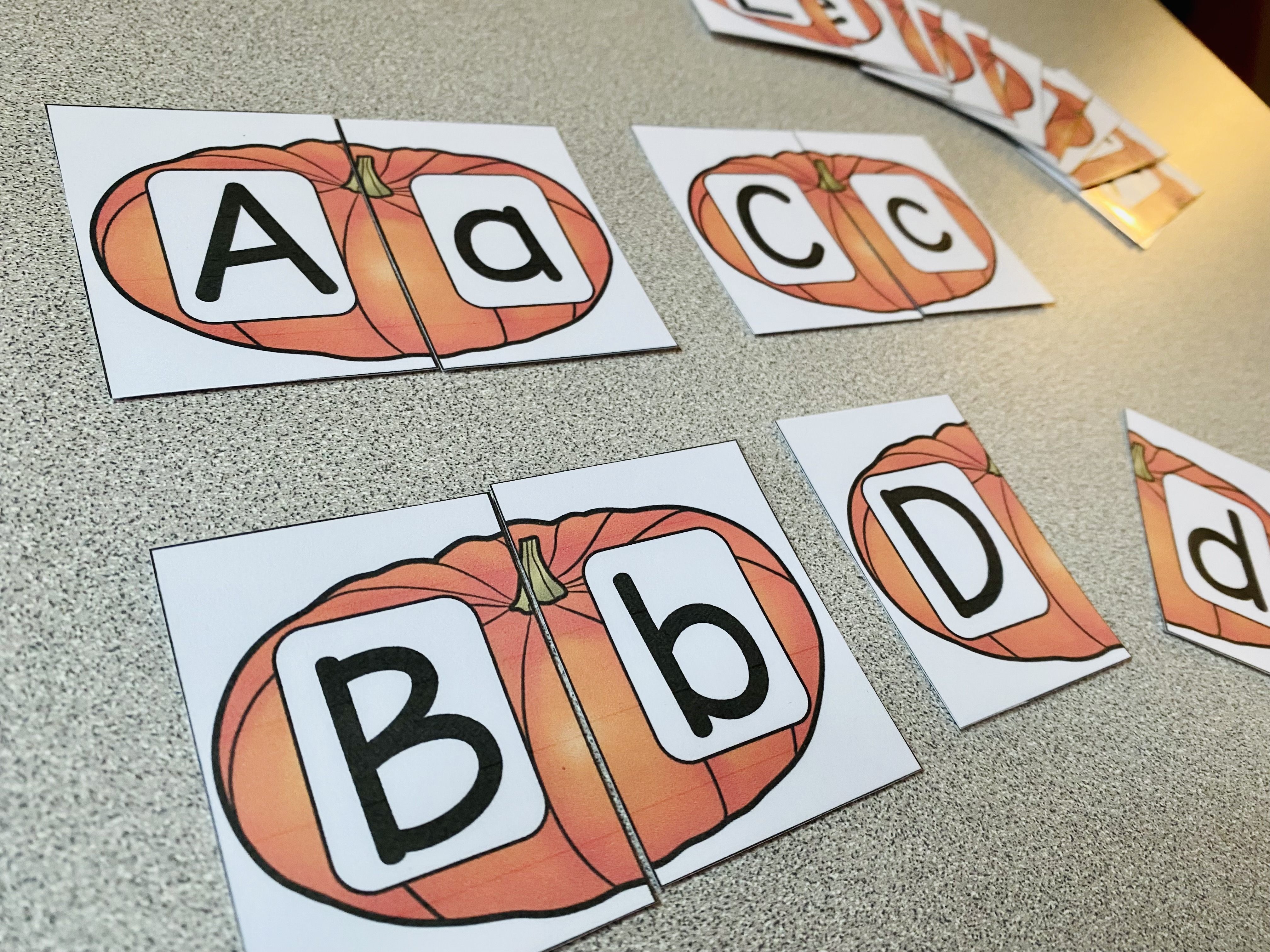
These Pumpkin Alphabet Puzzles allow kids to connect uppercase and lowercase letters to make the pumpkins whole again. When I use these, I am mindful of how many letter puzzles I use at a time. I rarely use all 26 together because 52 little cards is just too much to manipulate. I usually choose the most recent 5 or 6 letters that we are still learning then add in another 5 or 6 letters that my preschooler has mastered. Keeping a high ratio of cards that your students have mastered in the game will actually help them retain the few that they encounter and are still trying to get right.
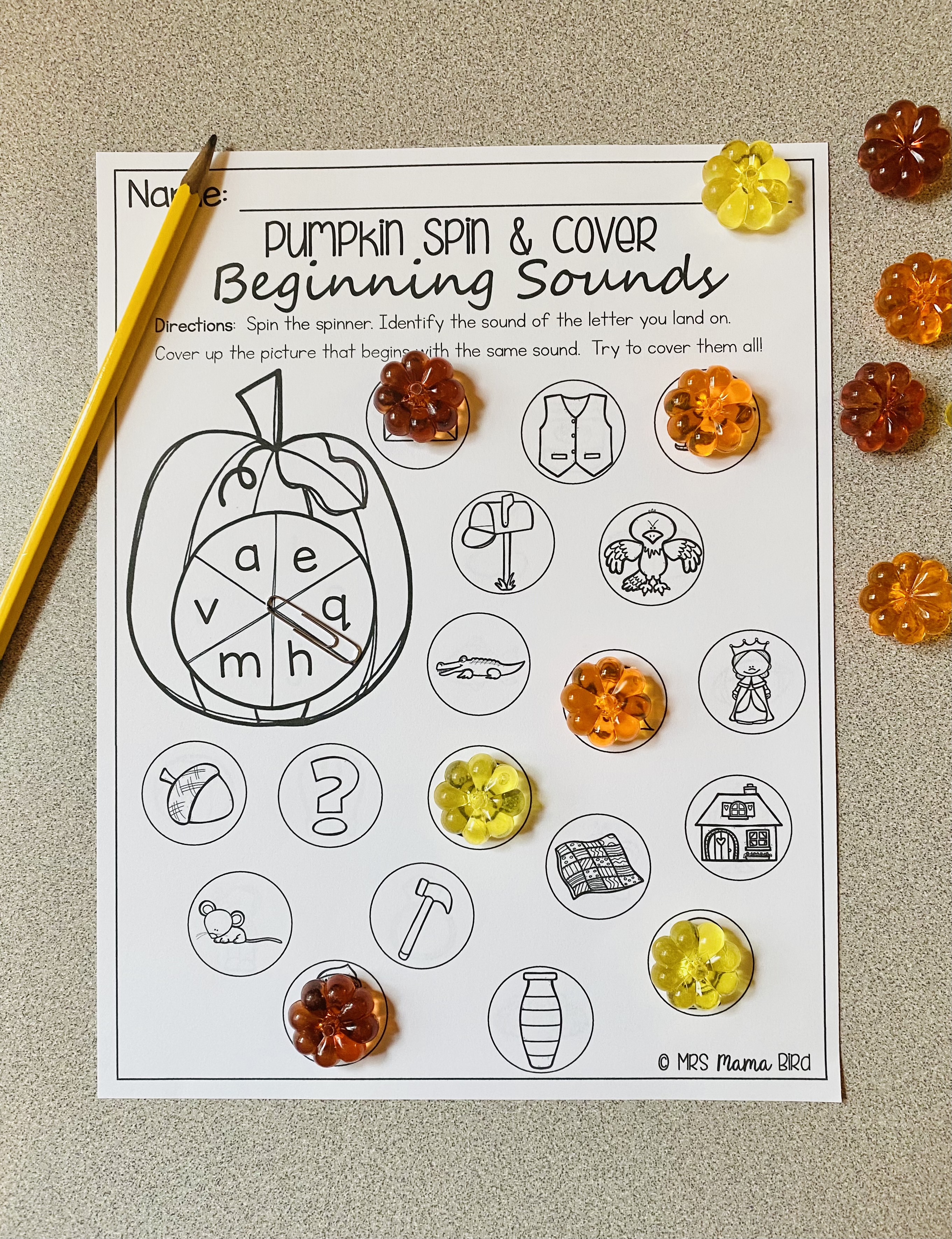
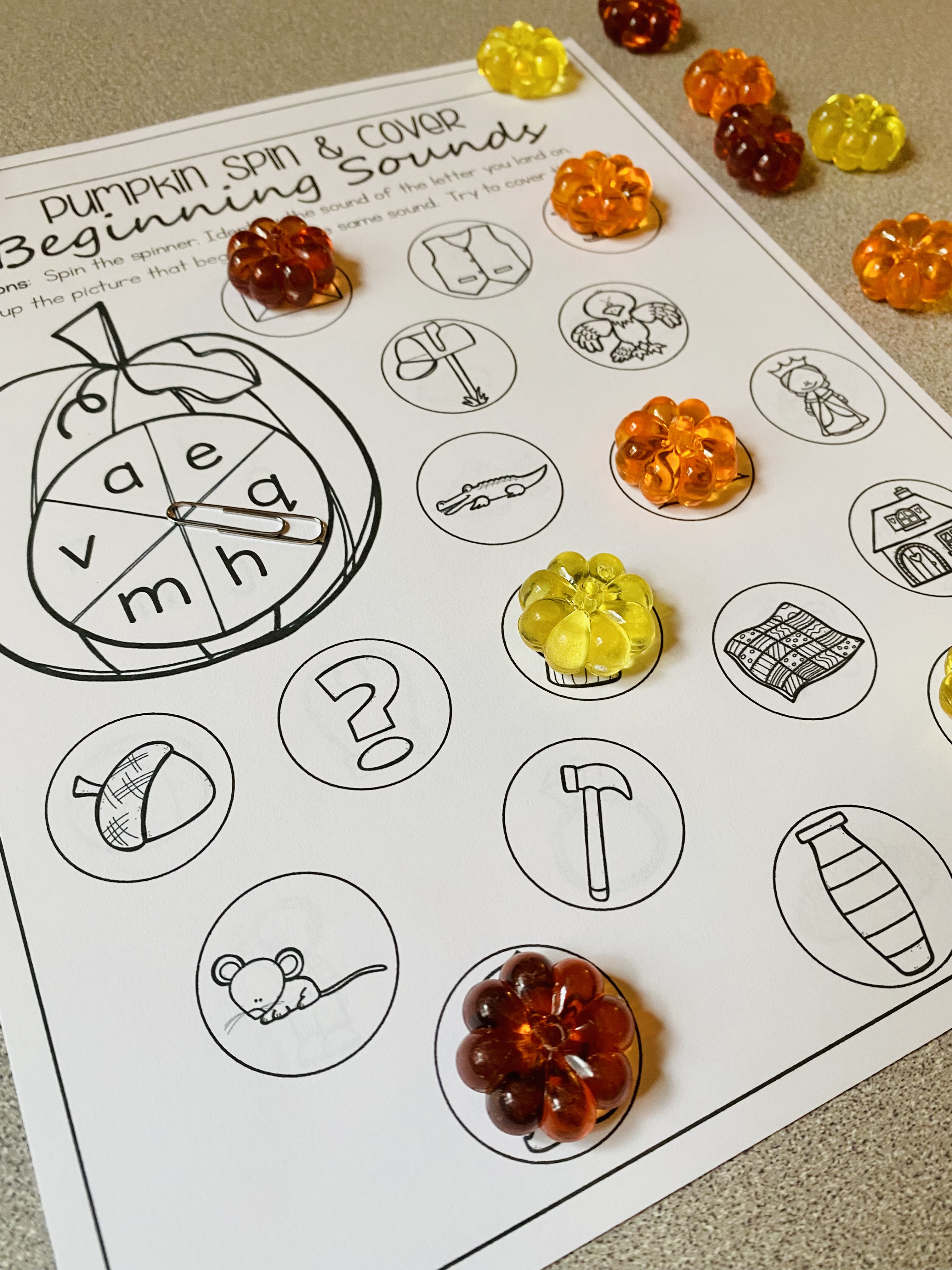
For those kiddos who are ready to practice their letter sounds, I created the Pumpkin Spin & Cover Beginning Sounds game. There are four variations of this printable, each with 6 different letter sounds to practice. All you need to do is print and gather something to cover up the corresponding pictures with. I used acrylic pumpkins that I found at the dollar store, but mini erasers, dot markers, crayons, or BINGO chips would also work perfectly. Students just take turns spinning the pumpkin spinner, identifying the letter sound, and covering up a picture that begins with the same sound.

Handwriting Skills

In my experience, handwriting is one of those things that kids either love or hate. Trying to compose the letters perfectly within the lines is intimidating and requires a lot of hard work. I designed three handwriting activities to help make writing more fun.

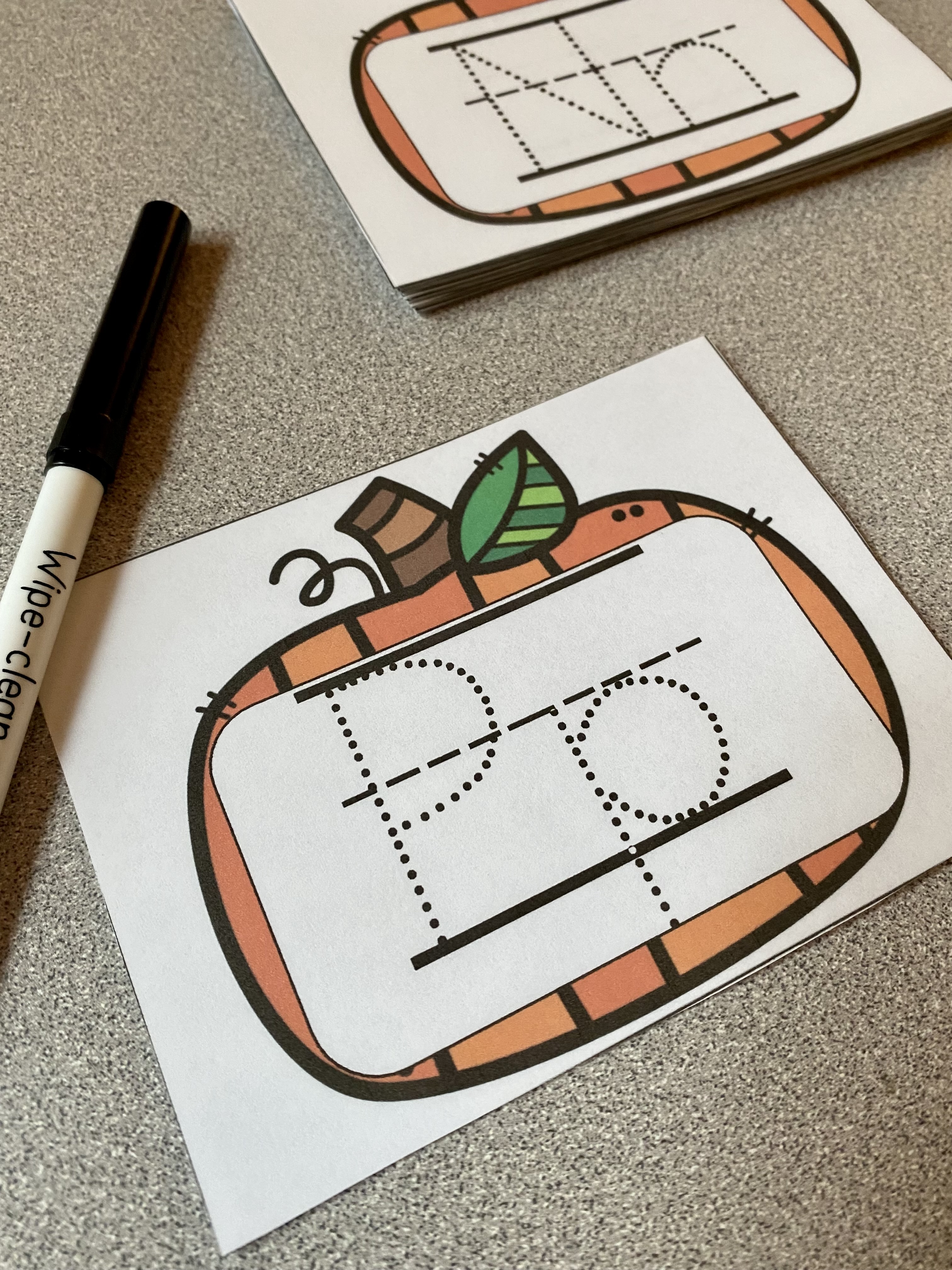
These Pumpkin Alphabet Tracing Cards are simple and can be used with dry erase markers after they are laminated. Kids can very quickly see their progress as they flip through and trace the given letters on each card. And the pumpkins are so cute!!

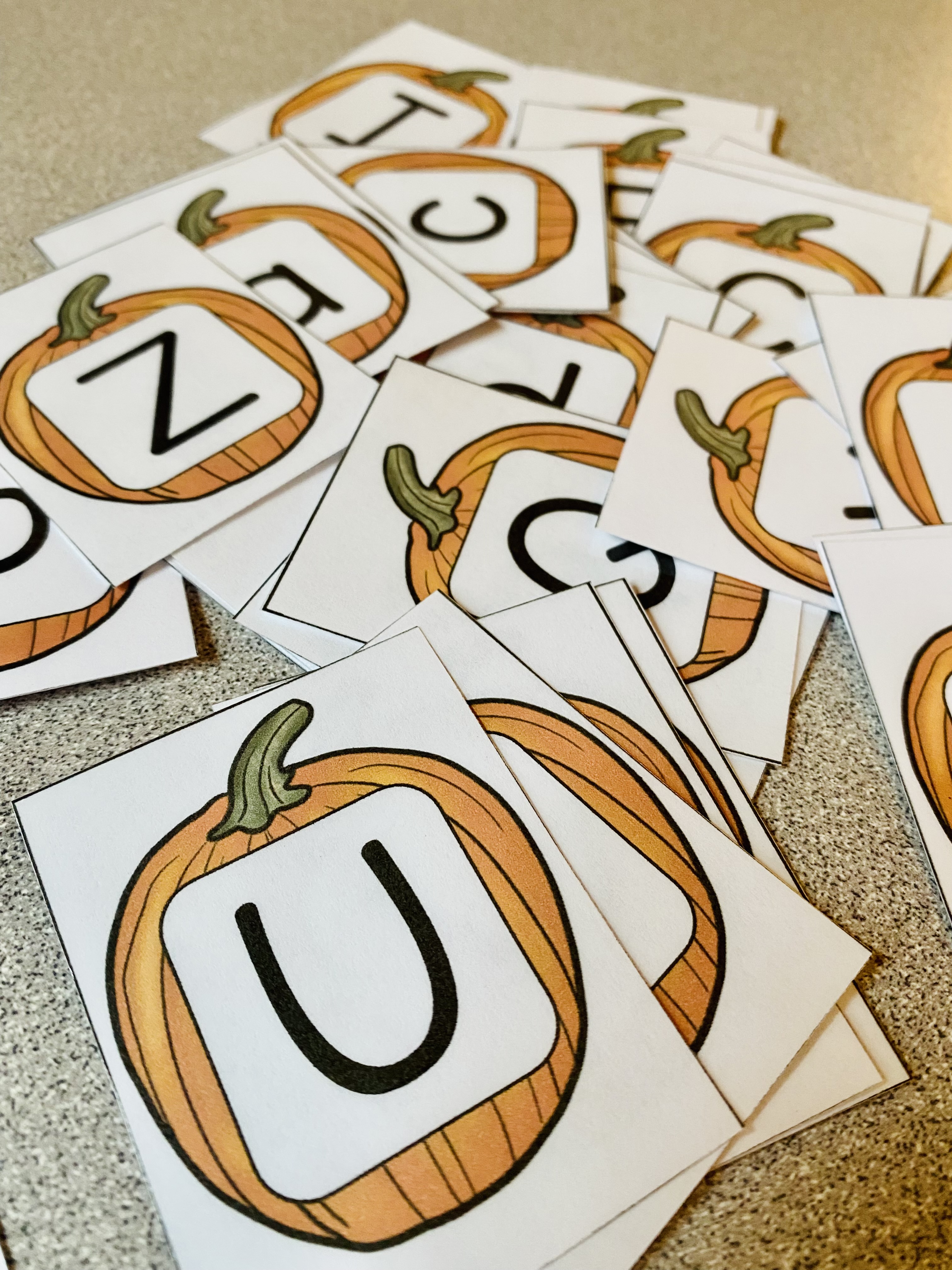
The Pumpkin Letter Draw activity can be very easily individualized depending on your students’ needs. As I said above, I wouldn’t choose to use every single alphabet card at one time. There is a set of uppercase and lowercase cards that you can choose from or pick just a few individual letters if you want your student to practice the same few letters more in depth. Have the students lay the cards face down in a draw pile then take turns picking one card at a time and recording it in the boxes on their recording sheet. It can be cooperative by filling up the board together or competitive by seeing who can fill their board first.
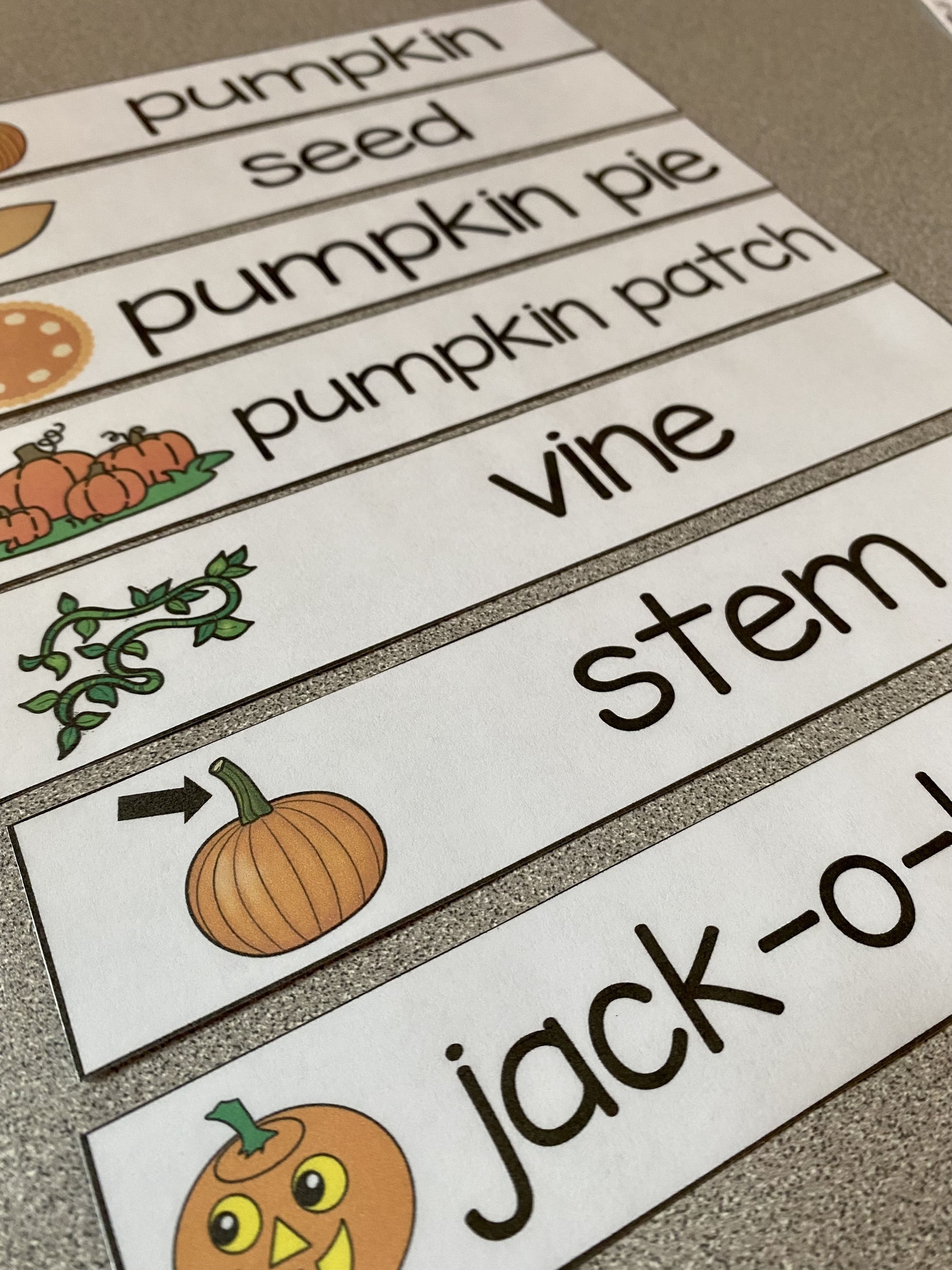
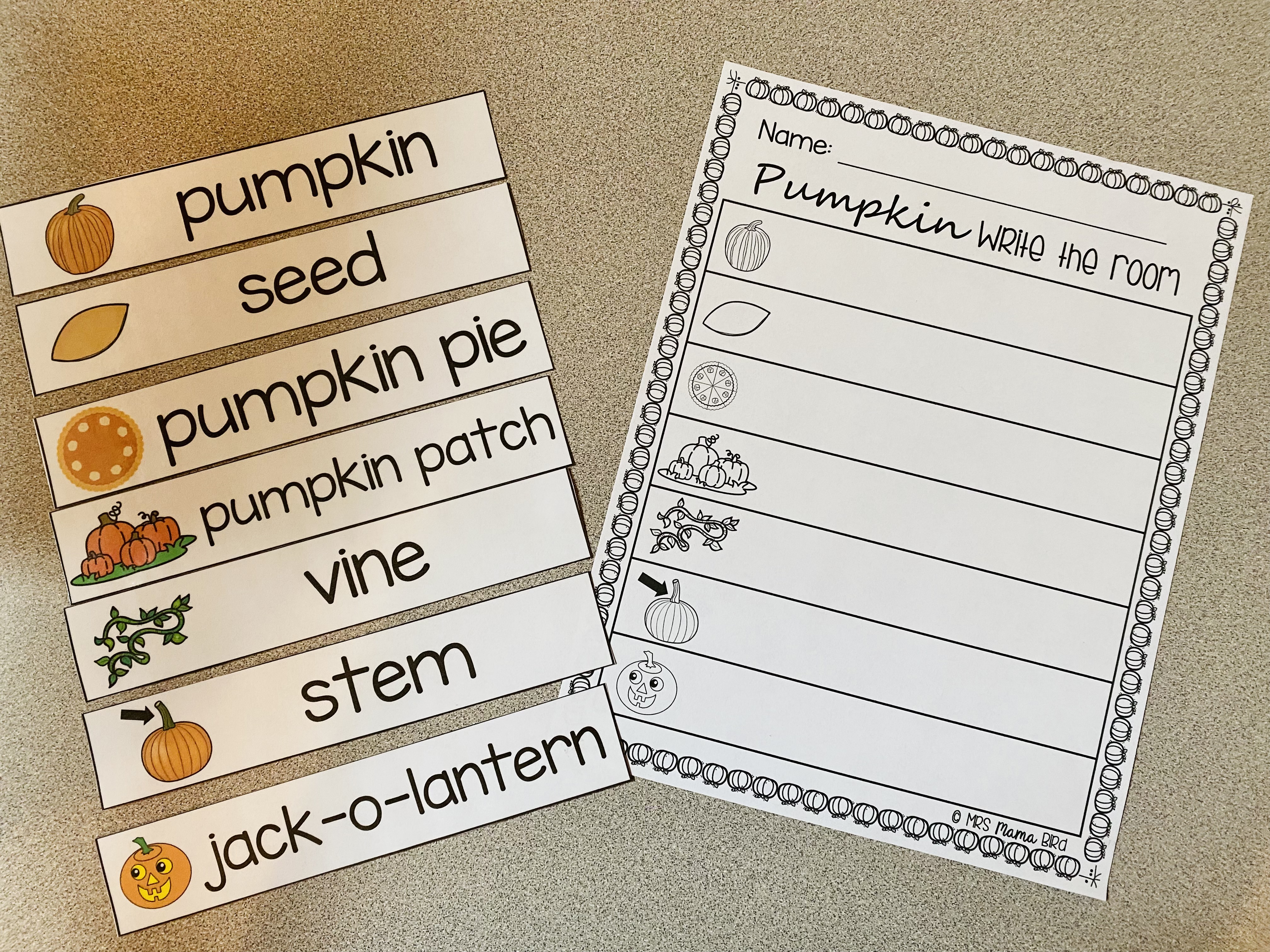
If your preschooler is ready to write words, the Pumpkin Write the Room activity is a perfect place to start. Simply hang the word cards throughout the room and have your students match the icons on the word cards to their recording sheet and write the corresponding word. You can display the pumpkin words in a pocket chart afterwards or leave them available to refer to in your writing corner.

If you are interested in adding these Pumpkin Literacy Centers to your collection click the button below. Have fun learning with Mrs Mama Bird!!

More Fall Activities
Fall, Fine Motor Skills

Apple Tree Spinner Game **Free Download**

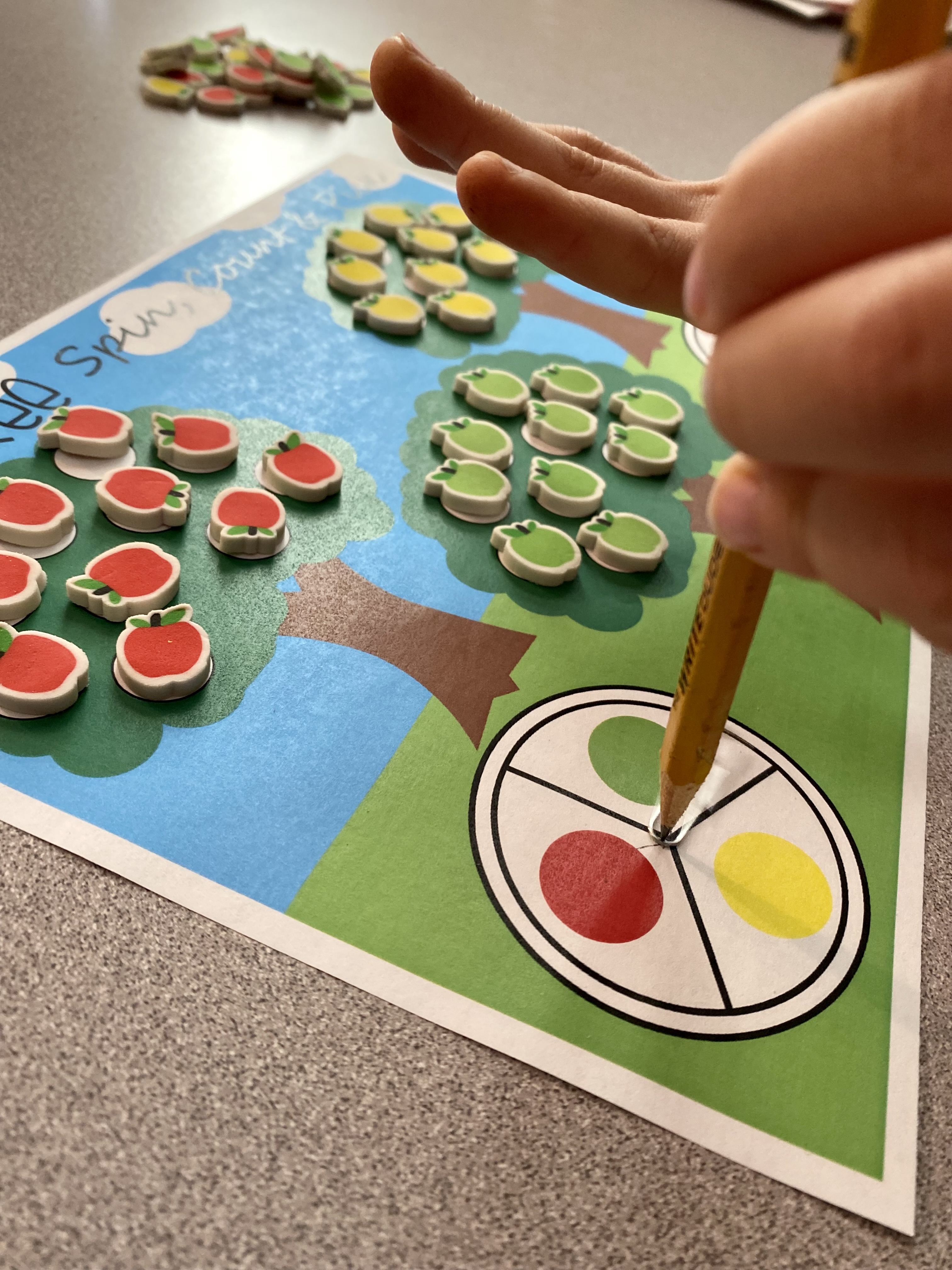
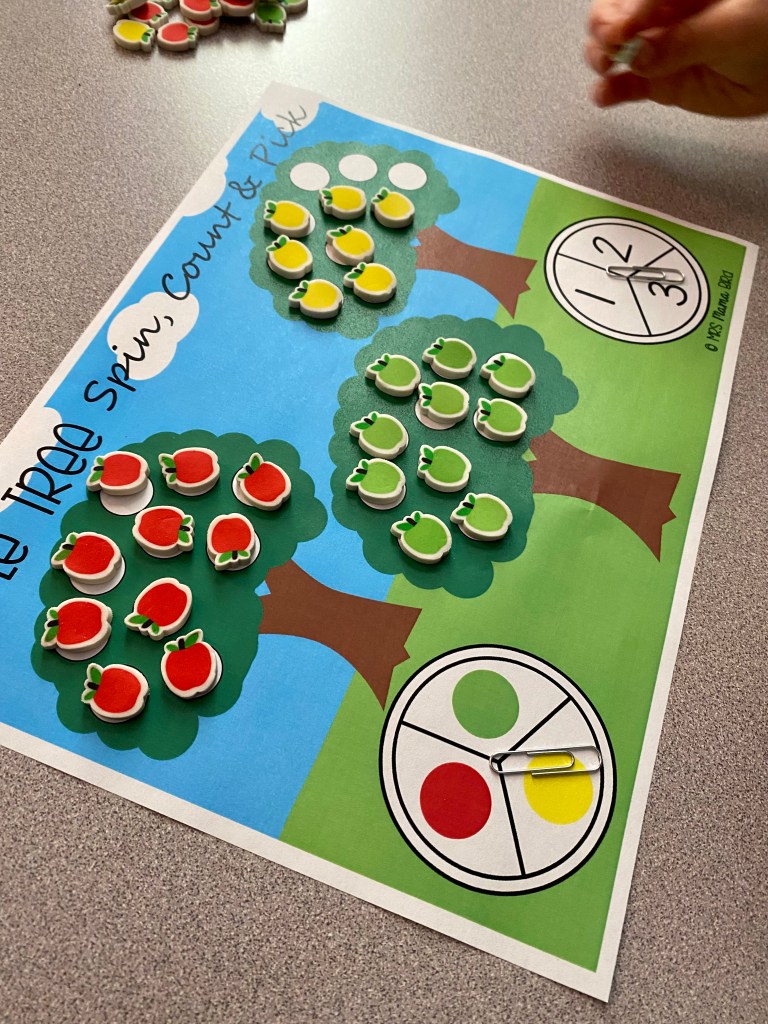
As September comes to a close, I want to sneak in one last FREE apple game for you!! Don’t pack up your apple unit without adding this to your file. It’s super easy to play and my preschooler had a blast with it.

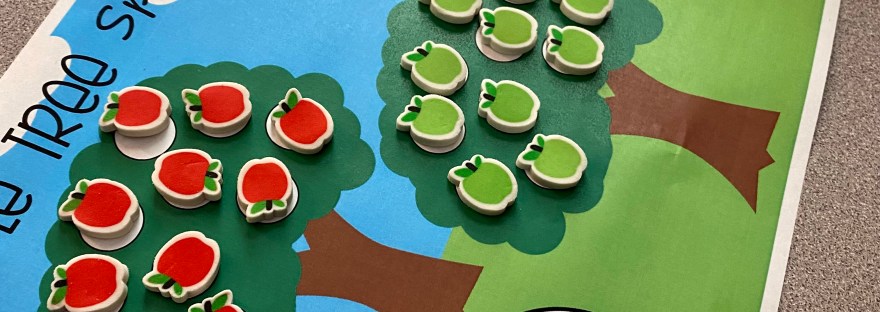
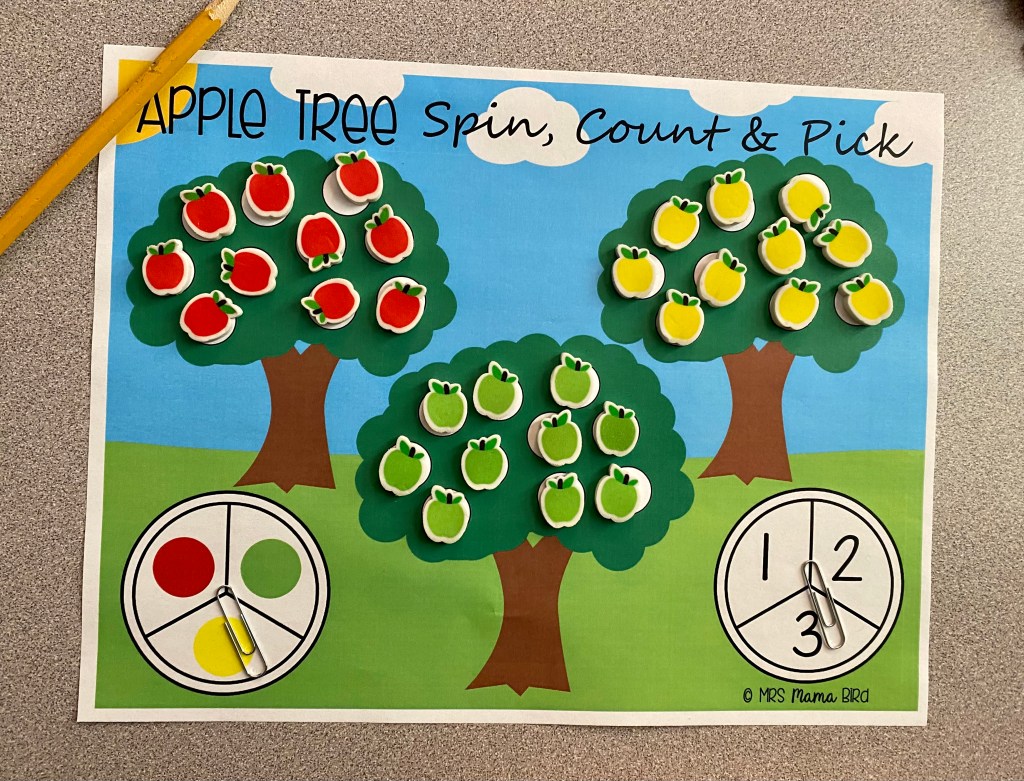
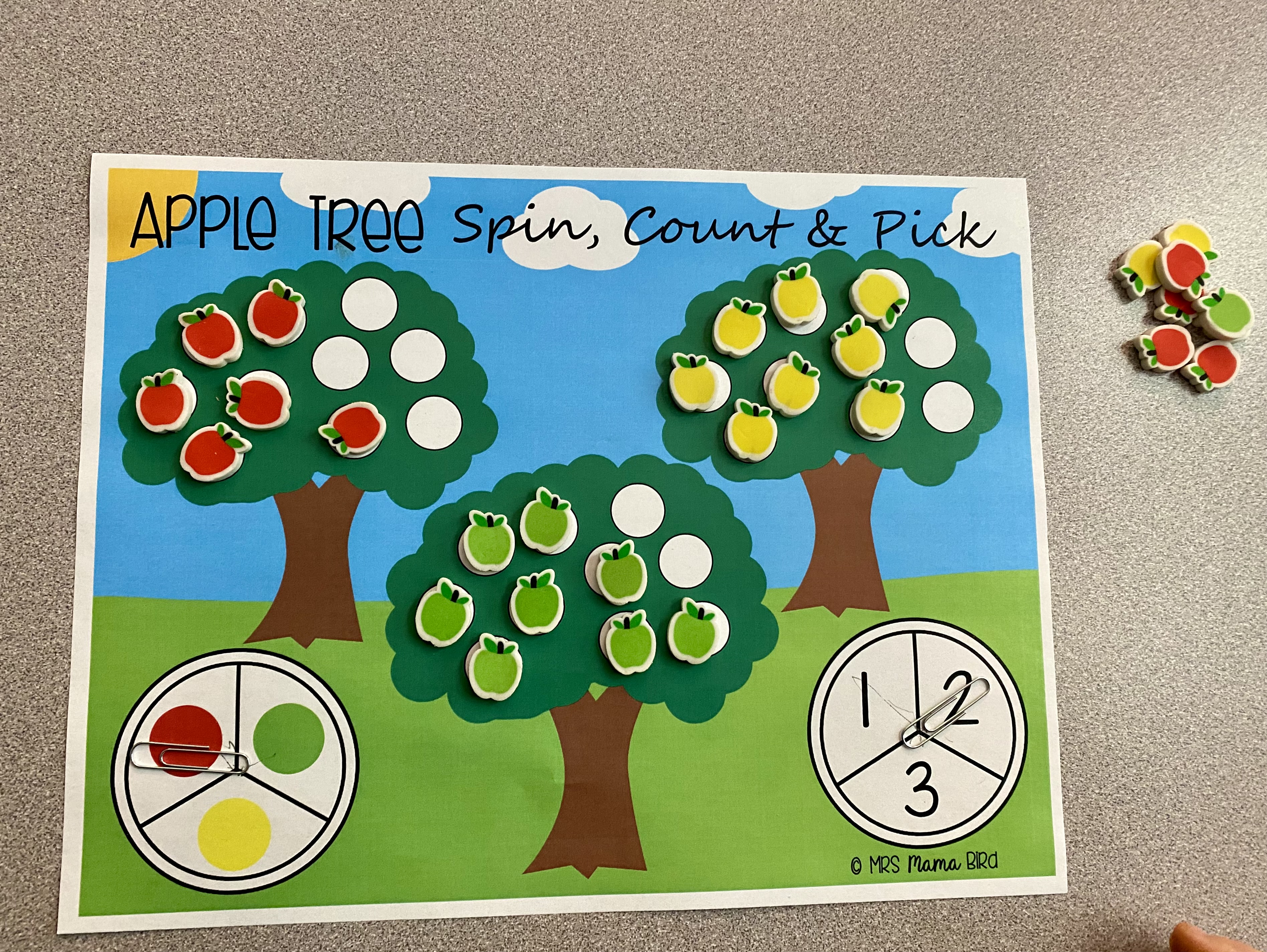
As I was rummaging through my fall box of goodies, I found these adorable mini apple erasers in red, green and yellow. I realized I hadn’t used them for anything yet and wanted to create something for them before September was gone! Of course, you don’t have to have these exact mini erasers to play the game. Any manipulatives can be used as long as you have some red, yellow and green. Things like buttons, flat marbles, BINGO chips, or poms poms will work perfectly.

How to Play

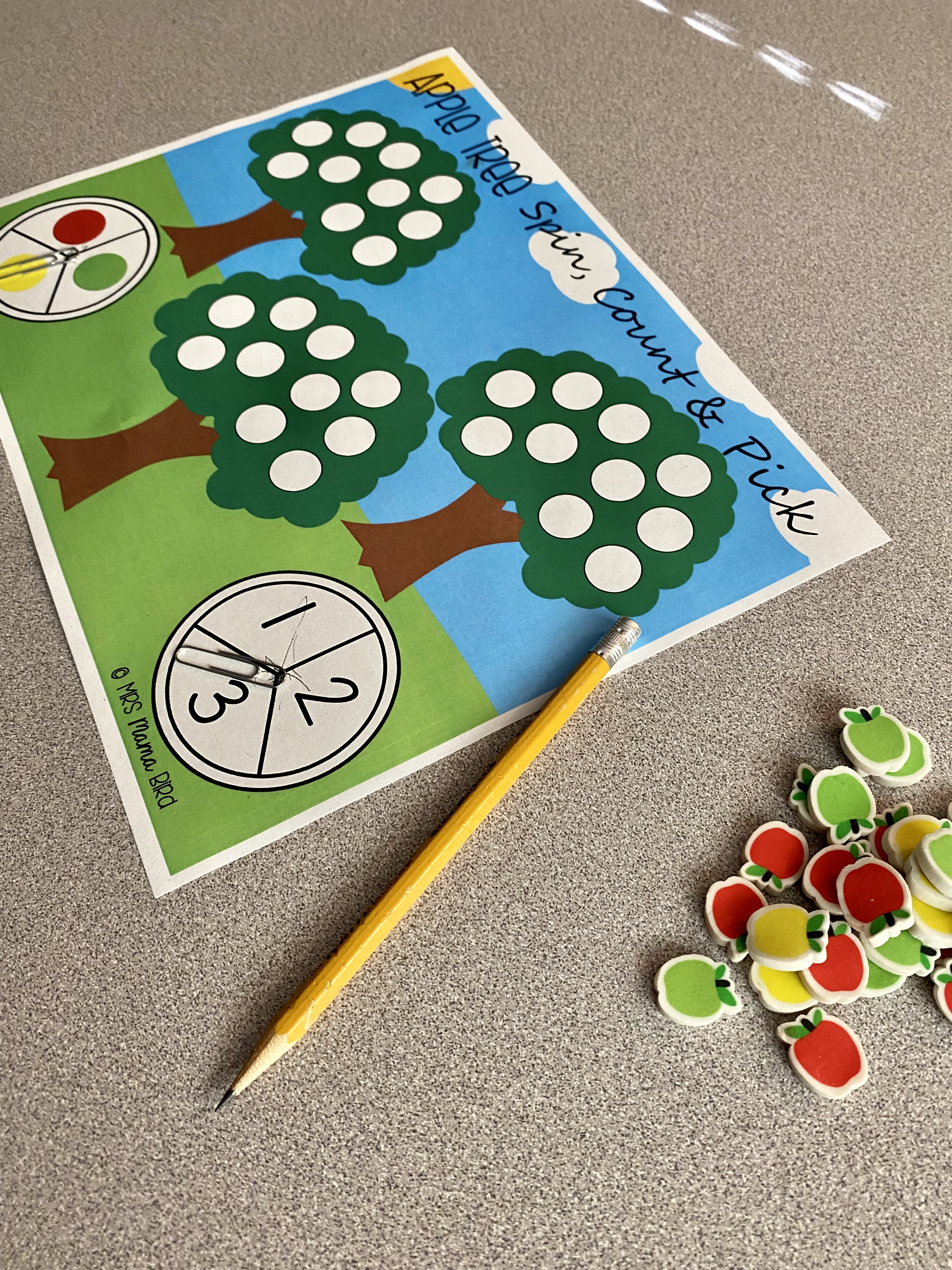
Gather your materials:

  • Apple Tree Game Board
  • Manipulatives (10 red, 10 green and 10 yellow)
  • 2 paper clips
  • pencil

Directions:

Students can play the game independently or with a partner. Give each student or pair of students a game board. Instruct them to place 10 red “apples” on the first tree, 10 green “apples” on the second tree and 10 yellow “apples” on the third tree so that all the circles on the trees have “apples” in them. Have your kiddos spin both spinners and remember what color and what number they land on (i.e. red 3). Then instruct them to remove that particular amount of apples from that certain color tree (i.e. Pick 3 red apples). Have students take turns “picking apples” until the game board is clear. Students can work together to pick all the apples as a team or they can compete to see who picks the most apples in the end.

Hint: If your students get 2 trees empty and only have one remaining color, you can tell them to just use the numbers spinner.

I had fun making this game really colorful and eye-catching, but I know printing several color copies can be detrimental to your ink supply. So I also took the time to create an ink-friendly, black and white version of the game. The students can simply color in the circles on the spinner before they get started.

That’s it!! If you’d like to add this fun Apple Tree Spinner Game to your collection of apple activities, just click the button below for your FREE download. Also, I love to hear from you, so please leave any questions or comments below!

Do you need more ideas for you apple unit?? You may also enjoy these resources!!

Fall, Fine Motor Skills, Seasons

5 Ways to Use Do A Dot Pages Without Do A Dot Markers **FREE Download**

Teachers and parents are always short on time. If I can get multiple uses out of the same resource, I consider that a major WIN. Do A Dot printables are so fun and there are an abundance of free resources available online that you can download and print. My kids absolutely love using the dot markers to decorate their artwork. But, truth be told, sometimes I’m reluctant to get the markers out for them to use. My toddler loves to dot herself and her clothes and my preschooler can finish dot art pages pretty quickly with the markers. It often turns into a huge mess in a very short amount of time. In an effort to make Do A Dot printables more worth their while, I brainstormed and tested a few new ways to use them.

Do A Dot Play-Doh

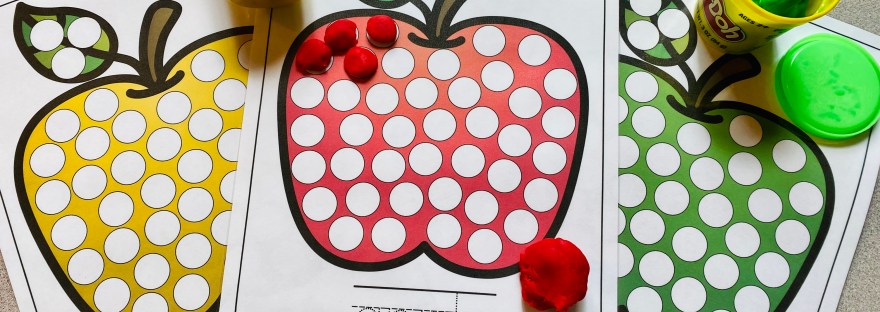
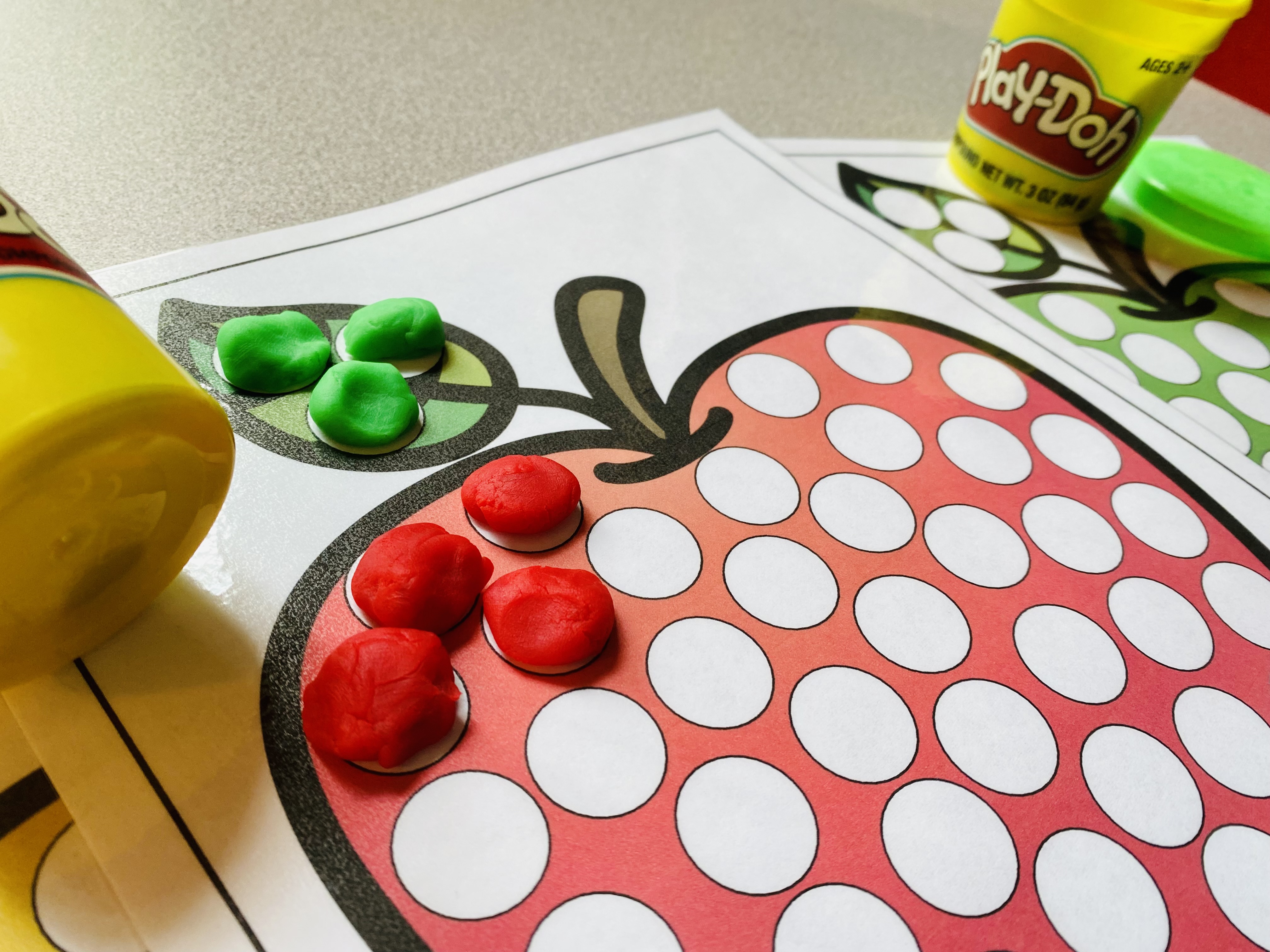
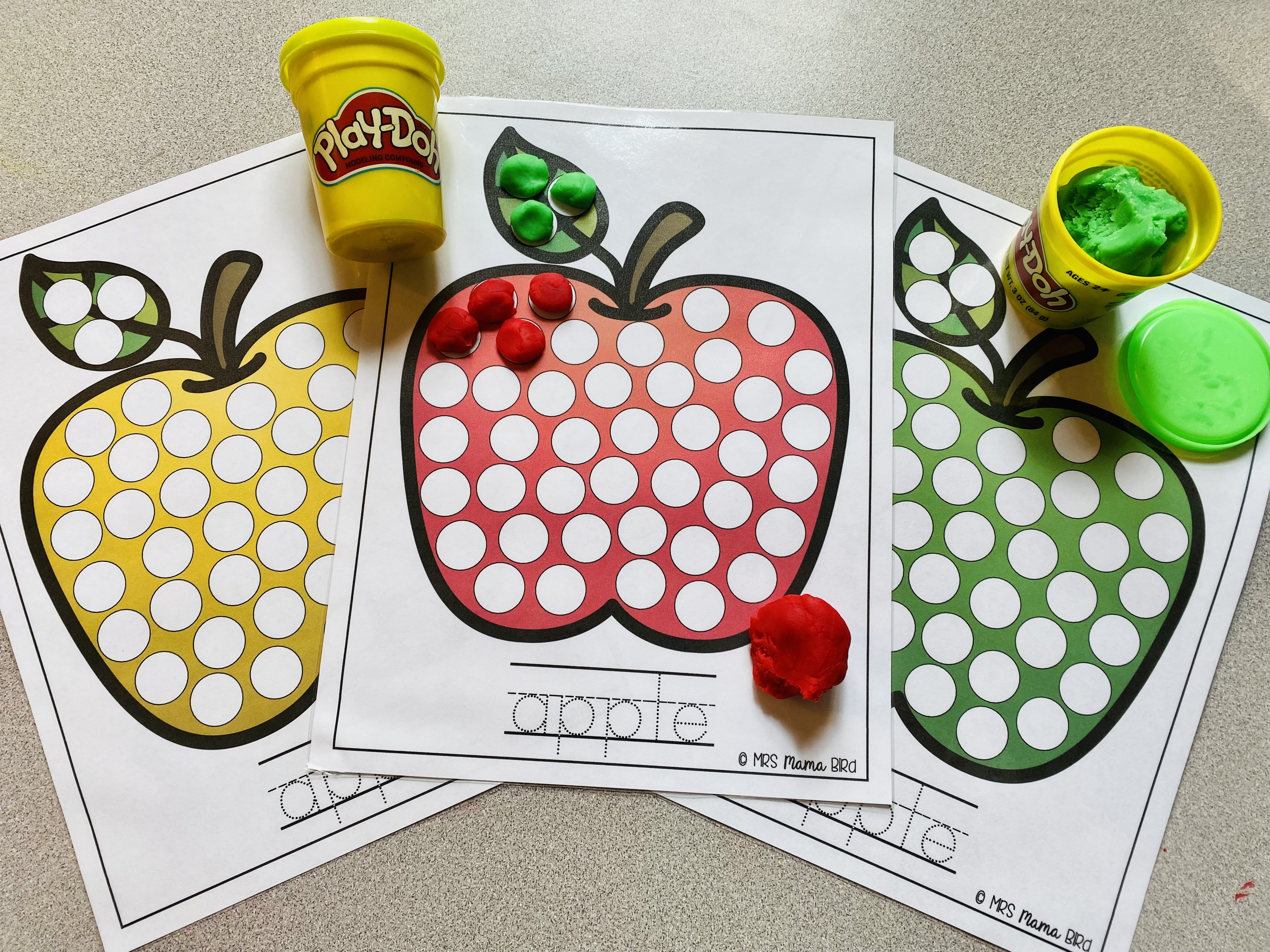
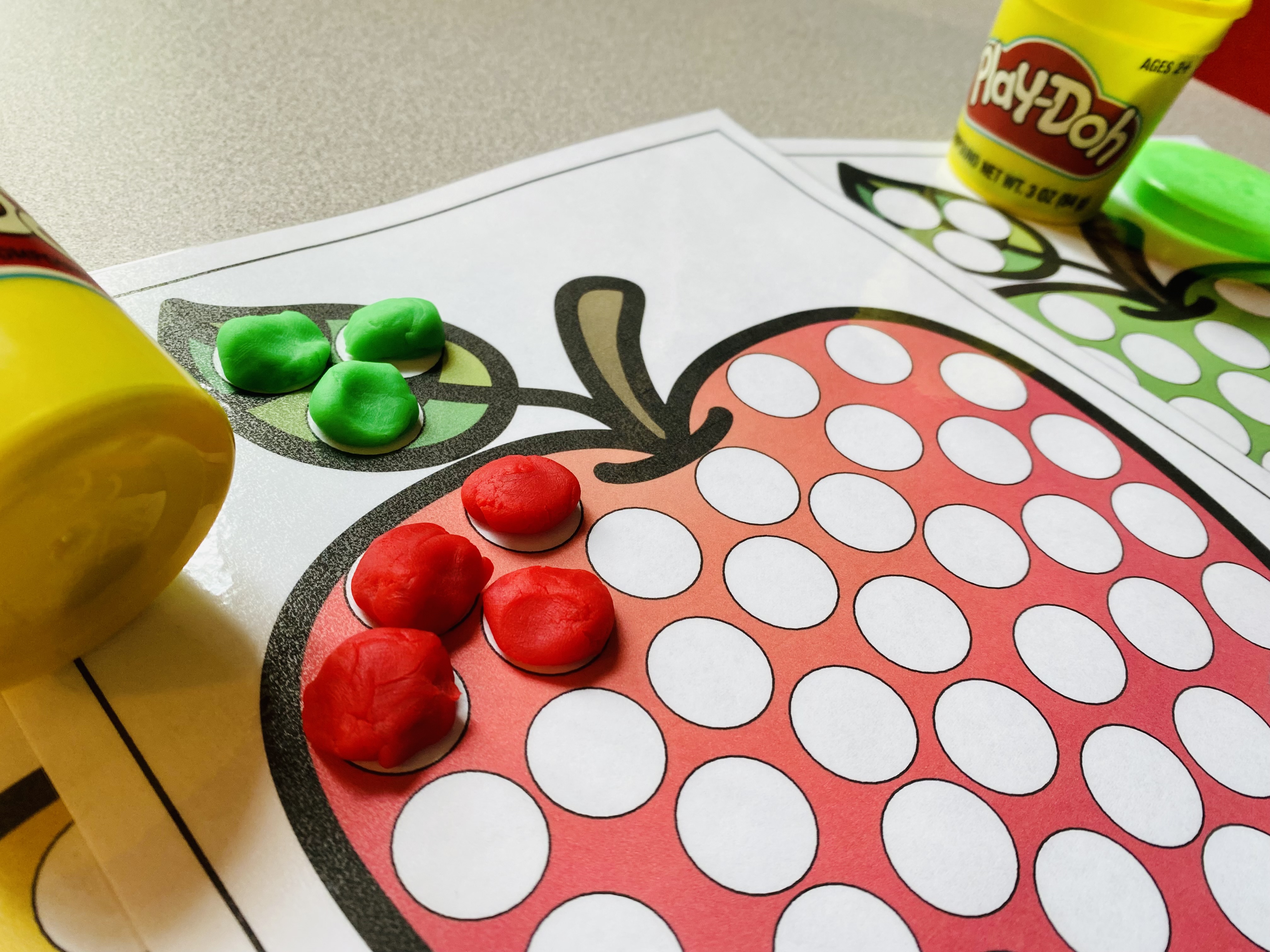
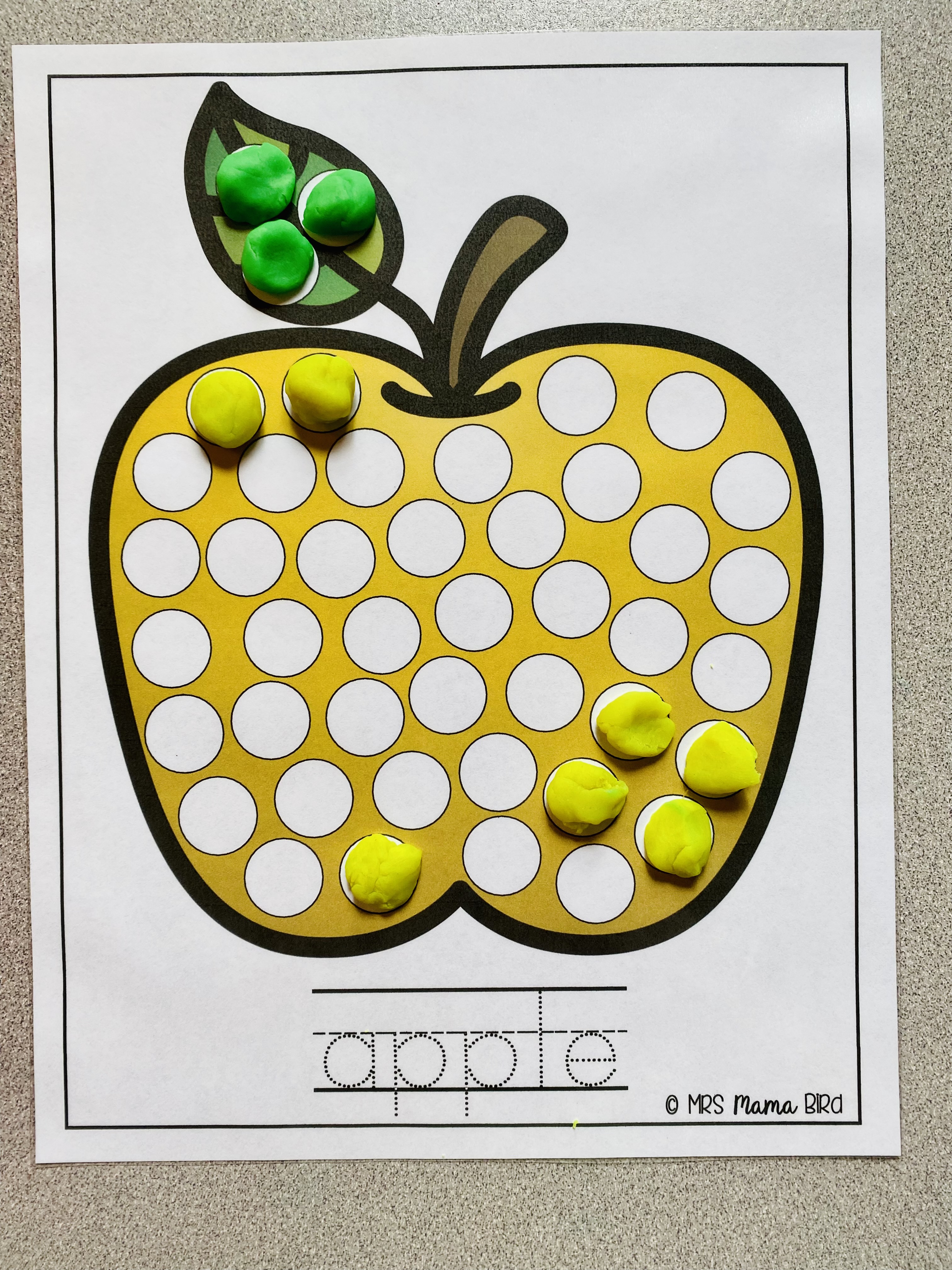
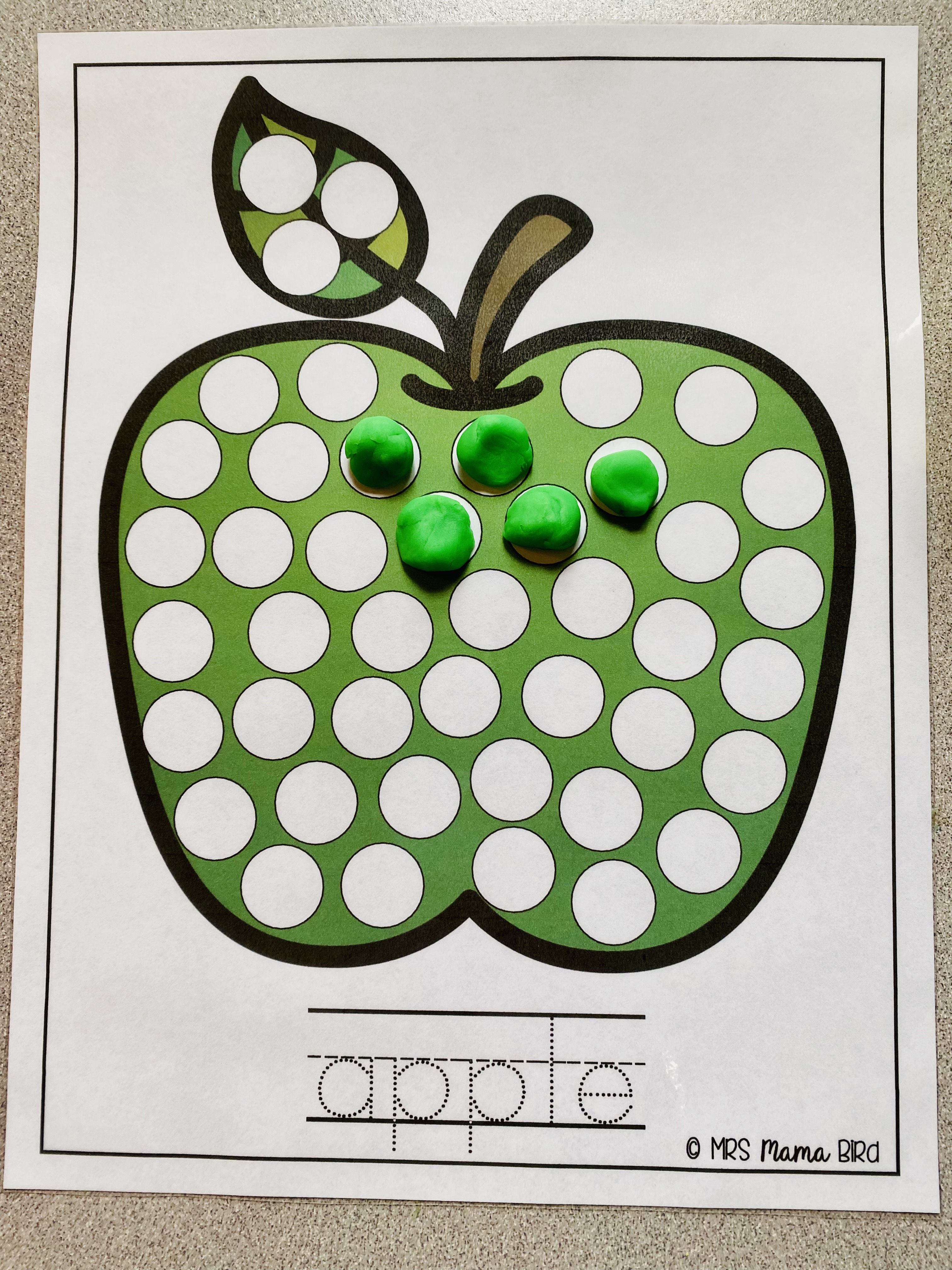
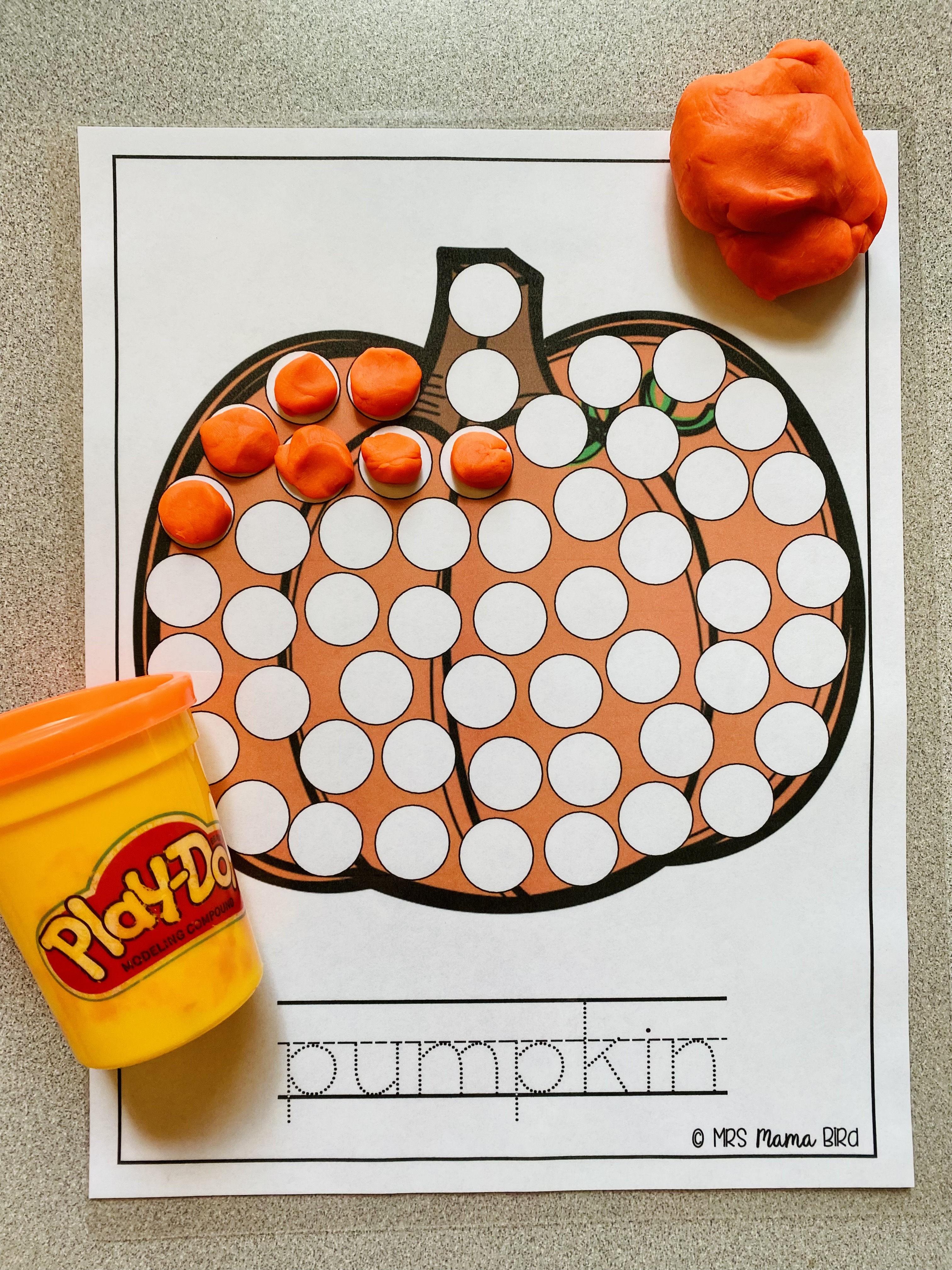
If you find Do A Dot printables available in color, grab them for your stash!!! I designed 4 versions of this printable, specifically with the playdough idea in mind. My preschooler chose his favorite color to work on. It was a great way to practice manipulating dough and identifying colors. Make sure you laminate your pages so that you can use and reuse them without the Play Doh ruining the color.

Do A Dot Buttons

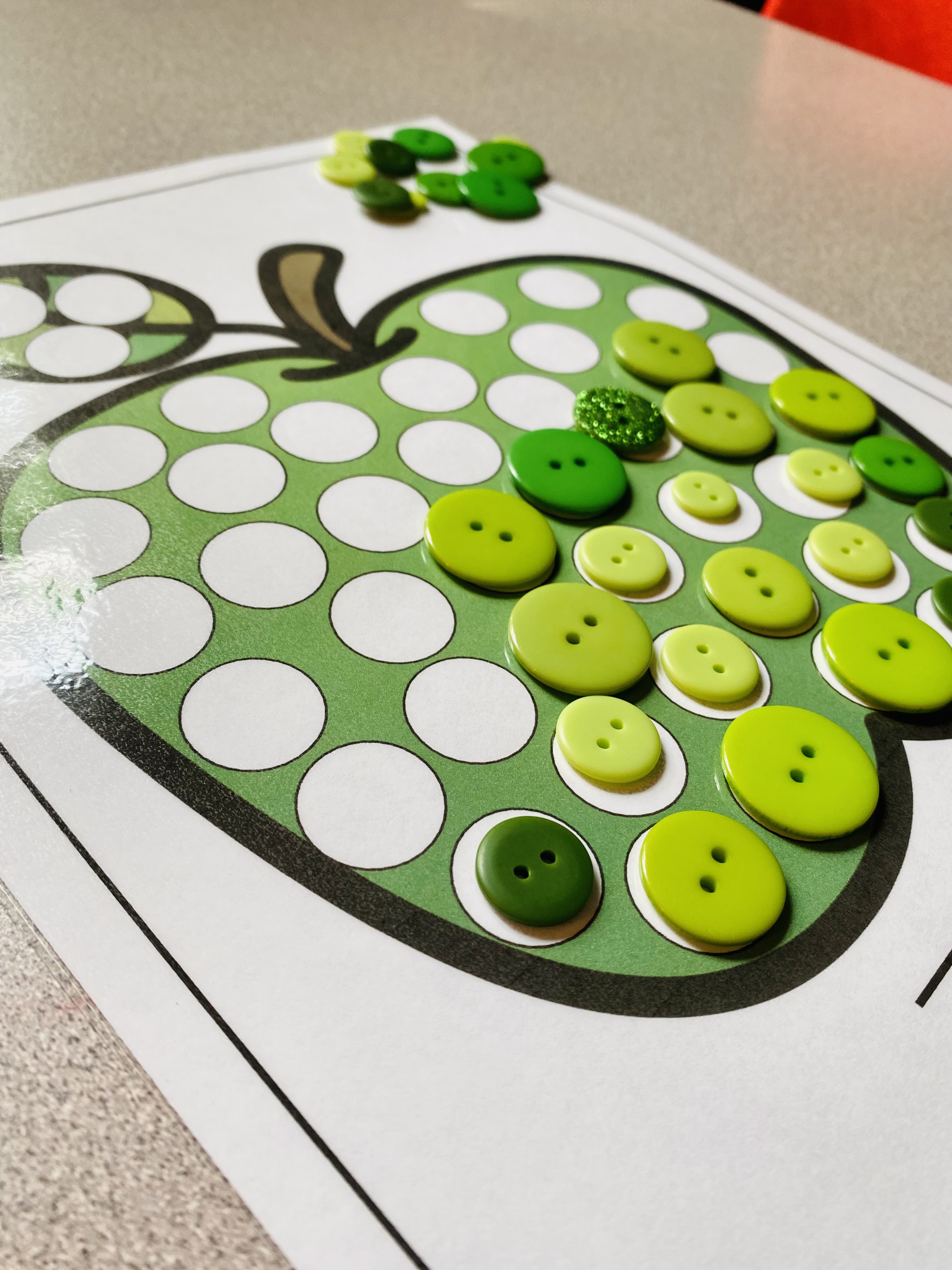
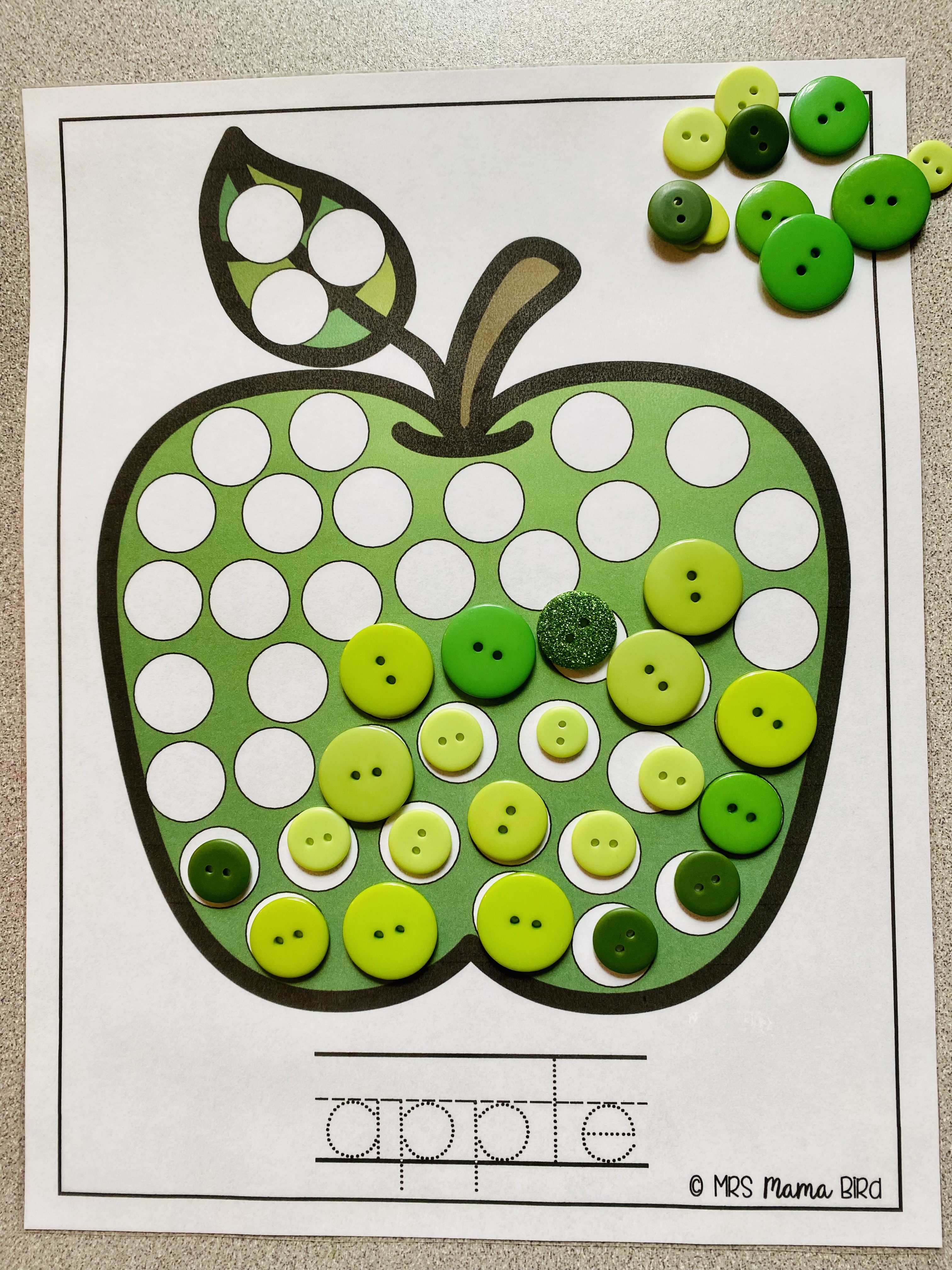
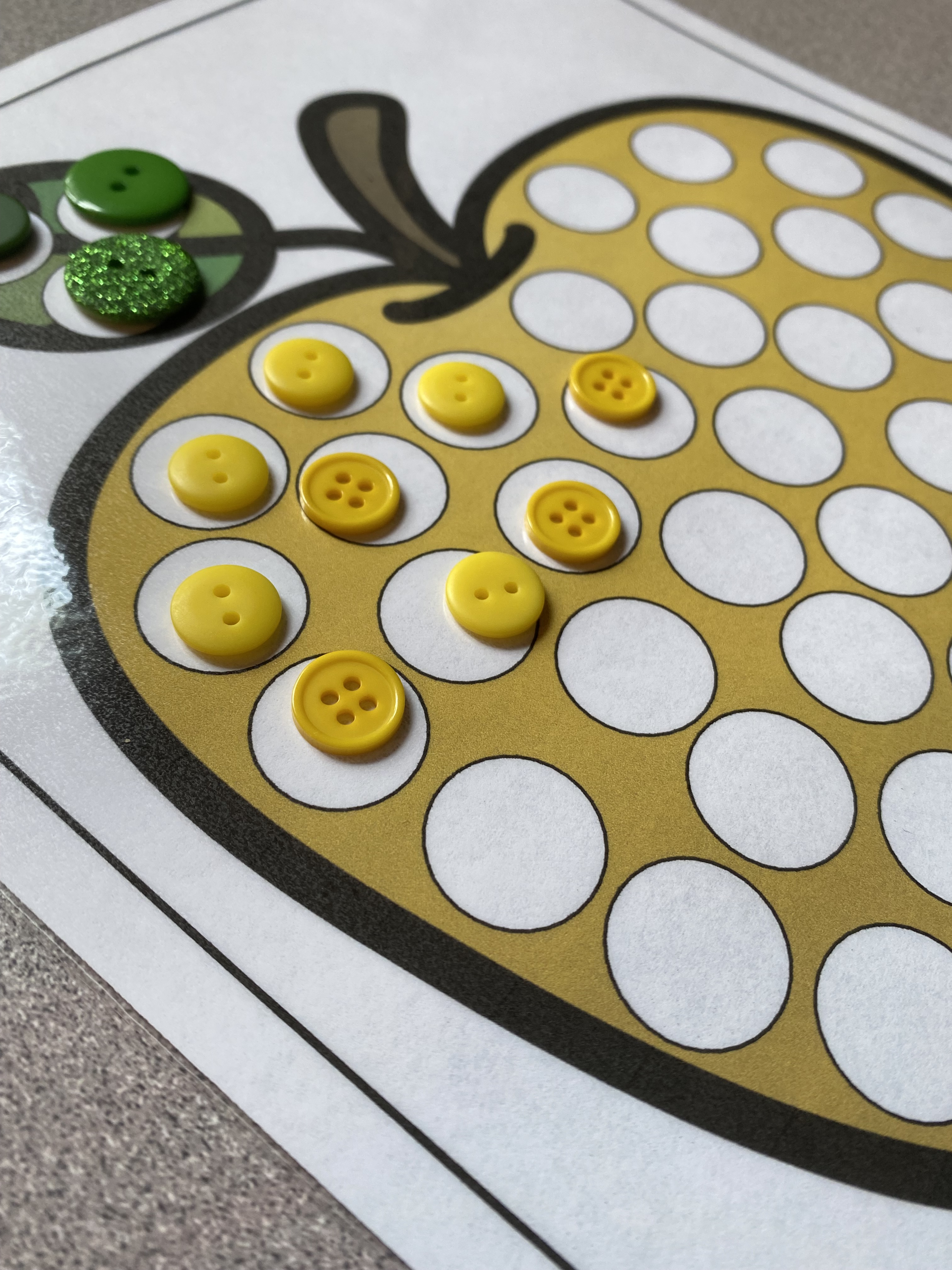
I am the type of person who saves craft supplies for all eternity and I found these buttons stashed away in a jar in my cabinet. They worked perfectly for this fine motor activity. My preschooler chose the red apple to complete this time. My buttons had a bit of variation among their size and color, which sparked some meaningful conversation. Best of all, when we were finished, we could curl up the page and slide the buttons right back into the jar. No mess!!!

Do A Dot Flat Marbles

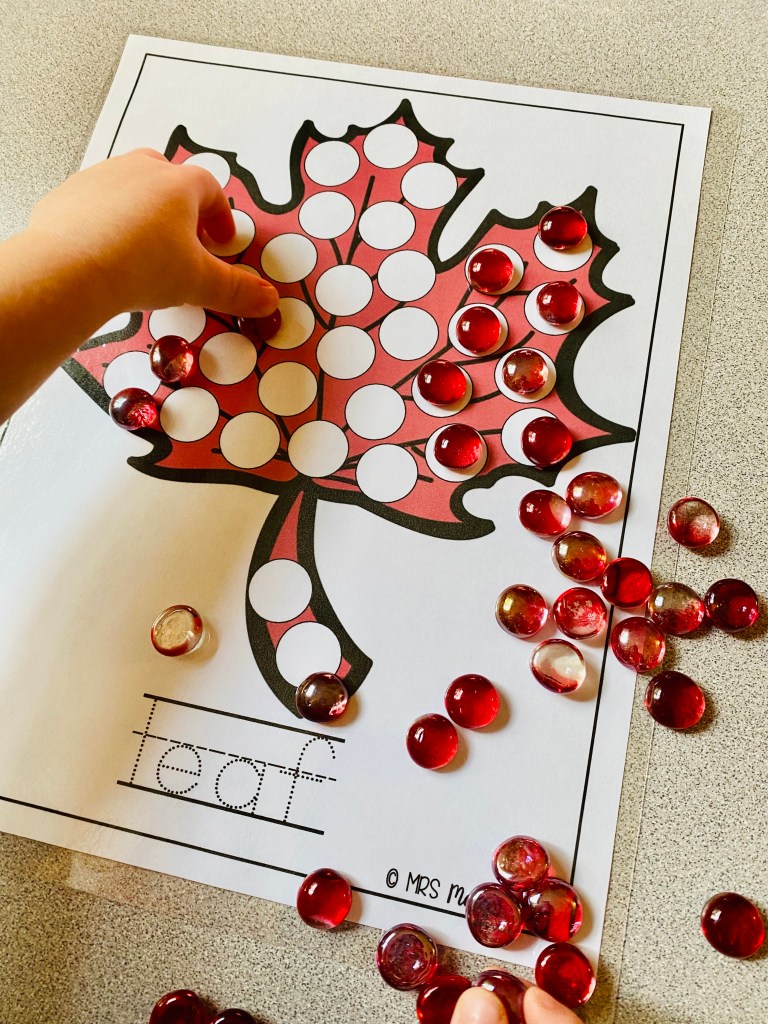
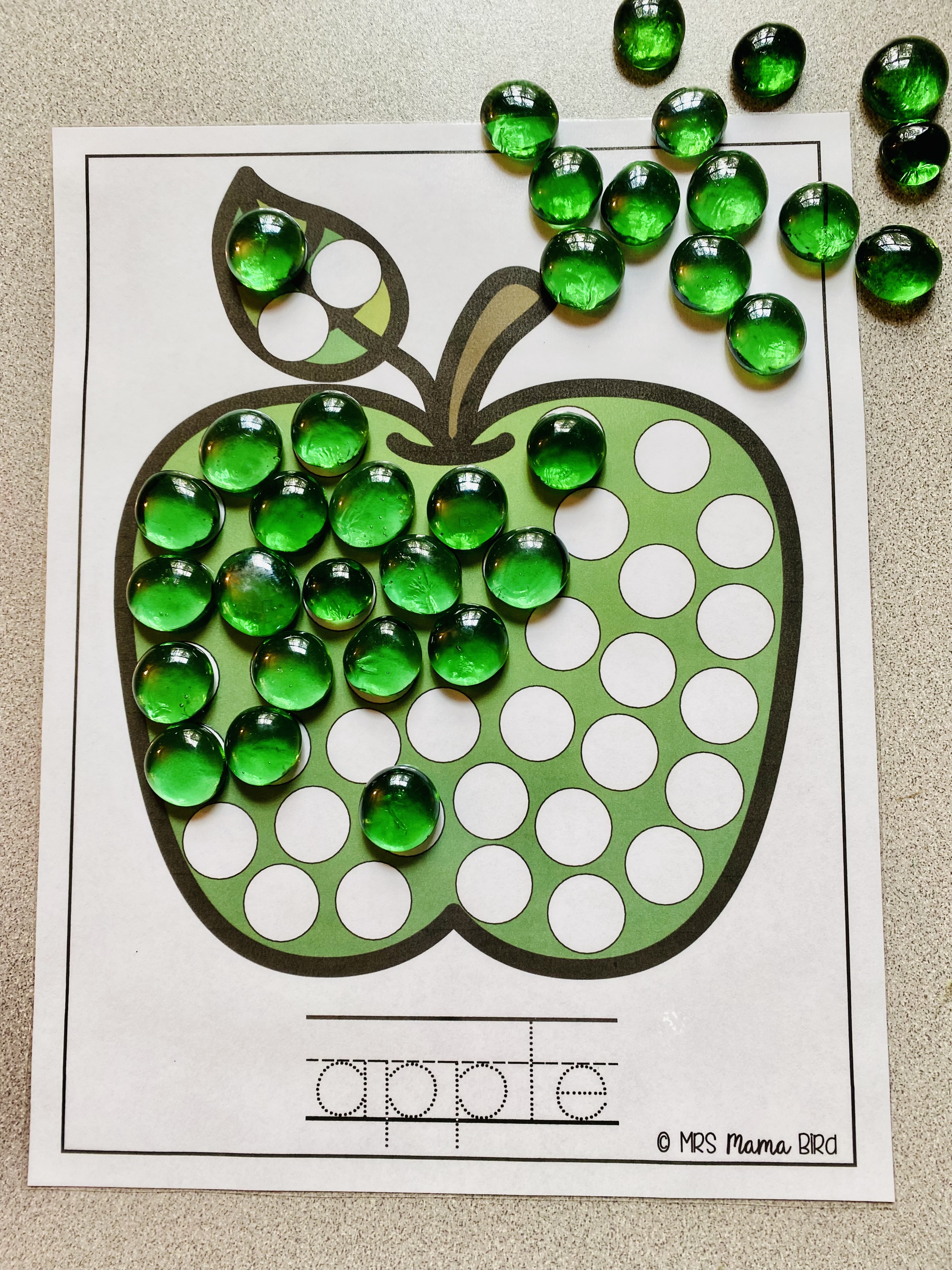
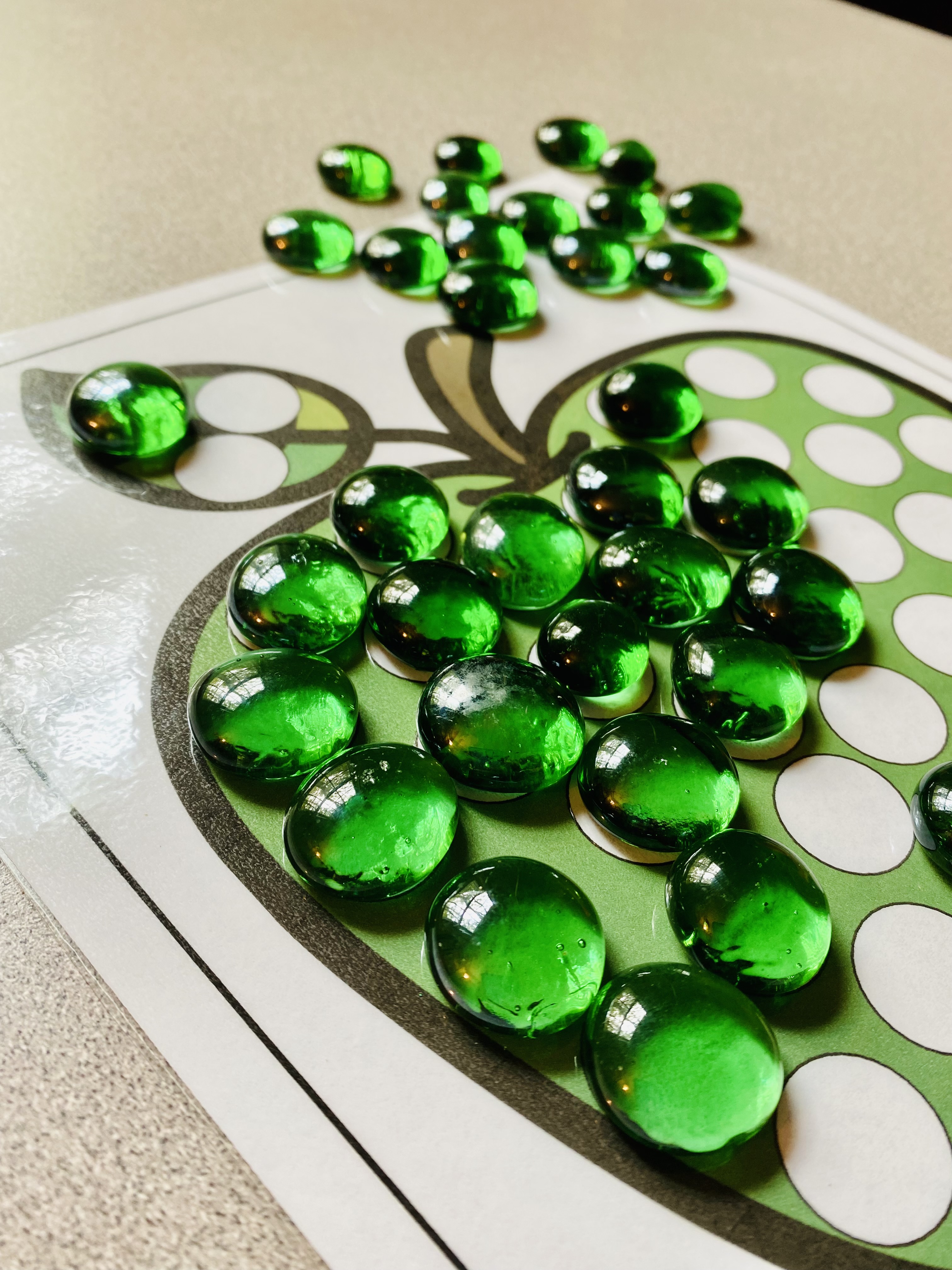
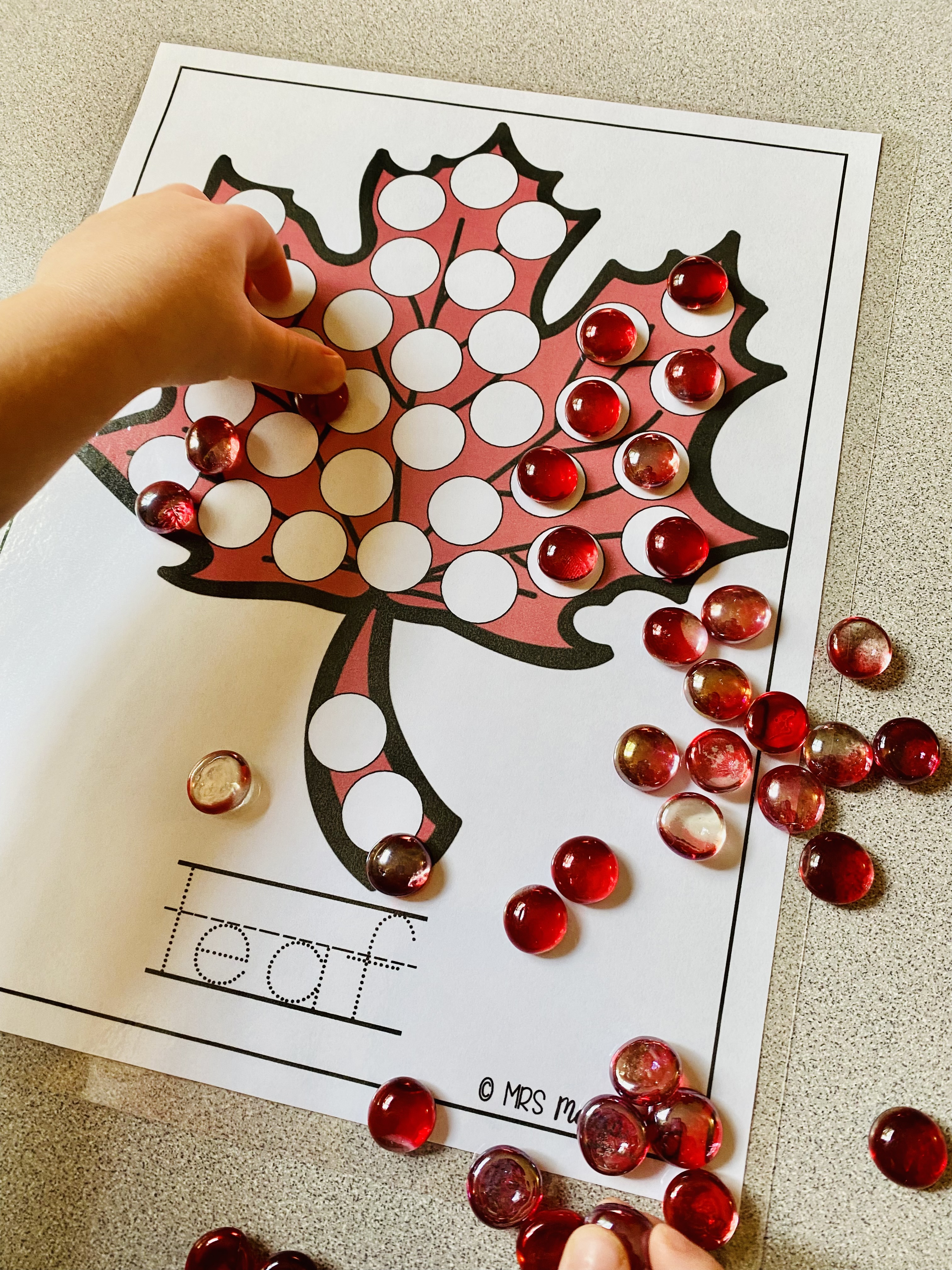
Adding flat marbles to the Do A Dot pages was a hit!! My preschooler spent the most time with this fine motor center. The flat marbles are smooth and heavy enough to sit still on the pages where you place them. Not to mention, they are shiny and see through!! This option was very engaging for my kids. Flat marbles, also called glass vase filler, can be found at any craft supply store. If you are lucky, you can find the color you need at a dollar store and save some money.

Do A Dot Circle Labels

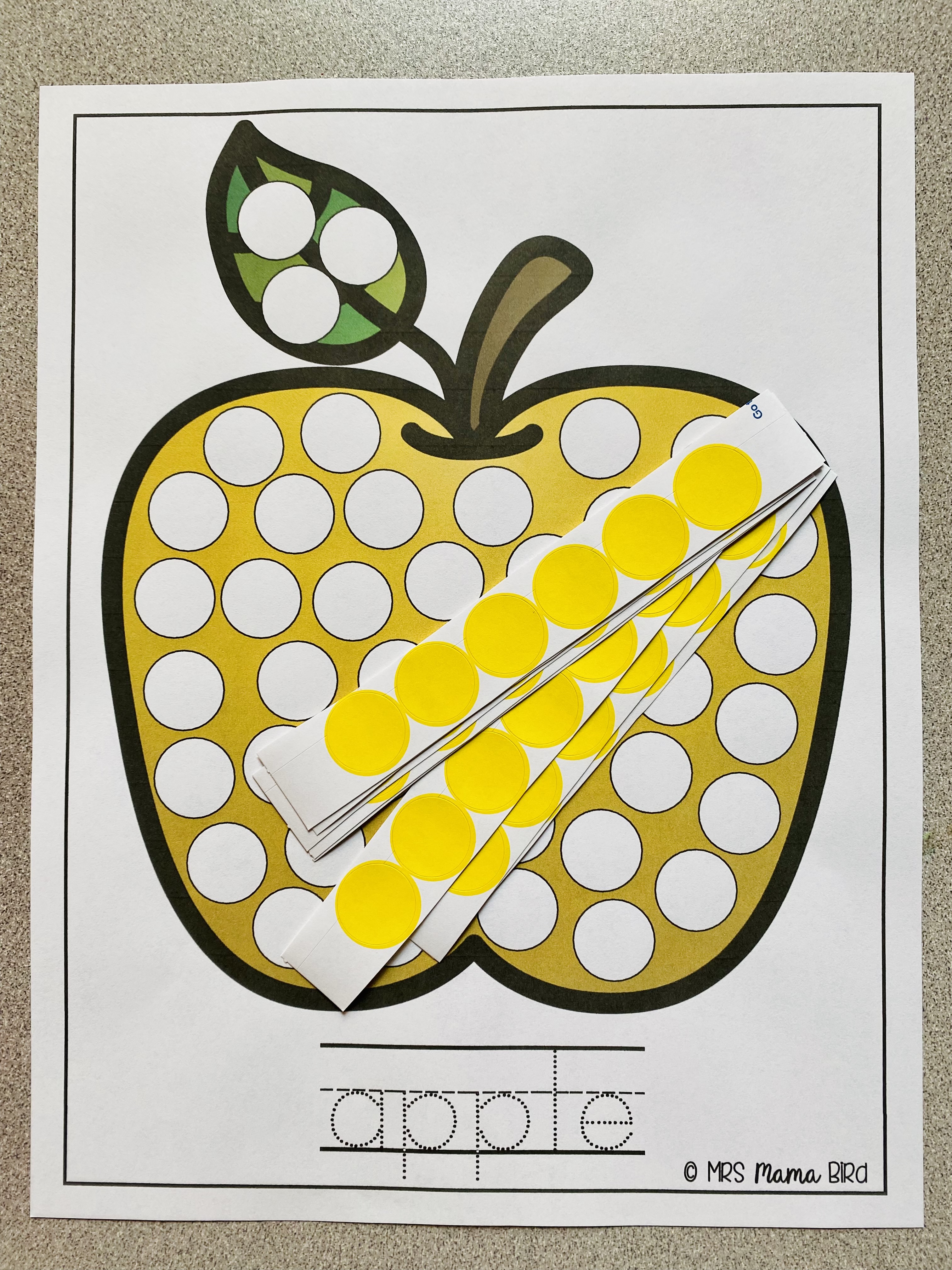
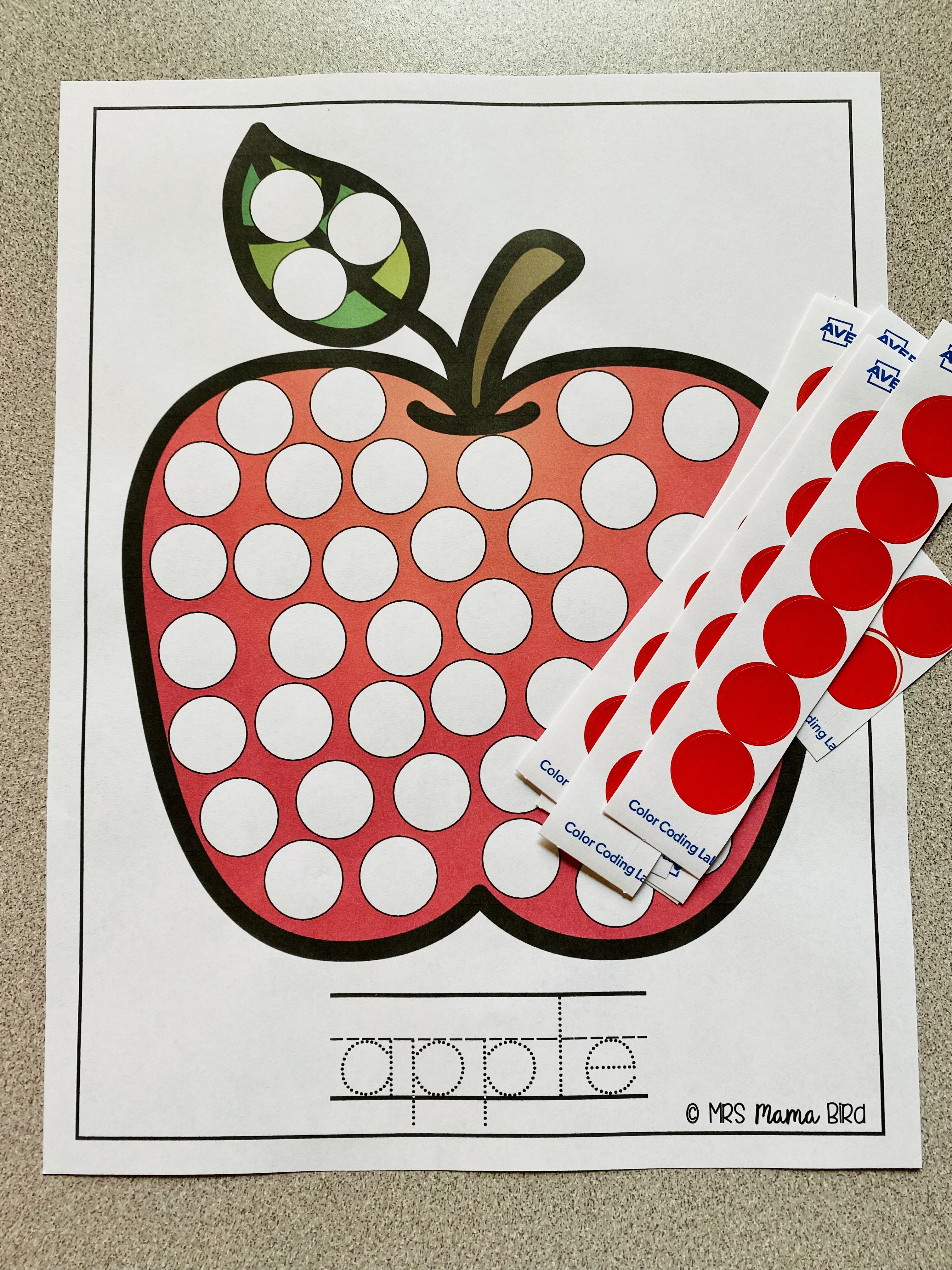
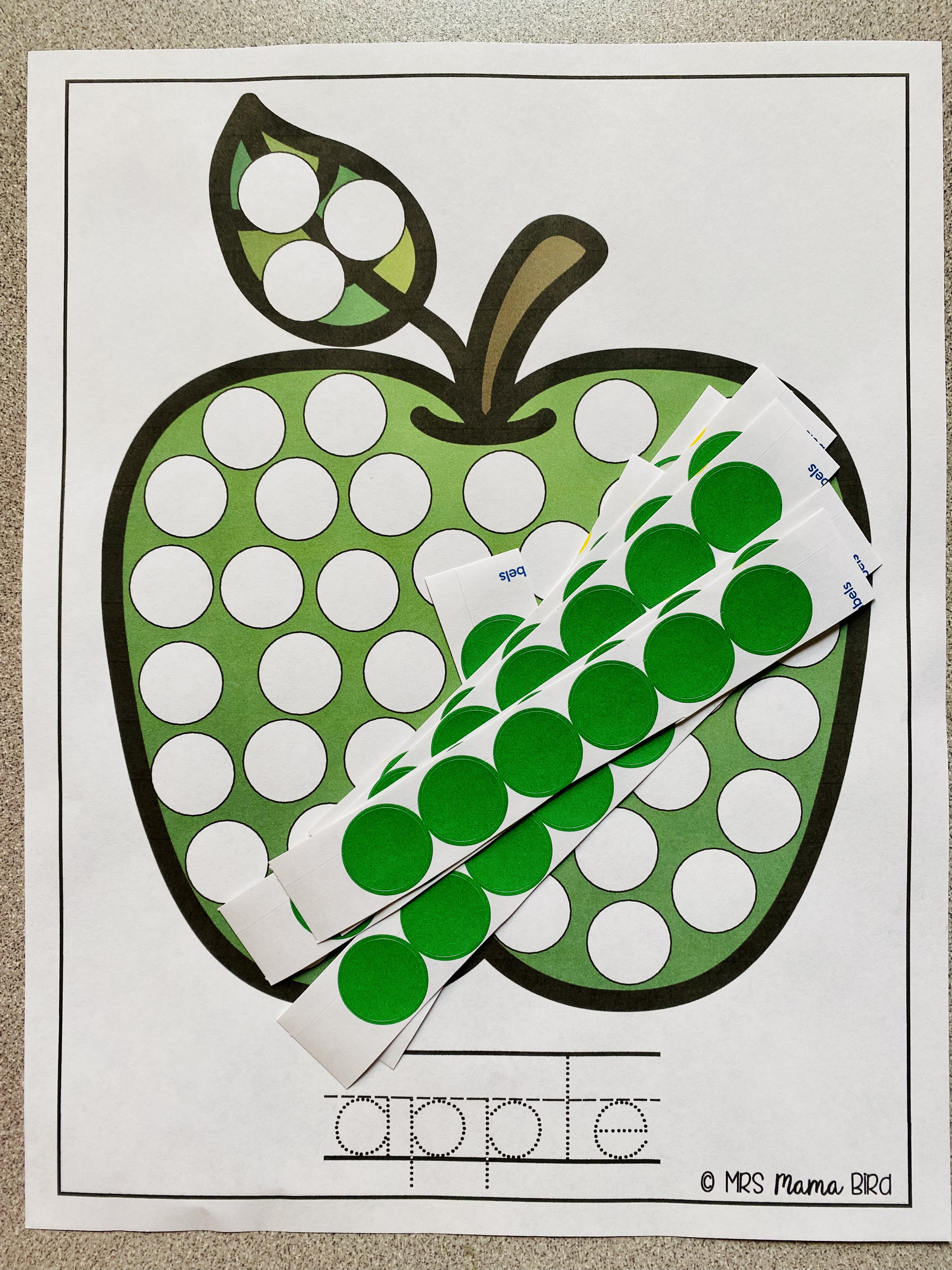
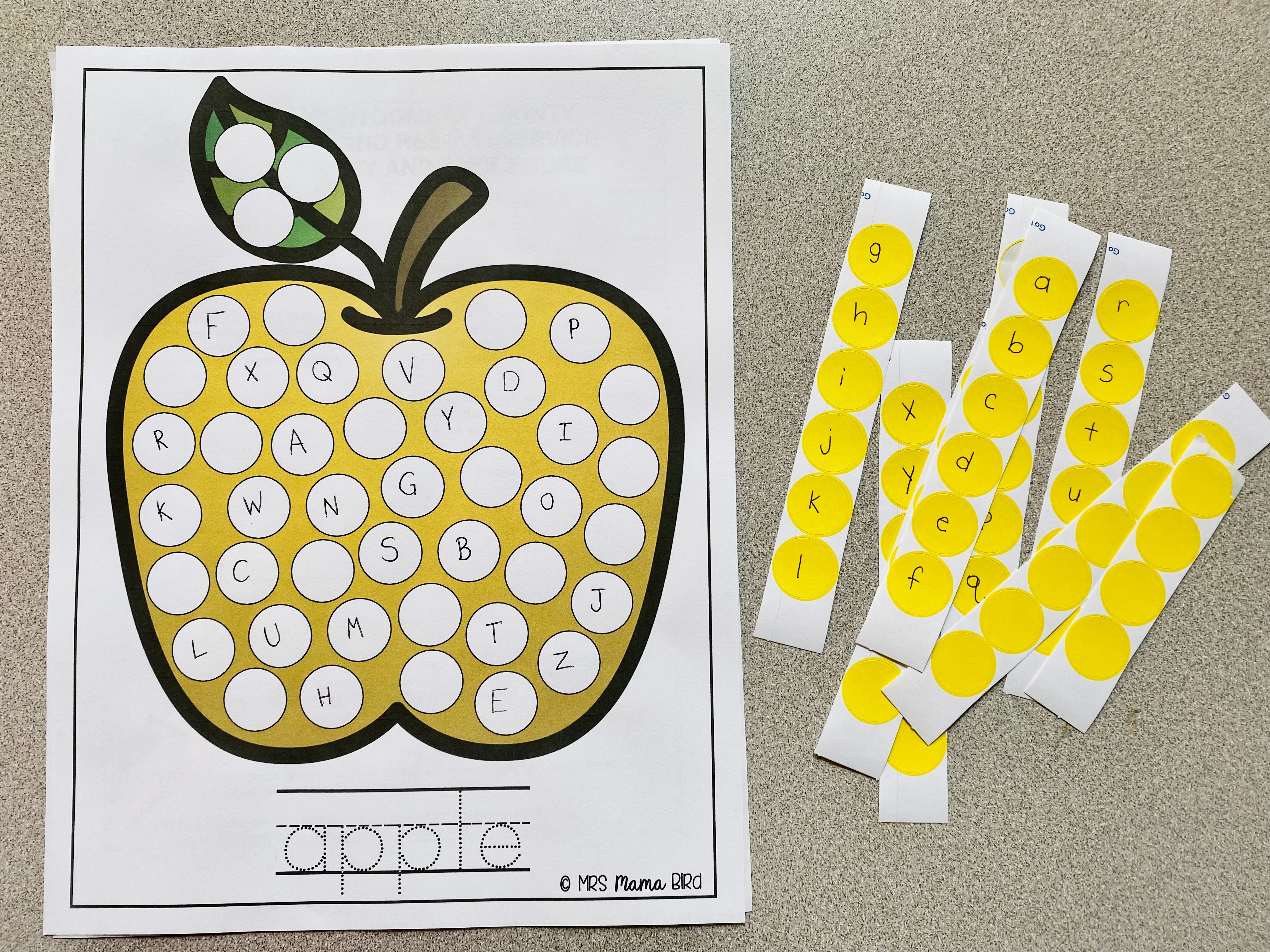
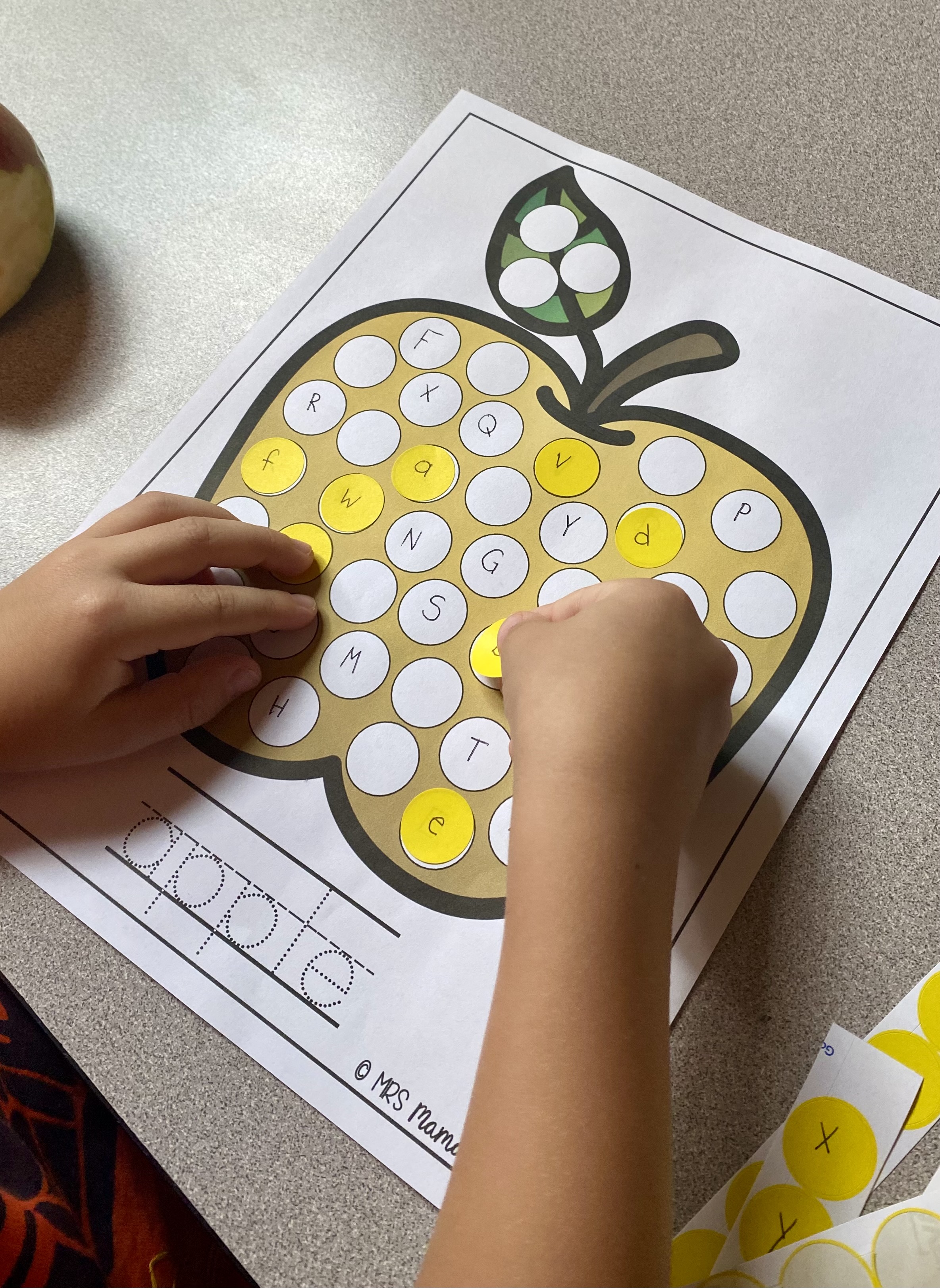
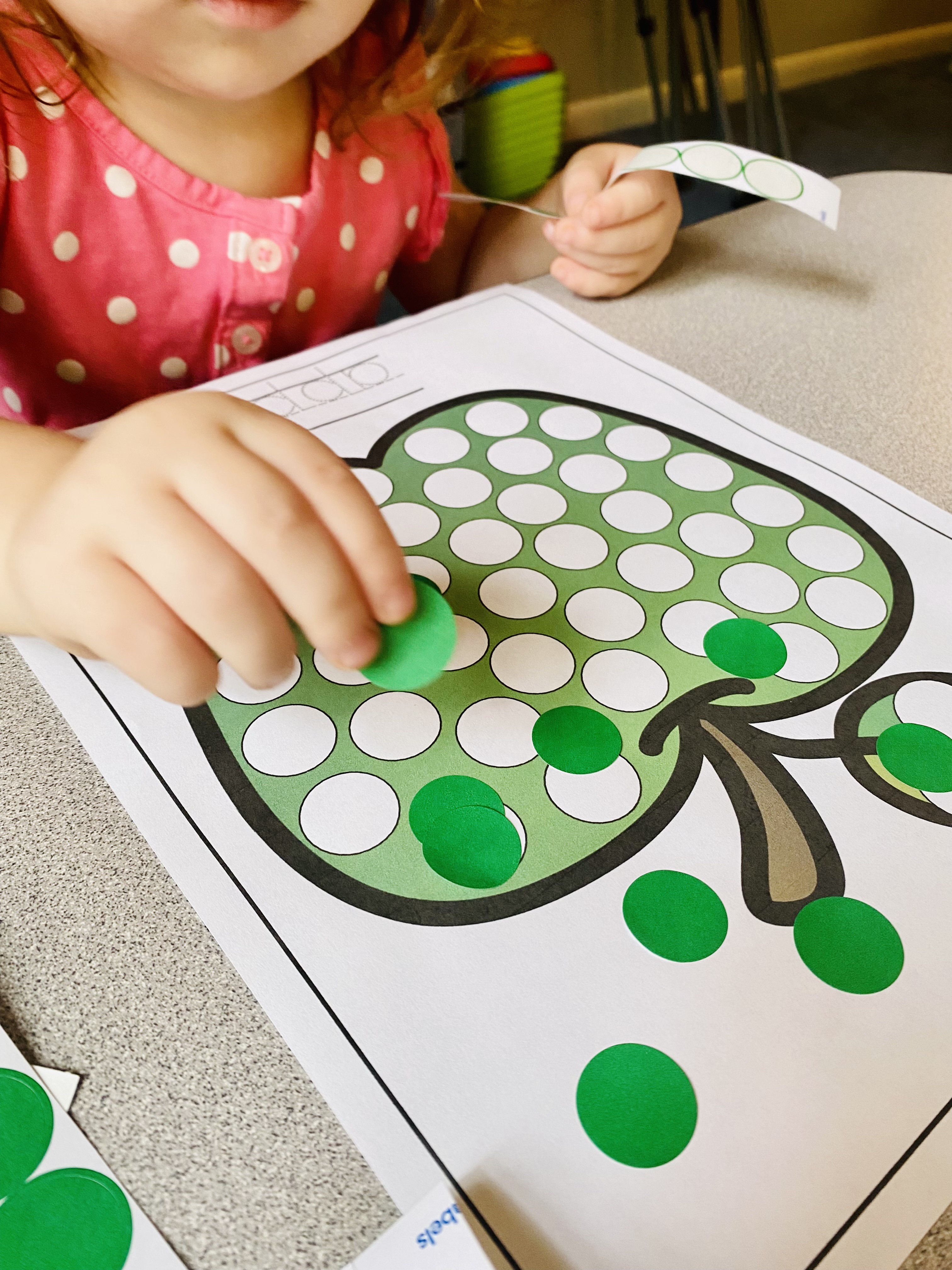
The Do A Dot Circle Label option can be used in color or black and white. I chose to use color this time, but it would be just as fun letting the kids decide which color stickers to use on their creation. Using circle labels gave me a chance to do a little differentiation with my kids. I left the labels blank for my toddler and added letters on the labels for my preschooler. I wrote upper case letters on the apple and lower case letters on the labels. My toddler was able to develop her fine motor skills and hand eye coordination while my preschooler practiced identifying letters. You can even use these labels to match sight words or numbers as well.

Do A Dot Light Box Exploration

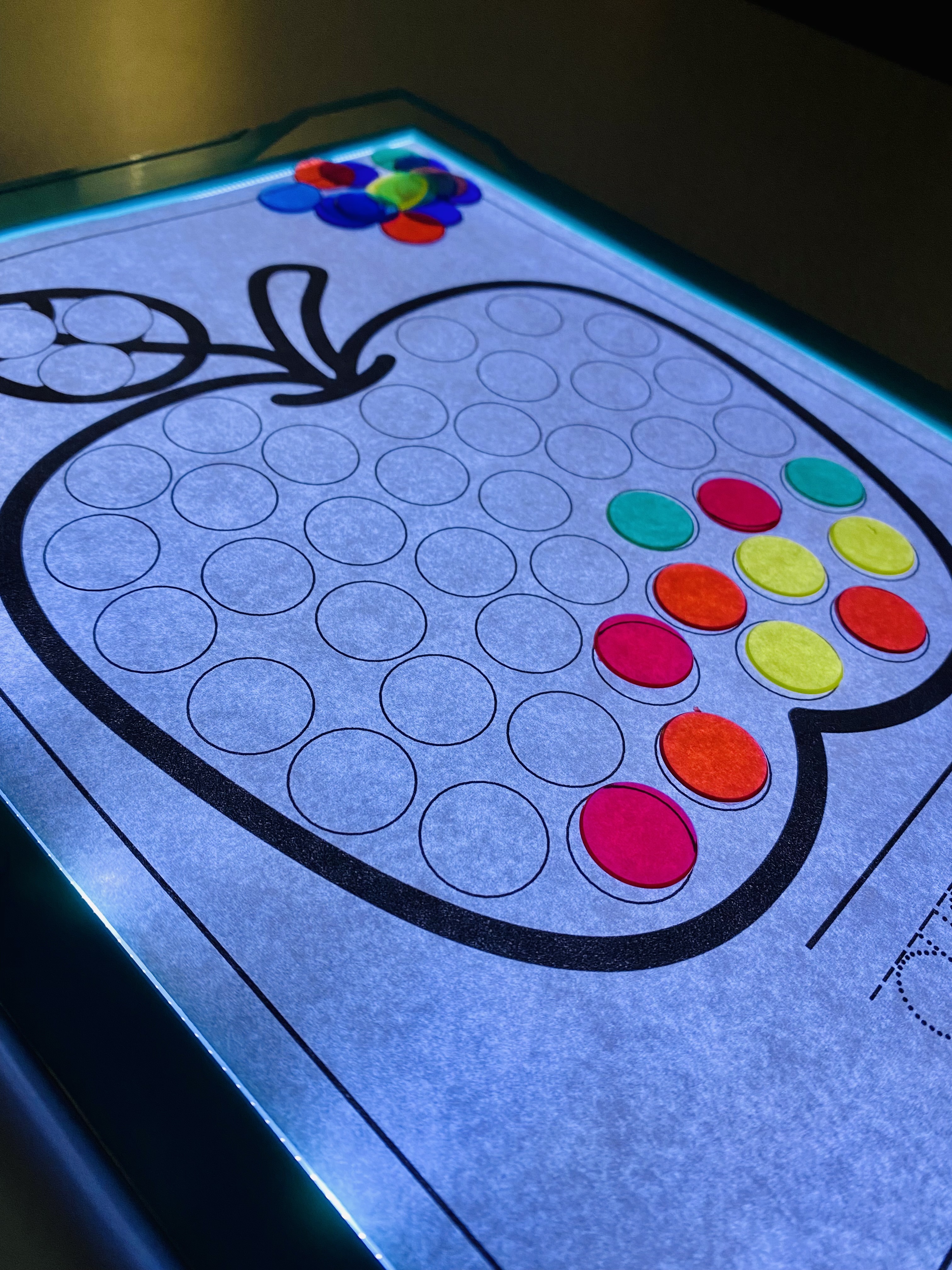
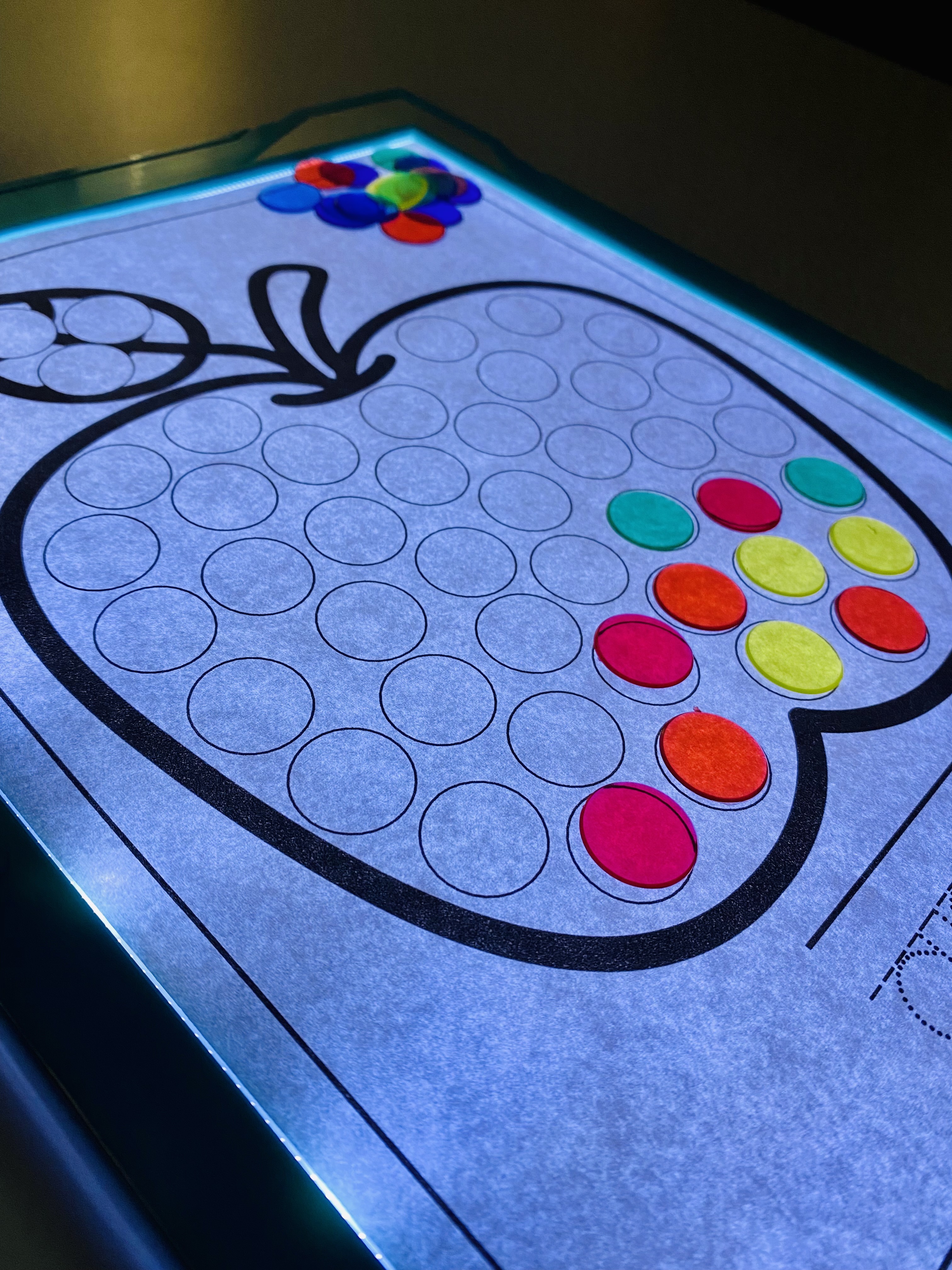
In order to use the Do A Dot pages for a light box exploration, you will need to print the black and white version. I used regular printer paper and the light shone through just fine, but if you have transparency paper, that would work even better. I am currently in a home setting, so I don’t actually have a light box. But whenever I plan fun light box activities, my son’s tracing tablet will do the trick. The circular chips that we used to place into the circles are transparent, so they looked really bright up against the light. My toddler absolutely loved this activity. She attended to it for at least 15 minutes, which is a lot of time for her to do just one thing, considering she’s not even two (I will also mention, I monitored her the entire time as these pieces can be choking hazards).

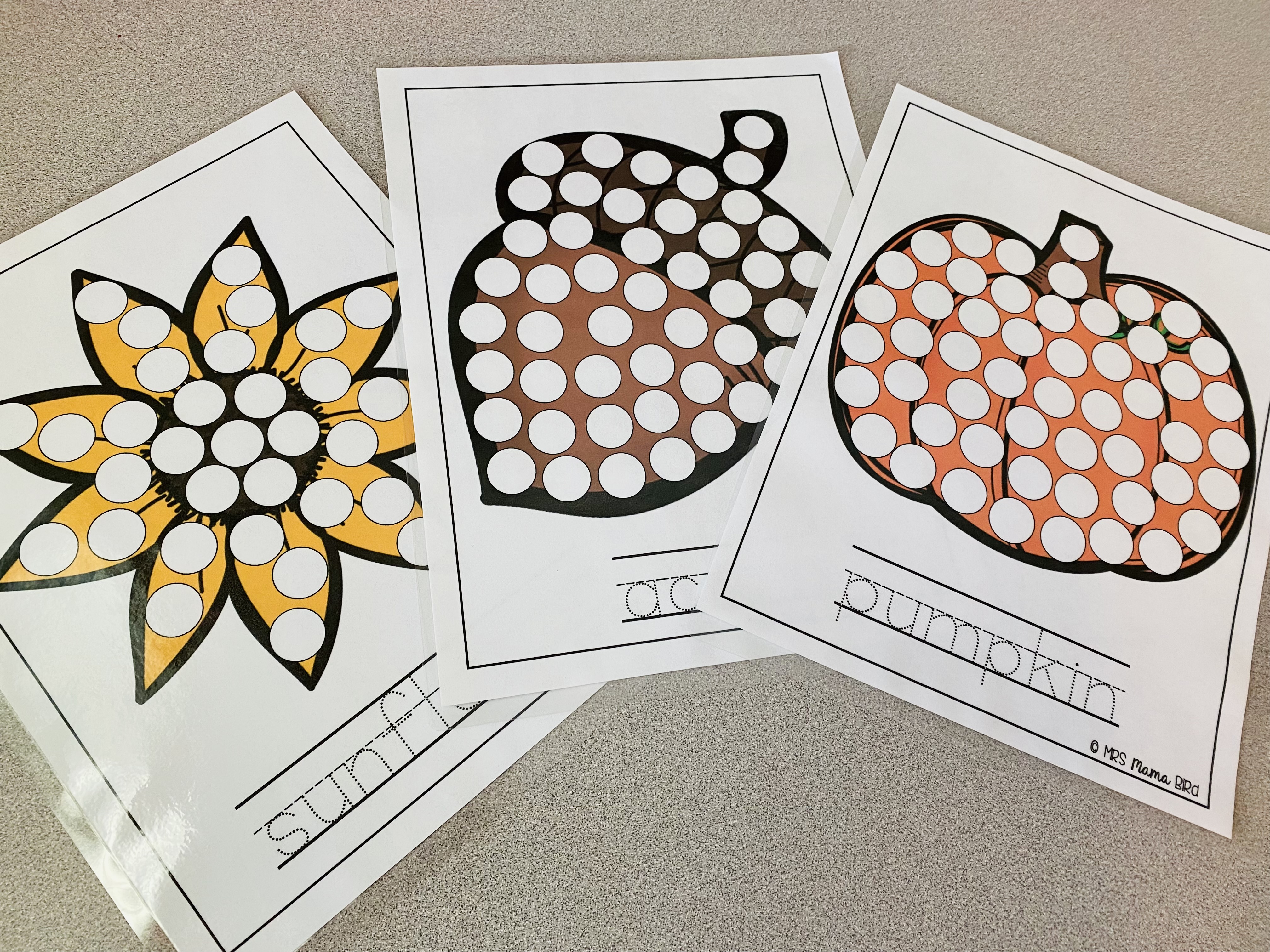
There are so many Do A Dot printables available on the internet, many for free. If you need help narrowing down the options, feel free to follow me on Pinterest (Click the Pinterest icon at the top of this page). I will only pin quality links so you won’t have to waste your time figuring out if the downloads work. They will!! If you like the apple Do A Dot printables that were featured in this post, download them for FREE by clicking the button below. And please don’t forget to comment below if you saw something you loved!! I love to see and hear about my resources in action. Thank you!!

Do you need MORE Do a Dot Printables for your collection?? Click the button below to discover more Fall Themed Do a Dot Printables for your fall centers.

Fall, Seasons

10 Favorite Books About Apples for Preschool

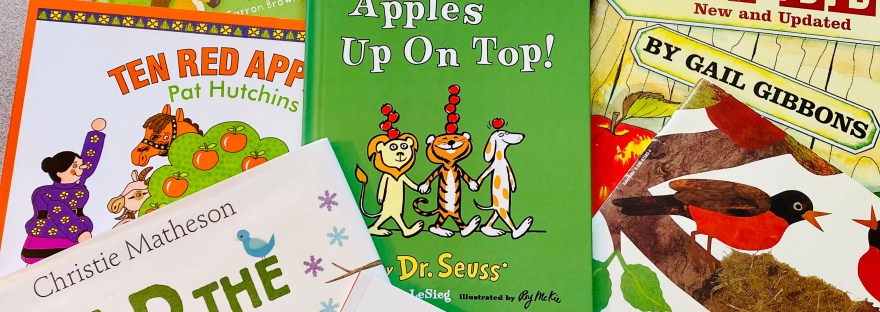
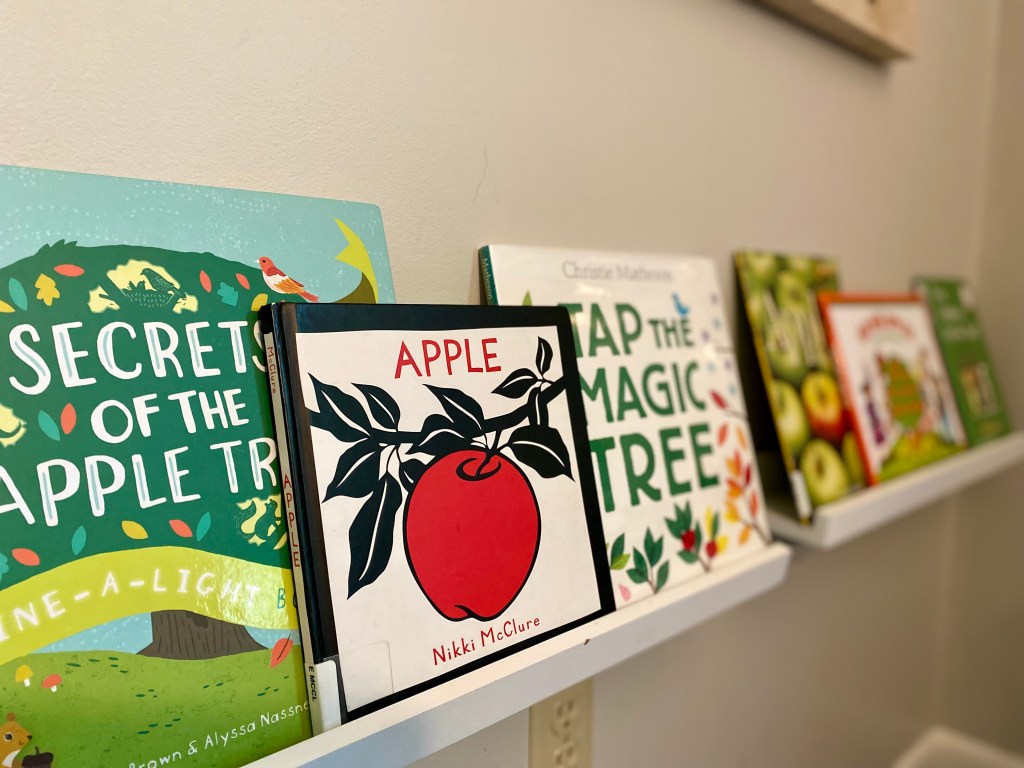
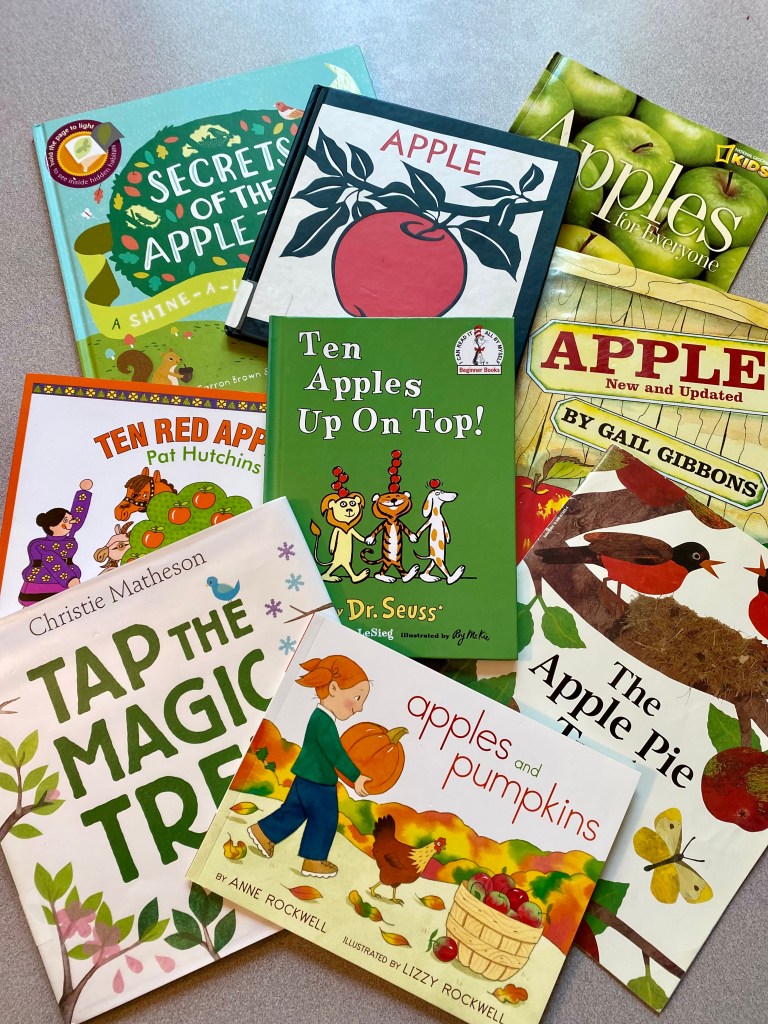
Sometimes, one of the most daunting things about being a teacher is sorting through the plethora of resources available and deciding which ones to use. This is especially true when it comes to books for preschoolers. There are so many good options out there, how do you decide??? Hopefully, I can be of some help here. I’ve sifted through other blog posts and raided my local library to help you narrow your search. Below you will find my 10 favorite books about apples for preschoolers (in no particular order).

Before I give you my first selection, I want to mention that when choosing books to use with my kids, I make sure to include both fiction and nonfiction. I, as many other teachers probably do, tend to gravitate towards fiction. I love to share a good story with kids, whether it depicts a relatable situation that’s easy to connect to or an unfamiliar story that expands kids’ understanding and perception of the world. Stories are the best!! But the truth is, kids, especially my oldest boy, are very curious and love to learn facts. Exposing kids to the structure of nonfiction text, as well as the realistic depiction of things through photography is just as important.

So without further ado, my ten favorite preschool books about apples:

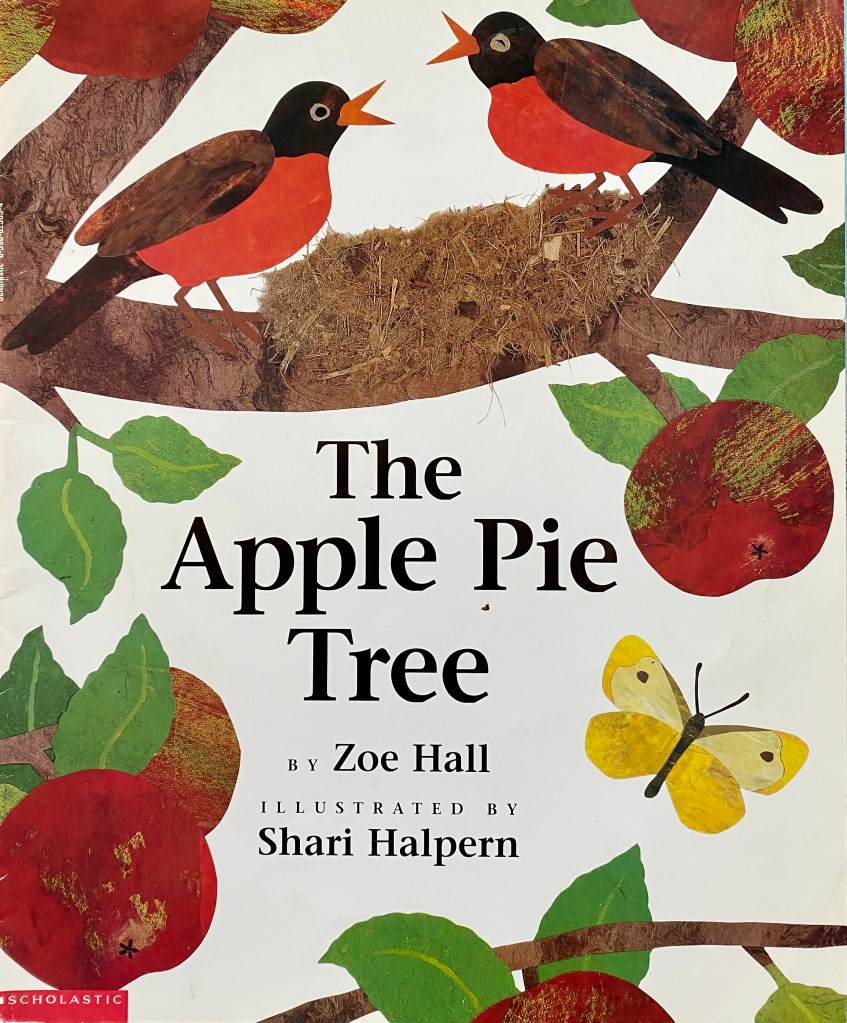
The Apple Pie Tree By Zoe Hall

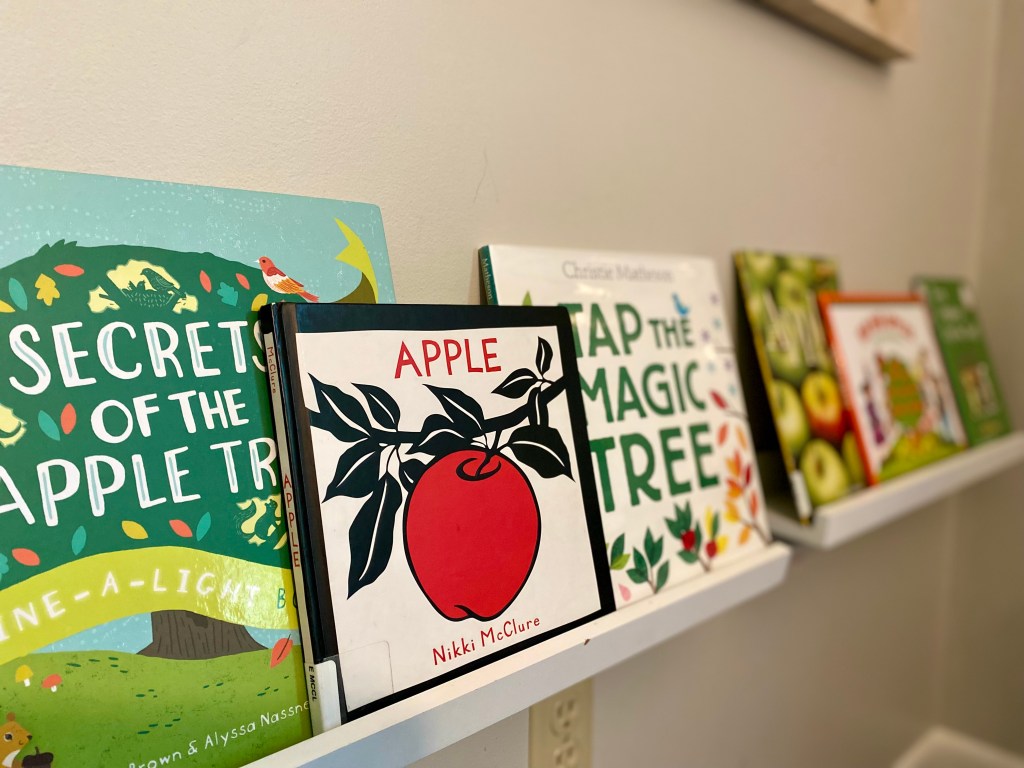
The Apple Pie Tree, By Zoe Hall is a staple in most apple units. I continue to use it for two reasons. I love the illustrations. This book uses a collage format to depict an apple tree in its different stages: dormant, buds, blossoms, leaves, and apples. Most of the collages are displayed against a white background, which tends to hold the attention of my younger kids. Another reason why I continue to choose this book is because of its strong connection to the cycle of the seasons. This book could be referred back to when learning about the four seasons or used to introduce the four seasons.

Ten Red Apples Up On Top By Dr. Seuss

Ten Red Apples Up On Top, by Dr. Seuss doesn’t veer from Dr. Seuss’ fun, silly, rhyming style. This book follows three characters, a tiger, lion and dog, as they compete to balance the most apples on their heads while doing ridiculous things. Kids always laugh out loud at this one, as they point out the impossible ways that the animals manage to keep apples balanced on top of their heads. Another reason why I love this book is the very clear connection to math. After reading this story, it is a perfect opportunity to set up apple themed counting centers.

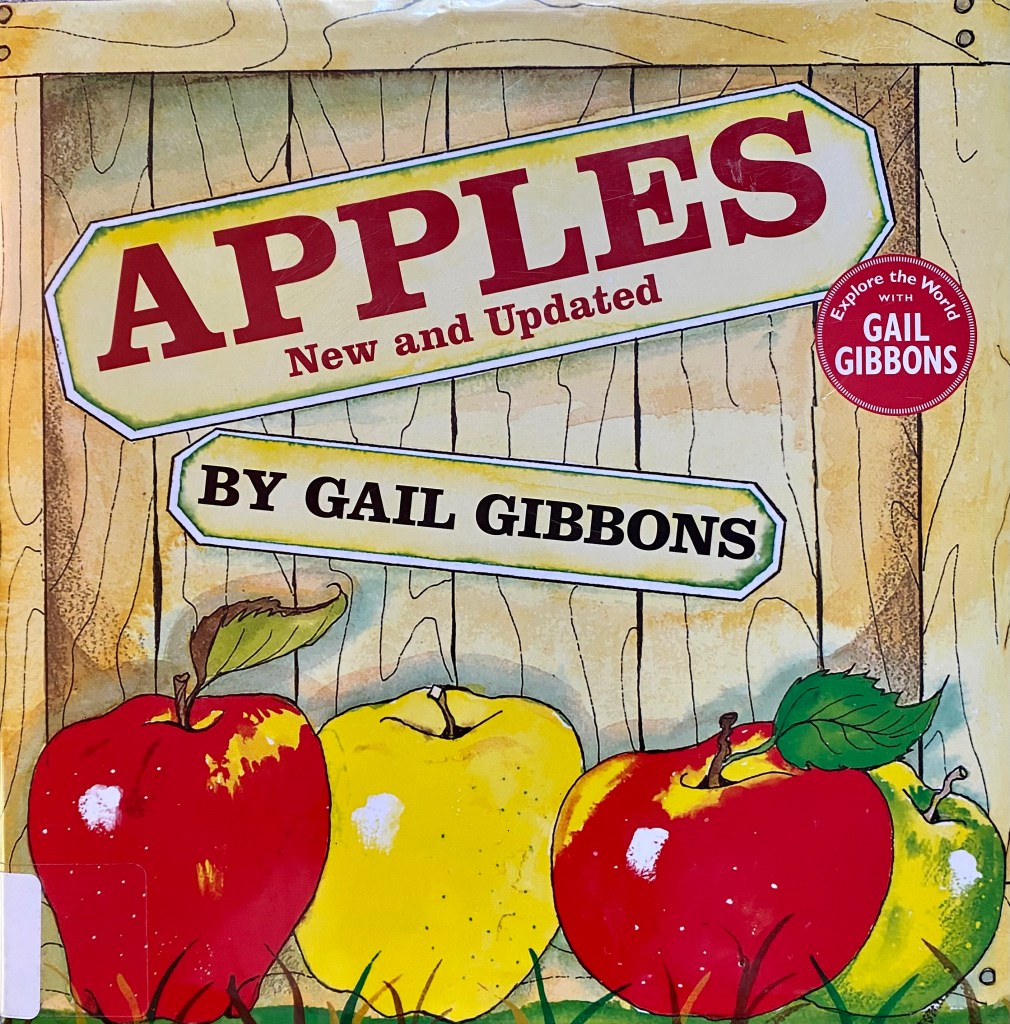
Apples By Gail Gibbons

Gail Gibbons is a guru when it comes to non fiction books for young kids. Although I probably would not be able to read this book from start to finish to my younger preschoolers, kids in prekindergarten or kindergarten would be able to attend to the words and pictures of this nonfiction selection. Apples, by Gail Gibbons, touches on many aspects of apples, including where they come from, Johnny Appleseed, how they grow, parts of an apple, pollination, harvesting apples, what people do with apples and even types of an apple. Teachers can easily use this book to showcase one or two pages to introduce some of these more specific concepts. Or simply introduce the book to the kids and set it on the shelf for them to look through when they get the chance.

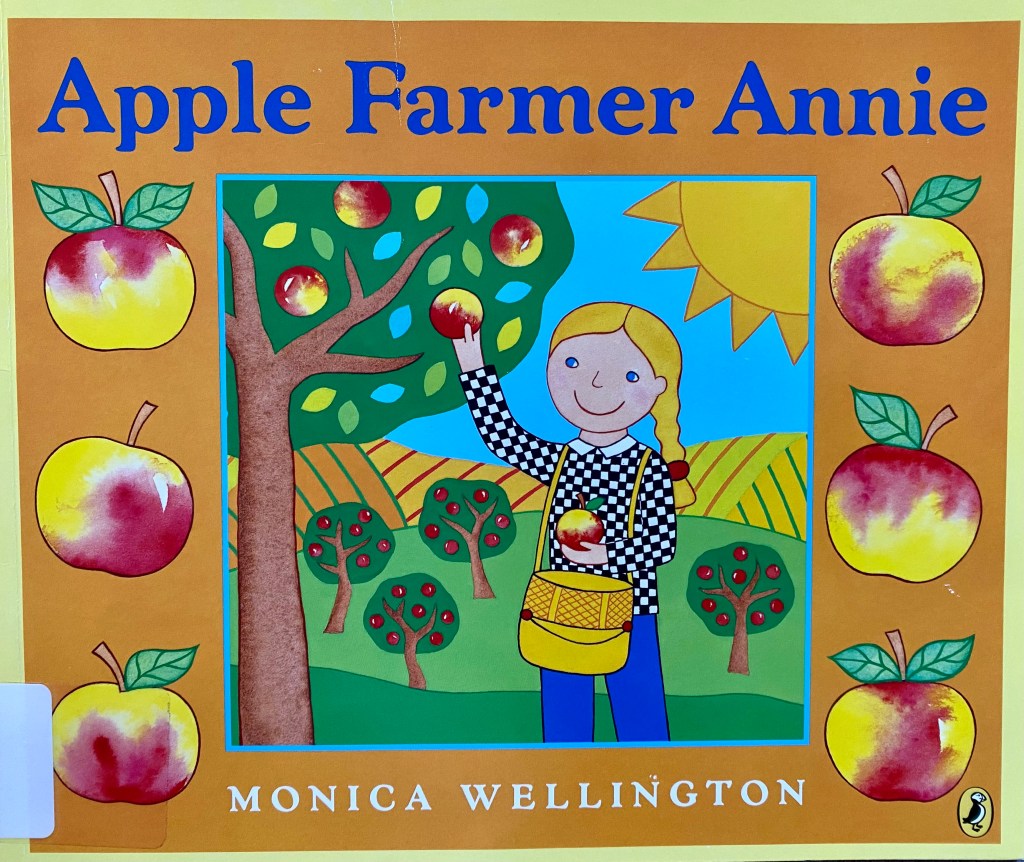
Apple Farmer Annie By Monica Wellington

Apple Farmer Annie By Monica Wellington tells the story of apple farming through the eyes of a farmer named Annie. The very simple text and colorful illustrations show readers what it’s like to harvest apples and what to do with them after they’ve been picked. The story focuses less on the cycles of an apple tree and more on what to do with the actual apple. Farmer Annie bakes all kinds of goodies and sells them, along with fresh apples, at the farmer’s market. At the end of the story, Farmer Annie shares some yummy recipes. This book may just inspire your little reader to make and try something new!

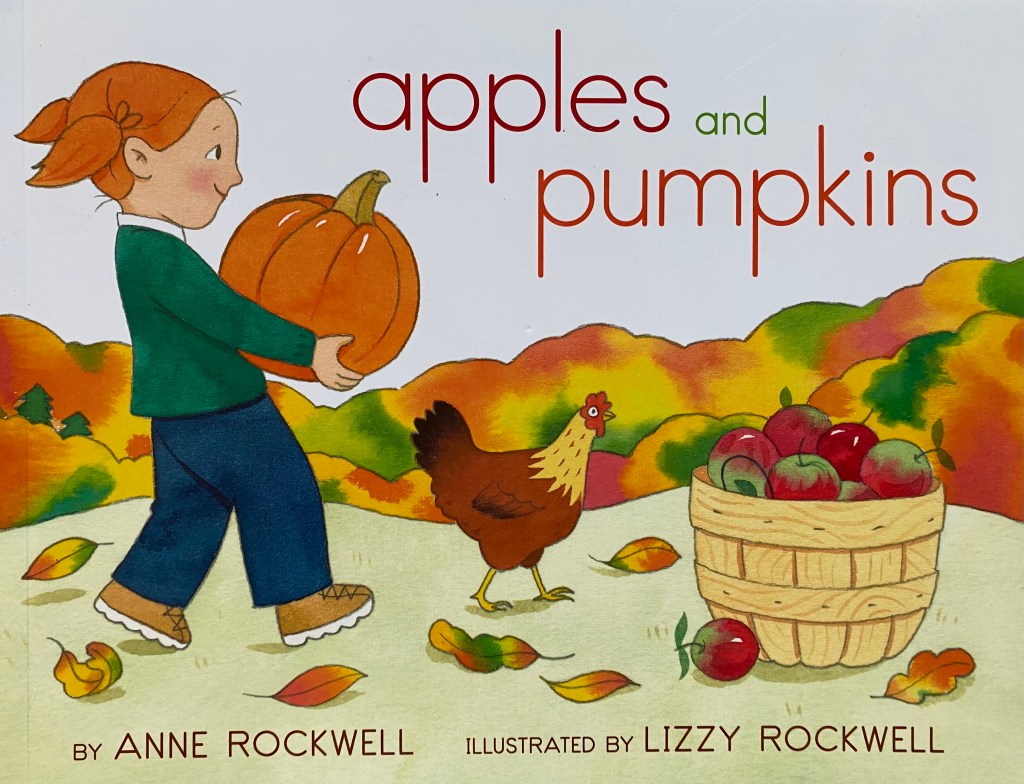
Apples and Pumpkins By Anne Rockwell

Apples and Pumpkins By Anne Rockwell is a simple story about a little girl who visits a local farm to pick apples and pumpkins. It is narrated in the first person, from the perspective of the little girl, whose name is not mentioned. She talks about the farm animals that follow her to the orchard and her hunt to find the perfect pumpkin. At the end, she carves a jack o lantern and goes trick or treating. I love this story because it is told the way a child would tell it. It is simple and relatable and sure to spark all kinds of connections with young readers.

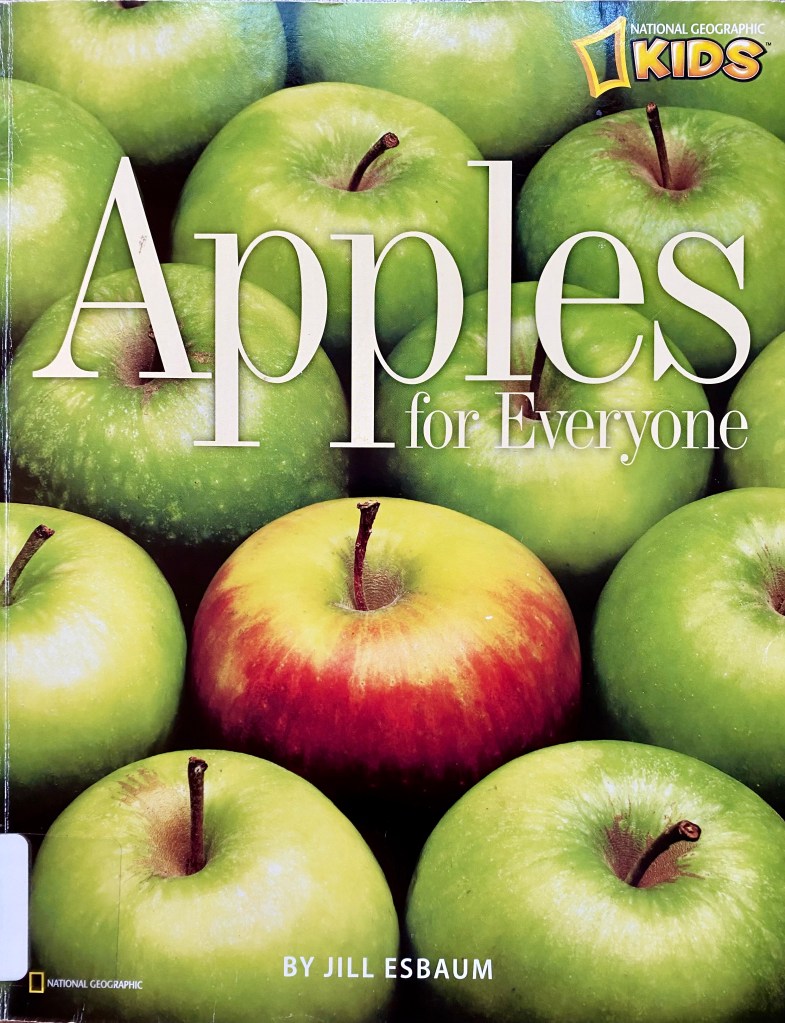
Apples for Everyone By Jill Esbaum

Another non-fiction selection, Apples for Everyone By Jill Esbaum made my list of favorites because of its eye-catching photographs. This text touches on growing apples, harvesting apples, how to enjoy apples, Johnny Appleseed and different types of apples. It is full of large photographs, many with kids included. It is the perfect book to emphasize what we can learn about apples and maybe even spark a few curiosities as well.

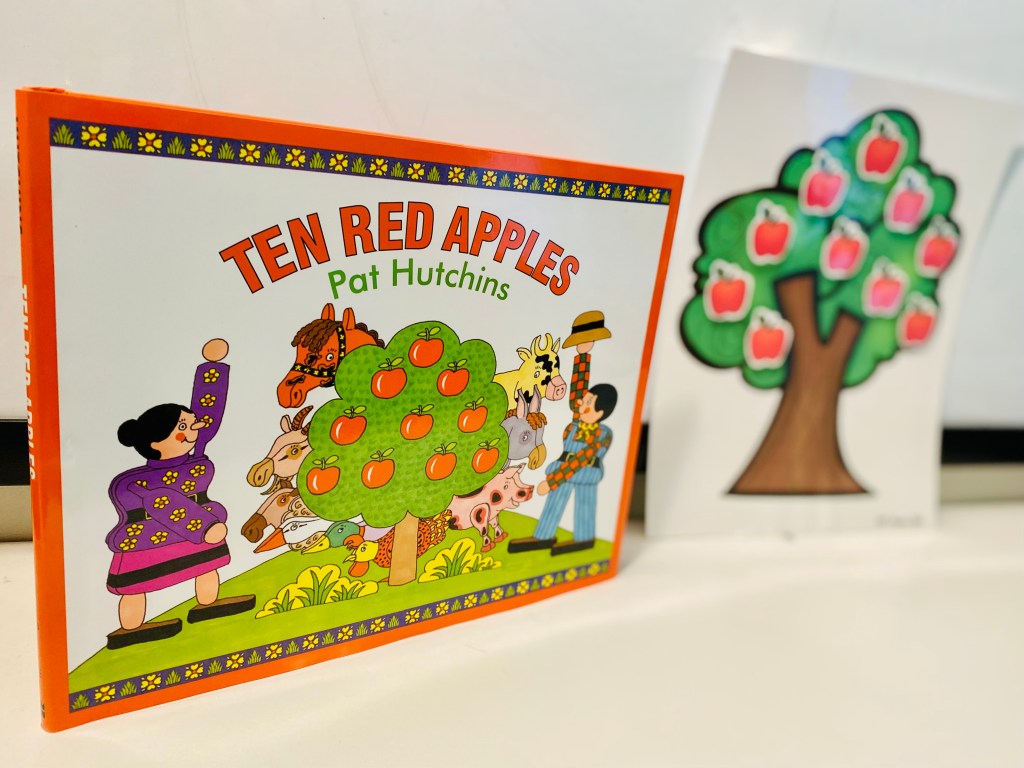
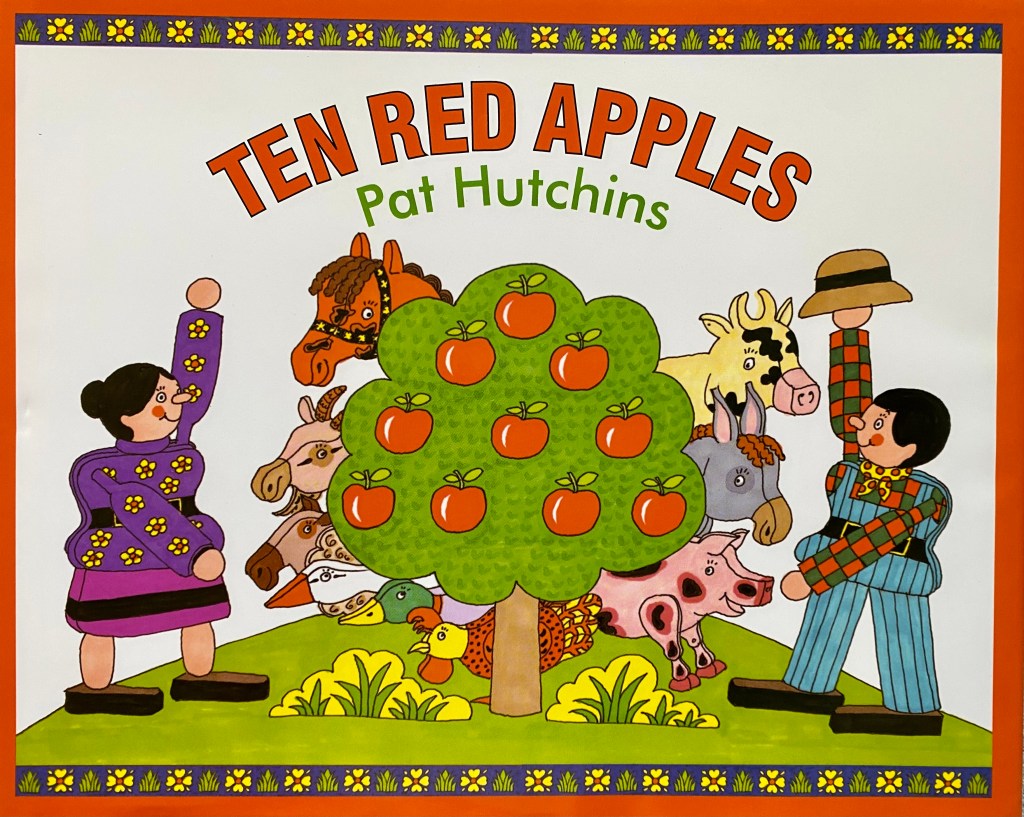
Ten Red Apples By Pat Hutchins

Pat Hutchins is another popular preschool author! Ten Red Apples is a folksy story about a farmer who is trying to harvest the apples on his apple tree. But every time he counts his apples, another farm animal comes by and eats one! I absolutely love the repetition and predictable text in this story. The colorful illustrations also allow readers to predict what animal is coming to eat an apple next. This book lends itself to math connections, including counting, less than/more than, and subtraction.

**If you’re looking for companion activities for this book, find the link below about my previous post!**

https://mrsmamabird.com/2021/08/18/tenredapples/

Tap the Magic Tree By Christie Matheson

This book is so fun!! Once again, there is just something about illustrations against a stark white background that draws my kids in. This books takes readers through the process of growing apples on an apple tree. But they don’t just get to read about it. This story invites readers to tap the tree to create magical changes. From leaves to buds to blossoms to apples, readers can interact with each step. It can be used to emphasize the cycle that an apple tree endures or introduce the characteristics of each season, similar to The Apple Pie Tree.

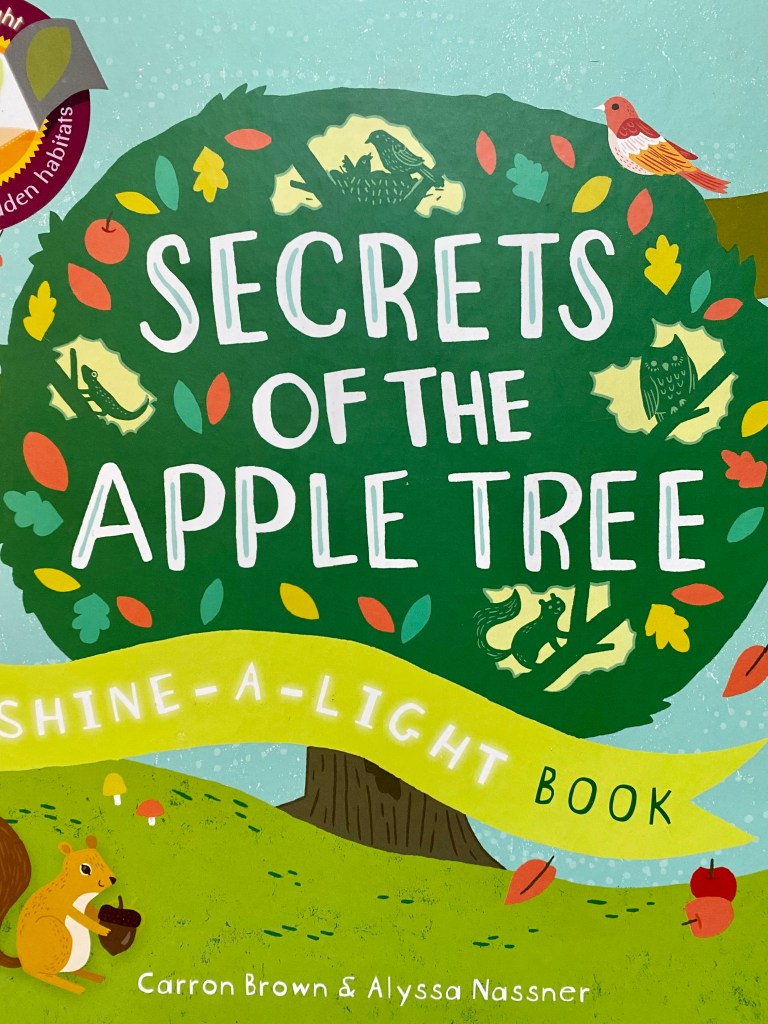
Secrets of the Apple Tree By Carron Brown & Alyssa Nassner

Secrets of the Apple Tree is an Usborne publication from the Shine-a-Light series. If you’re not familiar with these books, you’re in for a treat! These books are designed to be read with a flashlight. Each page is backed by a hidden image that appears when a flashlight is shone on the back of the page. My kids love these books! Secrets of the Apple Tree is one of my favorite books about apples because it gives kids a unique way to interact with text and learn about apple trees.

Apple By Nikki McClure

I went back and forth about including this book on my list for preschoolers because most teachers would agree this book appears to be geared more for babies and toddlers. In the end, I decided to include it because many of you might be trying to teach preschool with your babies and toddlers around. This book is perfect to include in a discovery basket for baby to flip through while you read to your preschooler. For those of you who are just teaching preschoolers, take a moment to appreciate this book with me. Each page depicts an event in the story with black, white and red illustrations. These illustrations are actually intricate paper cut outs of each image. The illustrations are also accompanied by one word on each page, a verb, the most important action taking place at that point in the story. Kids could easily use these words to practice sentence building and explain the story in their own words. Apple, by Nikki McClure is a versatile book about apples that could be used on many levels to engage kids.
Those are my ten favorites!! I hope you are able to use some or all of these wonderful books with your little learners. Do you agree with my selections? Feel free to leave a comment below about how you would use these books with kids!!!