Alphabet, Book Companion, Counting, phonemic awareness, Spring

Red Rubber Boot Day Activities for Preschool

Before April comes to an end, I want to share a huge set of rainy day themed activities that I created to compliment the book Red Rubber Boot Day, By Mary Lyn Ray. All the activities in this post have a red rubber boot and puddle theme like the story, but they all compliment a rainy day theme, weather theme, letter r theme or letter b theme as well. Below you will find literacy and math activities to enhance letter recognition, beginning sound recognition, rhyming, syllable identification, writing skills, number recognition, counting, and subitizing.

First, let’s talk about the book! At the center of the story is a child who is trying to decide how to entertain himself on a rainy day. The book uses lots of sensory language to describe the rain- how it smells and how it feels on your bare feet. The child goes through lots of imaginative play during the rainstorm until the weather breaks and he can go splash in all the puddles.

Because the story is so relatable, I decided to start with a question of the day: Do you like rainy days? You can display this header on a vertical surface or pocket chart, then provide cards or sticky notes with your students’ names on them. Students can place their card under the answer that describes their own feelings. Either yes, they do like rainy days or no, they do not. I’ve also seen this done with popsicle sticks in two different jars. I would challenge you to revisit the question of the day before and after reading the story to see if anyone changes their mind.

The next activity in the set is a Rainy Day and Sunny Day Picture Card Sort. Each picture card represents a fun activity that kids like to do. You can challenge your students to determine if each activity is best for a rainy day or a sunny day and why. Some of the activities have an obvious answer and others might be up for discussion. Several of the activities are showcased in the book, including playing cars, reading, building with blocks, and making a cave in the closet.

A great way to develop phonemic awareness is to practice identifying syllables in given words. In this activities set, I designed a syllable card sort using picture cards to represent 1, 2, or 3 syllable units. The pictures on the picture cards are all spring related with a red rubber boot theme. They can be sorted onto the puddle card with the corresponding number of syllables.

Another great way to develop phonemic awareness is with rhyming activities! Here is a red rubber boot themed rhyming activity to help do just that. Each puzzle is red boot themed and self-correcting, they will only connect one certain way. Students who aren’t sure about a match can check the pattern on the puzzle to find out if they got a rhyming match or need to try again.

If your students are ready to practice matching beginning sounds, this literacy center is perfect! I created 26 puddle themed beginning sound picture cards, 26 red rubber boot themed uppercase cards, 26 red rubber boot themed lowercase cards, and 26 red rubber boot themed sound cards for this matching center.

I do think that centers with this many loose cards can become really cumbersome for little learners, especially preschoolers. When I do matching games like this with my kids, I select the letters that I want them to practice ahead of time. I usually don’t choose more than 10 – 12, depending on the learner. In this matching game, I lay out all the puddle cards on the table in front of them. Then I gather all the corresponding matches, shuffle them and put them together in a draw pile. When presented this way, it becomes more of a cooperative game. Preschoolers can take turns drawing a card and placing it on the correct puddle. They work together to complete all the matches.

If your preschoolers are still working on identifying and writing letters, you can simply use the uppercase and/or lowercase boot cards in a couple different ways. You can select 10 – 12 letter matches and make a concentration game. Or you can put the letters in a draw pile and give your preschoolers the Red Rubber Boot Alphabet Build and Write Mat. With this activity, preschoolers can draw an alphabet card, build it with a given manipulative, then practice writing it at the bottom. In the example, I used blue flat marbles, but pipe cleaners, beads, buttons, playdough, and wiki stix work well too!

Another way to practice letter identification is with the Raindrop Alphabet Cover Up Mat. I LOVE these cover up activities because they are so versatile. You can choose to match uppercase to uppercase letters, lowercase to lowercase letters, lowercase to uppercase letters, beginning sounds to uppercase letters, or beginning sounds to lowercase letters. You can set up the activity according to your preschoolers needs. They also work well as an independent center, partner activity or group activity. Of course the cards work just fine in a draw pile, but you can make the game extra engaging by setting the cards up in a sensory bin for students to search in. I included blue dyed rice, blue flat marbles and cotton balls. The blue flat marbles work well to cover up the letters on the cover up mat as they are identified because they are heavy and stay in place. You can also use bingo dotters, round counters, buttons, pom poms, whatever you have!

I love to sneak in some low pressure writing practice whenever I can for preschoolers to practice pencil grip and letter formation. If your preschoolers are ready to practice writing letters, you can use the Red Rubber Book Flip and Write with any set of letter cards (uppercase or lowercase). Simply make a pile of the letters you’d like your preschooler to practice and have them flip the pile one at a time. After flipping each card, have your preschooler write that letter in an empty box on the recording sheet. Keep flipping until each box is filled or the card pile runs out. You can use this same recording sheet with the number cards too!

The last literacy activities I want to highlight are the Red Rubber Boot Cut & Paste Printables. I like to include printables in my resource packs to compliment the centers. These are good assessment tools that help you gauge what a preschooler can do independently after practicing the same skills with you or a friend. All three of these printables have students cut out the boot cards at the bottom and glue them to the corresponding puddles at the top.

Now let’s talk about math centers! This resource pack includes several number cards that can be used lots of different ways. There are 20 puddle themed number cards, 20 red rubber boot themed number cards, 20 red rubber boot themed tens frame cards, and 12 red rubber boot themed dice cards.

Similar to the letter and sound matching game above, you can use the number cards to create a number matching game. Each puddle number card can correspond to a number boot card, a tens frame boot card and a dice boot card (up to 12). Select the numbers you’d like your preschoolers to practice and set up your matching game just like the game above.

I love incorporating tens frame activities into any number practice for preschoolers. They are great for building number sense, one to one correspondence, and help prepare your preschooler for subitizing. You can use the red rubber boot themed number cards to practice numbers 1 – 10 or 1 – 20 on the tens frames. Again, I used blue flat marbles in the example (I think they make perfect rain drops!), but you can use anything you have on hand- buttons, counters, playdough balls, anything!

You can also use these tens frames with a sensory bin to hold the cards. It’s fun for preschoolers to go searching in the bin for the different cards until they’ve practiced all the numbers. You can set this up for an individual or use it in a group and take turns fetching numbers.

Speaking of sensory bins, I made Cover Up Mats for numbers too! There are two mats: numbers 1 – 12 and 1 – 20. You can use these in several ways to match numbers to numbers, numbers to dice, or tens frames to numbers. Number card draw piles work just fine too if you’re in a pinch!

Of course every book companion pack needs a write and draw response activity! I like to keep it simple and let your little learners add their own personality to it. This printable is no prep at all. It simply asks your preschooler to draw a picture of what they like to do on rainy days. Then there is space in the puddle for you or your beginning writer (if they’re ready) to write down what that fun activity is. These would make a great bulletin board! Another idea would be to take a photo of your little learner jumping in the air (as if they were jumping in a puddle), print it, cut it out, and glue it to the page.

If you are interested in any of the activities in this post, you can find them here:

You may also be interested in these resources from my shop!

You may also be interested in these blog posts!

Alphabet, Book Companion, phonemic awareness, Spring

Garden Activities for Preschool *FREE Printables*

Gardens are a perfect spring theme for preschool! In this post you will find some creative garden themed activities to get your preschoolers engaged and learning. Some of these activities include, companion activities for My Garden, by Kevin Henkes, garden alphabet games, a flower syllable game (FREE), garden number games, garden visual discrimination activities, garden sensory bin ideas, and a garden craft template (FREE).

There are so many fun children’s books to choose from when planning a garden them for preschool. My Garden, by Kevin Henkes is one of my favorite stories to use when exploring gardens and spring time because it harnesses the imagination of a child who is gardening alongside her mother.

In the story, My Garden, a child imagines the changes she would make to her mother’s garden if it could do fantastic things. For example, if she picked a flower from her garden, another would grow right back in it’s place. She imagines that the strawberries light up at night and the garden can also grow useful things like umbrellas and buttons.

The story sets the stage for preschoolers to make connections to the story and imagine their own magical gardens. I created a response activity that asks them to do exactly that- create their own gardens. The activity provides pictures from the story for students to cut and paste onto a garden background to represent what they would want their garden to look like. There are also blank squares to add their own ideas if they choose. Once students are finished arranging their gardens, they can attach the writing prompt to add a description of their garden. The writing prompt reads, “If I had a garden…”

There is also the option to cut and glue the grass and the fence onto a sheet of brown construction paper to give students more room to work. If you’re in a hurry, substitute the grass image with green construction paper that students can cut to look like grass. This activity and much more can be found in the My Garden Book Companion at the bottom of this post.

Cover up games are my absolute favorite way to practice letter and number recognition. I am excited to share these adorable garden themed cover up games for both alphabet and numbers.

I created 3 sets of literacy cards for the Garden Alphabet Cover Up games: uppercase letters, lowercase letters and beginning sound pictures.

These letter cards can be placed in a sensory bin or presented in a draw pile. I chose to use pinto beans in the sensory bin because they are brown like dirt, but a bit of rice dyed green would be really fun too!

There are 3 Literacy Cover Up Mats to choose from: uppercase letters, lowercase letters and beginning sound pictures. You can decide how you want your students to match the letters or sounds, depending on their readiness level. Preschoolers are able to match uppercase to uppercase, lowercase to lowercase, lowercase to uppercase, uppercase to lowercase, uppercase to beginning sound, lowercase to beginning sound, and beginning sound to beginning sound. When a card is pulled from the bin or pile, students can cover it’s match on the cover up mat with a dry erase marker or a counter.

If you don’t have the time (or let’s face it, the patience) to cut out all the letter cards, don’t! These cover up mats also work perfectly with 1 inch letter tiles or alphabet erasers. You can hide them in the sensory bin or inside some fun containers. I used carrot Easter eggs from Michael’s and 1 inch letter tiles in the picture. Simply have your students find the letter and place it on top of it’s match on the mat.

Of course I couldn’t take the time to make all these fun cover up mats without including numbers too. With this resource, a set of number cards 1 – 20 is also included.

You can decide if you want to practice numbers 1 – 10 or 1 – 20 and set up your Cover Up Mat accordingly.

You can play the Cover Up game the same was as the letter version, with the number cards in the sensory bin, covering up the mat as you find each number. Or you can put counters in small containers to dump and count. Then cover up the quantity of the items found. I filled the same Easter egg carrots with carrot erasers to represent each number 1 – 10.

For those of you who prefer to use the cover up mat a single time, there are black and white versions of all five mats! These are great with crayons, markers, and dot markers. Then students can keep their work!

For the preschoolers who have mastered identifying letter names, both upper and lowercase, I love activities that bring together letter name and letter sound identification. I created a garden themed alphabet game to enhance letter recognition and letter sound recognition in the same game.

The biggest cards in this game are the watering can beginning sound cards. They are the anchor cards. Choose which letters you want to practice (I like to stick with 12 or less at a time) and lay the watering cans out on the surface in front of you.

The matching cards include the Seed Packet Uppercase Letter Cards, the Spade Lowercase Letter Cards and the Flower Pot Beginning Sound Picture Cards. Again, take out the cards that correspond with the letters you want your preschoolers to practice. These cards are the same size so they can be shuffled together and placed face down in a draw pile.

Have your preschoolers take turns drawing a card and placing it on the correct watering can. The object of the game is to work together to build all the matches. Each watering can has an uppercase letter, lowercase letter and beginning sound picture that will correspond with it.

At the end of the game, your preschoolers can show what they know with these garden themed letter and sound match printables. You can find the link for all the Garden Letter and Sound Match materials at the bottom of this post.

Another fun garden themed activity is the Build a Flower Syllable Sort, which is FREE in my TpT Shop. Practicing syllables is an excellent way for your preschooler to build phonemic awareness and prepare them for kindergarten.

This activity includes 15 spring picture flower petals and 3 flower stems. Each flower stems represents a number of syllables in the word: one, two, or three. Preschoolers can take turns picking a flower petal and placing it on the correct flower stem based on the number of syllables in the picture.

Preschoolers can work together to build all three flowers then practice counting syllables on their own with the printable syllable counting worksheet. You can find the link to this FREEBIE at the bottom of this post.

Sensory bins are an absolute FAVORITE in my house, so I can’t start a new theme of stories and activities without switching out the items in our sensory bins. Truth be told, I actually really enjoy curating little items to put inside these bins for my kids to explore. Since I’ve been making these for several years, I store and reuse all my fillers.

This garden sensory bin features a mini gardening tool kit that I spotted a the Target dollar spot, faux flowers from dollar tree, and a small decorative bird and nest from Michaels. My daughter loved filling the flower pot with pinto beans and placing the flowers in it. I will definitely add more flower pots next time I put this bin together.

Another oldie-but-goodie preschool activity is always play doh trays. When you mix play doh, play doh tools, and several loose parts items together, it gives preschoolers such a strong invitation to create. Don’t you love the yellow tulip with pink leaves?? Have all your preschoolers work together to build a whole garden!

Finally, no preschool theme is complete without a good craft to top it off. I created a FREE watering can template for you to design a flower bouquet inside of. The preschool activity is very open ended- you can decide the medium for the watering can, stem, flower petals and leaves based on whatever you have on hand. I decided to color the watering can with my daughter in crayons, then cut it out and glue it to a new piece of paper. Then we used markers to draw flower stems and added flower centers and petals with our fingerprints and tempera paint. At the end, we drew leaves on the stems with markers again. I love this craft because it can be trimmed to fit an 8 x 10 frame or the watering can can be cut out and glued to an 8 x 10 canvas, making a perfect gift! If you’re interested in downloading this activity, you can find the link below.

I hope this post provided you with some inspiration as you plan some fun garden and spring activities for your preschoolers. As always, I thoroughly enjoyed creating these engaging resources for you through the help of my curious preschooler, Lillian.

Below you can find the links to all the activities mentioned throughout the post and more.

You may also be interested in these posts from the Mrs Mama Bird blog…

Alphabet, Book Companion, Valentine's Day, Winter

Valentine’s Day Monster Activities for Preschool *FREE Printable*

Valentine’s Day is fast approaching!! If you are in need of some Valentine’s Day activities for your plans, you have come to the right place. In this post, I will share some monster puzzles, ABC monster games, as well as a fun Valentine’s Day monster FREEBIE to help your preschoolers order the letters in their name, identify letters, and identify letter sounds.

Preschoolers absolutely love learning the letters and spelling of their own names. Here’s a look at the Valentine’s monster name puzzles. These puzzles are editable so that you can add the names of your own students with templates that support names with 2 – 15 letters. You can also use these puzzles to practice counting, ordering letters, spelling vocabulary words and sight words, if you so choose.

There are several ways to use these name puzzles. I prefer to print them in color, laminate them, and add a magnet to the back of each piece. This makes the pieces easier to manipulate on a magnetic surface. A cookie tin from the Dollar Store is an easy way to display the pieces with plenty of room to arrange the puzzle. If you choose not to laminate the pieces for reuse, your students can glue the pieces in order on a sheet of construction paper.

Black and white versions of each template are available with this resource if you prefer not to or don’t have access to colored ink. You preschoolers can color their own name puzzles, cut out the pieces, order them and glue. This approach would incorporate some very important fine motor skills as well.

You can have your preschoolers go on their own “Love Hunt” with the Love Monster Alphabet search and find activity. With this activity, you can display the alphabet cards and tuck the 10 monster cards underneath 10 different alphabet cards at random without letting the students see. Your little learners can take turns naming each letter then peek underneath to see if they find a monster. This can be cooperative or competitive, it’s up to you!

If you would like your preschoolers to keep track of where the monsters are found, there are two alphabet mat variations to use. Students can cover up the colored hearts with counters or monster erasers with the colored version. If you prefer black and white, have your students color or dot the letters where the monsters are found.

You can also use the Love Monster Alphabet Mats with search and find sensory bins or alphabet hunts around the room. I set up a sensory bin with our 1 inch tiles for Lillian to find and match the letters. You could also use the letter cards and “hide” them around the room. Have students walk around and color in each alphabet heart as they find the corresponding letter. These Love Monster Alphabet Mats are available for FREE in my shop. The link to this freebie is at the bottom of this post.

Update: I found these amazing little heart shaped containers at Walmart and had to grab them for this activity!! They are just the right size to fit the 1 inch letter tiles that I like to use with this Search and Find Activity. They would also fit alphabet erasers or letter beads if you prefer to use those. I simply put one letter tile in each heart and hid the hearts in a sensory tray full of black beans. They added task of opening the little containers is not only super fun and engaging, it is any way to build those fine motor skills which is exactly what preschoolers need before they learn to write. 

The last Love Monster activity I designed for Valentine’s Day is a set of Love Monster Alphabet Puzzles. This activity includes a set of 26, four piece puzzles. Each puzzle represents a different letter of the alphabet with a piece for the uppercase letter a piece for the lowercase letter and two pieces for a picture that begins with that letter. My favorite way to put these puzzles together is cooperatively in a small group. Because all 26 puzzles at once can be cumbersome, I prefer to choose 10 – 12 letters to focus on for the game and only use those pieces. Once I’ve selected the pieces I want to use, I mix them up and create a draw pile. Each player takes a turn drawing a card and placing it on the table. If the card goes with another card that has been played, it gets placed with that puzzle. If it begins a new puzzle, it gets placed in an empty space on the table. Your students can work together adding pieces until all the puzzles are complete. The Love Monster picture on each puzzle provides an opportunity for your students to self correct as they go.

That’s it! I had a lot of fun creating and preparing these fun Valentine’s Day activities for preschool and kindergarten. I hope that you are inspired by them as you plan a fun Valentine’s week for your little learners!

If you would like all the fun Valentine’s Day Monster activities, including the FREE alphabet mat, you can find them in my shop by clicking the icons below.

You may also be interested in these posts from my blog!

Arctic Animals, Book Companion, Color Fun, Uncategorized, Winter

Penguin Activities for Preschoolers *FREEBIE*

It’s been a while, but I’m back!! Now that we are in the midst of winter, I’ve got some fun activities for you all about one of our favorite cold weather animals- PENGUINS! In this post you will find penguin books, center ideas, sensory play ideas and a fun craftivity especially designed for your preschoolers.

There is no shortage of adorable penguin themed books for little readers. I always try to balance out a mix of nonfiction and fiction books for my kids to choose from. Most of these titles have bright, engaging pictures as well as short, predictable text. My three year old daughter, Lillian, loves books but she doesn’t yet have the attention span for long drawn out stories. I will say Penguin Problems, by Jory John and Lane Smith is one of my absolute favorites. It’s a funny story about a penguin who complains. A lot. When a wise walruses teaches the penguin to appreciate the wonderful things in his life, he begins to see that life out on the frozen ice isn’t so bad. If you like Karma Wilson and Jane Chapman’s lovable character from the “Bear Snores On” series, you will love Where is Home, Little Pip? The story is about a sweet, curious penguin who wandered too far from the nest. The story and the illustrations are so engaging.

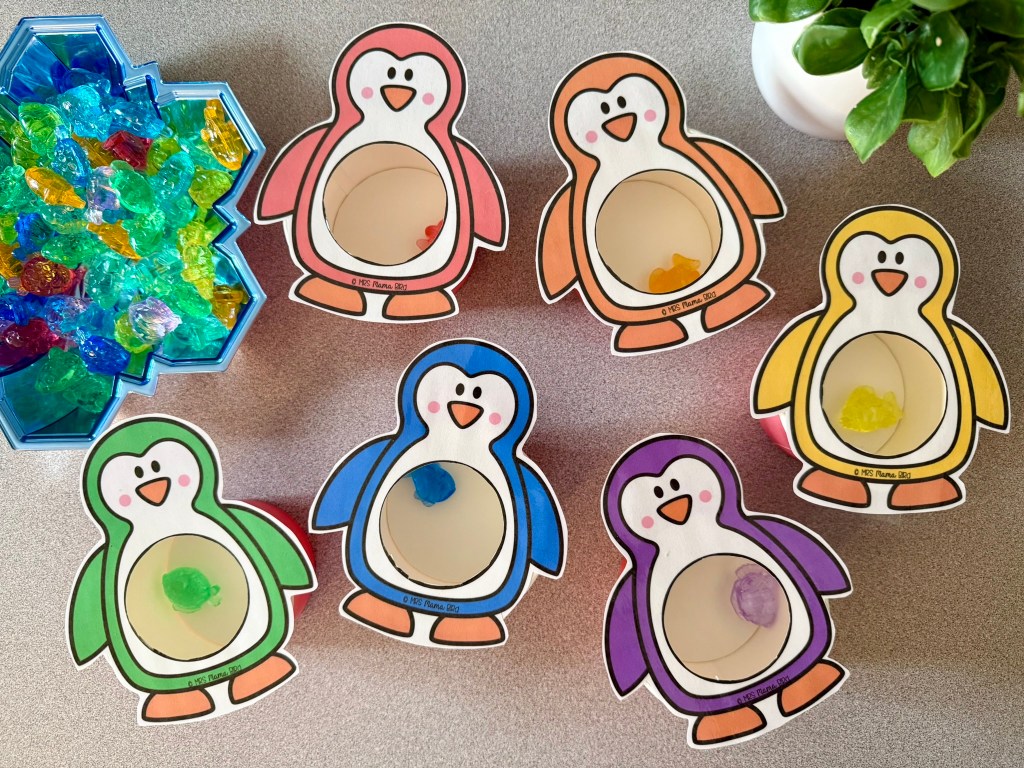
We spent a lot of time with Penguins Love Colors, by Sarah Aspinall. This is a fun story about 6 little penguins who all have a different favorite color, even though their home is surrounded by almost all white. They paint their mom a colorful picture in the snow, reviewing all the colors as they go, then get a much needed bath at the end.

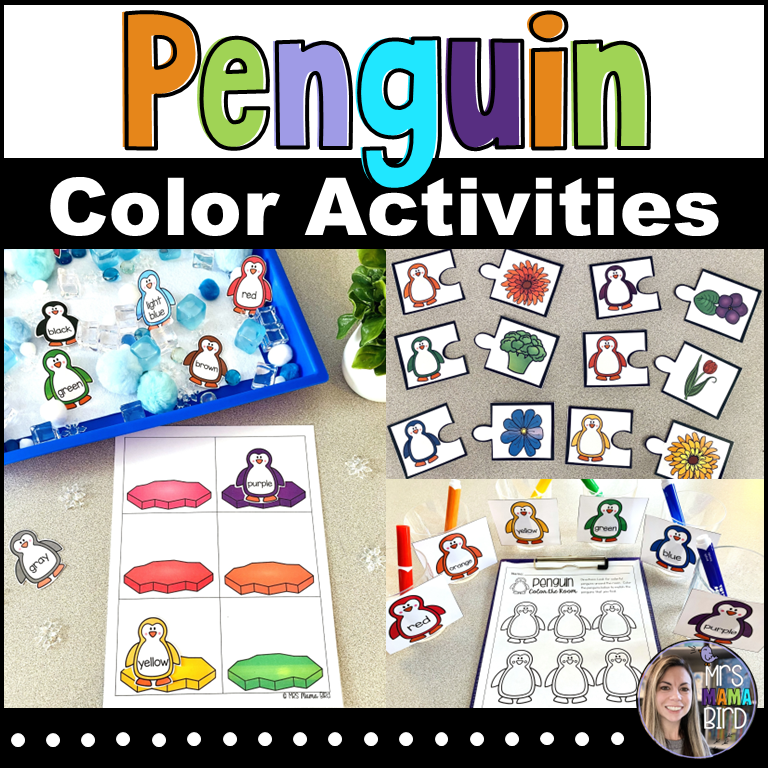
I created a few colorful penguin activities to do after reading Penguin Loves Colors. The first activity Lillian chose was a colorful penguin and iceberg matching game. I set up the colorful penguins in an easy sensory tray and laid out the iceberg mats so that everybody could reach. We took turns choosing a penguin, naming the color and placing it on the correct iceberg. Lillian and her friend did a great job deciphering between pink and red, light blue and blue, and black and gray.

The next activity I created is a simple two piece puzzle set to match each color in the story, Penguins Love Colors. Each character was given a named based on their favorite color: Tulip, Tiger Lily, Dandelion, Violet, Bluebell, and Broccoli. With these puzzles, preschoolers can match the penguins to their corresponding picture by matching the colors.

Who loves Write the Room activities?? All of my kids love the challenge of finding all the elements of the story around the room and recording their findings on their recording sheets. I created a picture and word card for each colorful penguin in the story and designed three different recording sheets to choose from based on your learners’ abilities. The first recording sheet is for your pre-writers and requires only coloring to record their penguin findings around the room.

The other recording sheets are for writing (and coloring if you choose!). There are two versions of the Write the Room recording sheets. One version has a large space for preschoolers to write each word. This is better for those kiddos who are just beginning to write and need lots of room for their letters. The second version of the Write the Room recording sheet has smaller boxes designated for the words. You can give this sheet to your more confident writers to help them hone in on their fine motor skills.

Lillian is just starting to learn how to write letters, so I decided to use the Color the Room recording sheet with her. I taped the colored penguin cards to 6 plastic cups and provided the corresponding marker in each cup ahead of time. I hid the penguins around the house and had Lillian look for them. Each time she found another penguin, she could use the marker to color a penguin on the recording sheet. She was so engaged in the activity!

Up next, I created a Colorful Penguin Spinner Game. Preschoolers can use the spinner at the top of the page with a pencil and paper clip. This game can be used individually or with a partner. Preschoolers can take turns spinning the spinner and coloring in the corresponding colored penguin. The first color to get to the top of the graph is the winner! I like to laminate these or put them in page protectors so that they can be used over and over.

Another fun way to practice colors is with dot markers! I designed these colorful penguin cards with my pocket dice in mind. However, you can simply flip them over to make a draw pile or put them in a paper bag for students to pick from. As students roll (or choose) a new color, they dot a corresponding dot onto their Penguin Dot Art sheet. You can even add a standard dice to turn it into a counting game. For example, if your preschooler roles blue and 5, they add 5 blue dots to their picture.

Lillian is loves numbers and counting games, so we played with the color dice and number dice. We each took turns rolling the dice and dotting the penguin the right number of colored dots. She was so proud of her colorful penguin at the end!

Of course, the best way to follow up any story is with art. After we were finished reading and practicing colors, we created a colorful penguin ice painting.

This art project took a little prep ahead of time, but it was worth it. I simply filled an ice cub tray about 3/4 full of water. Then I gave each ice cube compartment a squirt of washable tempura paint. I added a popsicle stick to each ice cube and place the tray in the freezer over night. You will need to take them out of the freezer a few minutes before you start painting to let them melt slightly. The melted water becomes your medium so the paint will show up better when the cubes are wet. The final project ended up resembling pastels. So fun!

After we were done painting, we used some pre cut out shapes to build penguins on our masterpieces. I designed a template to use to make these shapes. I traced each shape onto the color paper that I wanted and cut them out ahead of time. You could also have your preschoolers color and cut each shape themselves, depending on ability. You can download this template for FREE at the bottom of this post.

Last but not least, to wrap up our penguin day fun, we played penguin ice rescue. Ahead of time, I froze small plastic penguin toys in yogurt containers filled with water. When it was time, I popped them out on a tray and gave Lillian and her friend a cup of warm water and a plastic dropper. I allotted 15 – 20 minutes for this activity and they played with it for almost an hour!

The girls took their time excavating the penguins from each block of ice, talking about the parts of the penguin as they emerged from the ice. Then they played together with the penguins in their little ice world, setting up a penguin hospital and giving them all a check up. I love how their imagination took this activity a step further and made it so engaging!

I hope you found some inspiration for your preschoolers from this post. If you would like access the resources mentioned above, you can find them by clicking the link below.

You can download the FREE Penguin Loves Colors Craft Template by clicking the DOWNLOAD button below.

Thank you for stopping by! You may also be interested in these posts:

Book Companion, Color Fun, Spring

Rainbow Activities for Preschool

March is the perfect time for a rainbow theme in preschool, whether it is to compliment St. Patrick’s Day or go alongside your weather theme. Not only will a rainbow theme enhance color recognition and introduce different concepts of science and weather, rainbow themes are so fun and pretty!!

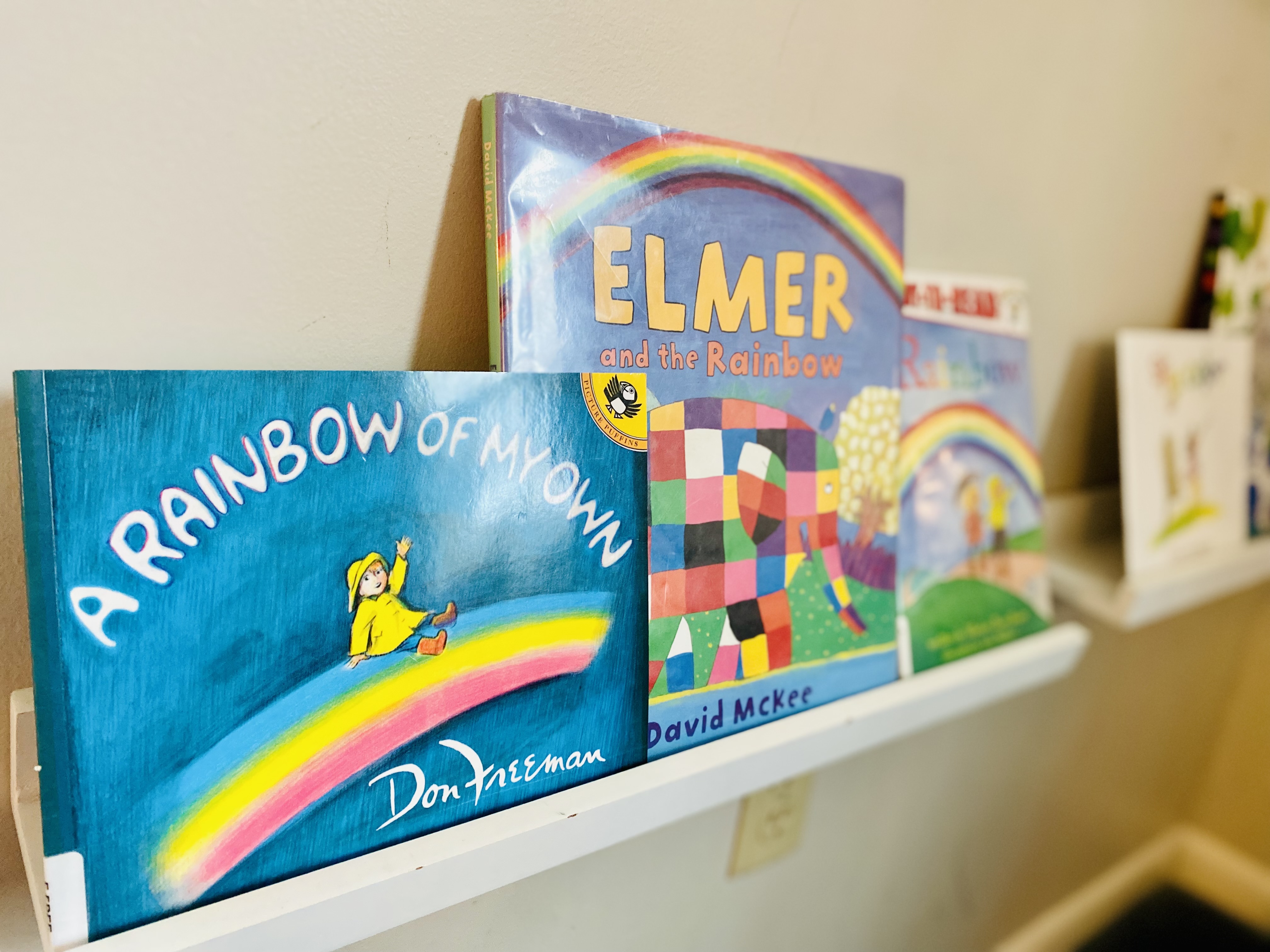
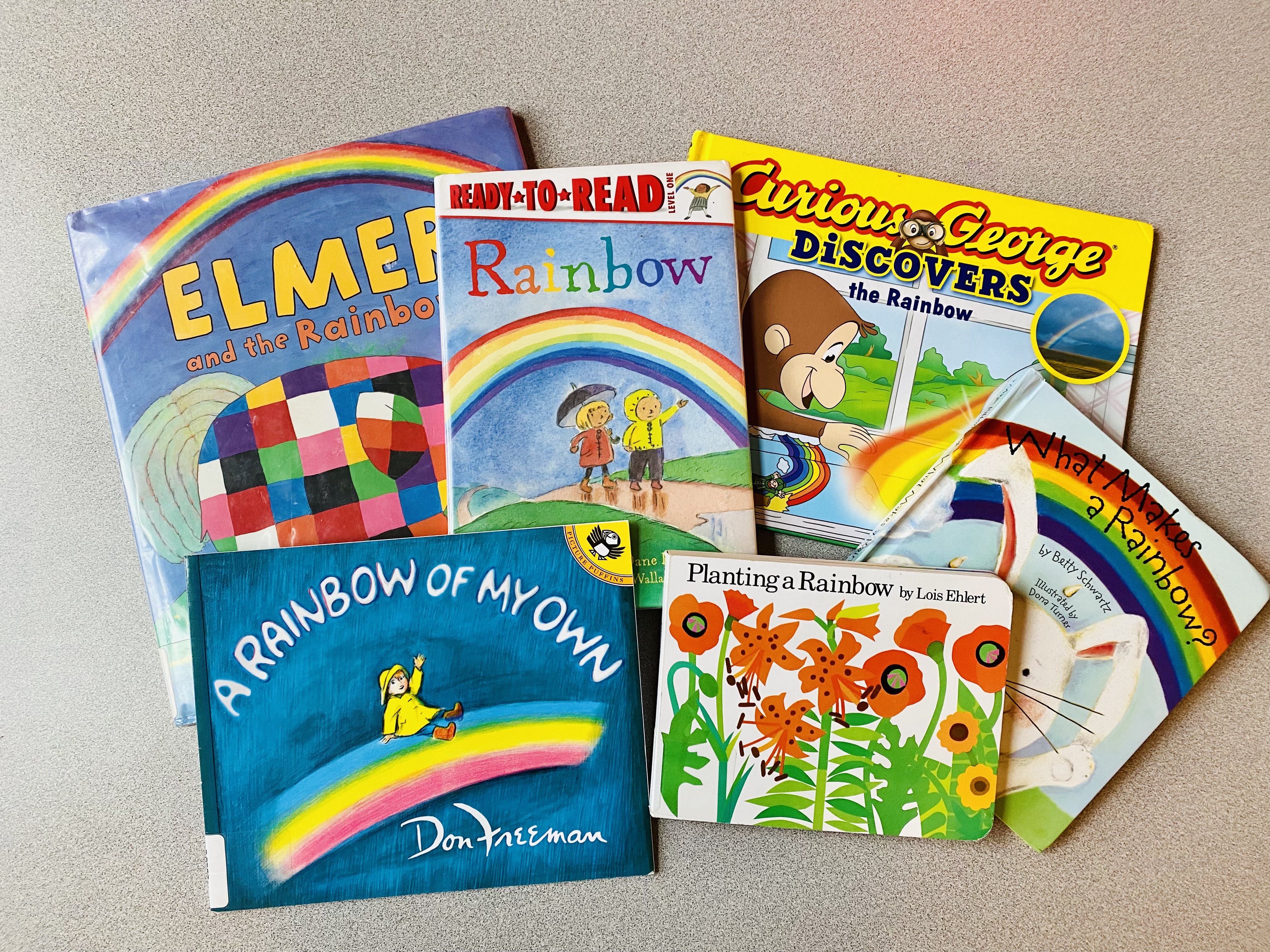
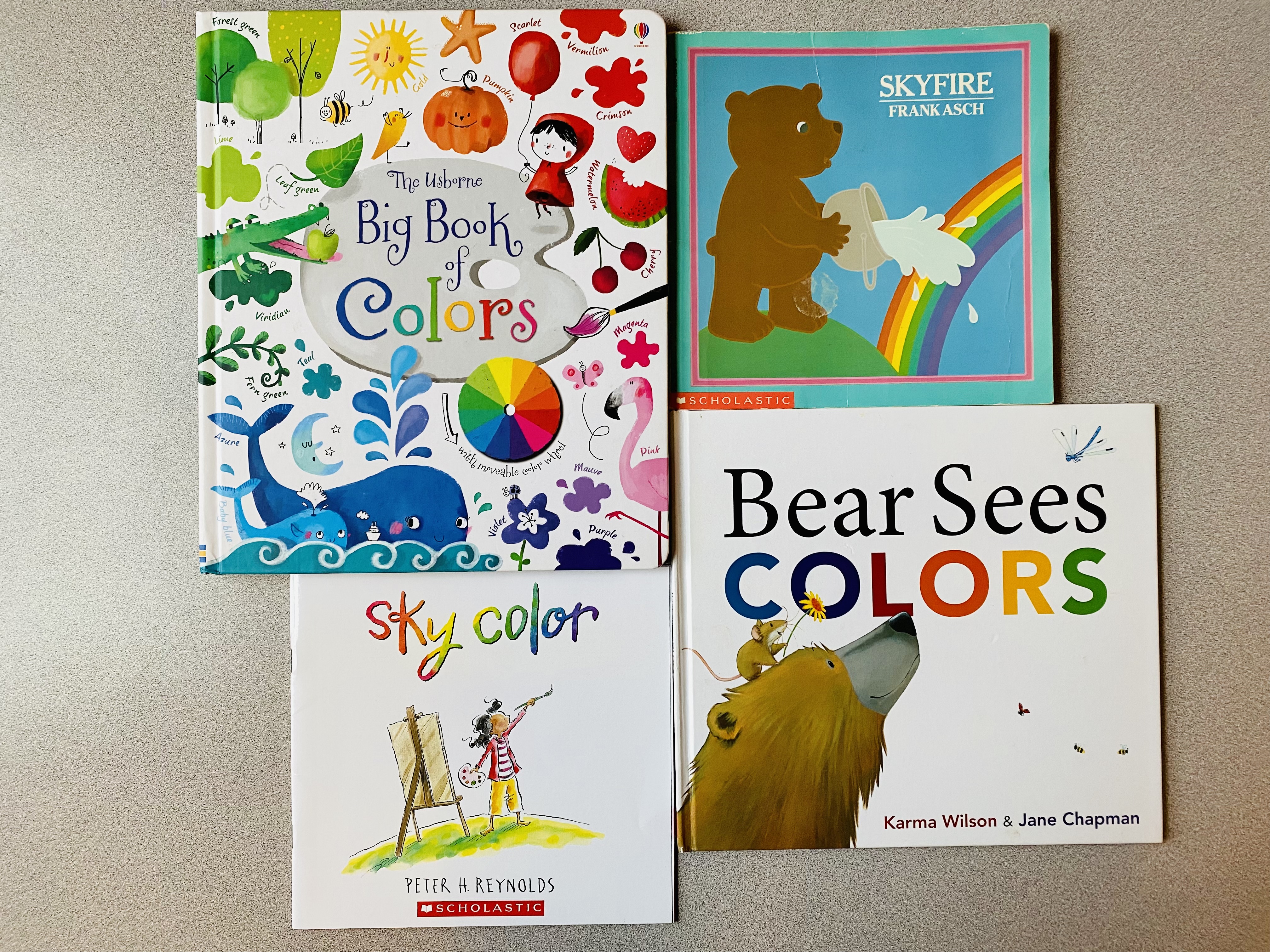
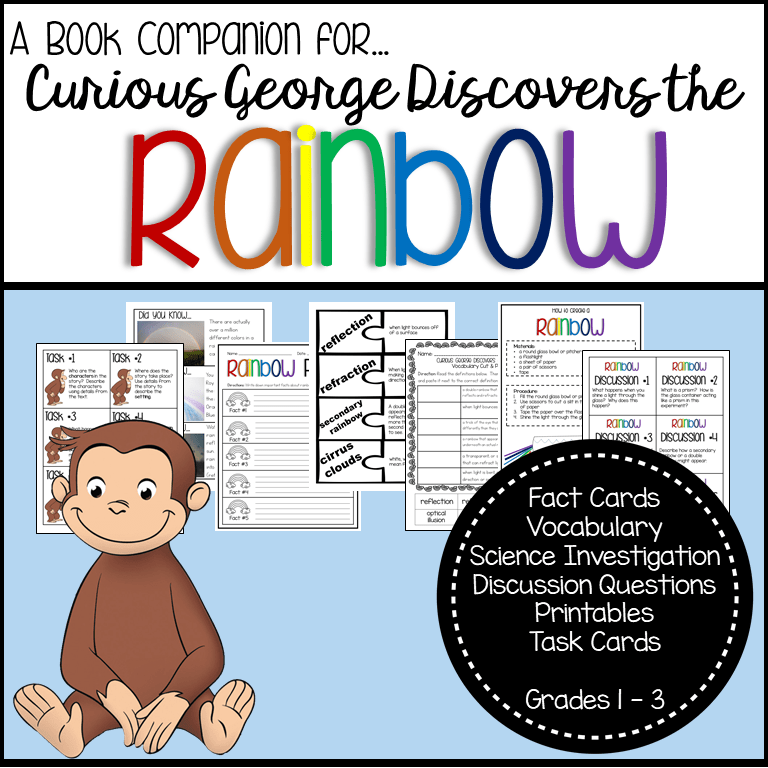
Whenever I introduce a new theme, I like to make sure there are LOTS of theme related books available in our playroom for my preschoolers to access. I use our local library to gather some ahead of time and I also have a seasonal book rotation for our home library. For this week, I gathered books specifically about rainbows as well as books that focus on color. Today we read A Rainbow of My Own, Elmer and the Rainbow as well as Planting a Rainbow.

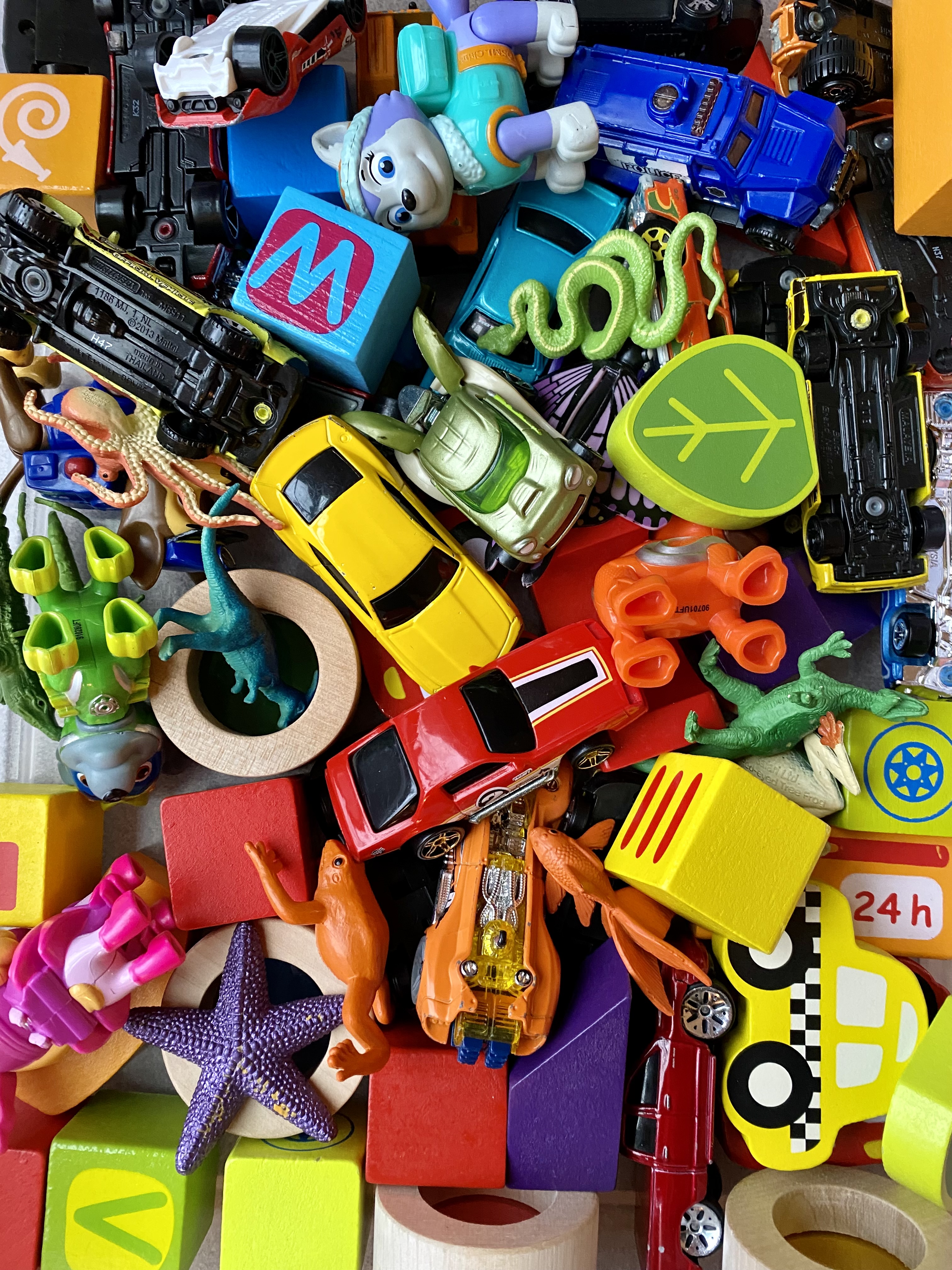
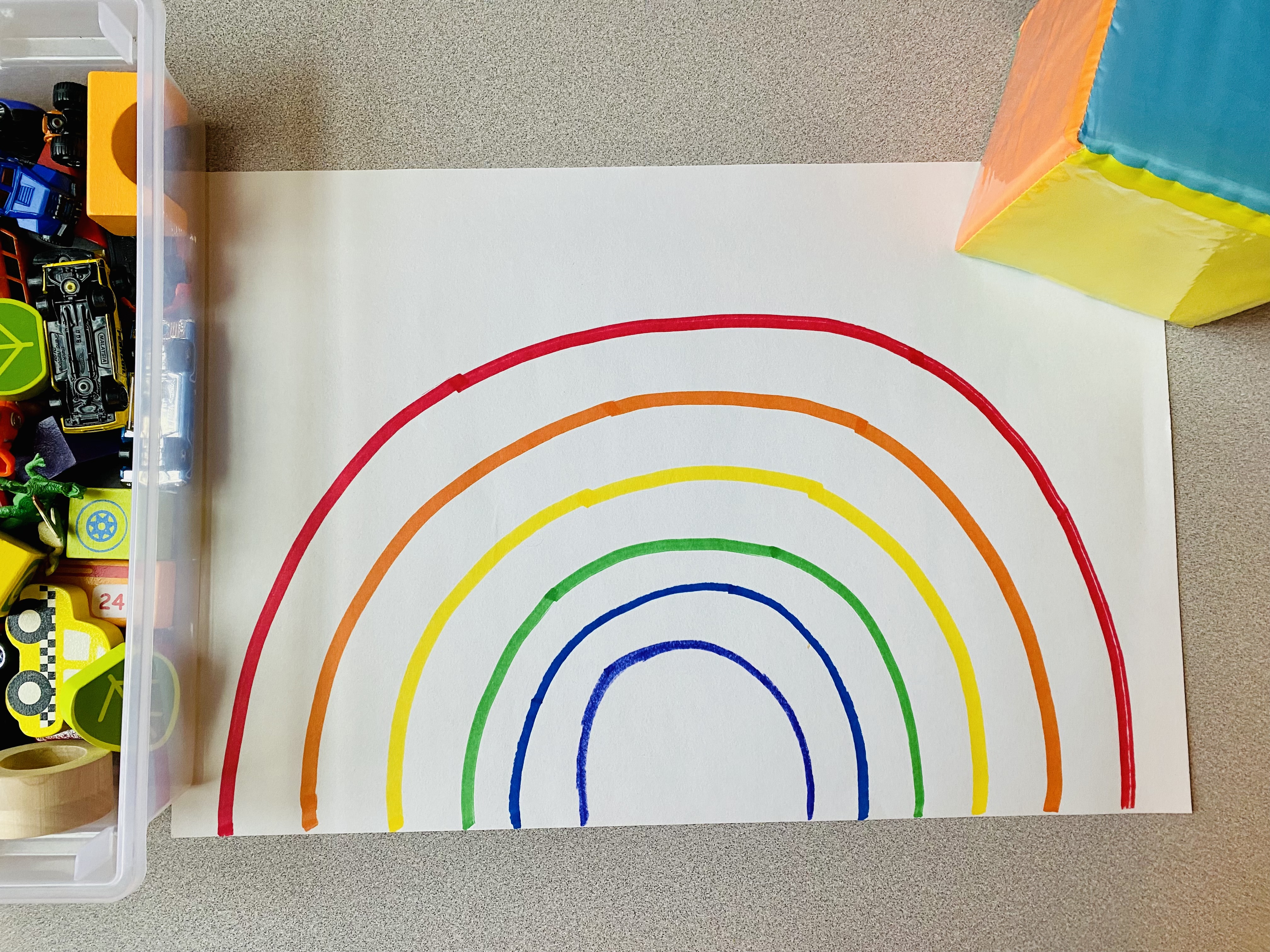
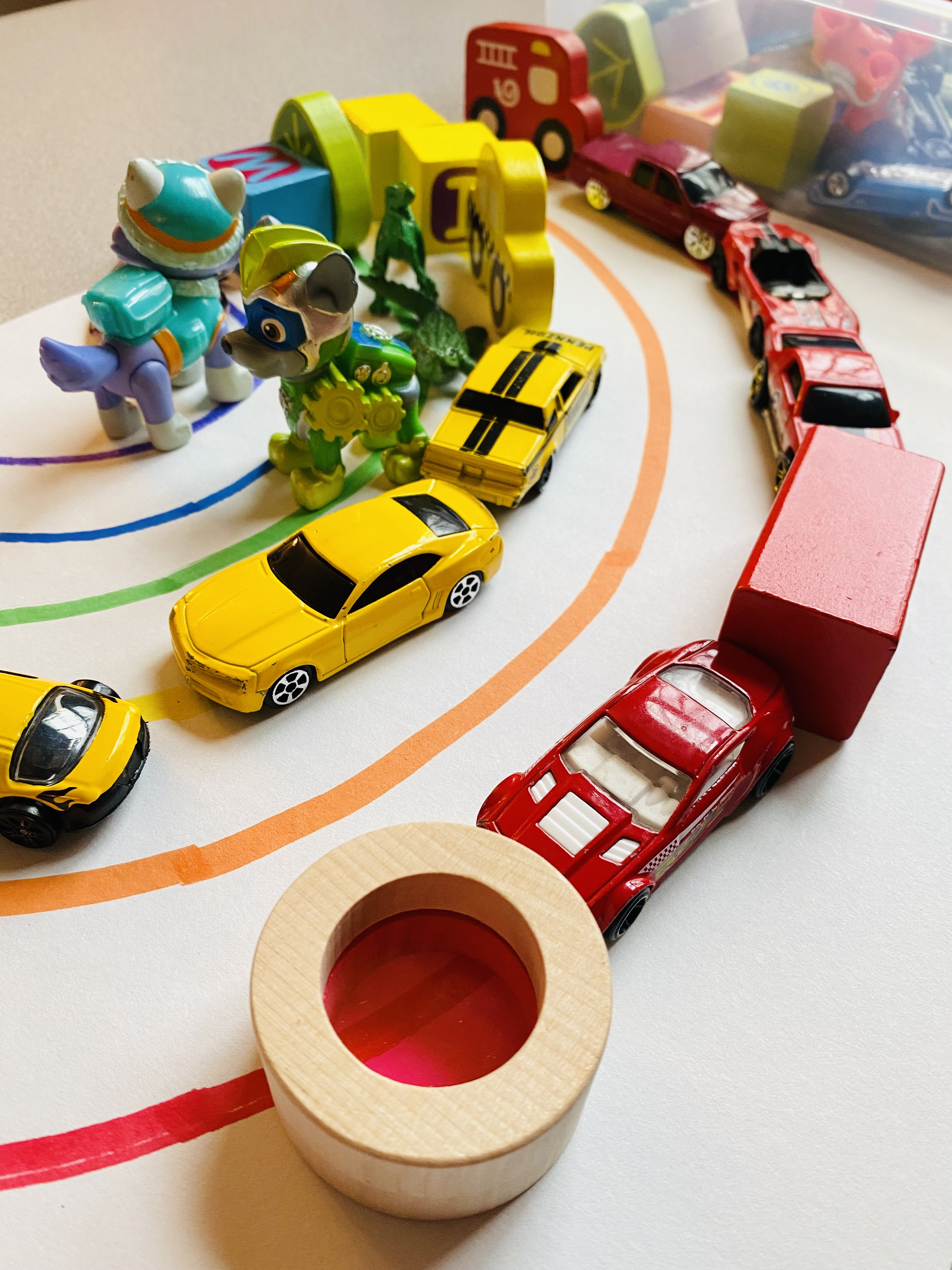
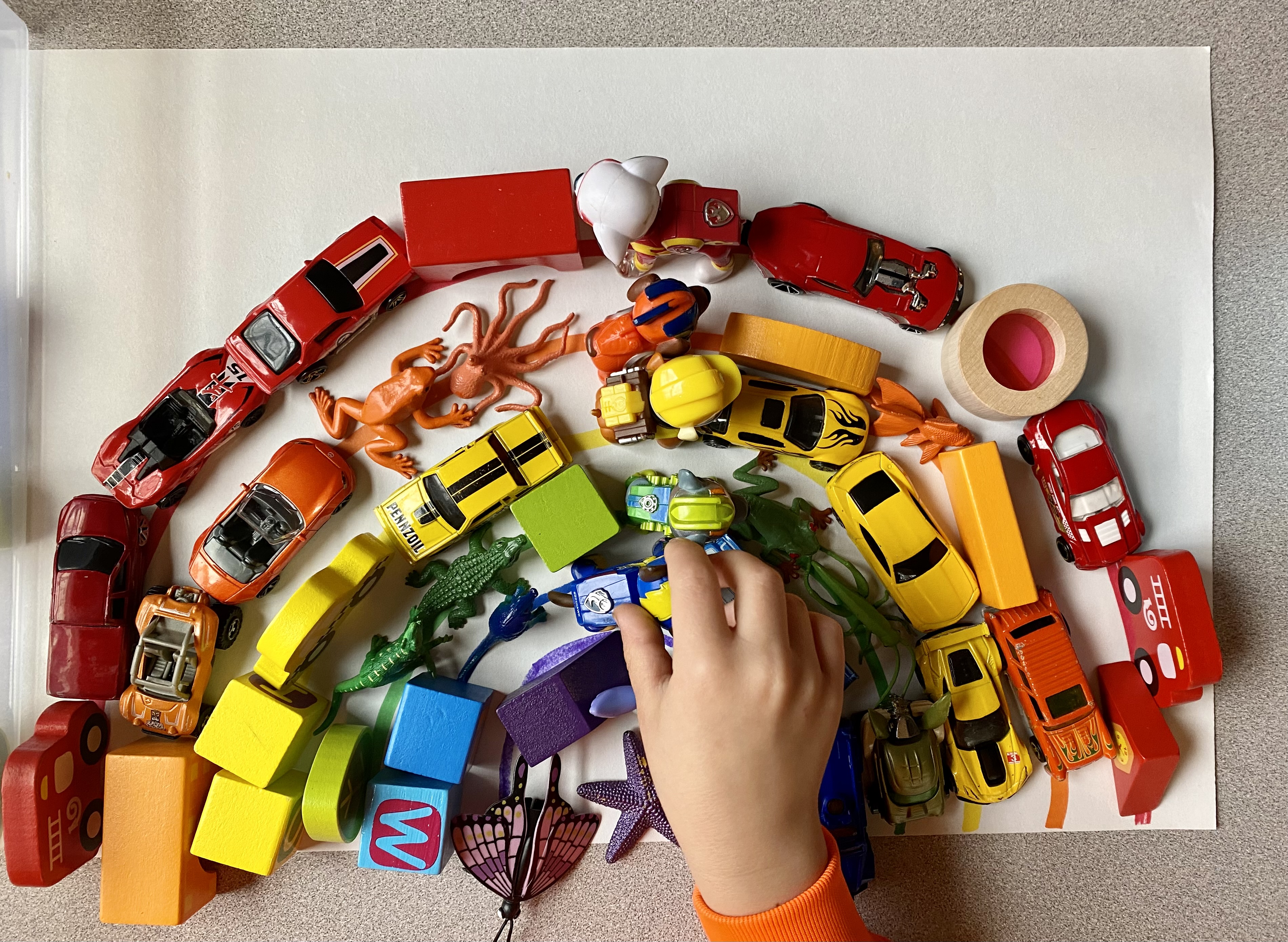
Our first rainbow activity was so easy to prep because it involved items that I already had in the house. Ahead of time, I gathered up small toys of every color. You can choose to have your preschoolers help you with this process too by going on a color hunt. Then I prepared the outline of a rainbow on a large sheet of white paper.

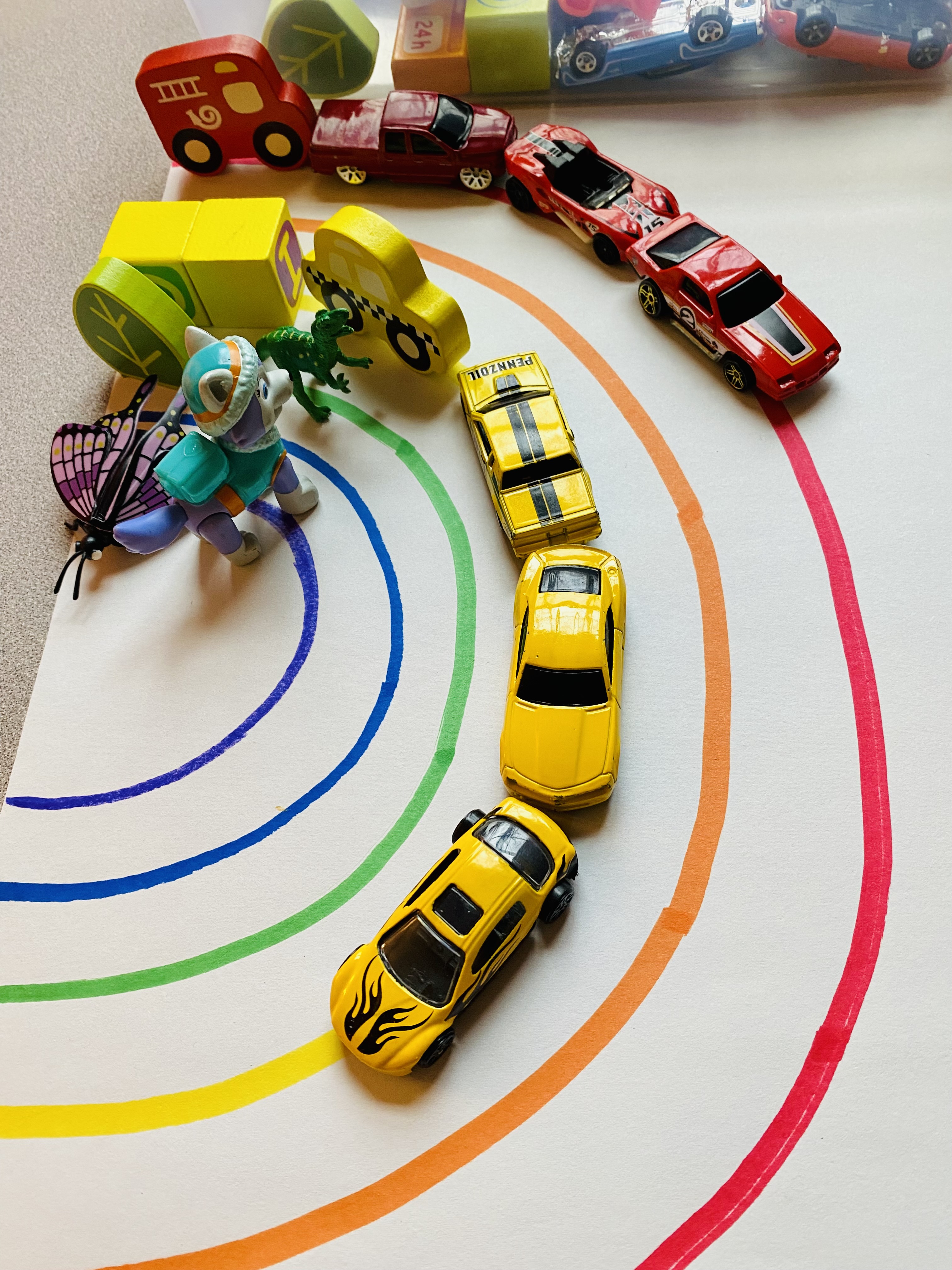
Emmett and I took turns rolling a colored dice and placing a corresponding item on the rainbow. Emmett enjoyed arranging his toys according to their color. Once we had one color “win,” we decided to take turns choosing our own color toy to add.

Emmett was impressed with how it all came together. A rainbow made out of toys!

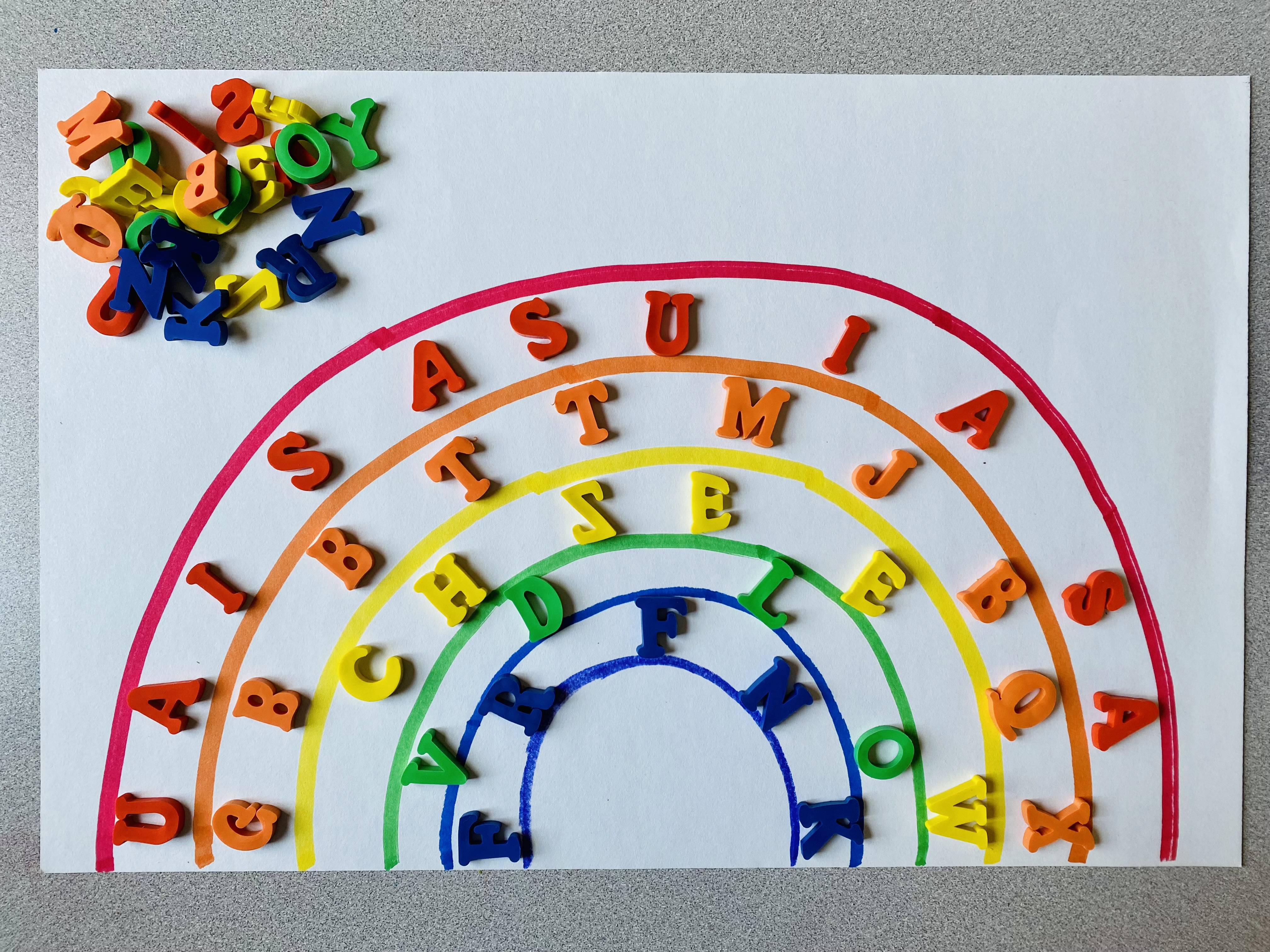
If you have colored letters or numbers, you can reuse this rainbow outline and add a literacy or numeracy twist. These colorful alphabet erasers are from the Target Dollar spot from a while back, but I was able to find them available online. My two year old, Lillian, loves naming letters so this activity was perfect for her.

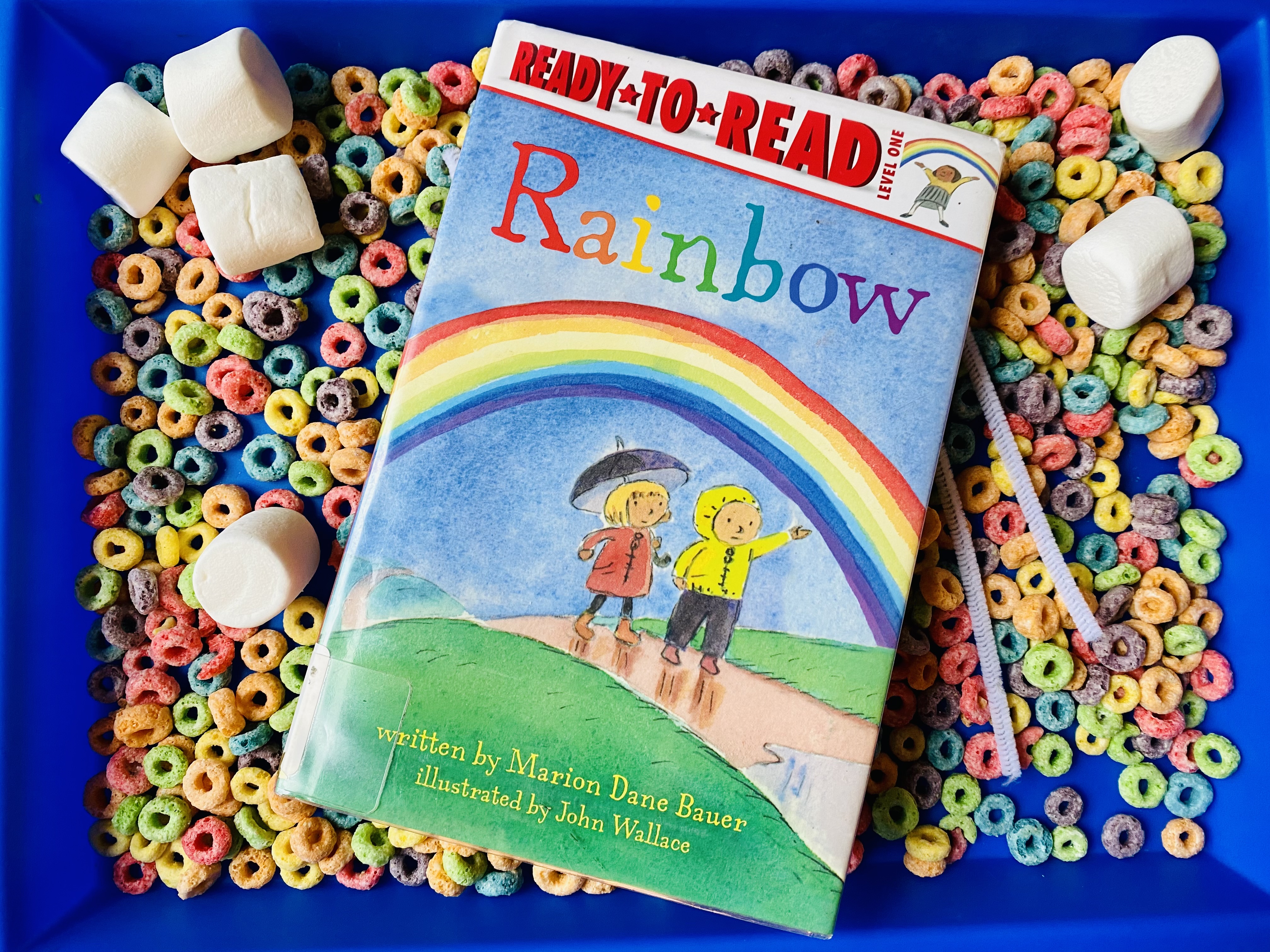
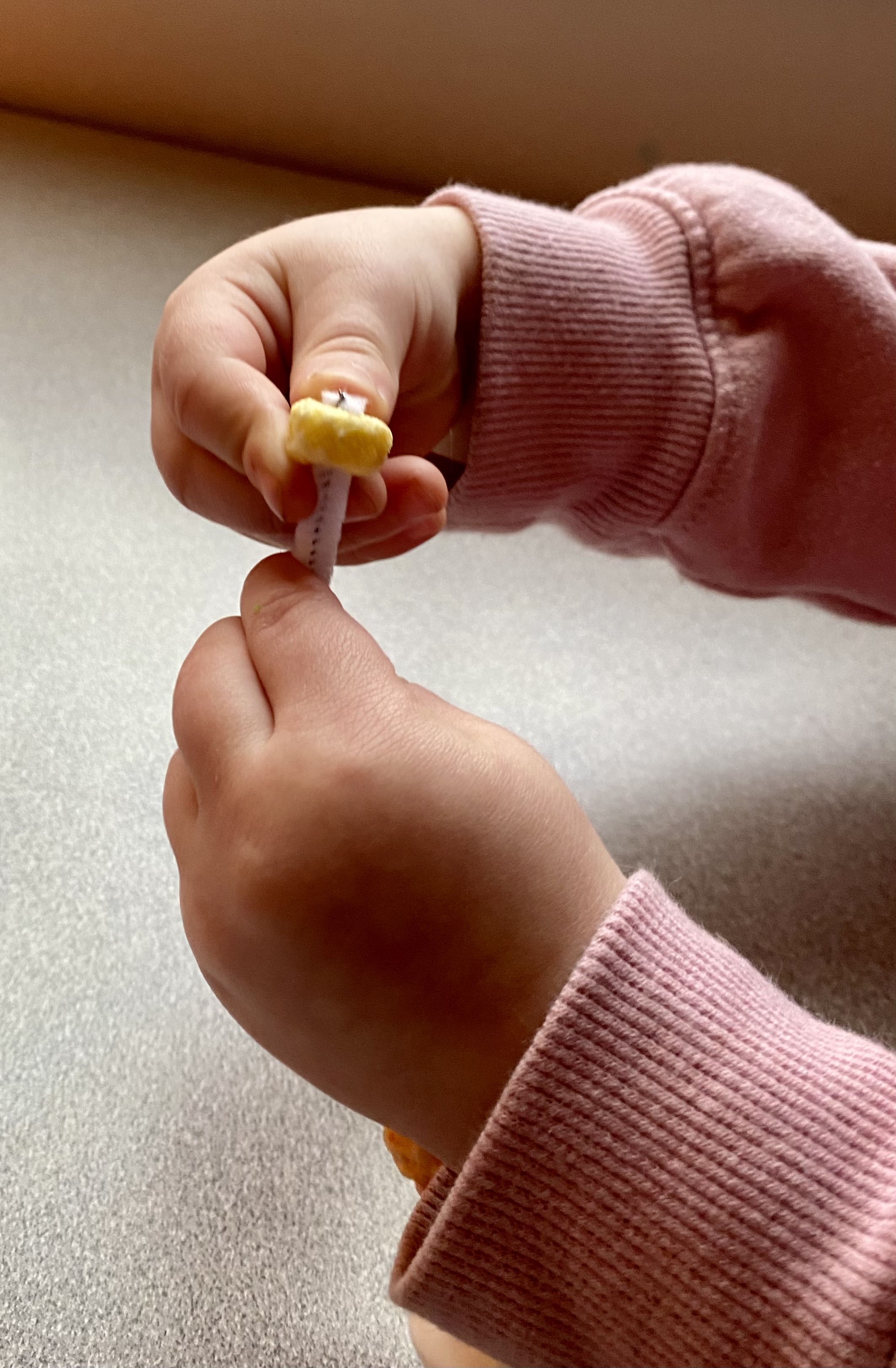
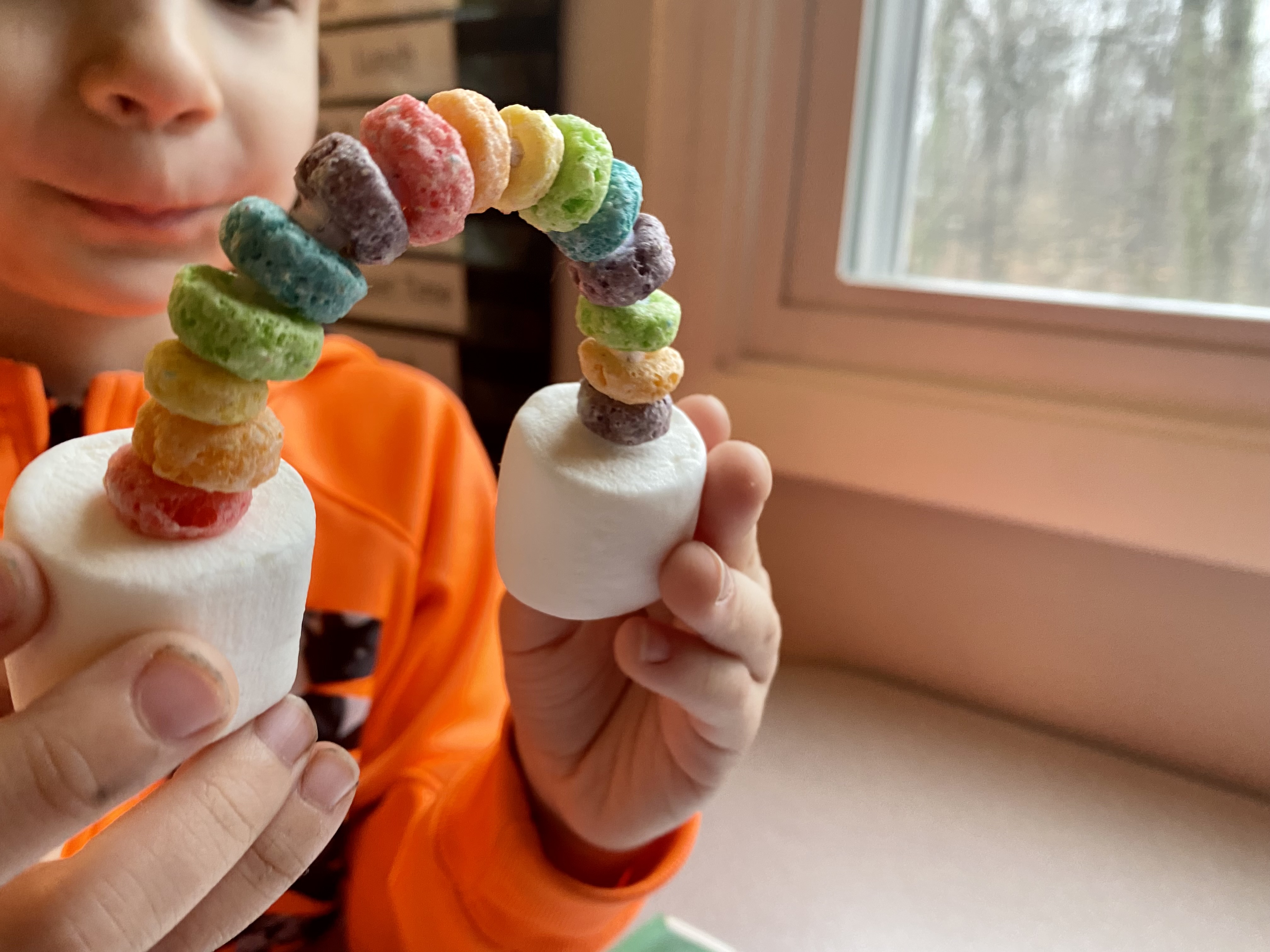
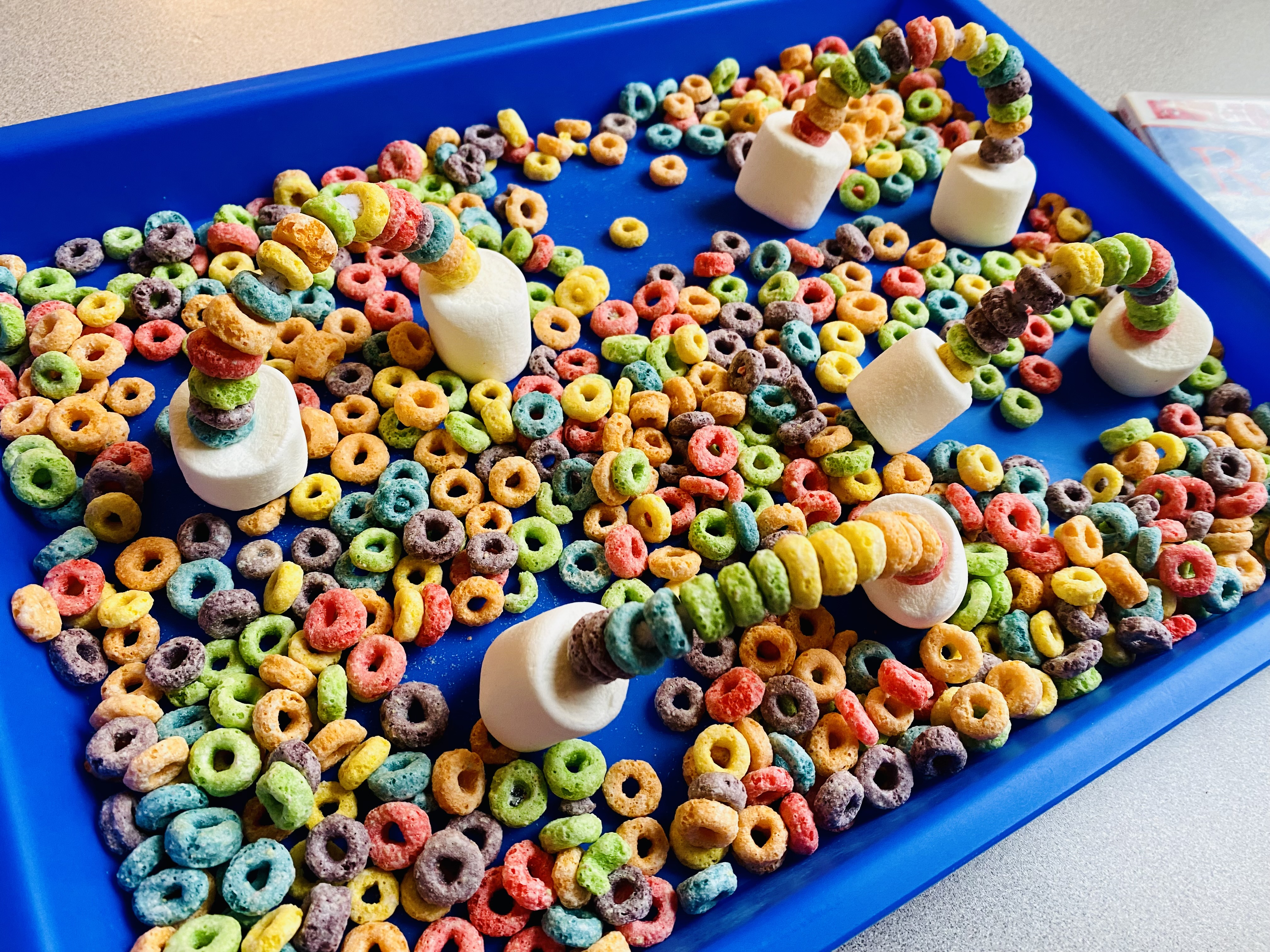
Our next rainbow activity was a fun SNACK-tivity. I gathered Fruit Loops, jumbo marshmallows, and pipe cleaners and placed them all in a deep tray.

I encouraged the kiddos to string the Fruit Loops along the pipe cleaners to make a rainbow. Then we added jumbo marshmallows to the ends for the clouds. My five year old, Emmett, was really into making his rainbows look authentic. When he was finished, he proudly displayed his creations in his bedroom. Lillian, on the other hand, needed a little more direction and her activity became a snack a lot sooner!

In the end, we ended up with four delicious rainbows. This was a fun way to encourage fine motor development, hand-eye coordination, color recognition and patterning.

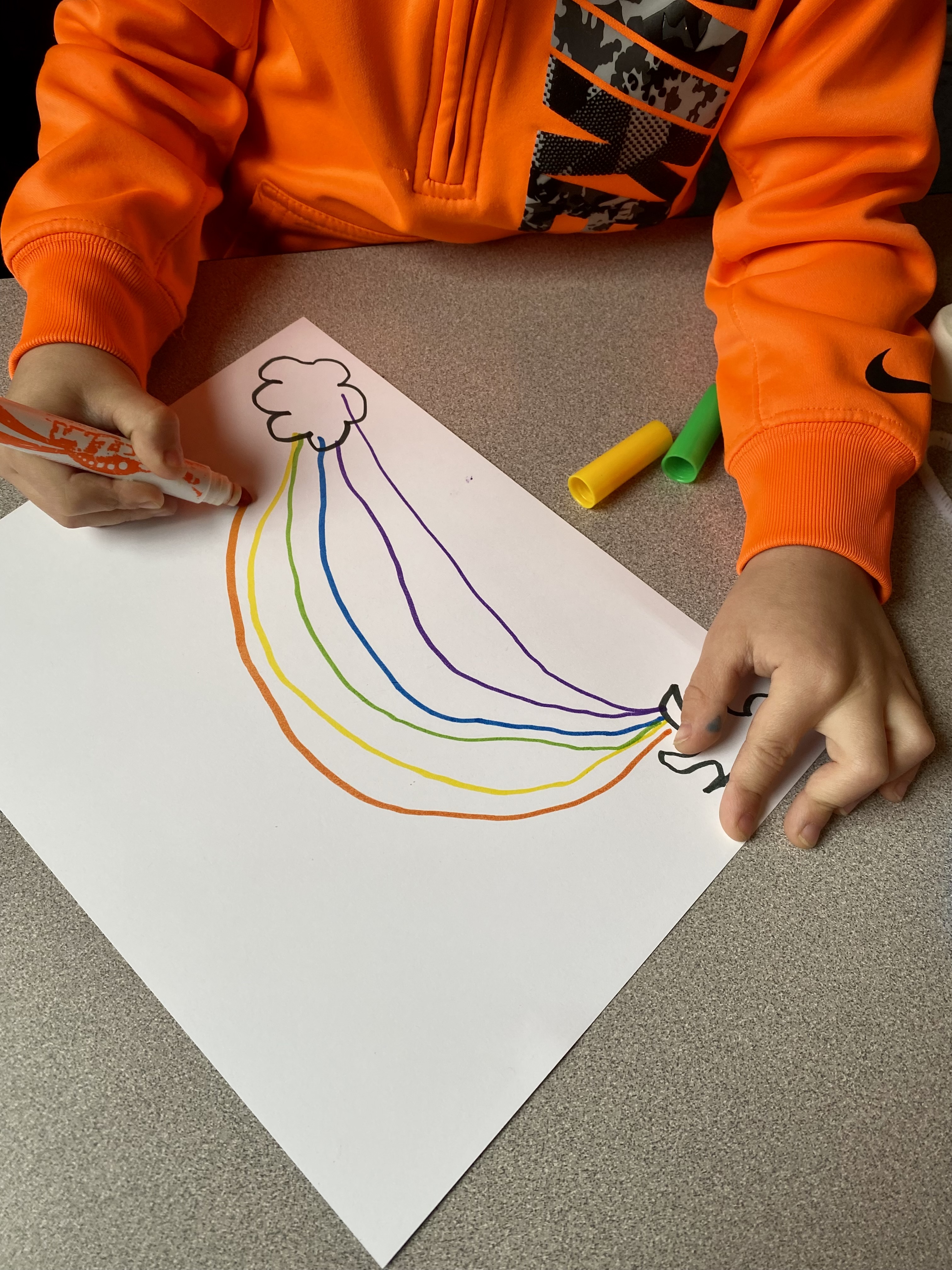
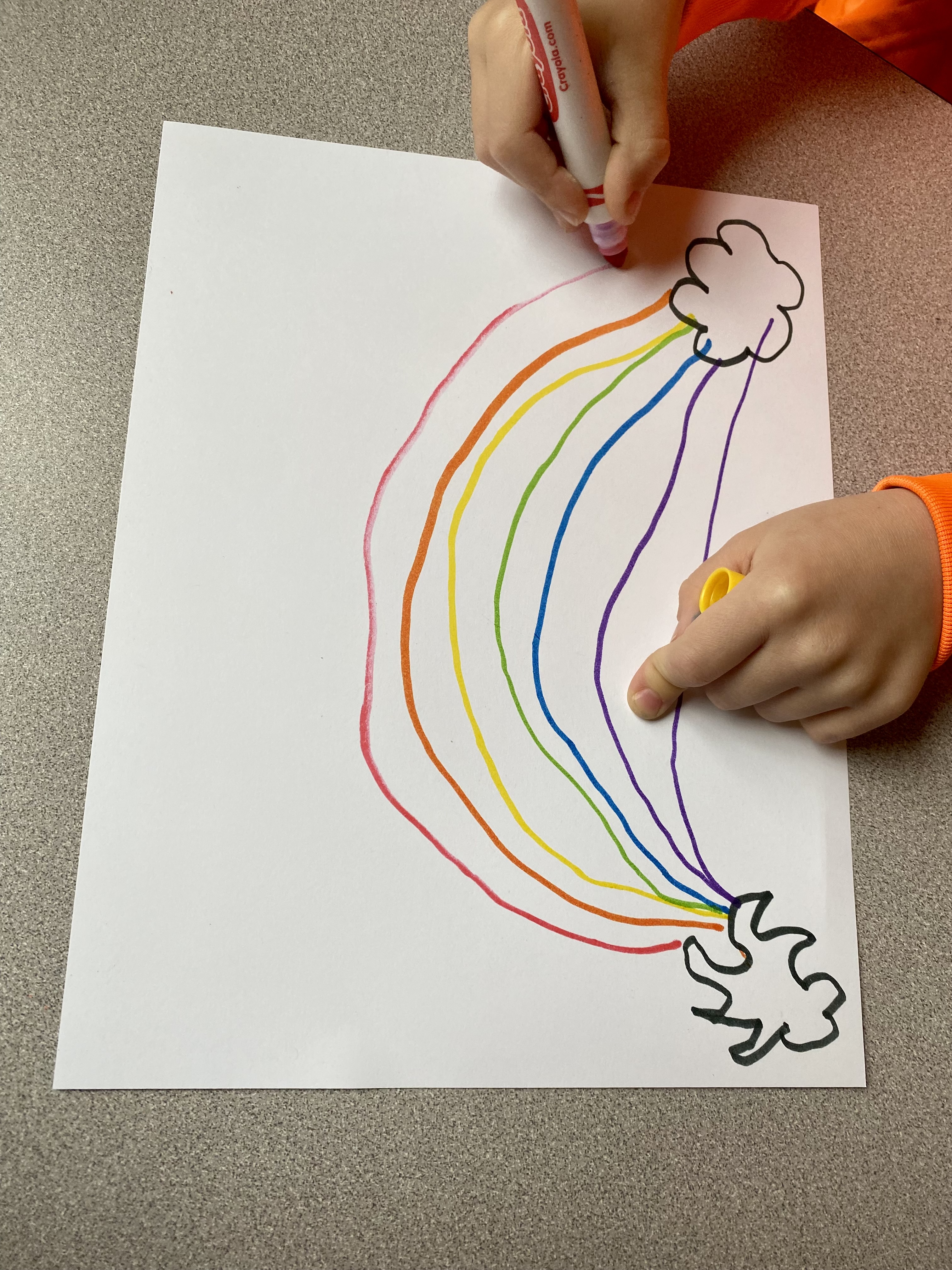
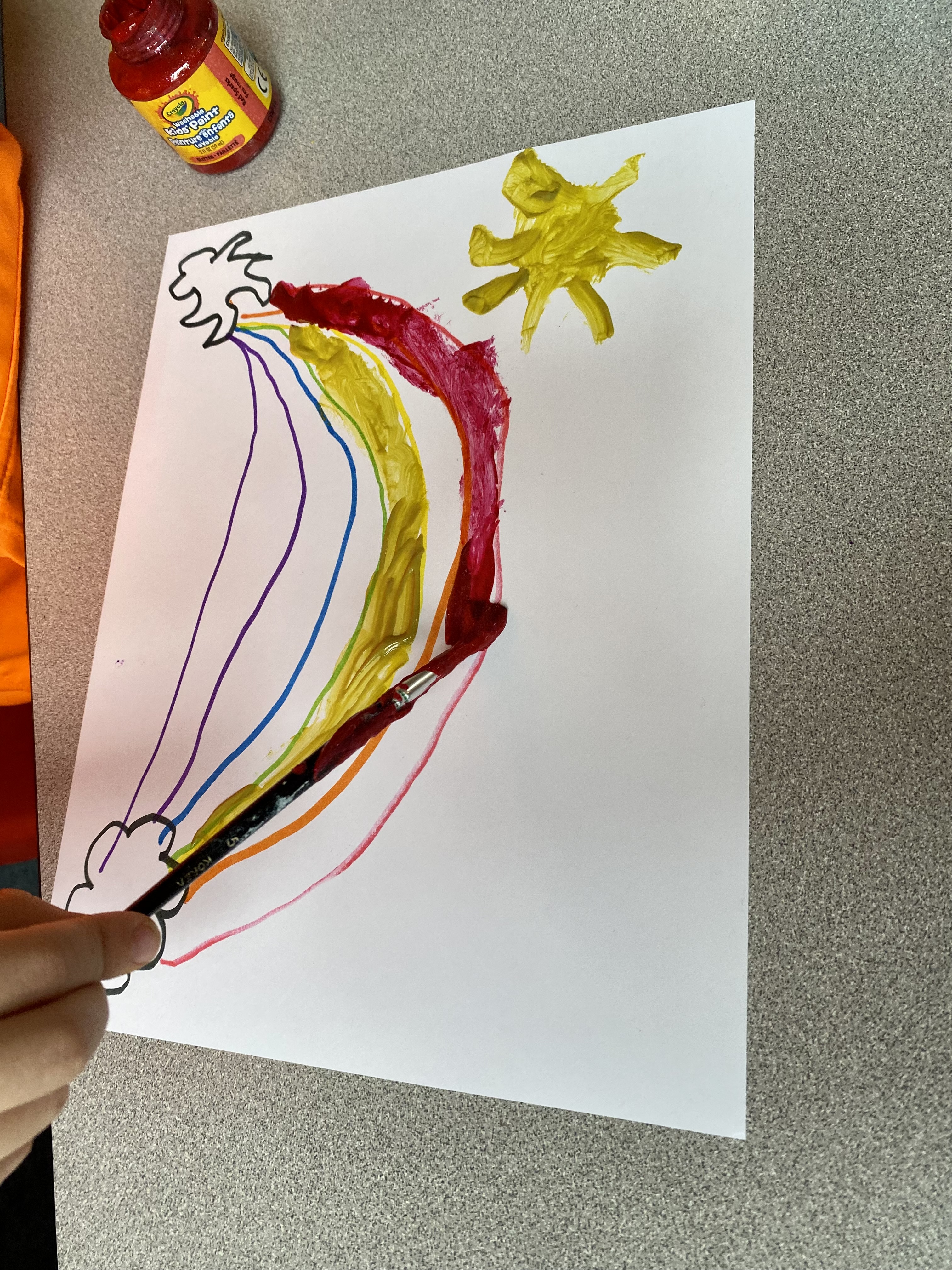
Who doesn’t love directed drawings?? Once we were finished with our snack-tivity, I guided Emmett through a rainbow directed drawing. I taught him how to make clouds with “humps” and then we went through the colors of the rainbow together to make the rainbow bands. While I think this drawing could be complete as an outline, Emmett wanted to color it in. My original plan was to paint the rainbow bands with our fingerprints, but Emmett was not crazy about that idea.

Of course, I let him decide how he wanted to color in his rainbow. He chose to fill in the colors with a good old fashioned paintbrush. He had so much fun, carefully managing his brush strokes. He decided to add a sun, a storm cloud and rain to go along with his rainbow as well. We will be sure to hang this one up!

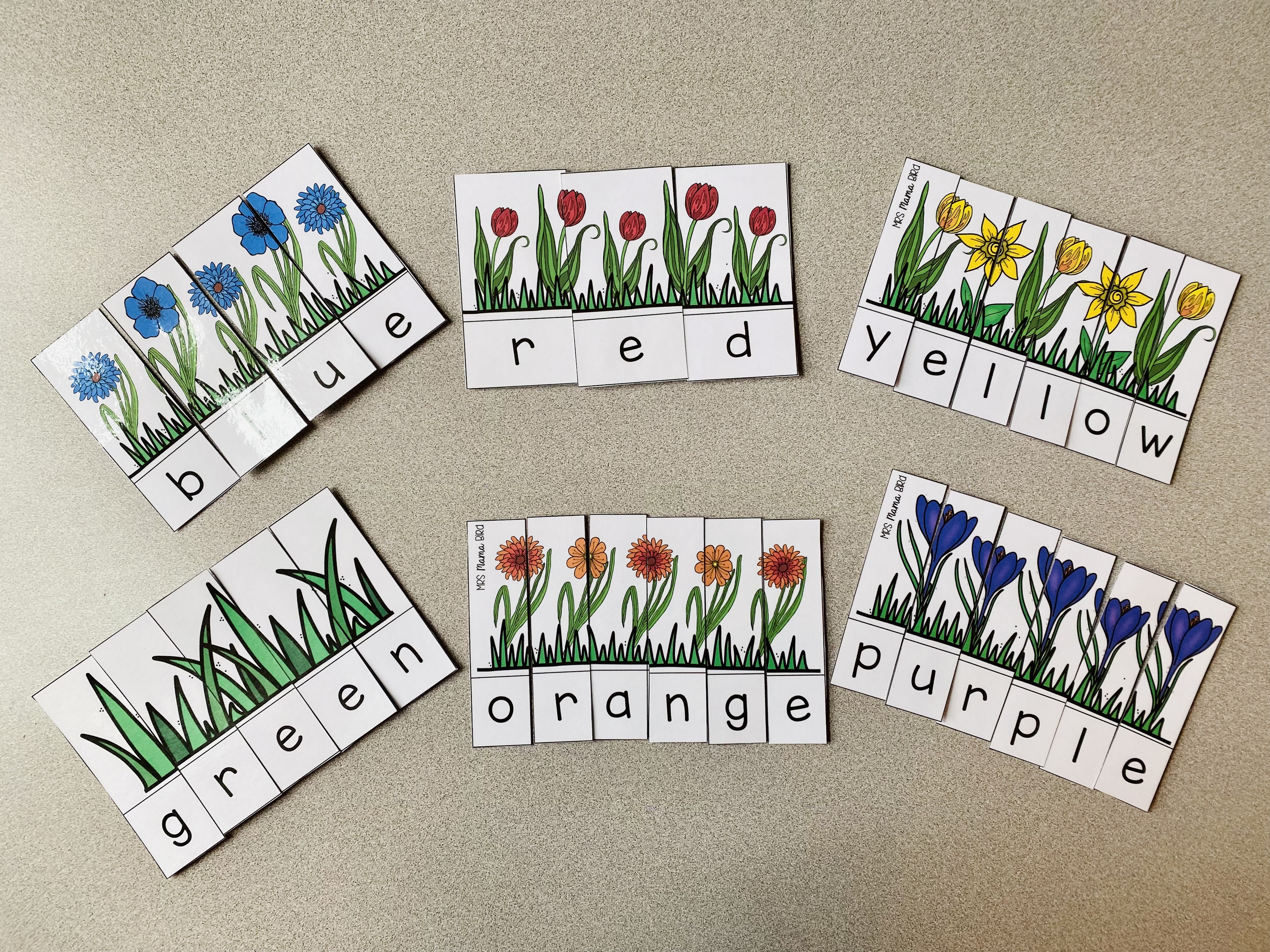
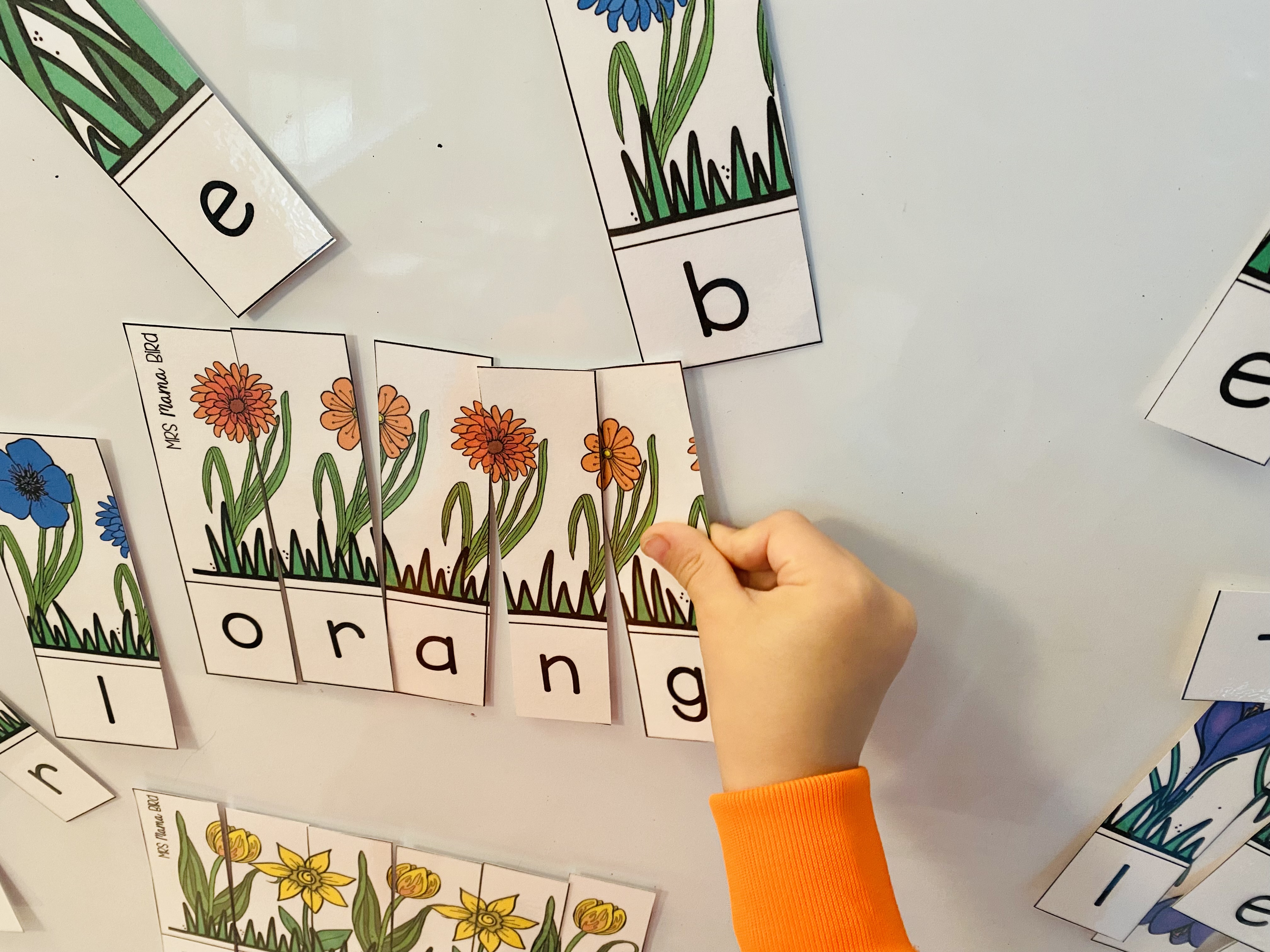
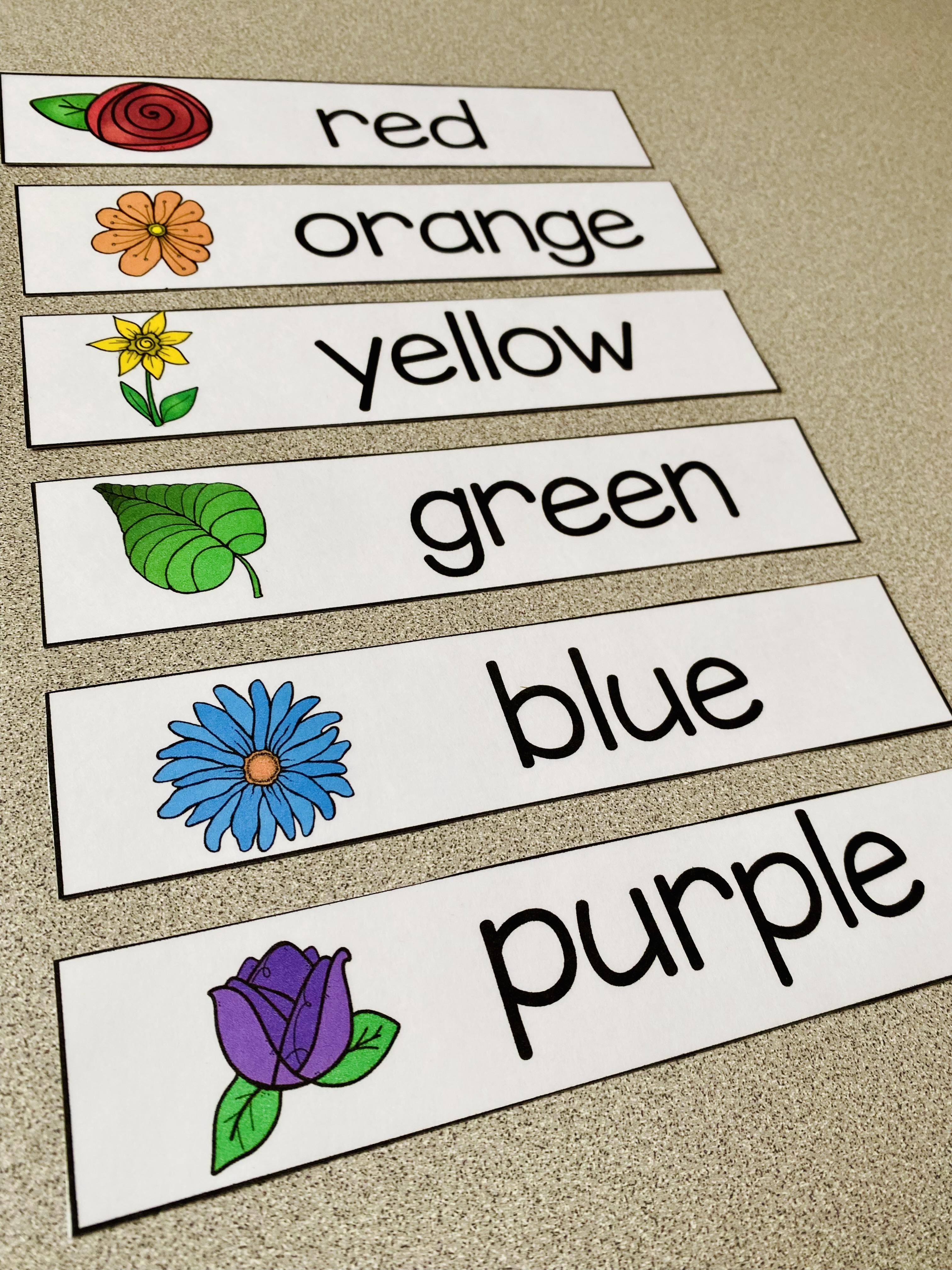
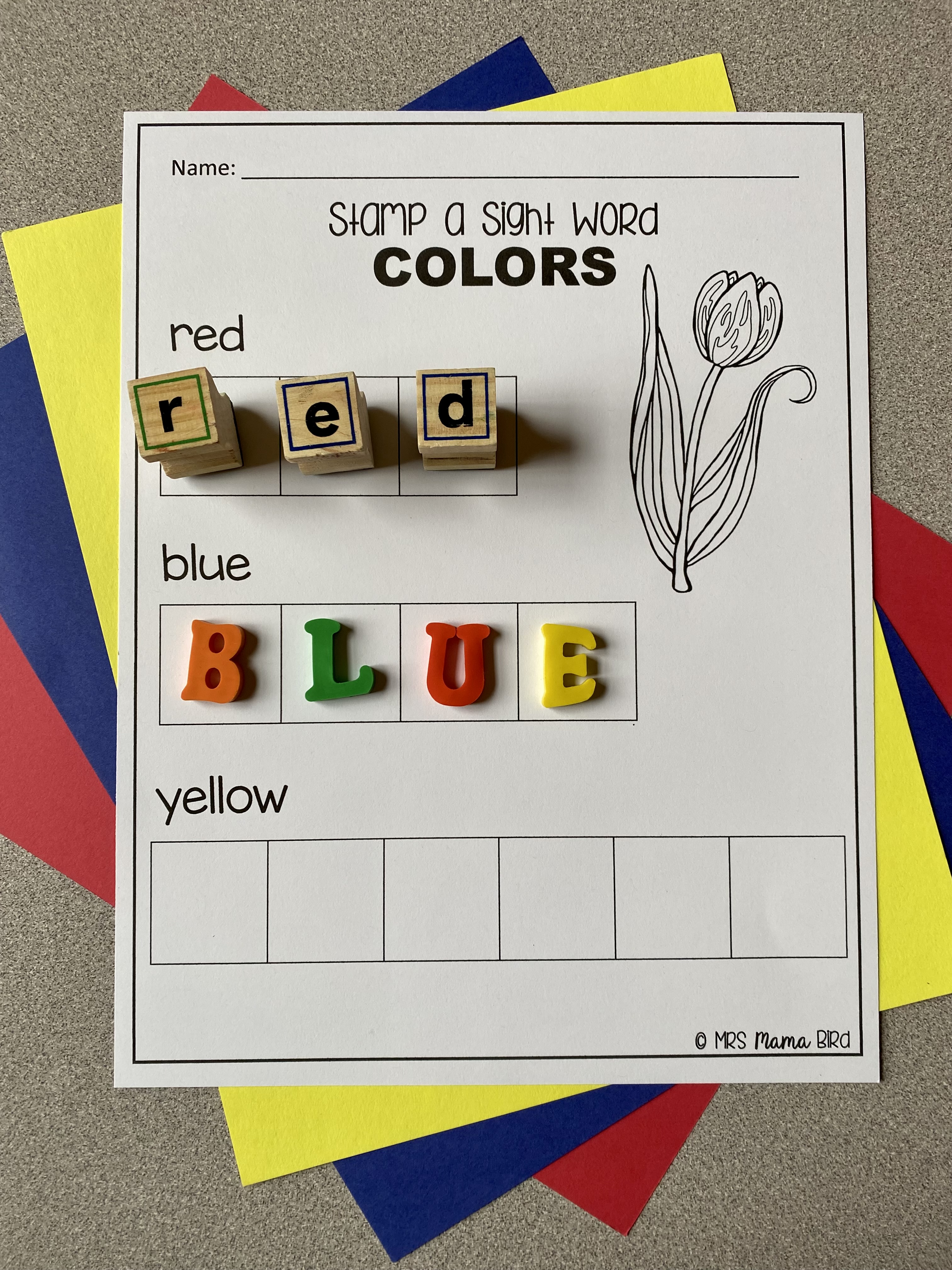
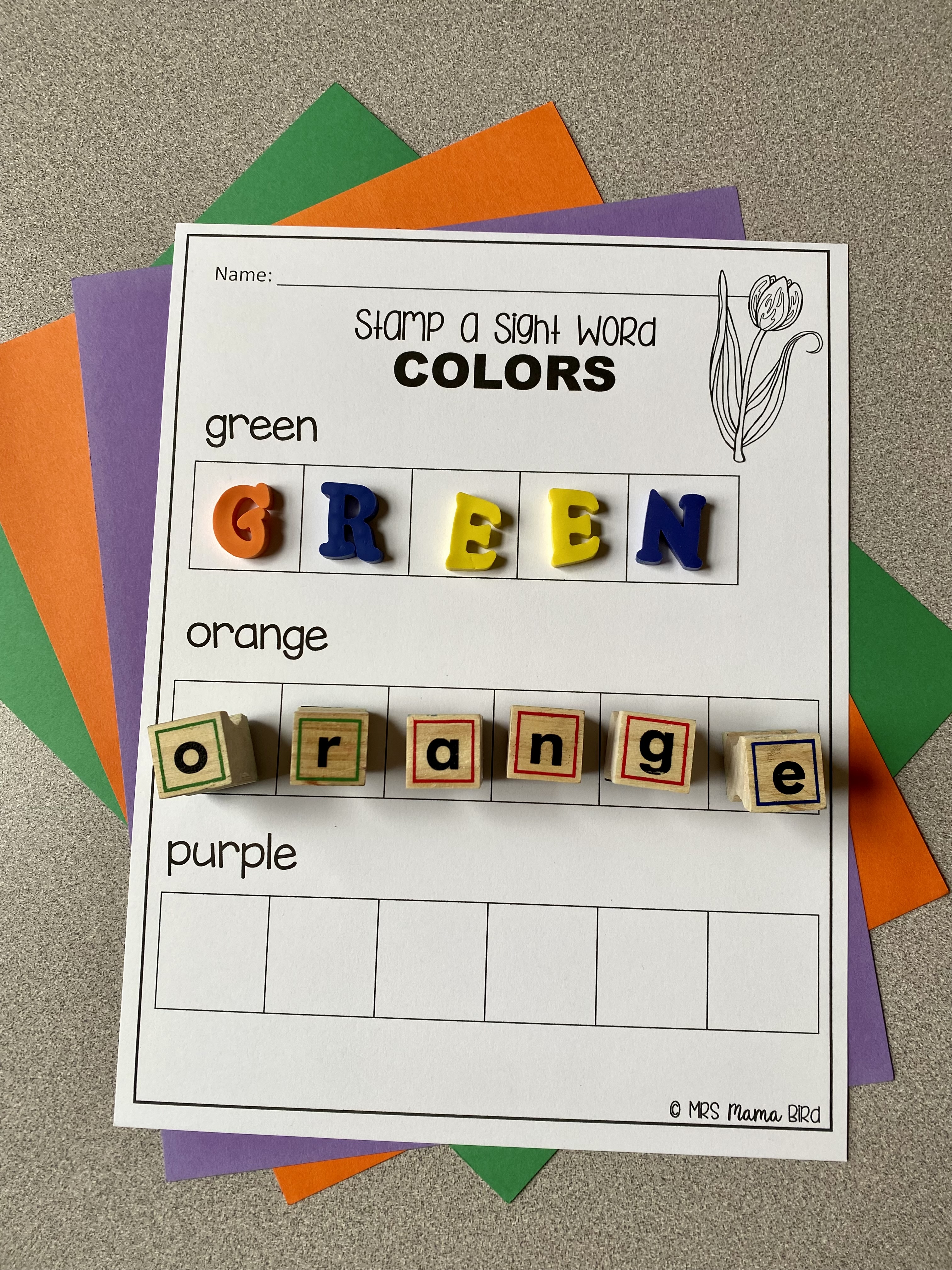
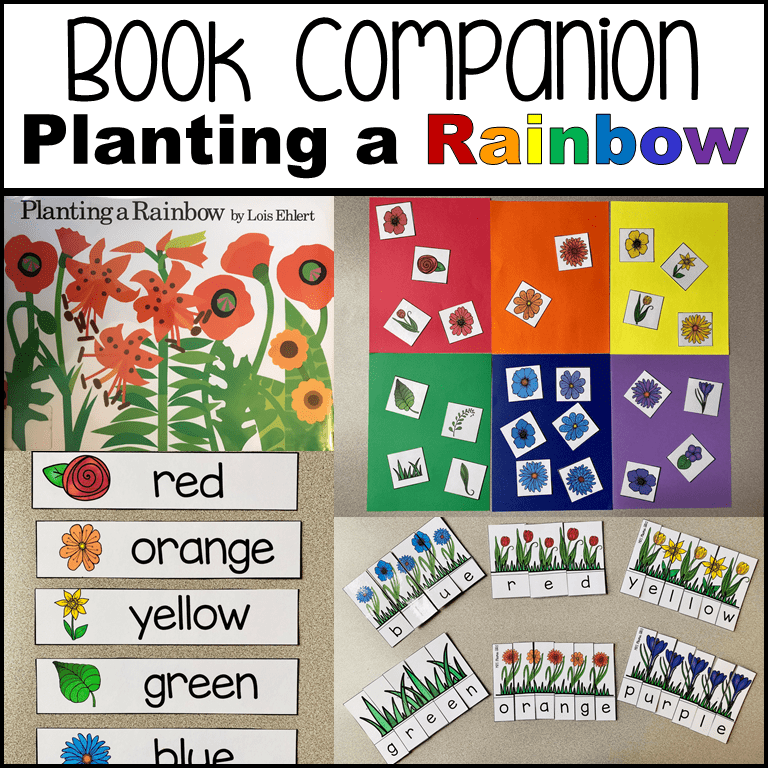
At the end of our morning, I decided to reinforce color words with these fun picture and word color puzzles. These puzzles are part of a larger set of activities that I created for my Planting a Rainbow Book Companion. (Link below!)

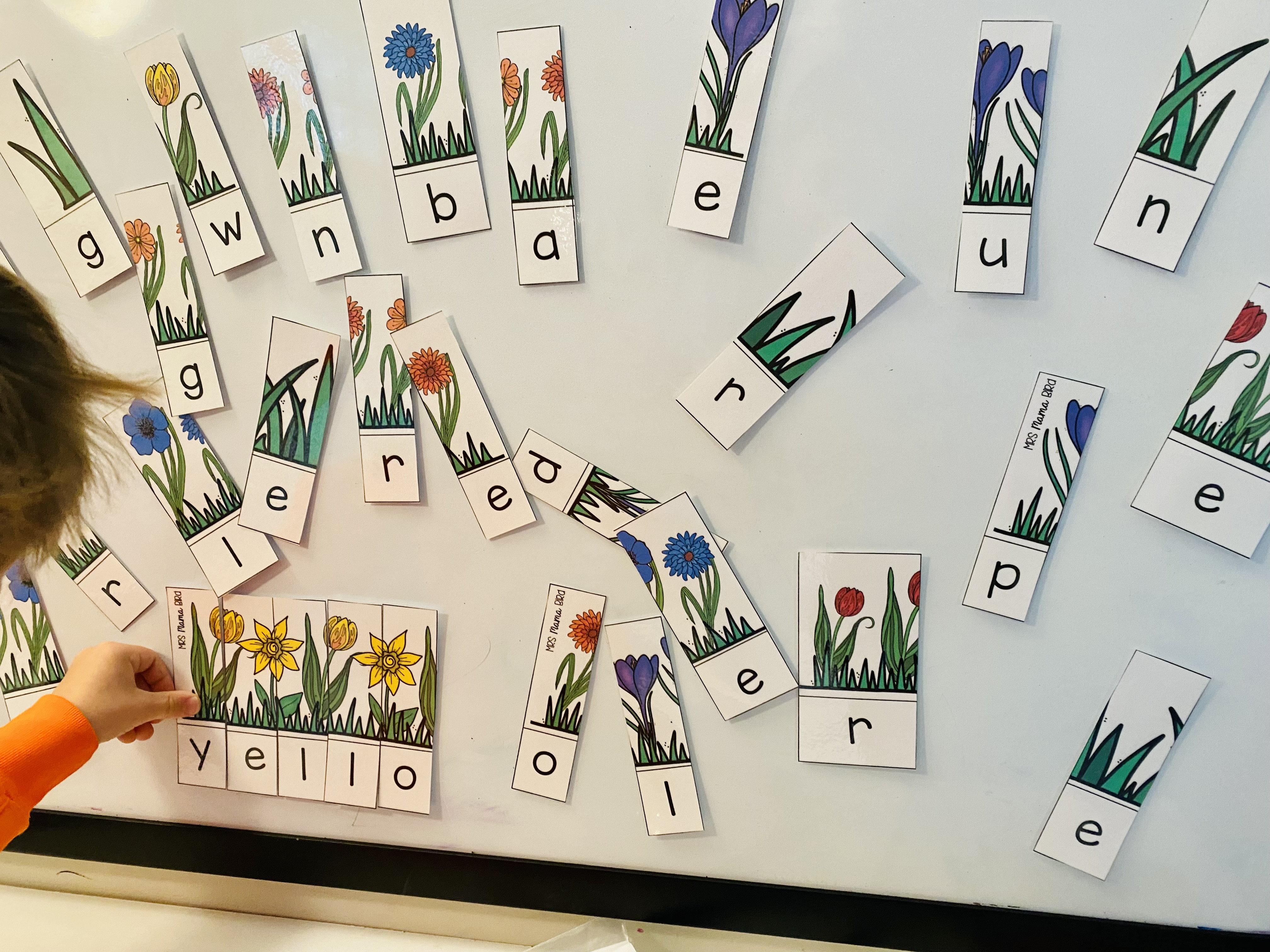
There’s just something about vertical work that draws my preschoolers in. So I added magnets to the back of these puzzle pieces and left them all mixed up on the magnetic whiteboard. You may or may not want to offer all the puzzle pieces at once to your preschoolers. I knew Emmett would be up for the challenge because he is my puzzle guy.

Emmett worked one color at a time to construct the puzzles for each color. He got a little mixed up with the word “purple” and needed some assistance. Other than that, he was able to put them together independently and really enjoyed seeing the words associated with each color. I recently started working with him on CVC words, so he was excited when he put together the word “red.” He actually recognized each sound and blended them together. He was so proud of himself!

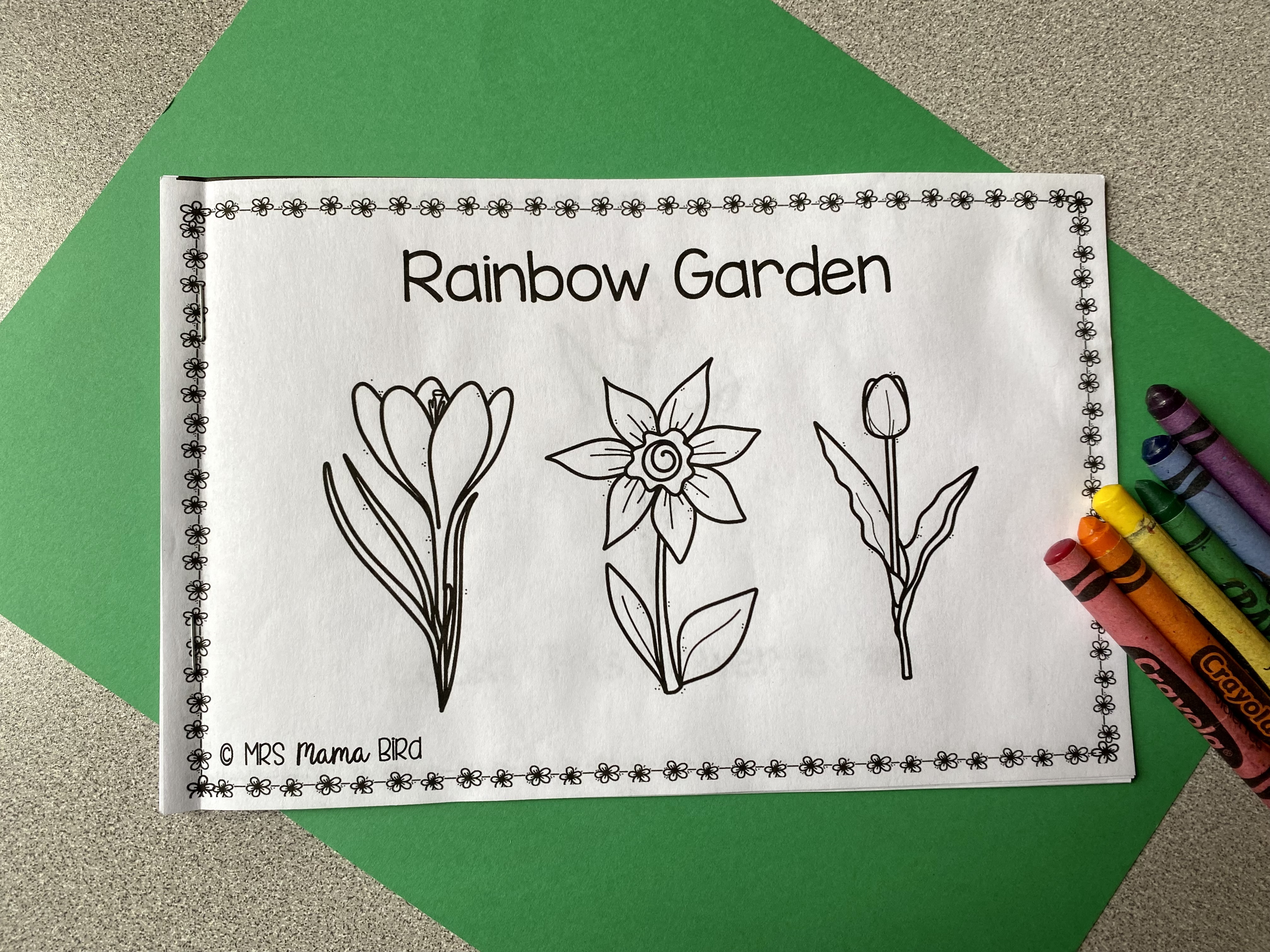
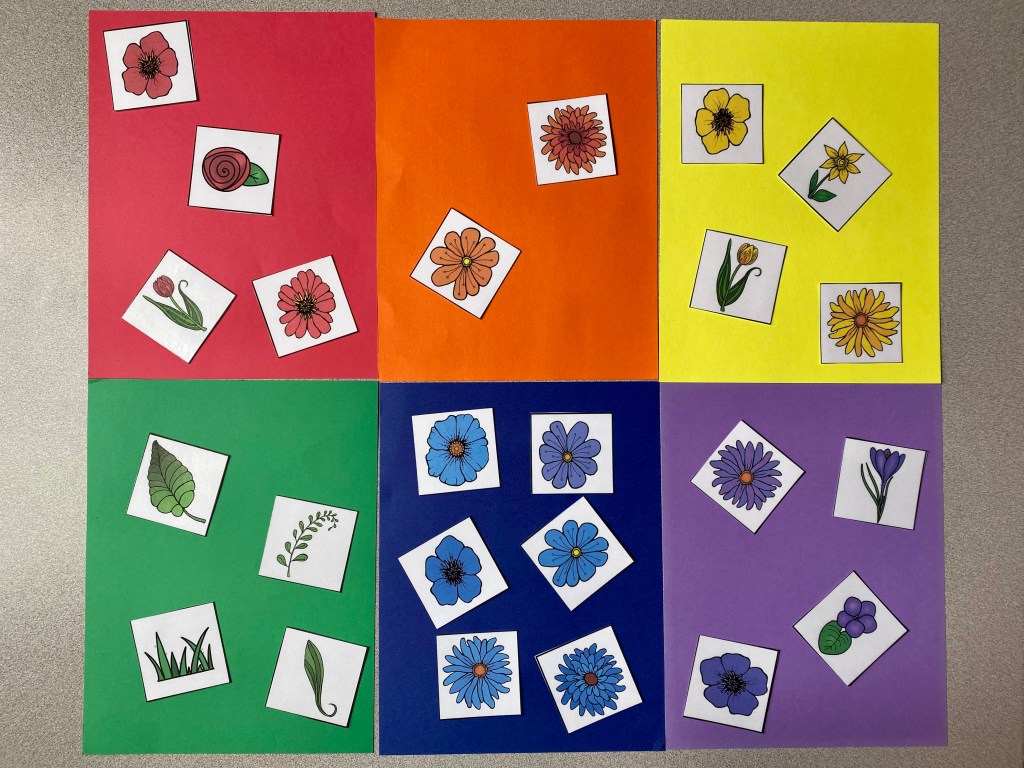
Here’s a sneak peek at some of the other fun preschool activities that I created to compliment Planting a Rainbow, by Lois Ehlert.

If you are interested in more rainbow and color ideas for early learners, be sure to check out these resources from my shop…

I add new ideas, FREEBIES, and resources all the time! Be sure to follow me by clicking the social icons at the top of this page so you don’t miss any of my new creations.