Fall, Forest Animals

Fall Squirrels and Acorns Preschool Activities Teaching Tote

*This blog post contains affiliate links that can earn me commission at no additional cost to you. When you use the links to access the resources, you are supporting my small business, which is greatly appreciated!*

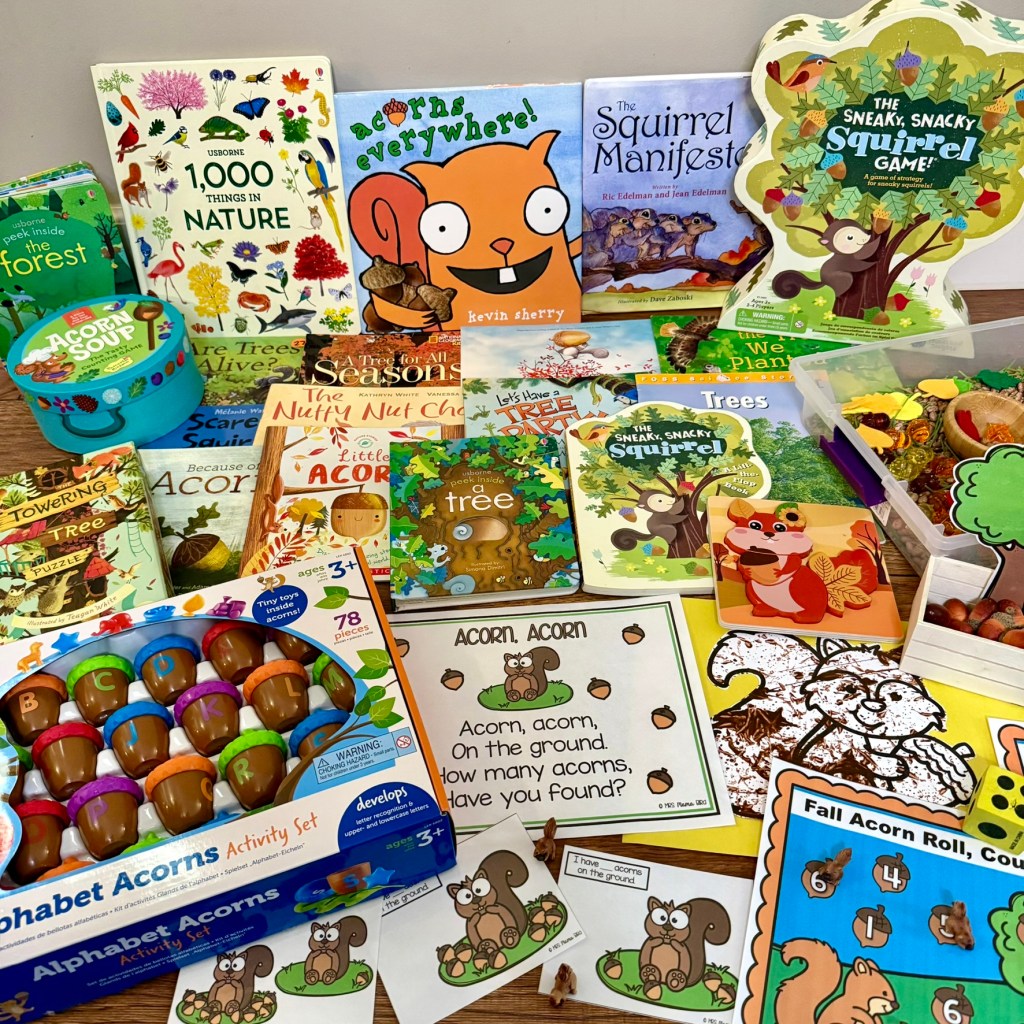
Hi!! If you’re looking for some fun fall themed activities, you have come to the right place! This post will highlight all of the books, toys, games and activities that I’ve included in the the Fall Squirrels and Acorns Teaching Tote. Teaching Totes are a play-based learning kit available to rent, learn and return. If you are not local to the Mount Airy, MD area, that’s okay!! I’ve included lots of links to resources so that you can pick and choose the things that inspire you and will help you facilitate play based learning with your own children or students, including a FREE craft template.
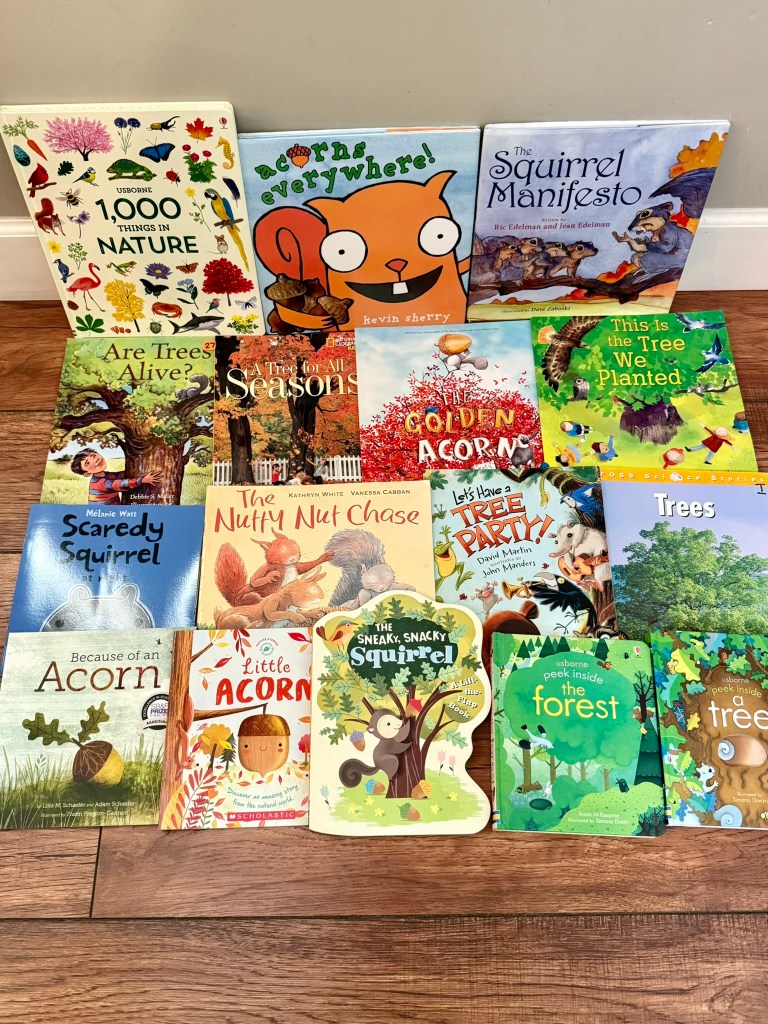
Whenever I am curating activities or planning lessons for little learners, I always start with the books. Books are such a fun way to spark curiosity and build connection with preschoolers. In this tote, the stories and non fiction texts focus on squirrels, acorns and trees. I will highlight a few below.

Because of an Acorn is a simple and beautiful way to introduce to children how the living creatures in a forest interact with each other. The text is minimal, so it will keep the attention of your littlest learners. Yet the illustrations are full of details, color and a few little peek throughs. It is a perfect addition to the squirrel and acorn themed Teaching Tote!

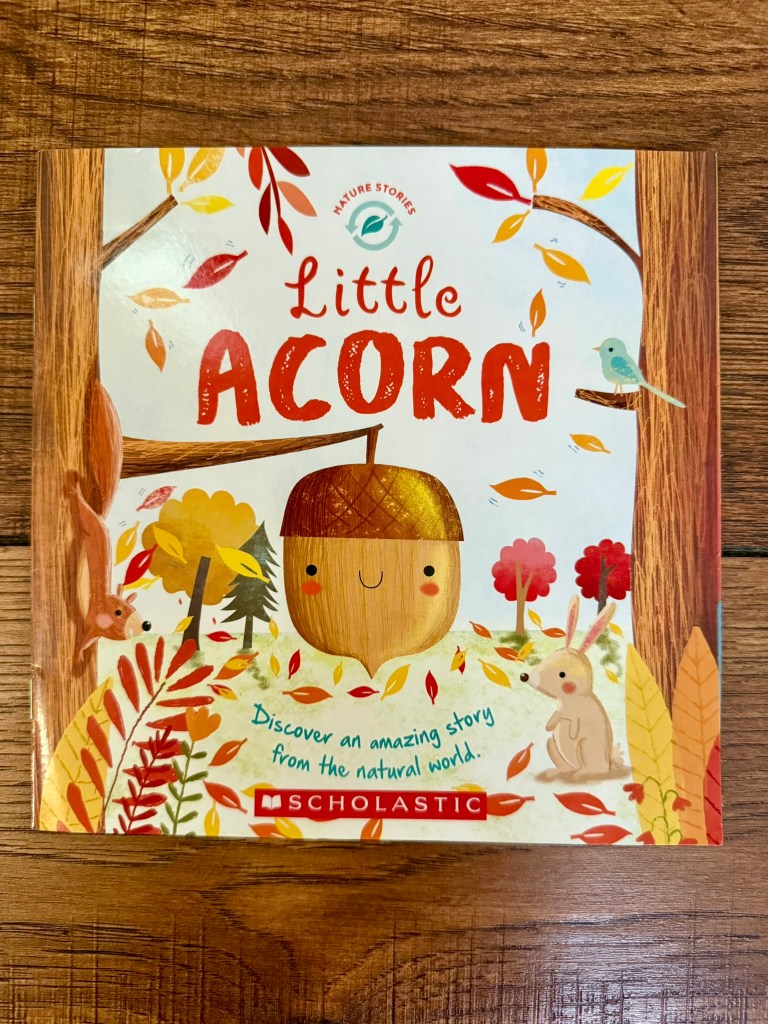
Little Acorn tells the story of the tree’s life cycle through the perspective of the acorn. Each page depicts a different part of the process and explains with playful rhymes how an acorn can sprout and grow into a big tree, able to produce another little acorn and start the process all over again.
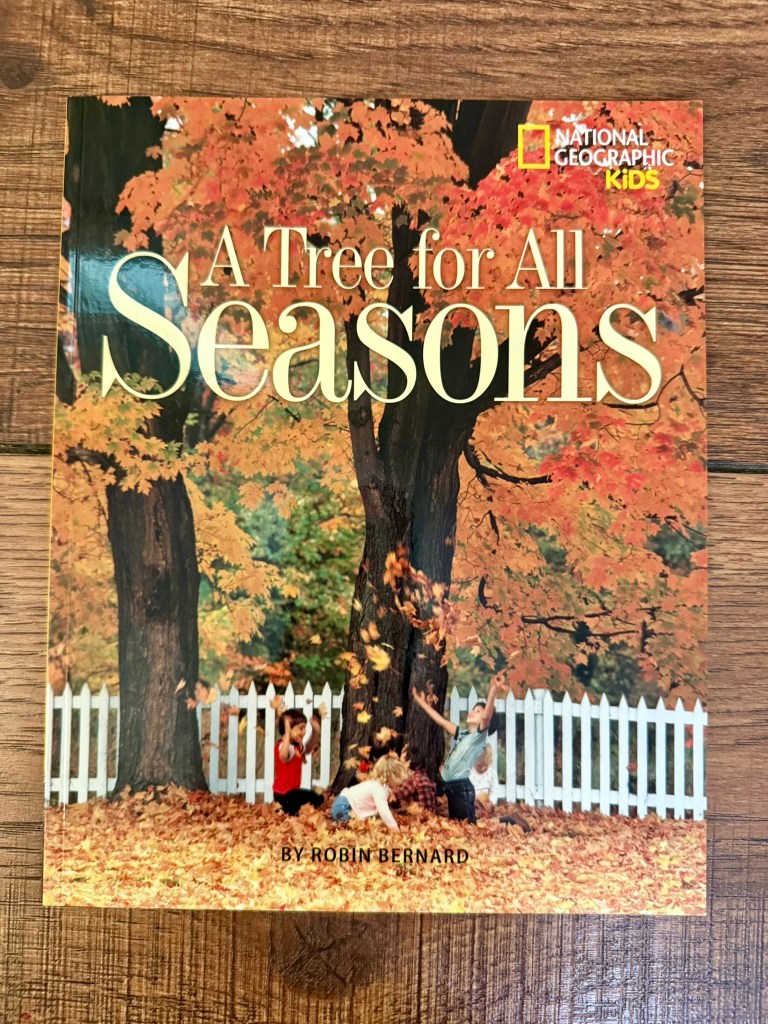
A Tree for All Seasons depicts the changes a maple tree endures throughout the four seasons of the year. While not an Oak tree like the other books, I still chose to include this one because of the stunning way it illustrates the importance of that tree to the living things around it. The photographs are engaging and sharp. And you may find a squirrel in there too!

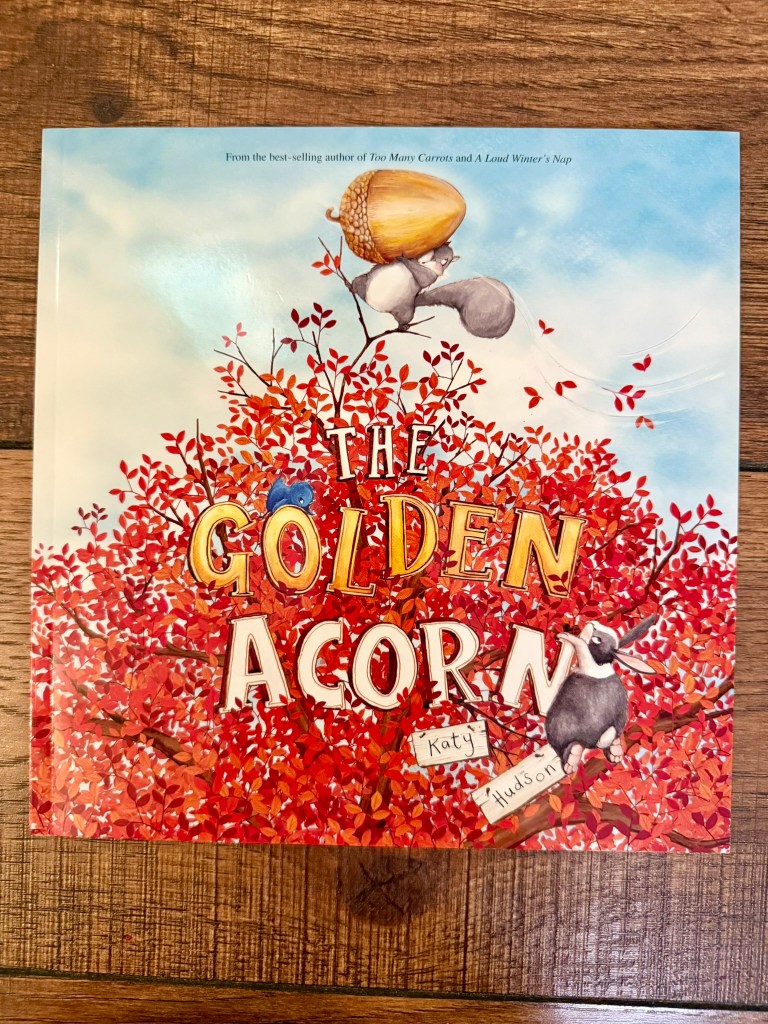
The Golden Acorn is such a fun story about a confident little squirrel who is determined to win the gold acorn in the neighborhood competition. However, only teams can enter the race and he is used to working by himself. The independent squirrel must learn how to recognize the strengths of others around him and find out what is more important- winning or friendship. This story is such a sweet addition to the Squirrels and Acorns Teaching Tote!
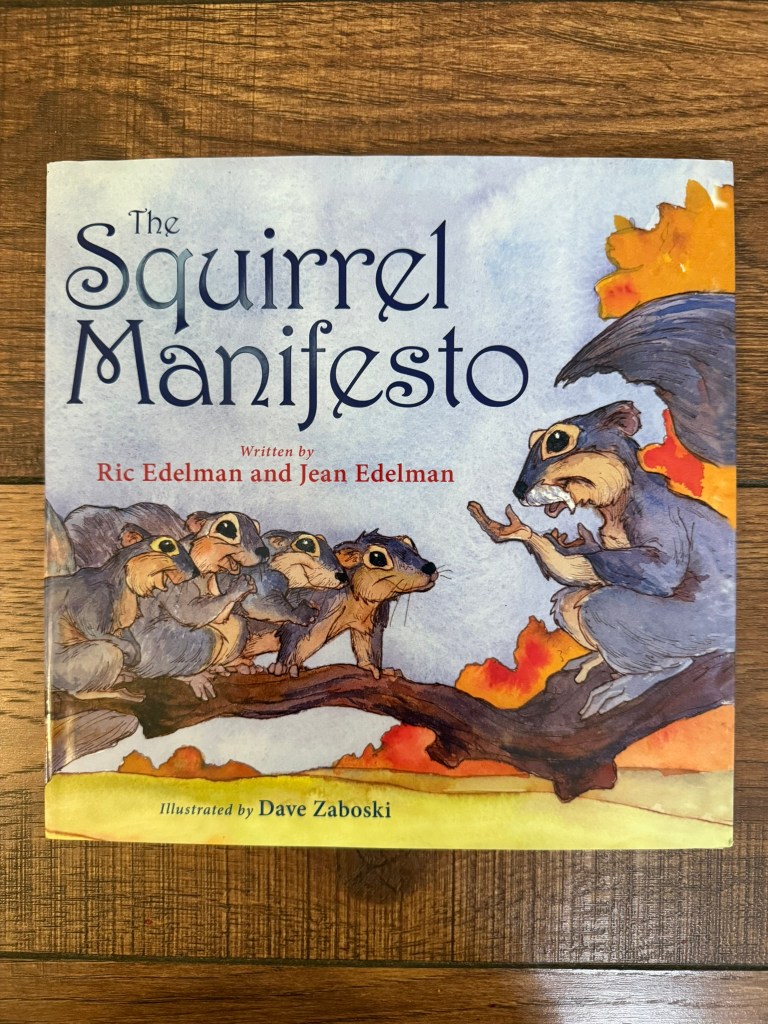
The Squirrel Manifesto is a clever anecdote about how squirrels gather, save and share their acorns. It is told in verse with catchy rhymes and includes vibrant illustrations to accompany the words. It is a simple way to introduce finances to young children and how to handle money. Some of it can be enjoyed, some saved for later and some given to others, just like the acorns!

Acorns Everywhere! is a fun story about a squirrel who is busy hiding his precious acorn collection. With minimal text, we rely on the zany mixed media illustrations to see the obstacles squirrel is running into as he tries to hide away his stash of acorns. He might just change his whole approach!

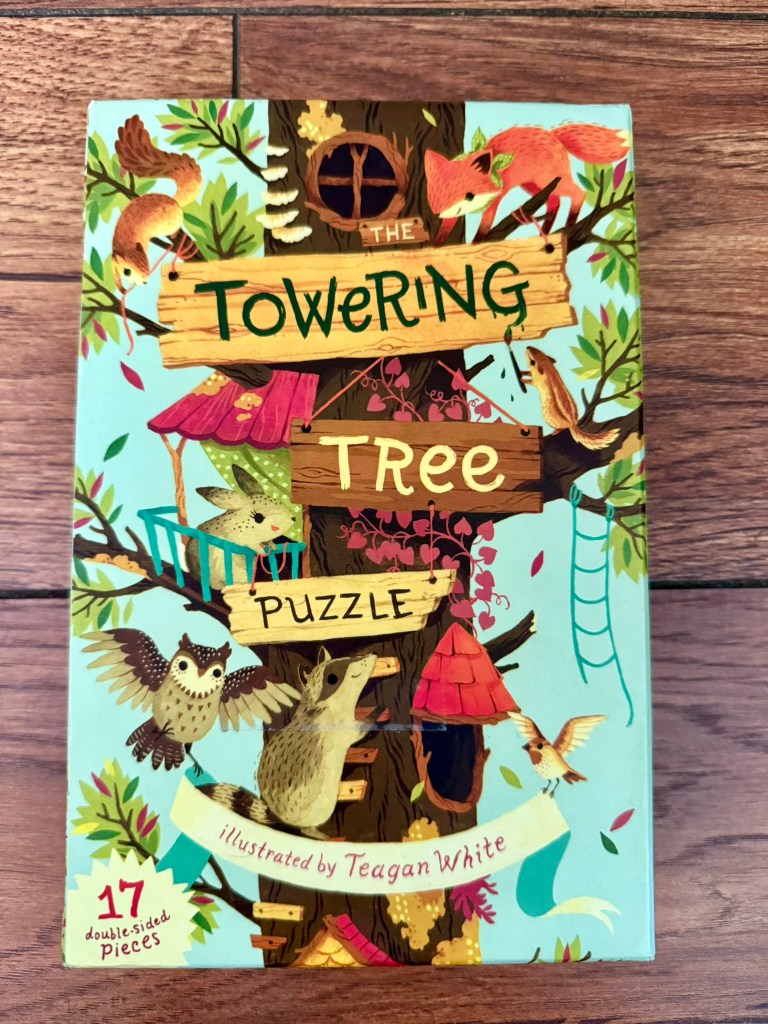
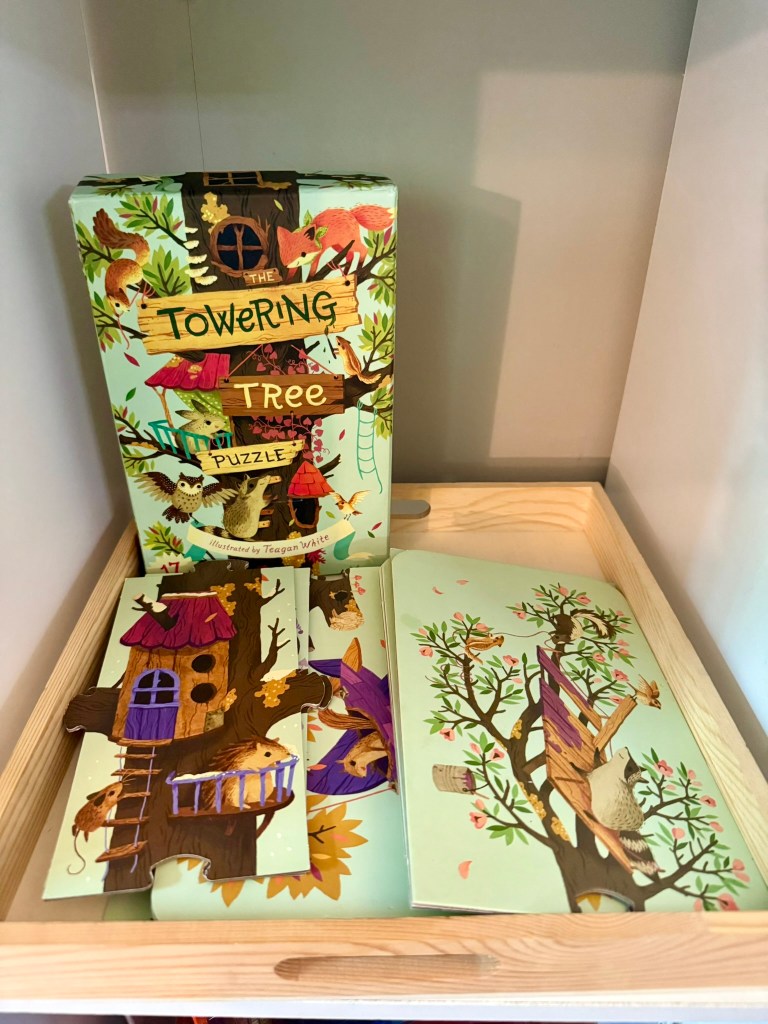
For this Teaching Tote, I’ve selected two fun puzzles. The Towering Tree Puzzle is a unique one because it builds a towering tree in an unconventional shape. The pieces literally branch off like a tree, which is fun for little ones to put together. Its pieces are also double sided so there is more than one way to put it together.
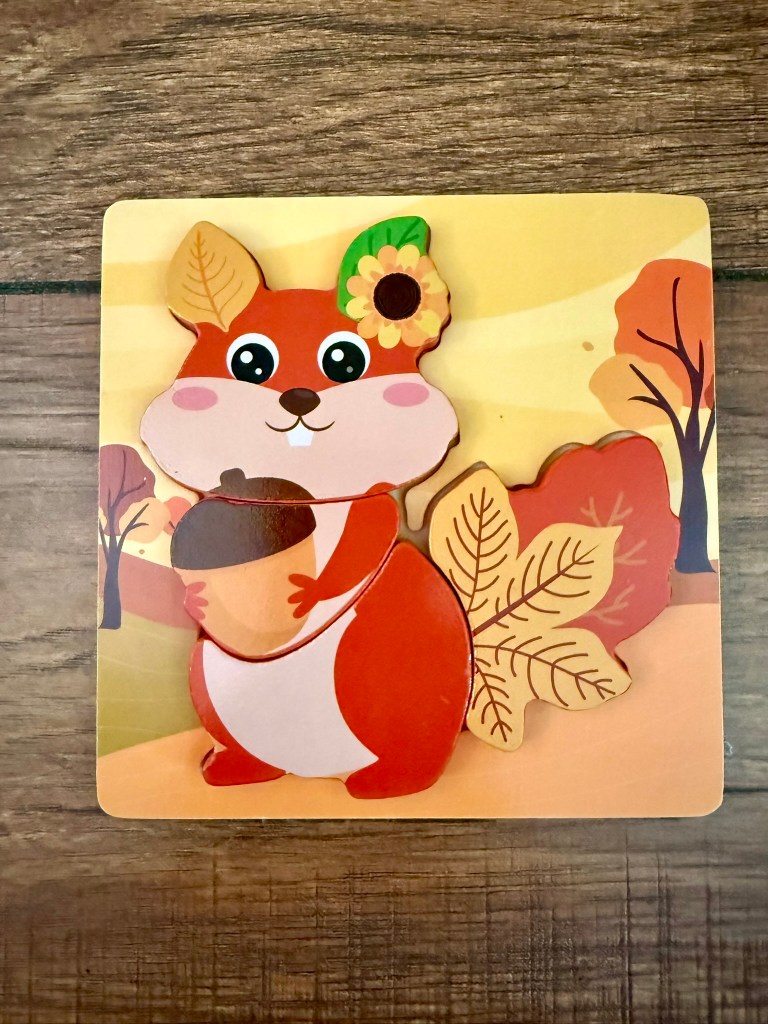
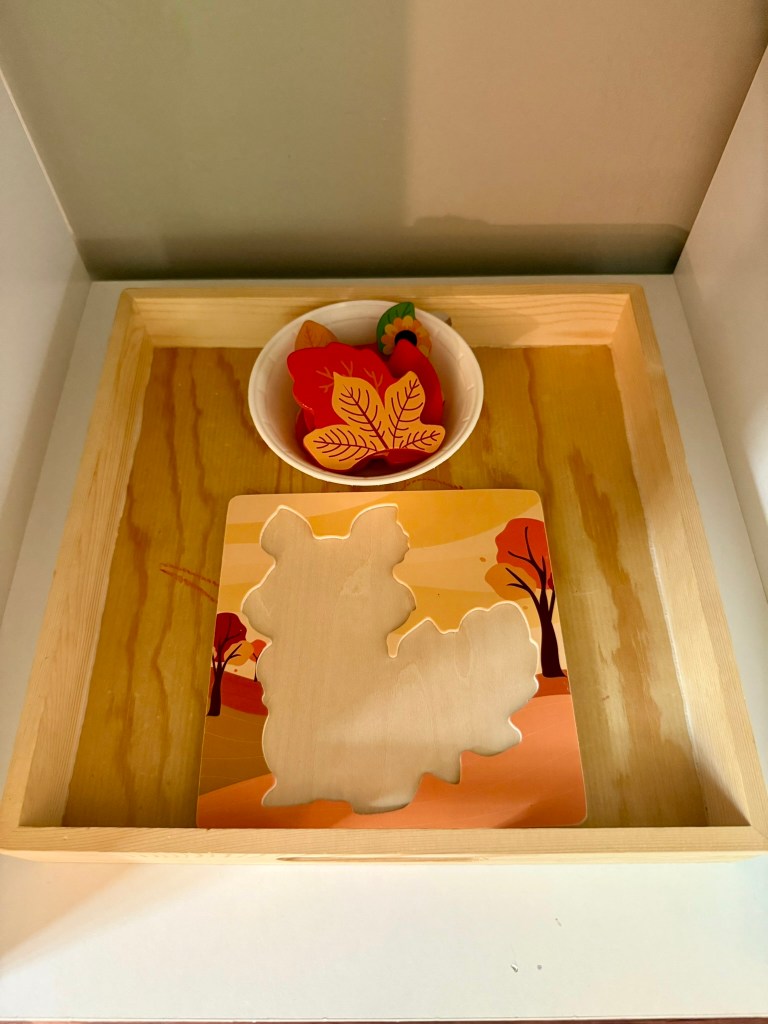
I’ve also included an adorable squirrel wooden puzzle. This one is a simple, 4-piece puzzle with traditional fall colors and a tail and ears made out of fall leaves. I love taking the puzzle apart and presenting it to preschoolers undone. This becomes like an invitation to put the puzzle back together. This puzzle is part of a set of six. I’ve divided the set up among my different Fall Teaching Totes. If you are interested in adding these to your own collection, click the photo for a link.
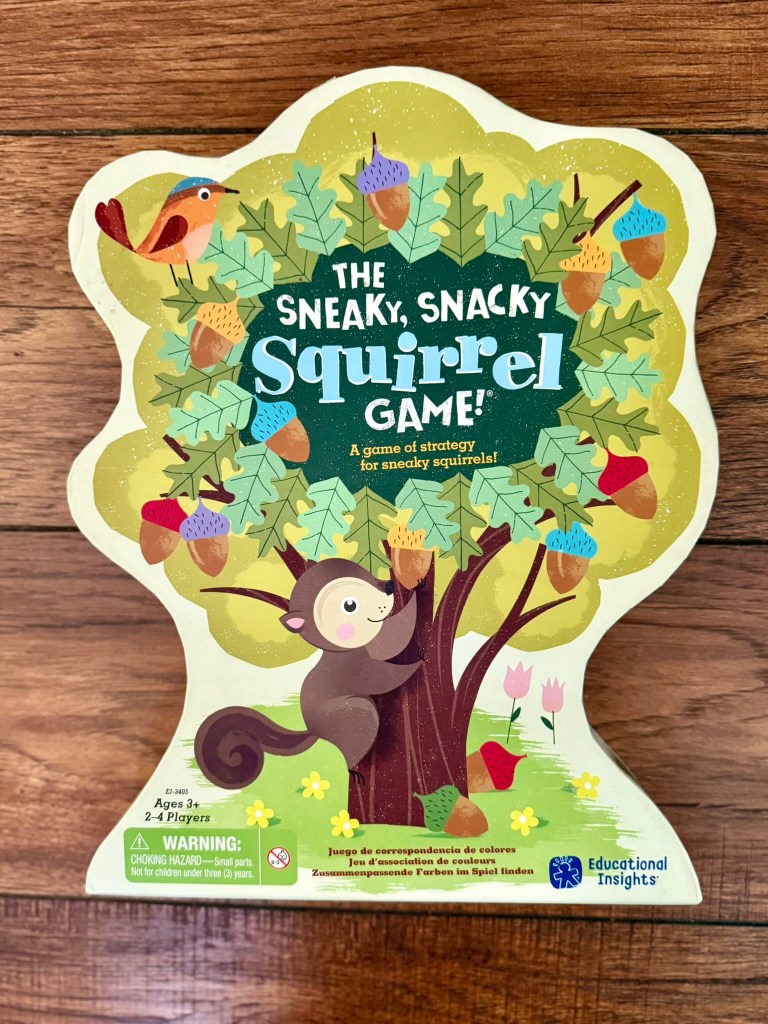
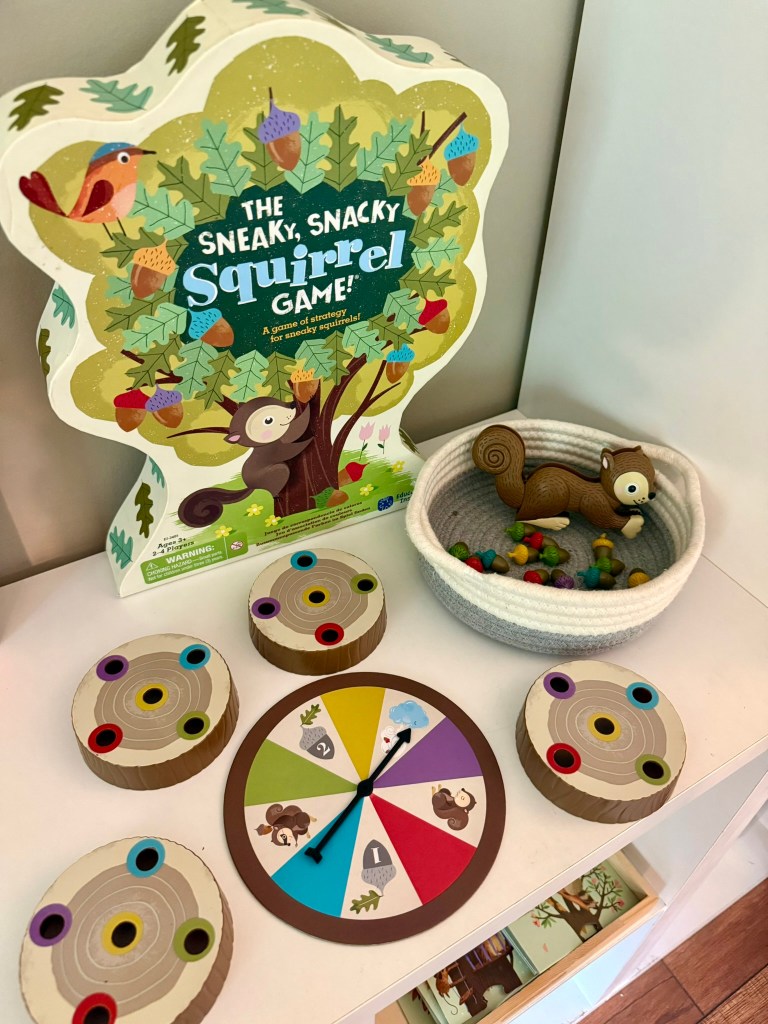
Of course I cannot create a squirrel themed Teaching Tote without including the game The Sneaky, Snacky Squirrel. This game is such a fun way to practice colors, counting and fine motor skills all in one! It is a simple game so it is easy to learn and does not requiring any reading to play. Use a dice to determine which acorns you can collect, but watch out for the sneaky squirrel!! This game is the perfect way to begin learning social emotional skills like taking turns, sharing and winning and losing gracefully.
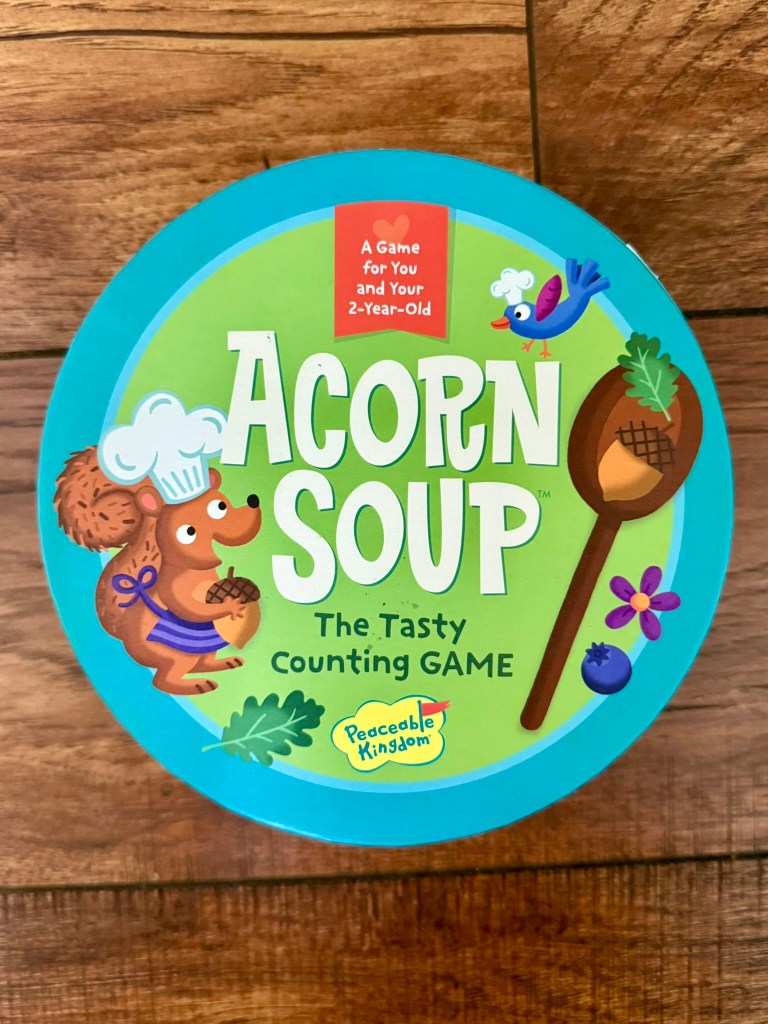
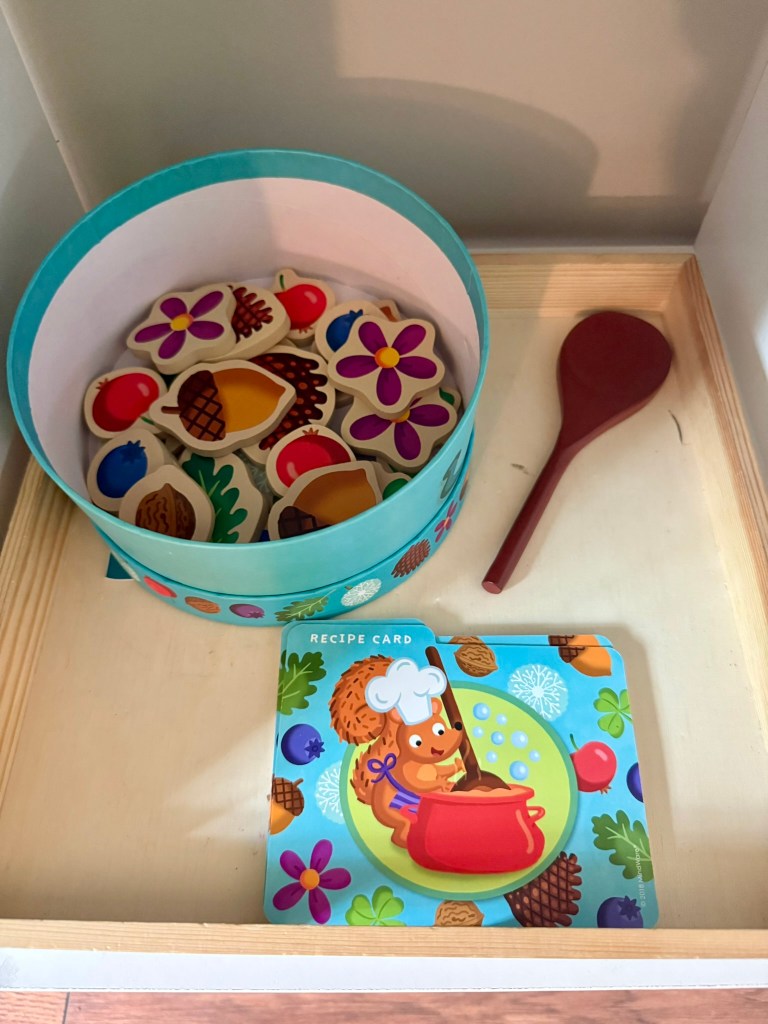
Speaking of games, Acorn Soup is another great addition to the Squirrels and Acorns Teaching Tote! This simple game includes 24 adorable wooden ingredients, a wooden spoon and 8 recipe cards. Take turns rolling the dice and creating different soups with the recipe cards and ingredients. I especially love this one because it inspires play that can extend beyond the game. Use the pieces to set up a pretend meal in your play room. Practice setting the table, enjoying your meal and tidying up. You can even talk about table manners as you play! It is recommended for ages 2 and up so even the littlest learners can participate and enjoy.
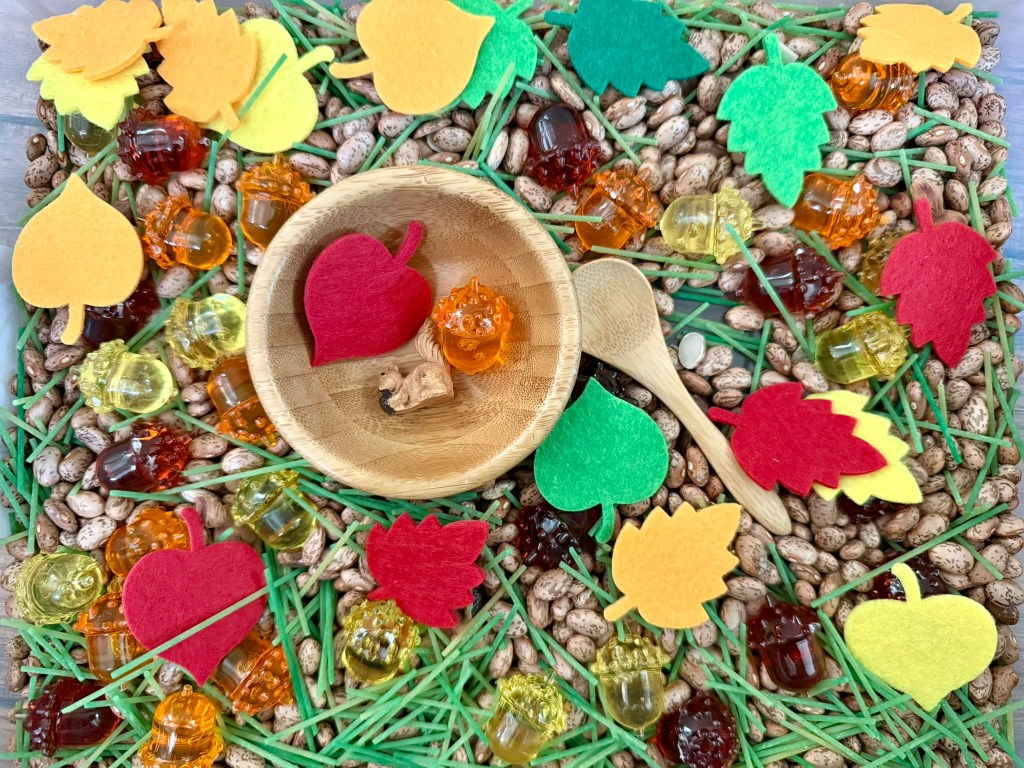
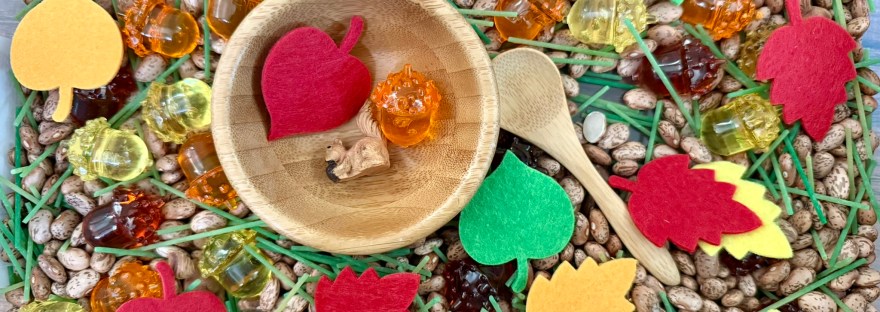
One of my favorite elements of every Teaching Tote is the sensory bin!! I love putting together themed sensory bases and loose parts to entice your little learner into some sensory play. The Squirrels and Acorns Sensory Bin comes with a dry pinto bean base mixed with green dyed spaghetti. On top of that, I added some loose parts – acrylic acorns (Dollar Tree), felt leaves (Michaels), small squirrel figures (Hobby Lobby), a small wooden spoon (Hobby Lobby) and a small wooden bowl (I had this handy in my kitchen- it is from Pampered Chef). Together it looks like a fun fall retreat! This can also serve as a fun extension to the game Acorn Soup. Little ones can mix up their own soup with the sensory ingredients. Or you can put the game pieces into the sensory bin and have your child hunt for the pieces as they complete each recipe. So many ways to play!!
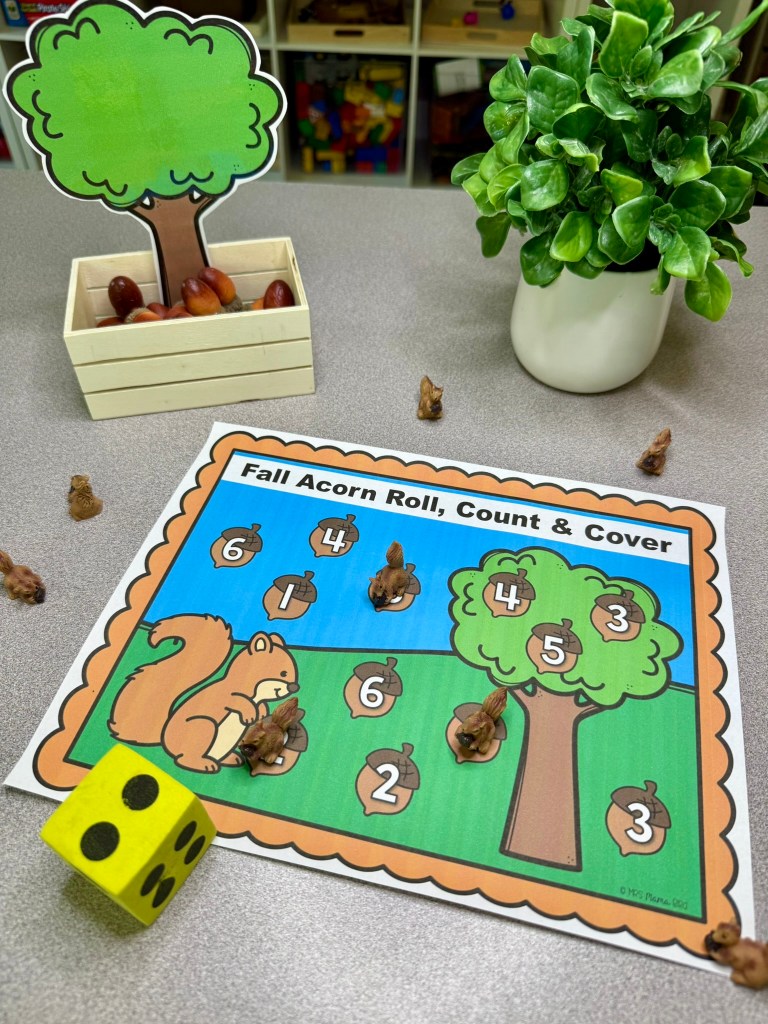
When it comes to learning through play, dice games are a winner!! I created this adorable Squirrel Roll, Count & Cover game to practice number recognition and counting. I love adding hands-on elements to my activities, so I put together a tree with a mini-crate (Dollar Tree) for collecting acorns. Preschoolers can roll the dice, count the acorns and place them in the basket, then cover the number with a little squirrel. Little ones can play independently or take turns until all the numbers on the mat are covered.
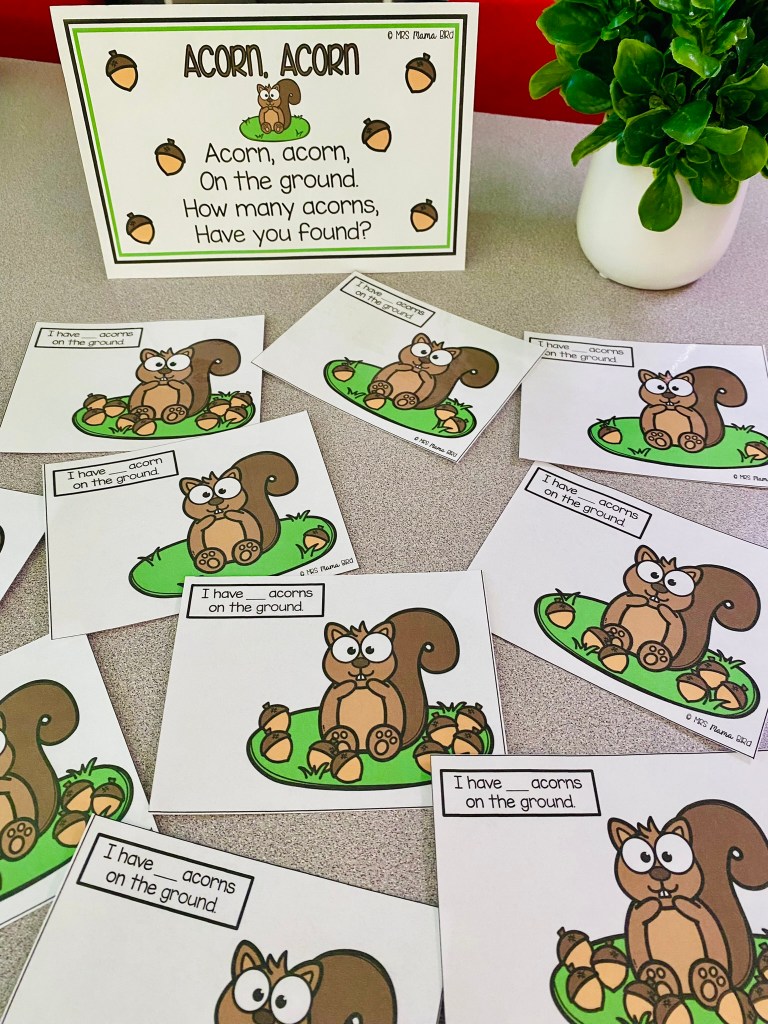
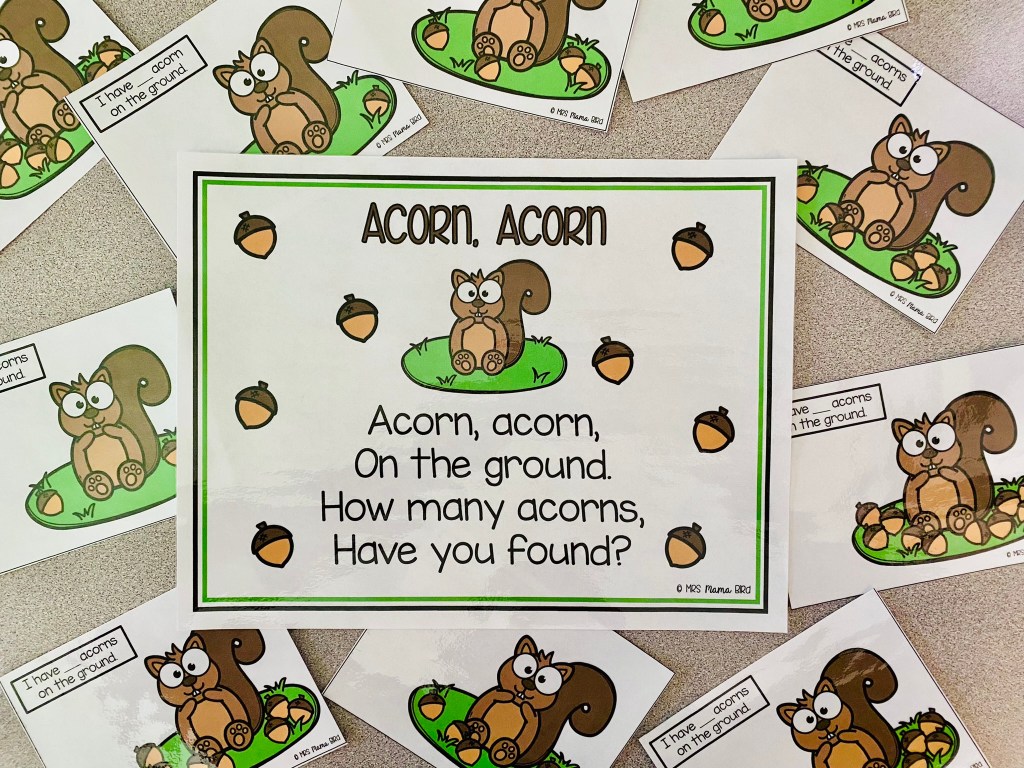
If your preschooler is ready to count higher, the Acorn Counting Chant is the perfect way to practice counting, naming and writing numbers up to 20. First you teach your preschooler(s) the catching chant, “Acorn, acorn, on the ground. How many acorns have you found?” As a teacher, you can do this activity together in circle time or small groups.

Or you can set it up like a “write the room” activity and display the acorn counting cards around the room. Have your preschoolers find a card, count the acorns and trace the number on their recording sheet. There are 3 recording sheets to choose from (1 – 10, 11 – 20 or 1 – 20) so that you can cater to your learners’ needs.
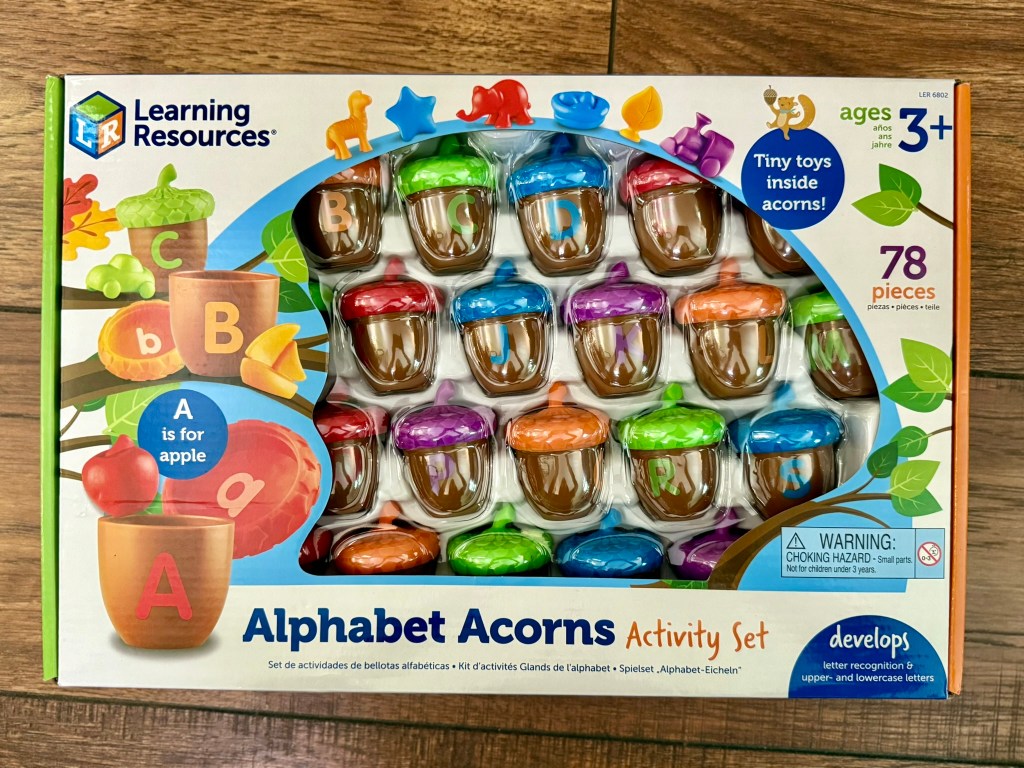
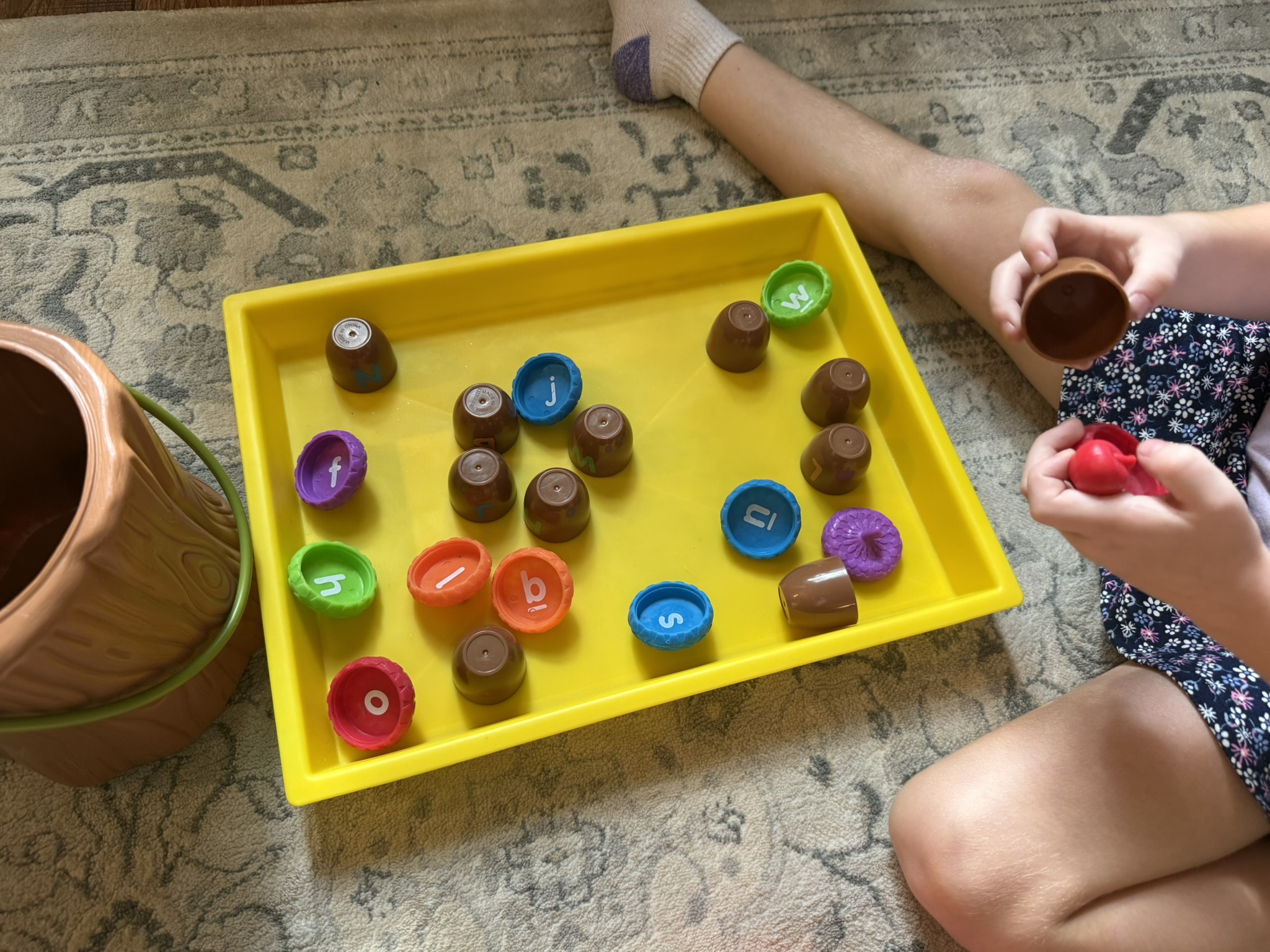
Learning letters can be a tedious task for preschoolers so embedding letters into their play is an easy way to make letters recognizable, familiar and part of their language. This set of Alphabet Acorns from Learning Resources provides adorable little acorns, lids and objects with the matching beginning sound to explore, manipulate and match. Let me show you how I set these up in my playroom.
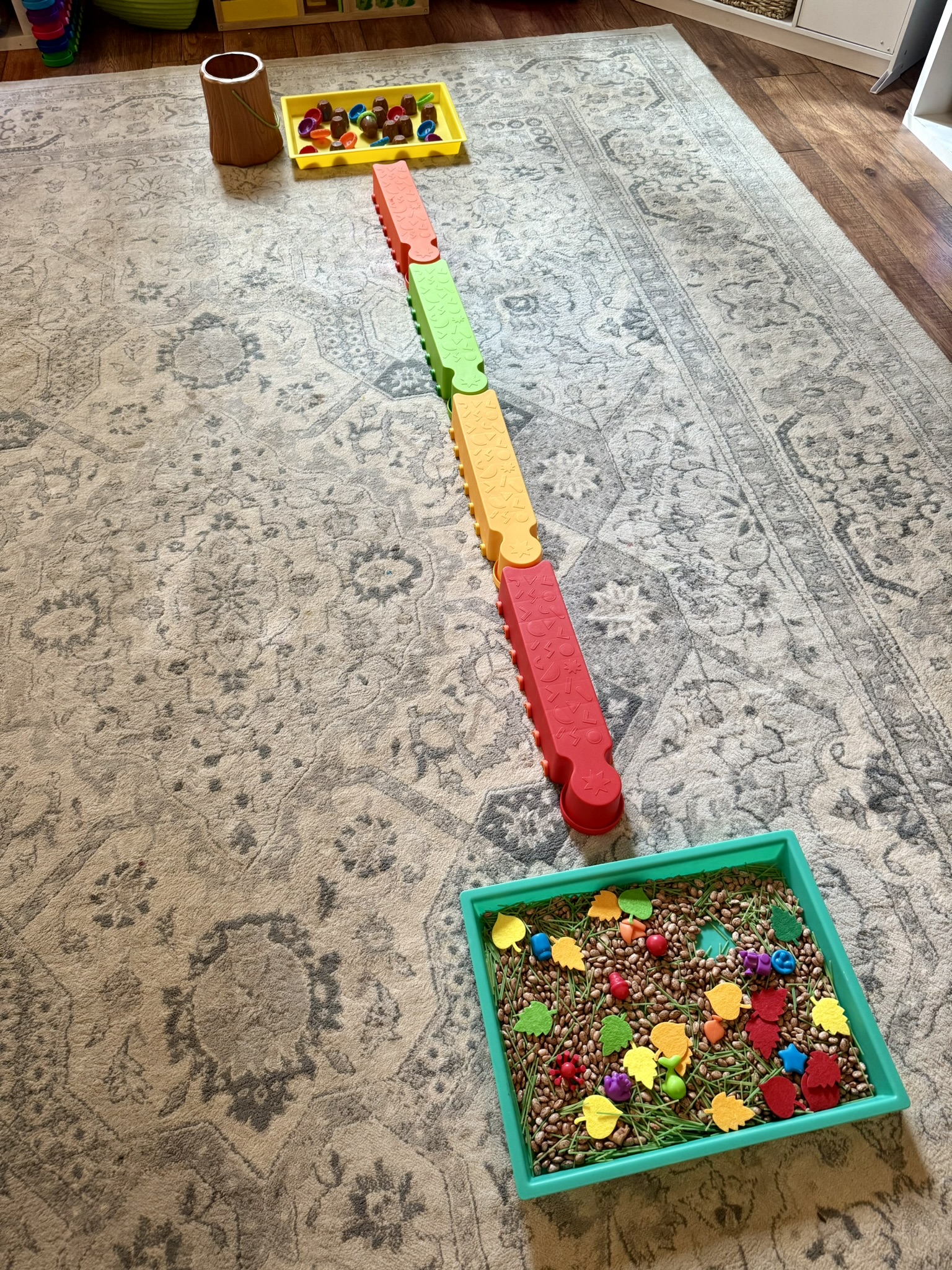
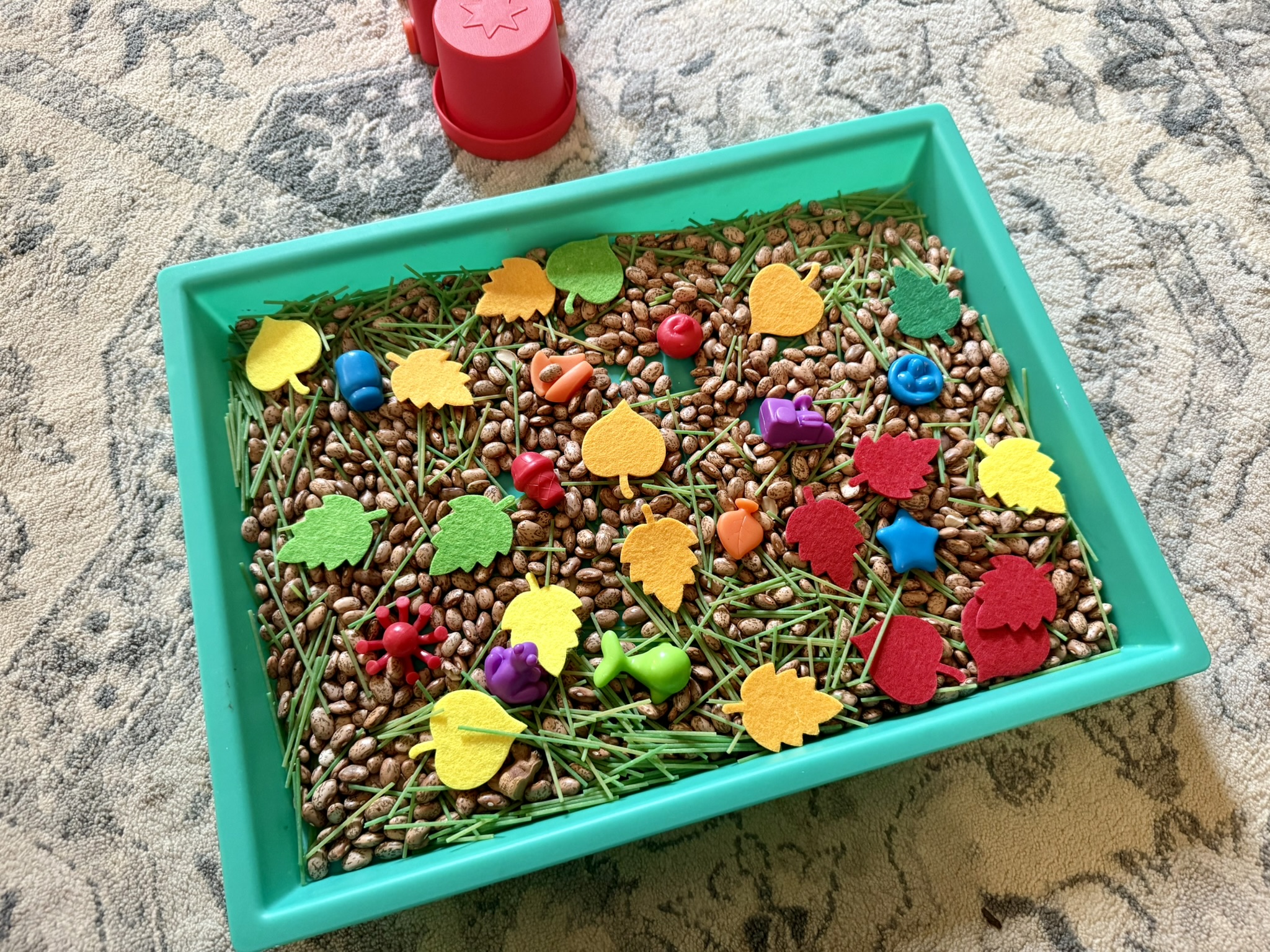
I decided to add in some gross motor movement when I set this activity up. Instead of just setting the trays side by side, I put them at opposite ends of the room and placed a balance beam in between them. Then I challenged my 5 year old to carefully travel across the balance beam to retrieve a shape them match it to the corresponding acorn. When she put each acorn together, she placed it in the tree trunk bucket.

She absolutely loved this set up and was super motivated to engage in the activity. She decided to make up her own moves between the two trays. She started with balancing, then tried crawling, scooting, and walking. Eventually, she placed the two trays next to each other and finished the activity sitting in one place.

I also want to mention that when I set this activity up, I only included 12 letters of the alphabet. I find that including all the pieces at once is cumbersome for my daughter and she does much better matching the letters and their beginning sound shapes when there are not as many pieces.

Please note: The balance beams are not included in the Squirrels and Acorns Teaching Tote. However you can easily incorporate the gross motor movement into the Alphabet Acorns game without them, which is why I wanted to share how we used them!

The last element of the Squirrels and Acorns Teaching Tote that I would like to share is the Squirrel Process Art Project. This craft is so fun and preschoolers at any age can participate in creating a squirrel. In order to do this craft, you will need the squirrel template, paint of your choice (I included brown in the Teaching Tote), and acrylic acorns or marbles.
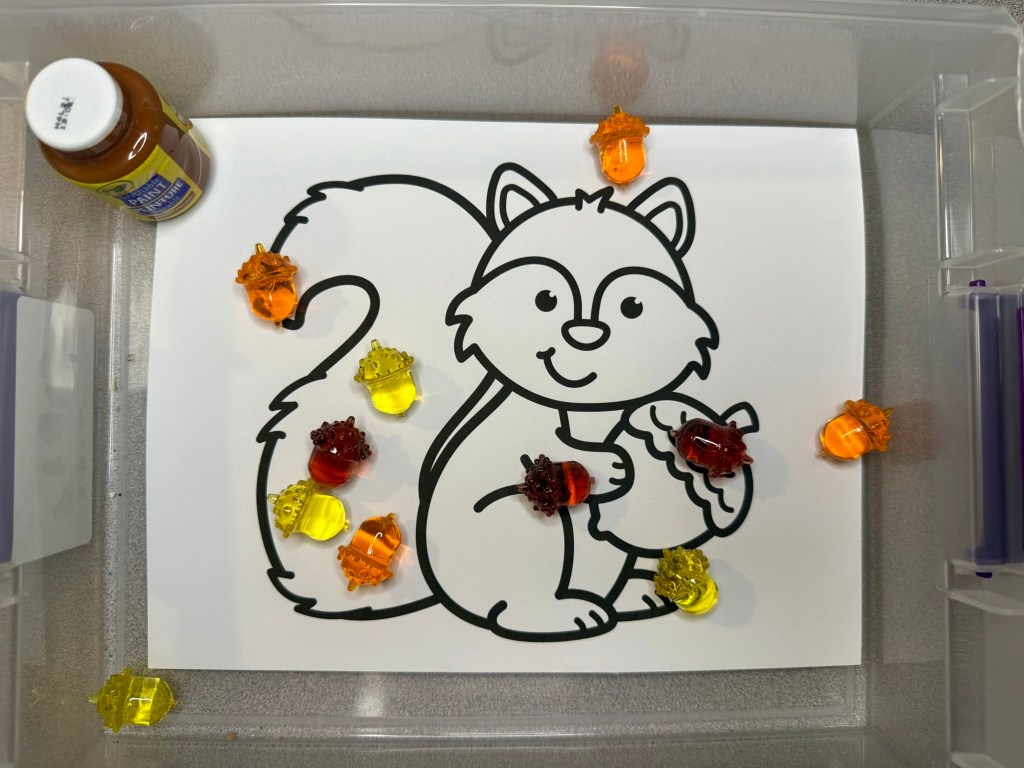
Place the squirrel template inside a deep lid (like a copy box lid) or container. Squirt some paint in various places on the squirrel template. Add the acrylic acorns or marbles. Let your preschooler manipulate the lid so that the acorns roll around, leaving trails and spreading the paint all over the squirrel. Keep going until most of the squirrel is colored in. Set the template aside to dry. Then cut it out and glue it to a piece of construction paper.

If you would like a copy of the squirrel template, click the button below for the FREE download.
I hope this post was helpful to you! If you’re local to the Mount Airy, MD area and you are interested in renting all of these fun items, please click the Teaching Totes icon to visit my Teaching Totes website and contact me for booking!

If you would like more information about the learning activities featured in this post, click the icons below. Happy playing!!

Apples, Fall

Apple Activities for Preschoolers- A September Teaching Tote

*This blog post contains affiliate links that can earn me commission at no additional cost to you. When you use the links to access the resources, you are supporting my small business, which is greatly appreciated!*

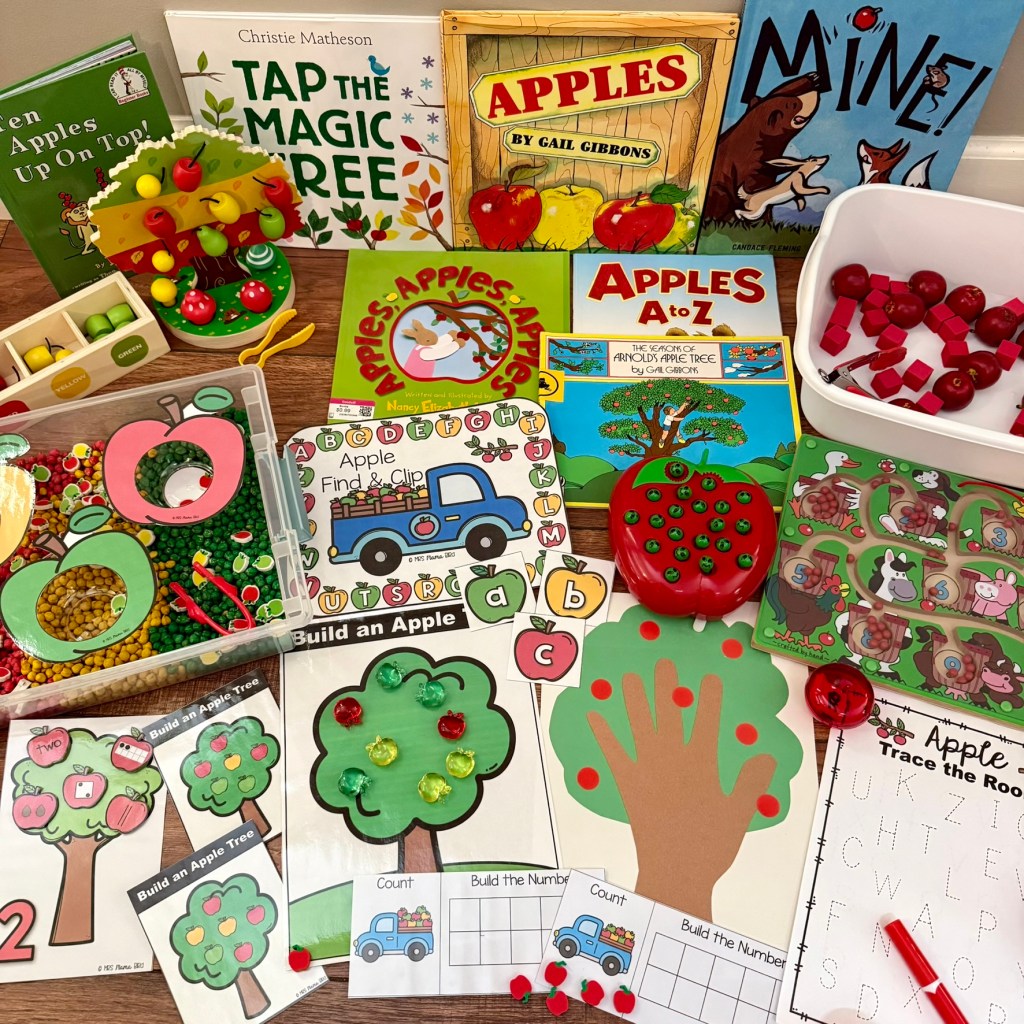
Welcome!! I’m creating this blog post to inspire some apple themed play and learning between you and your preschooler. If you’re looking for some engaging and hands on apple themed ideas, you’re in the right place!! I will use this platform to explain in detail all the elements of my first Apples Teaching Tote – a play based kit that I’ve created for families like you to rent, learn and return. If you are not local to the Mount Airy, MD area, don’t worry! I will describe all the resources available in this bin so that you can find exactly what you need for your preschoolers. Click the photo for a direct link to each item or activity!

Let’s start with the books!

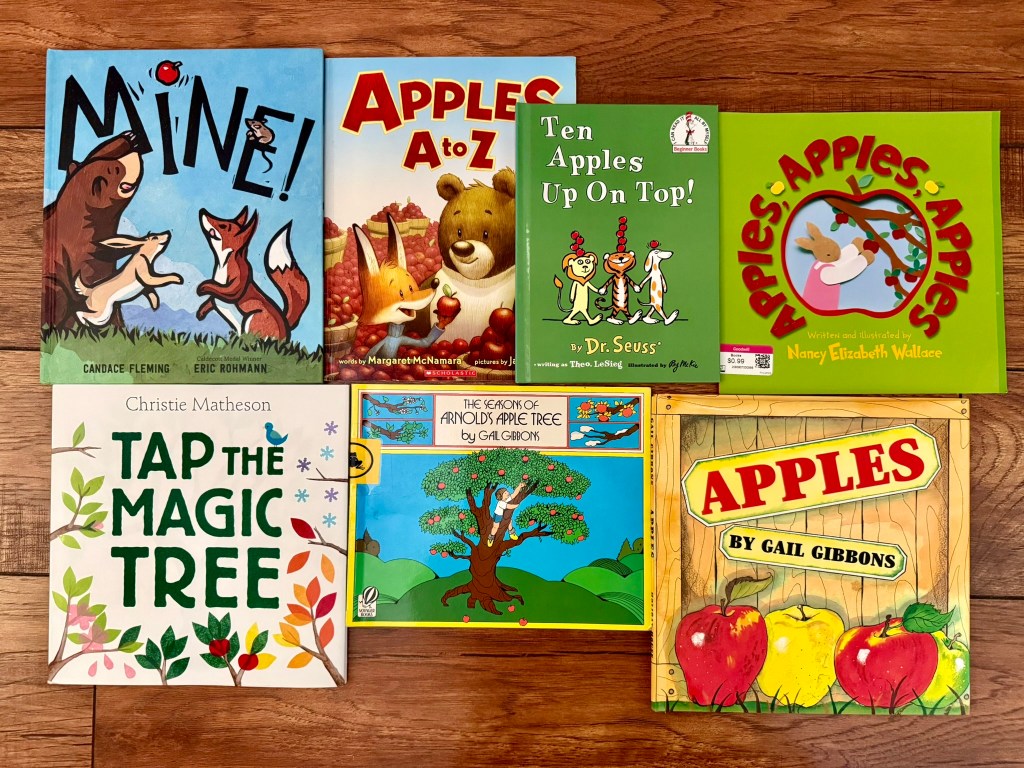
This tote includes seven apple themed books to help immerse your preschooler in the apple season. I’ll explain each one and if you are interested in a direct link, just click the photo!

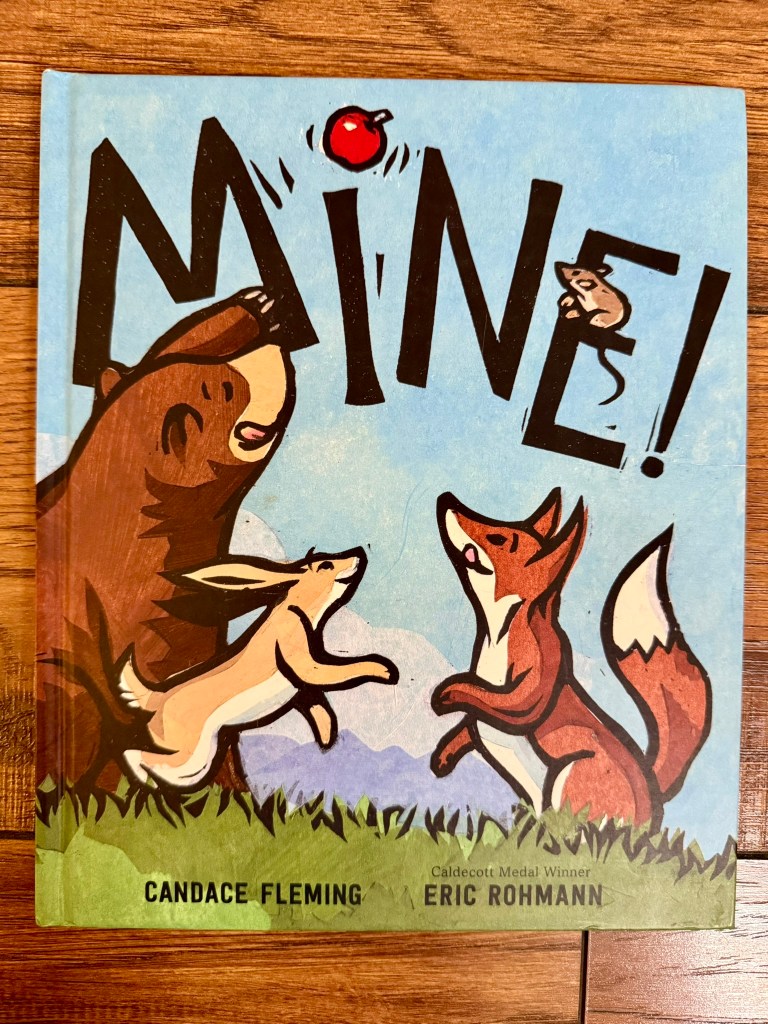
Mine! By: Candace Fleming

Mine! is a beautifully illustrated story about a juicy red apple that catches the eye of several forest animals. Each animal claims the apple as their own without knowing that the others around them all have the same idea. When the apple falls, a scuffle ensues and a unsuspecting forest friend obtains the juicy treat. This is a wonderful way to start a conversation about sharing and considering the feelings of others, while celebrating the sweet red fruit.

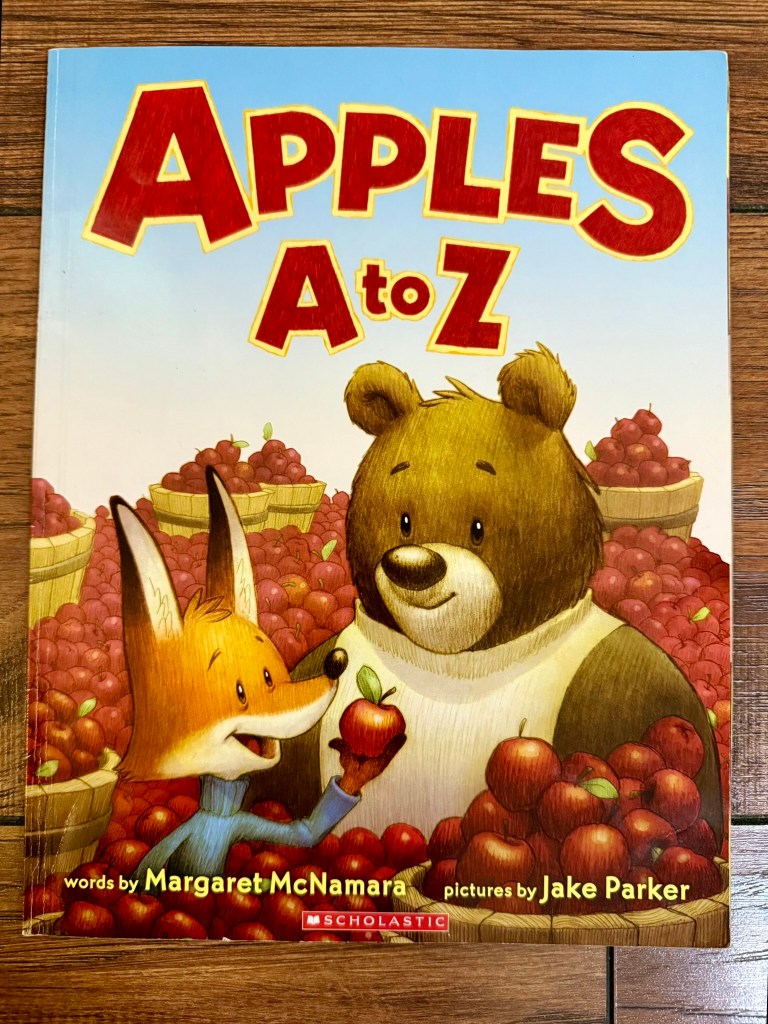
Apples A to Z By: Margaret McNamara

Apples A to Z introduces each letter of the alphabet page by page by describing a word that connects to apples in some way. Vibrant and lively pictures accompany each description. Your preschoolers can learn more about the parts of apples, types of apples, all the things you can create with apples and the process of creating these things. The book is a great choice to accompany any alphabet activity or preparing a yummy apple treat.

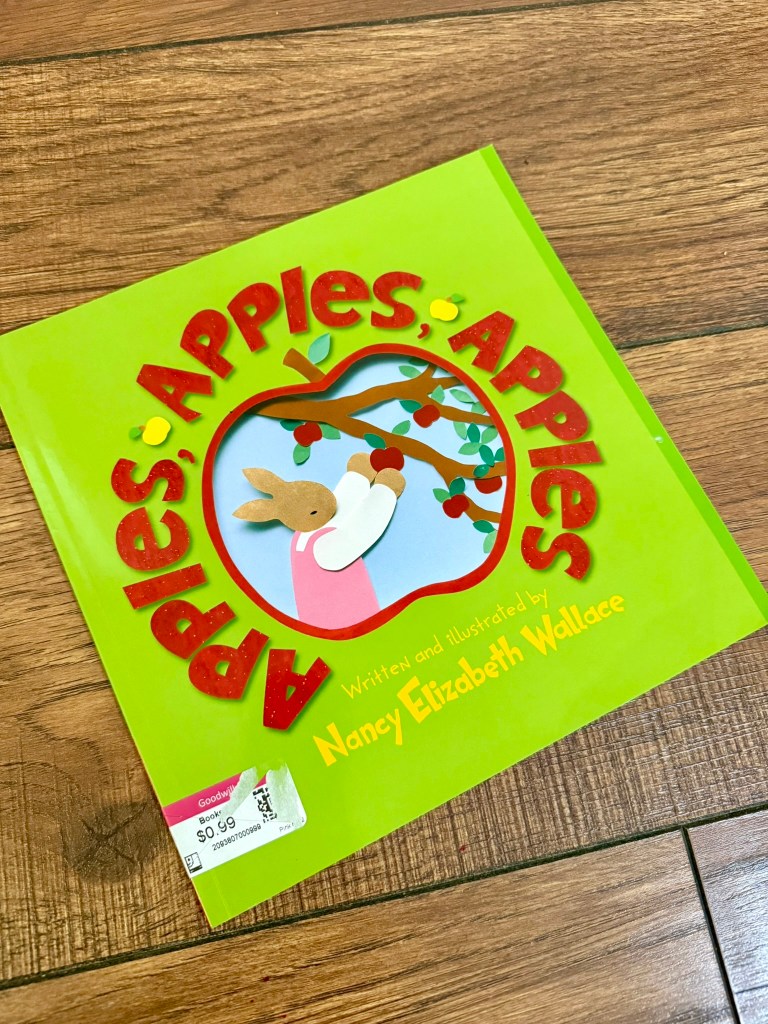
Apples, Apples, Apples By: Nance Elizabeth Wallace

Apples, Apples, Apples follows a sweet bunny family to an apple orchard to pick apples for snacks, baking and crafts. The collage style illustrations are absolutely adorable and add dimension to the story. During their visit, the farmer shows them different types of apples, the parts of an apple and how an apple tree grows. The family goes home to have their snack, make applesauce and do an apple craft. An applesauce recipe and directions for the apple craft are included in the story! A eye-catching mix of story and facts, this book is a must have for an apple theme.

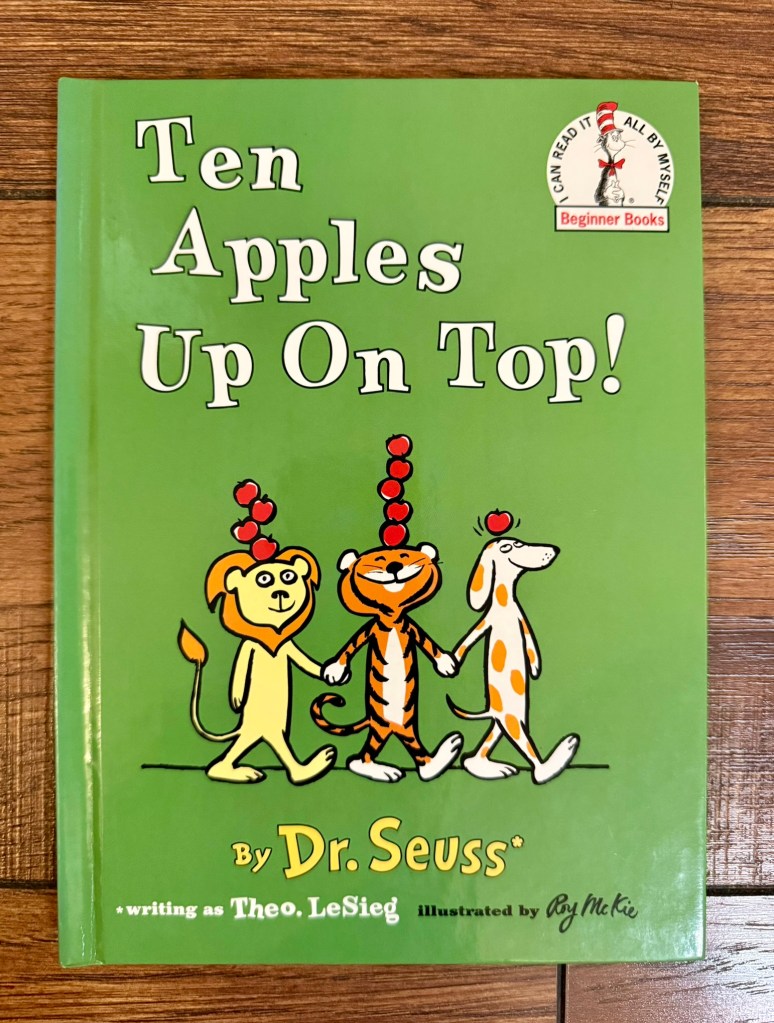
Ten Apples Up on Top! By: Dr. Seuss

Ten Apples Up on Top! is a silly story about three animal friends who compete to balance as many apples on their head as they can. Of course, the fun story is written in verse, so it supports important language skills like rhyming words and rhythm. The apple stacks also get bigger as the story progresses so that you can practice counting numbers 1 – 10 with your child throughout the story. This book is a perfect companion to an apple themed counting activity.

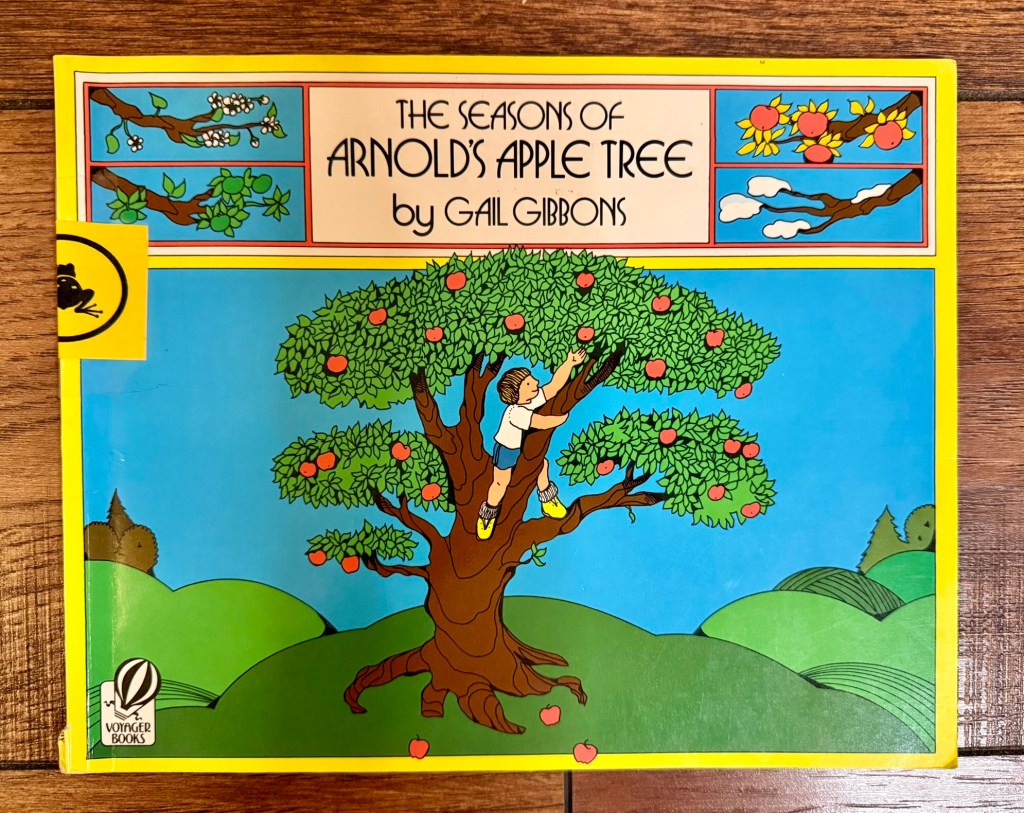
The Season’s of Arnold’s Apple Tree By: Gail Gibbons

The Season’s of Arnold’s Apple Tree details the characteristics of Arnold’s Apple Tree throughout the four seasons of the year. As he spends time by his apple tree, he notes the buds in spring, the full leaves in summer, the juicy apples in fall and the bare branches in winter. This book even provides an apple pie recipe and explains how a cider press works. And it’s all through the eyes of a boy who loves to play outside by his apple tree.

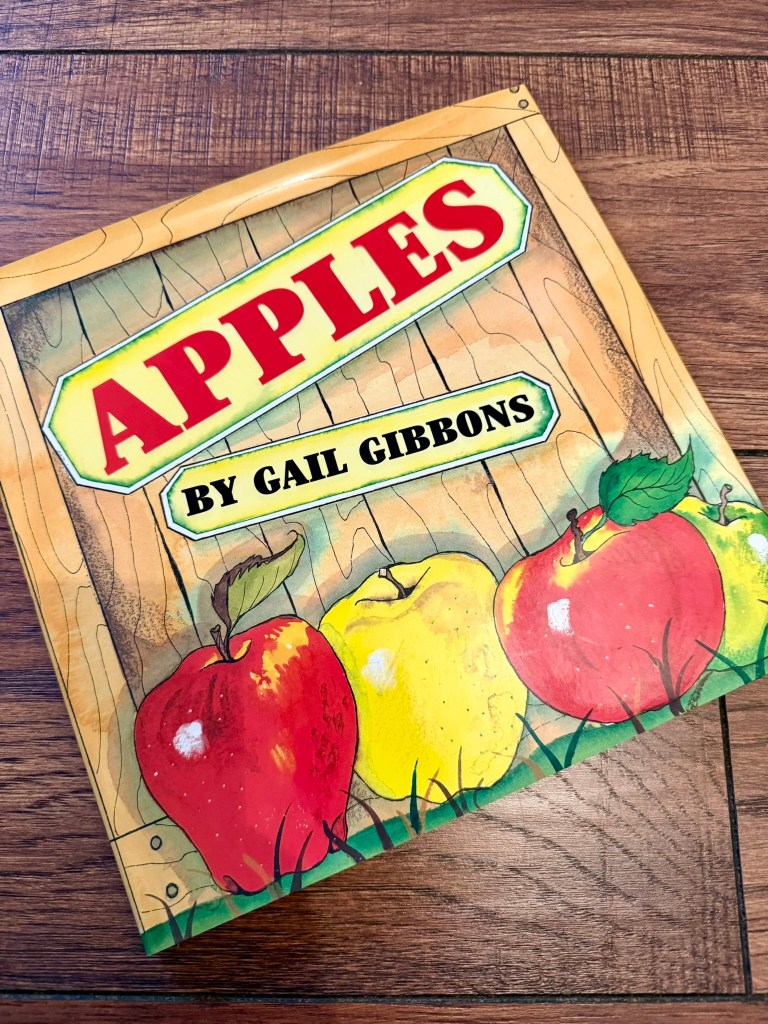
Apples By: Gail Gibbons

Speaking of Gail Gibbons, can you even have an apple theme without this book?! Apples is a nonfiction story about the types of apples, Johnny Appleseed, parts of apples, how apples are used and how to grow an apple tree. The details are accompanied by lively and colorful illustrations to draw your child in. Even if you have younger learners who may not be able to attend to all the information, the illustrations are certainly worth sharing to introduce everything apples.

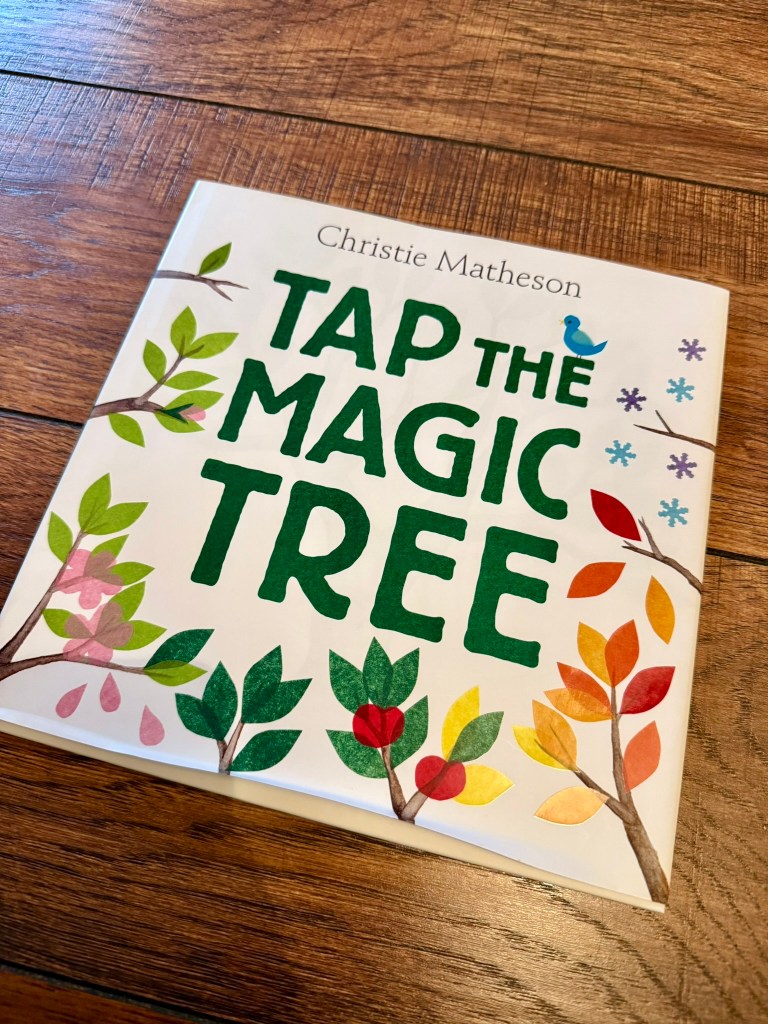
Tap the Magic Tree By Christie Matheson

Tap the Magic Tree is one of my absolute favorite apple stories. It is an interactive journey through a year with the apple tree. Each page invites your child to interact with the story by tapping, shaking or blowing the tree (and more!). You get to see the tree grow buds, flowers, drops its pedals, grow apples, drop it’s leaves and go dormant for the winter. This is also a wonderful way to introduce seasons to your little learners.

Also included in the Apples Teaching Tote are a collection of puzzles, toys, games and activities centered around apples. Read on to see what I’ve chosen for this tote!

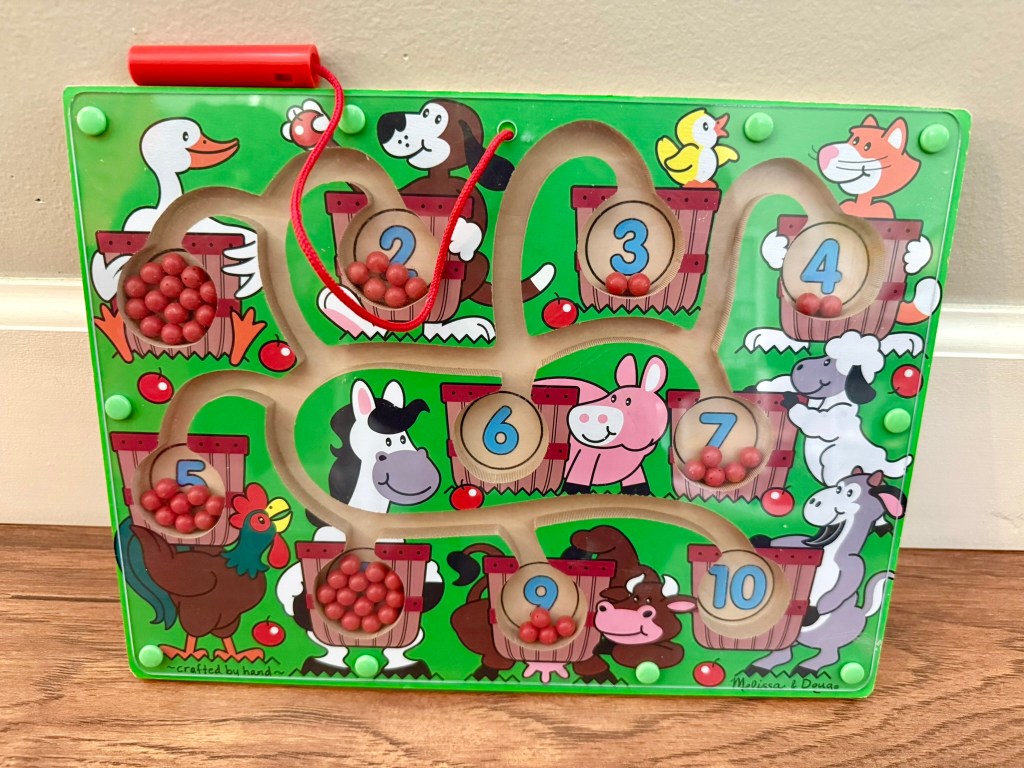
We absolutely love the Magnetic Apple Number Maze from Melissa and Doug. It allows your child to use their fine motor skills and dexterity to use the magnetic wand and guide each little apple to the baskets. Each basket is numbered so they have to work carefully, adding just the right amount of apples to each one. This one is also perfect for on-the-go because it is interactive but all the small pieces are contained!

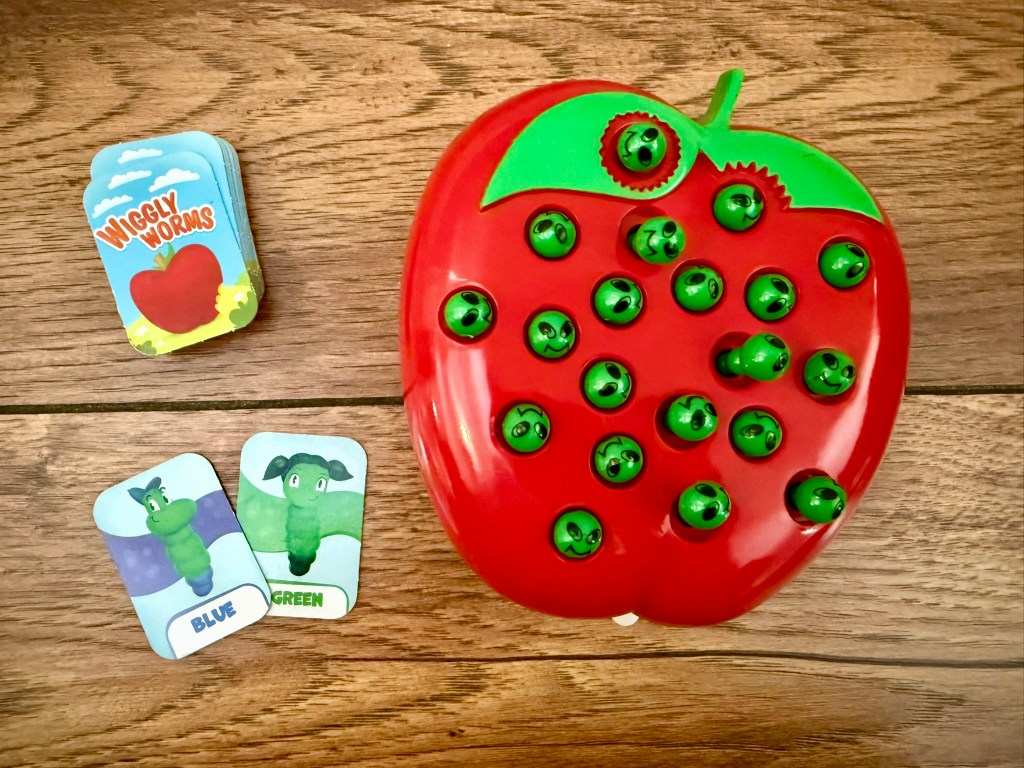
Wiggly Worms is a fun game that explores colors and challenges your memory! The worms wiggle around while you try to find a color that matches your card. You can replay as many times and you want and your child does not need to be able to read to play the game. Wahoo!

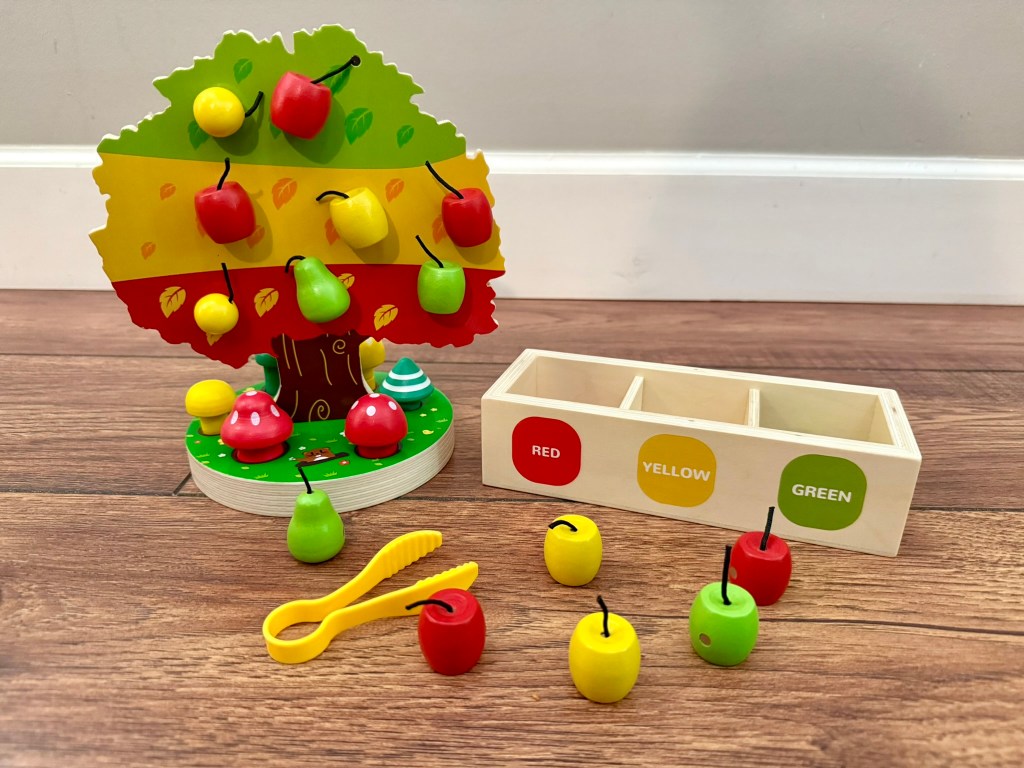
Another apple themed toy that I am so excited to include in this Teaching Tote is the Apple Picking Magnetic Tree. This toy is an open ended way to explore apple picking and the apple colors red, yellow and green. Use the small grabbers to strengthen fine motor skills and sort the colors. The base even comes with different size mushrooms that you can sort into their different holes. You can also embed in some number practice while playing with this toy by counting the number of fruit you pick from the tree. Pretend to be a farmer or pretend to be visiting a farm, pick your apples then use them to play!

I will always include sensory activities in a Teaching Tote. This Apple themed Teaching Tote actually includes 2 different sensory activities that you can easily recreate in your classroom or at home learning setting.

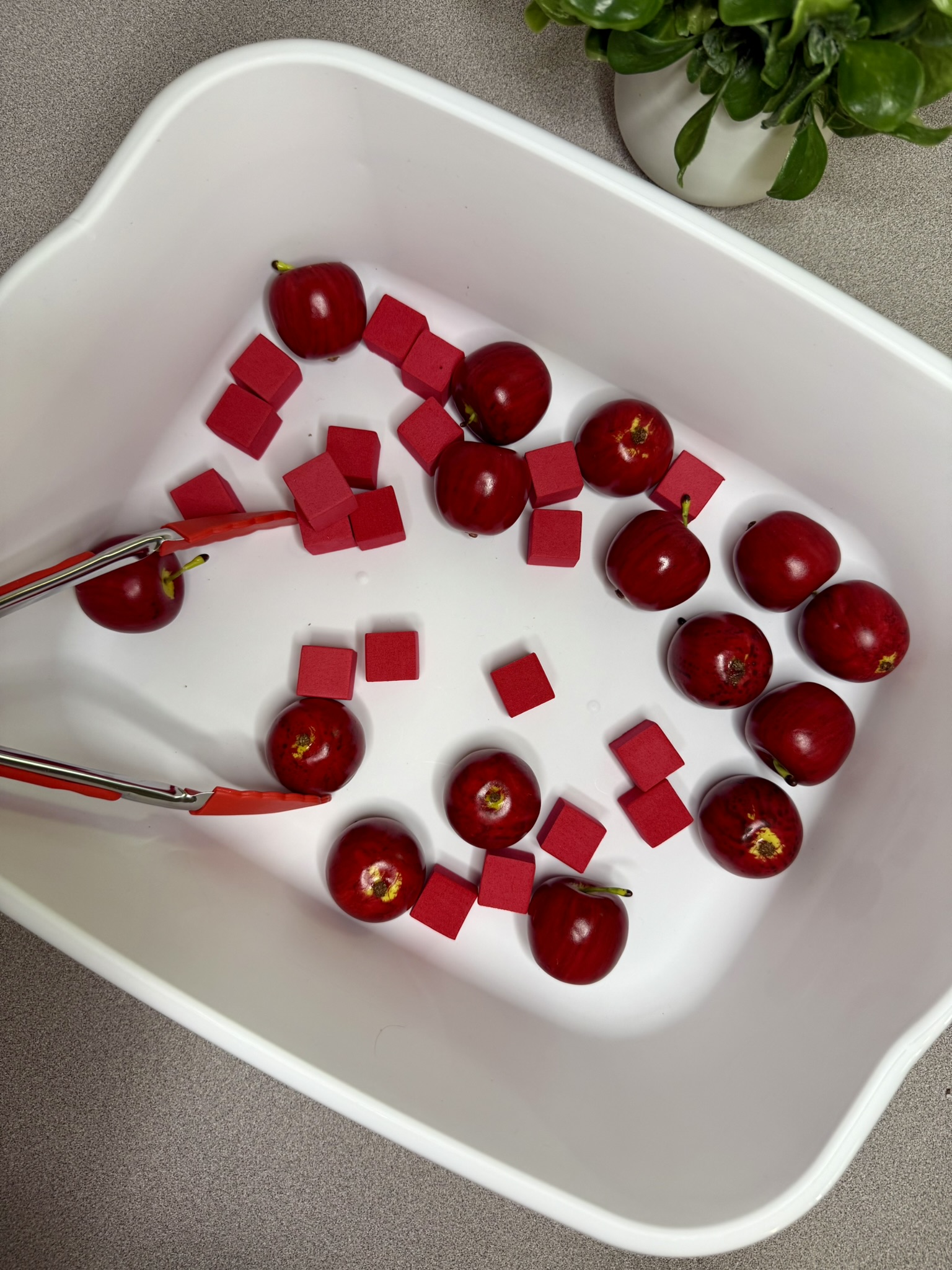
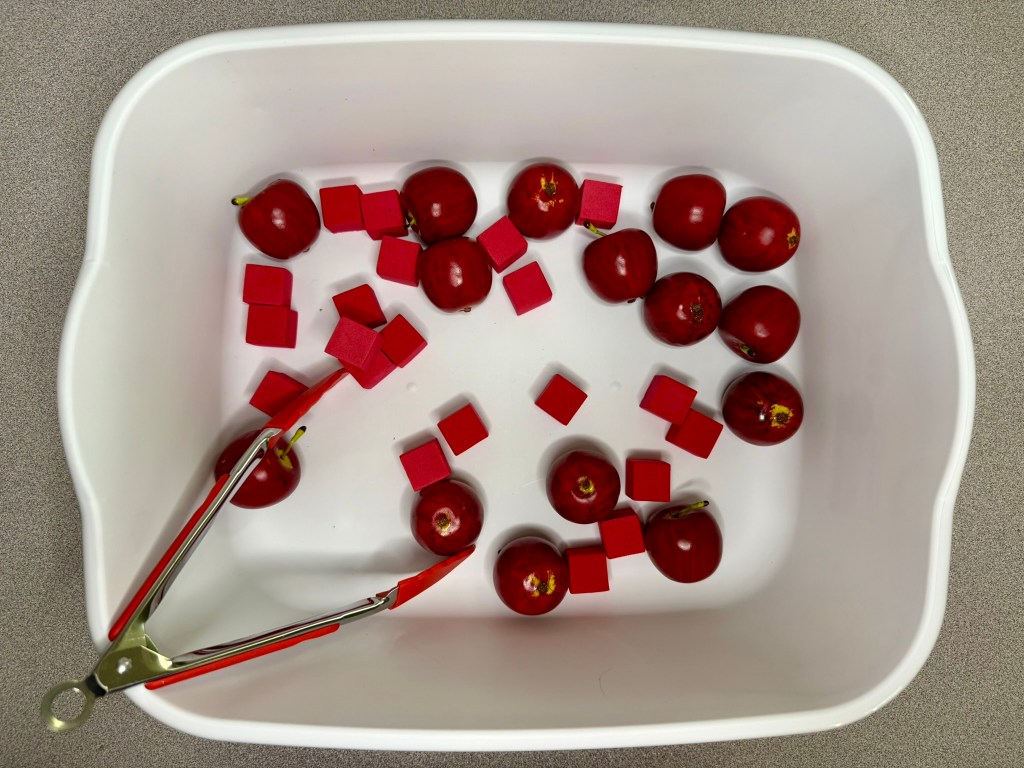
Create your own apple bobbing station with a small bin and some foam apples. Using a pair of tongs, your preschooler can transfer the floating apples from inside the bin to outside the bin. Encourage them count as they go. If you don’t have foam apples, you can also use red foam blocks.

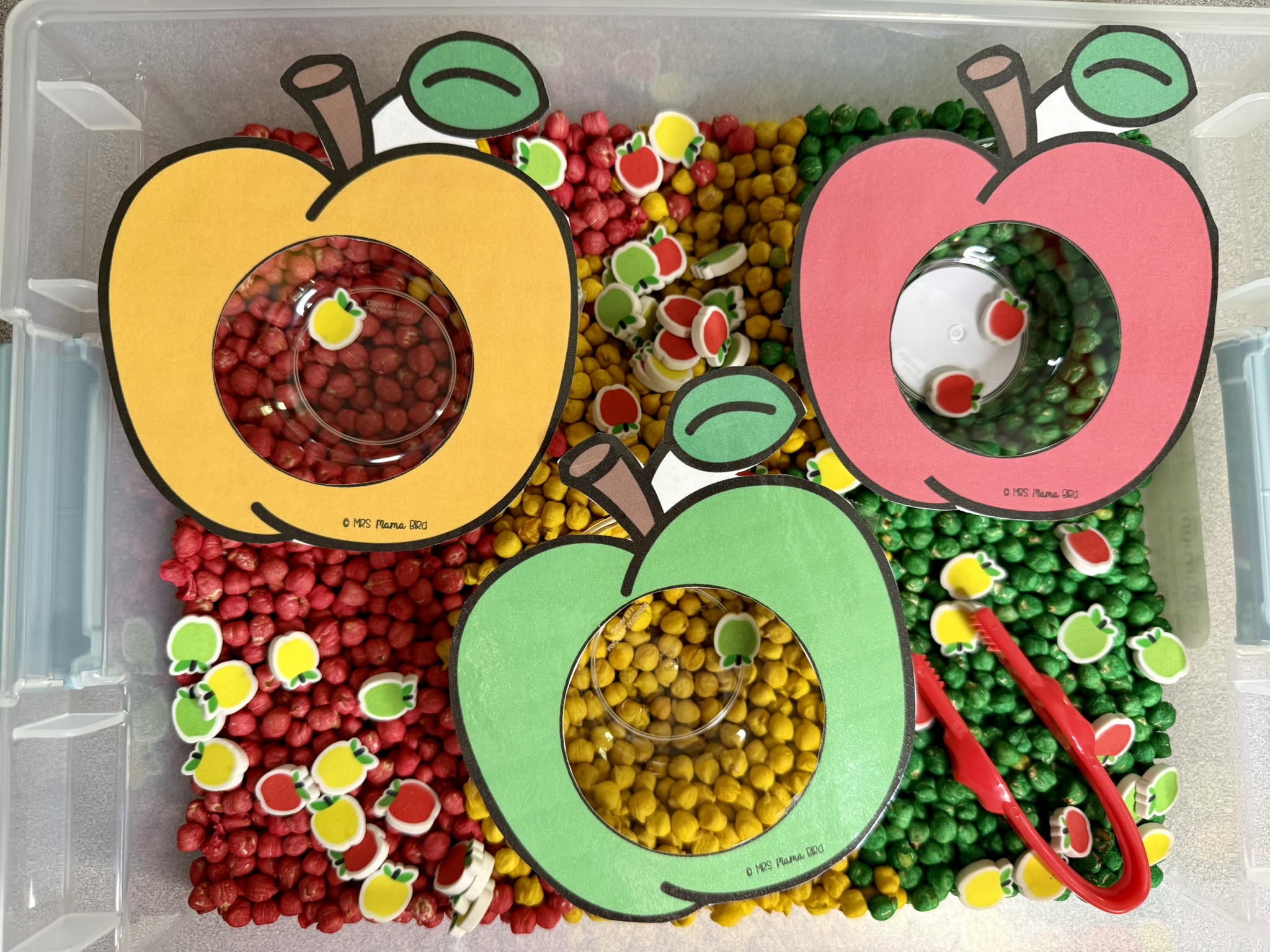
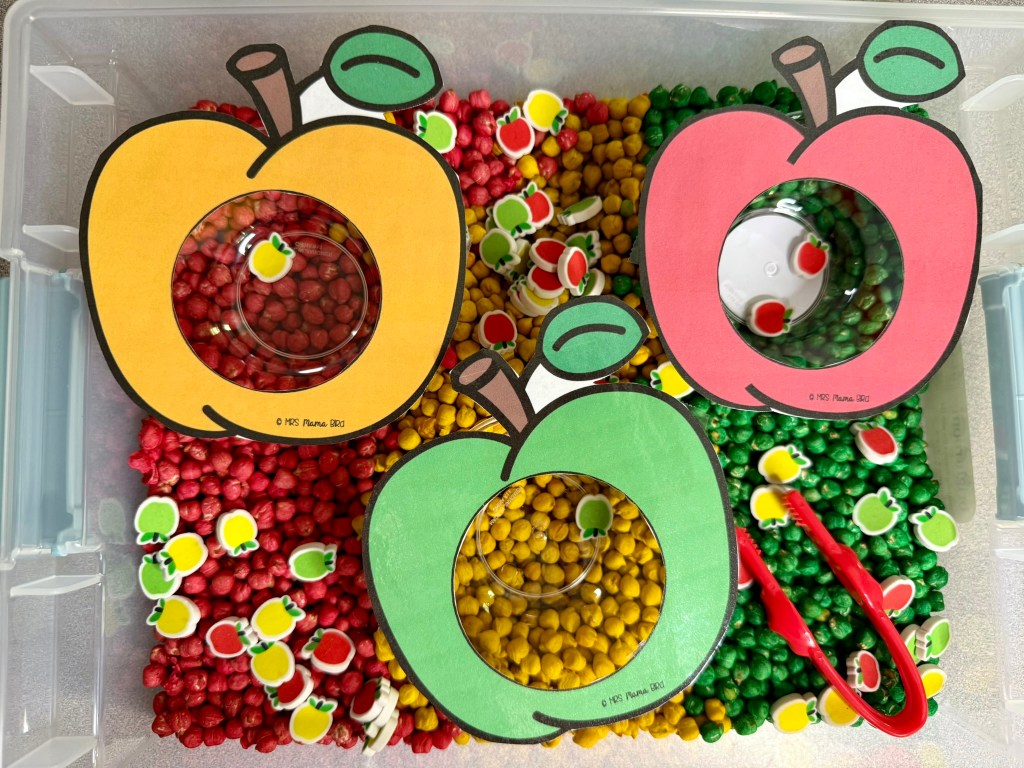
This is one of my favorite sensory bins! I created the base by dying dry chickpeas with liquid watercolor paint. Then I added apple mini erasers (linked in photo) and a small grabber. The apple icons are taped to small plastic bowls from the Dollar Tree. These labels can be found the the Apple Fine Motor Activities set from my TpT shop. You can find the link to that at the bottom of this post.

Every Teaching Tote includes hands-on activities to help your preschooler engage in early concepts like visual discrimination, the alphabet, counting, numbers, colors, and shapes. This tote includes 5 learning activities that perfectly accompany the books, games and toys that I’ve shared so far. You can click the photographs for the direct links to each activity. I will also link the icons at the bottom of this post.

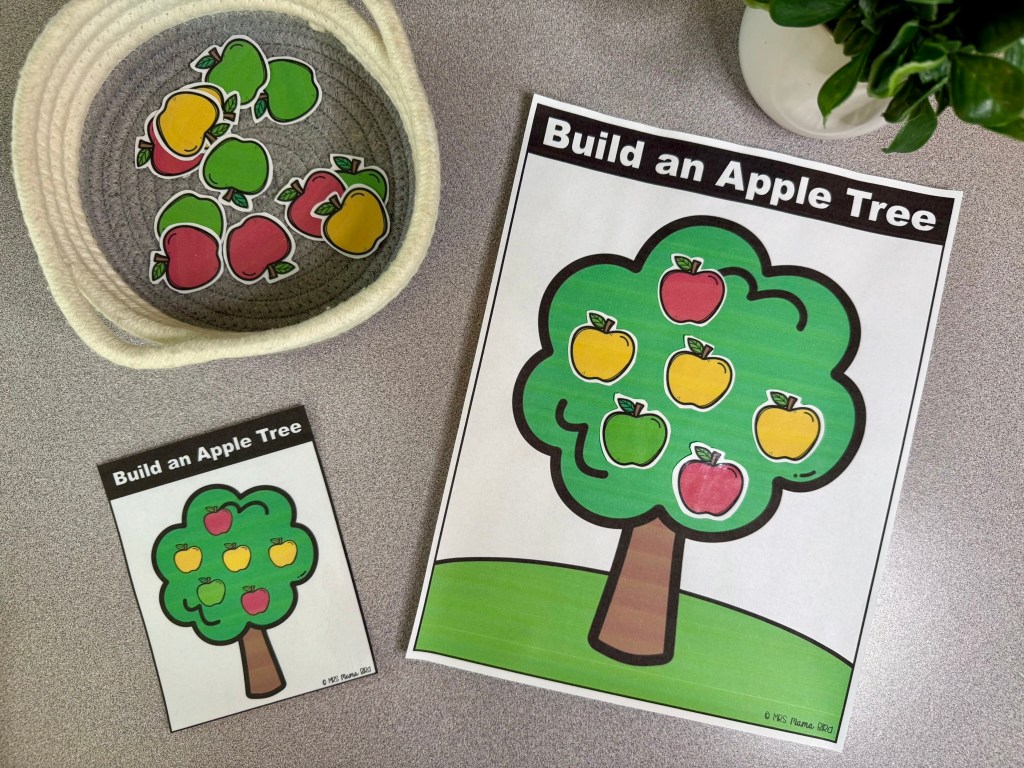
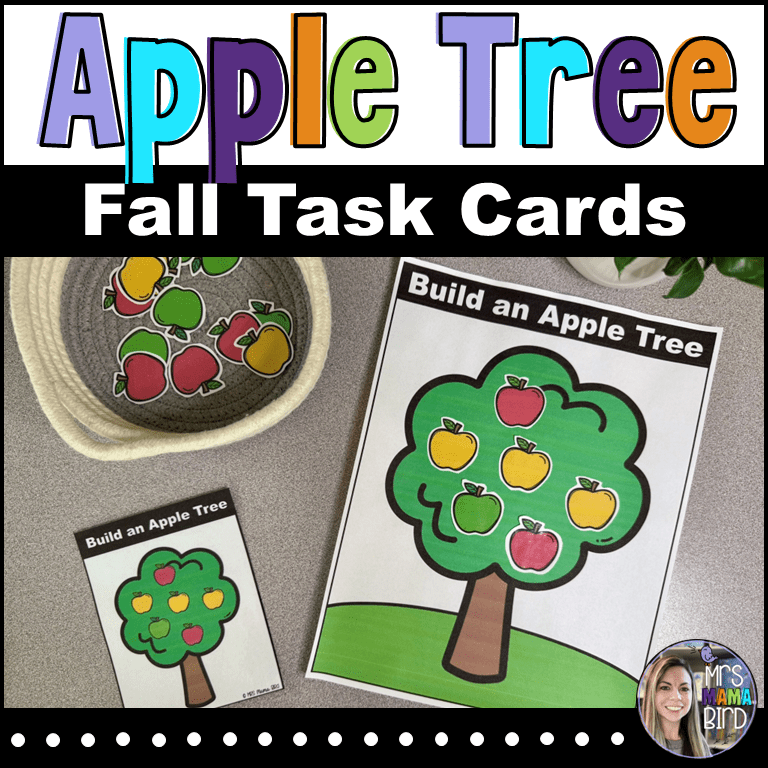
Visual discrimination is such an important skill when it comes to identifying, sorting and classifying objects. In this Apple Teaching Tote, you will find a Build and Apple Tree activity designed to help your preschooler strengthen their visual discrimination skills in a hands-on and fun way. It is easy to play! Just set the Build and Apple Tree Mat in front of your preschooler and provide the apple cut outs in reach. Have your preschooler pick a card and build a matching apple tree on the mat. Ask your preschooler- what color apples does your tree have? How many red? How many yellow? How many green? What color has the most? What color has the least? Continue to pick a card and build the different apple trees, letting your preschooler set the pace. Challenge your preschooler to create their own apple tree and tell you about it.

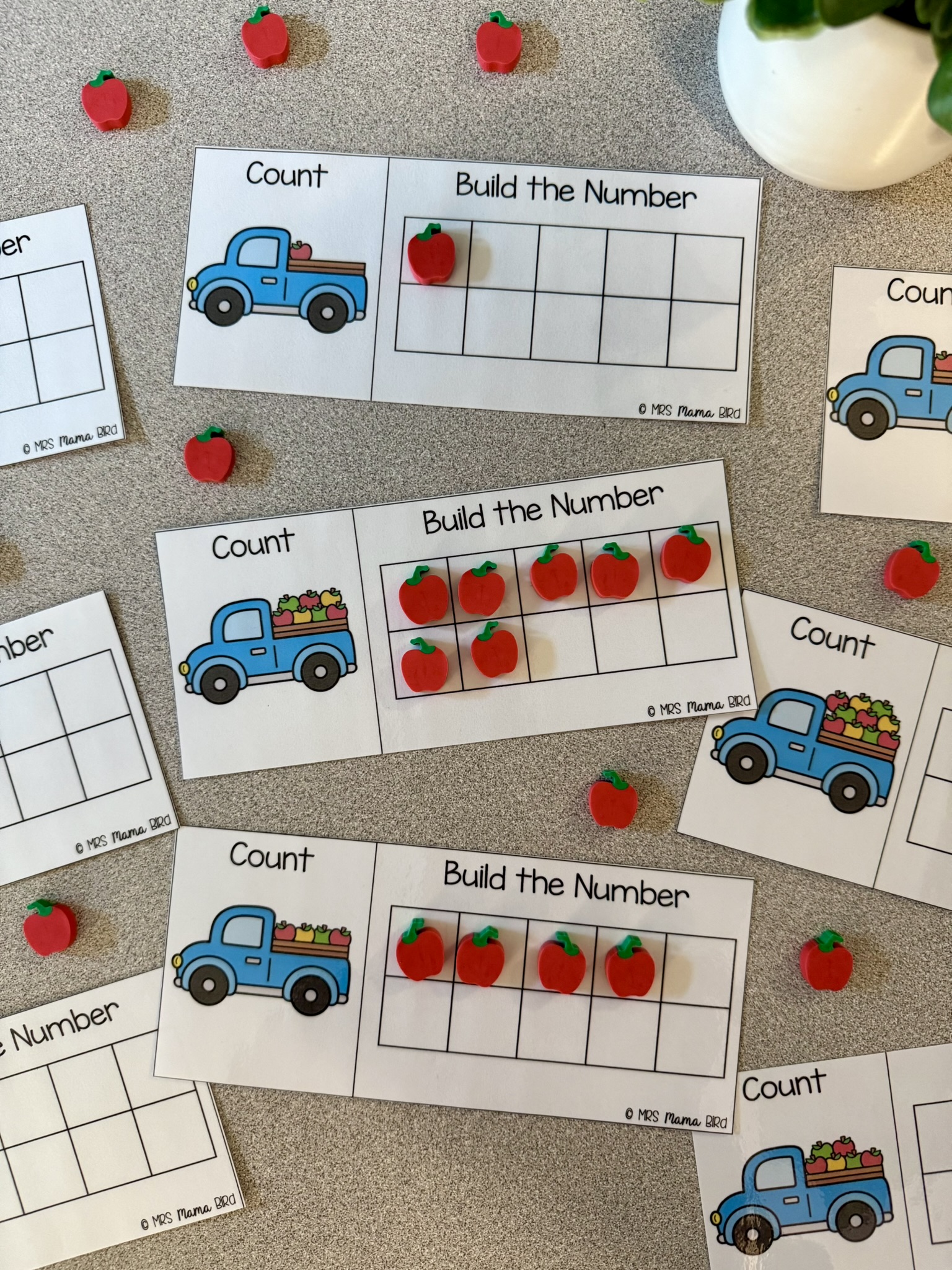
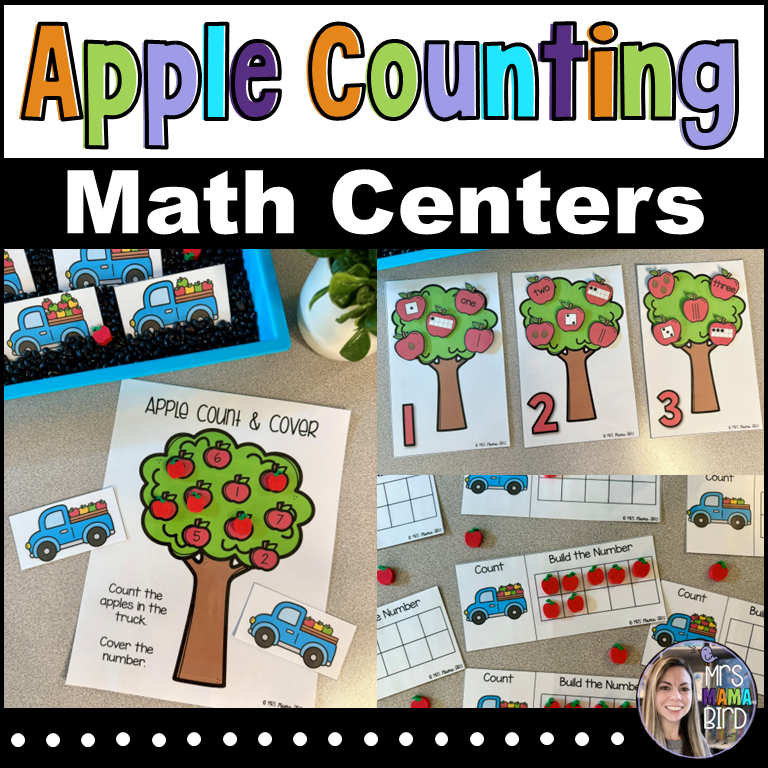
I’ve included 2 learning activities in this teaching tote that are designed to strengthen number sense and counting skills, the Apple Tree Number Sort and the Apple Count and Build Cards. Both of the activities are a part of the Apple Counting Math Centers set available in my TpT.

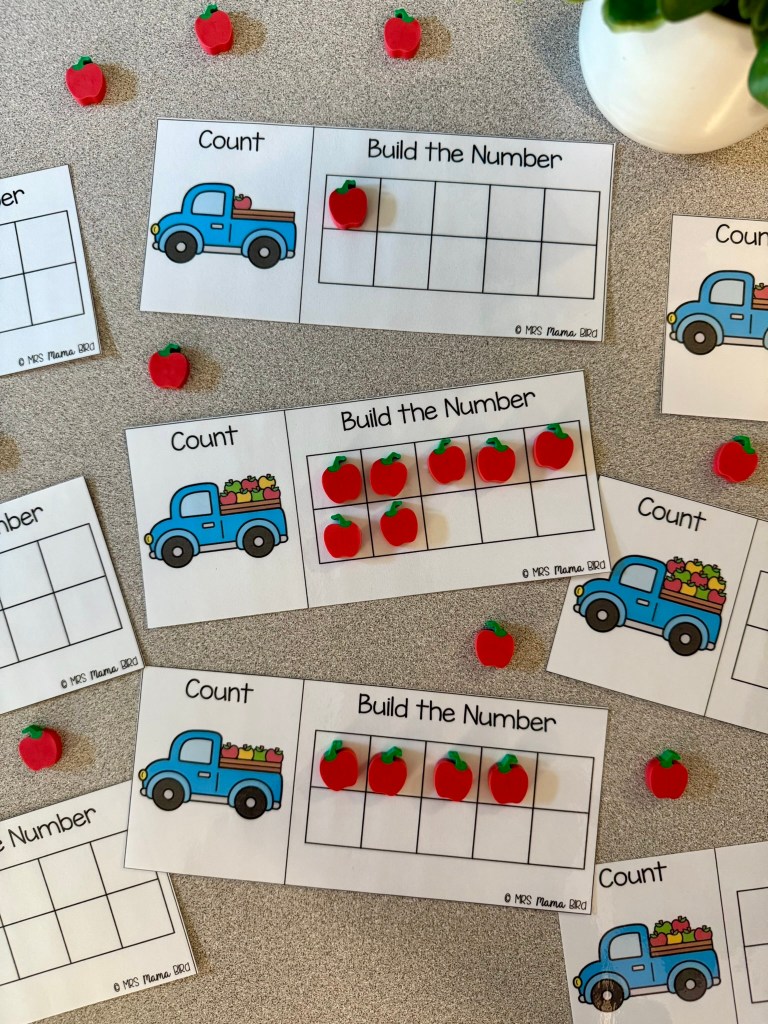
The Apple Count and Build Cards are a fun and easy way to practice counting 1 – 10 and introduce your preschooler to tens frames, building a foundation for a strong number sense. Simply pick a card, count the apples in the truck and show the quantity in the tens frame. Click the photo to grab the apple mini erasers pictured. Click the photo below to grab the printables.

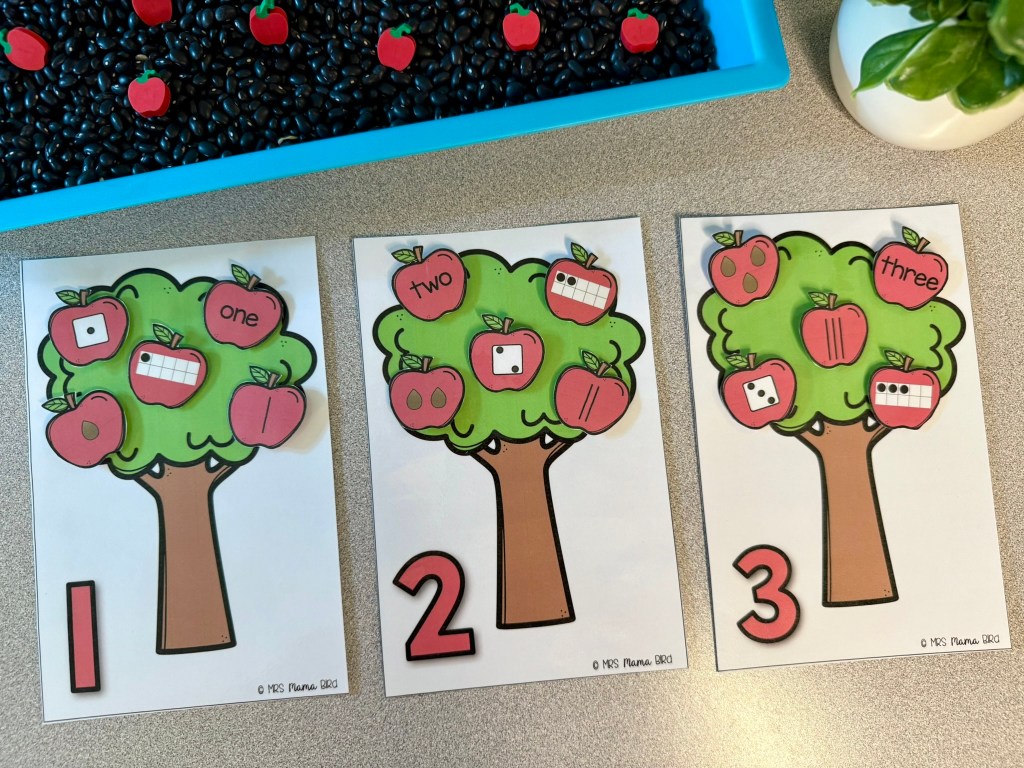
The Apple Number Sort is a wonderful way to introduce your preschoolers to number forms. The apple cards show numbers 1 – 10 in 5 ways: number, dice, quantity, tens frame and word form. Choose 2-4 numbers to practice and place the corresponding apples in a draw pile. Take turns picking an apple and placing it on the correct tree.

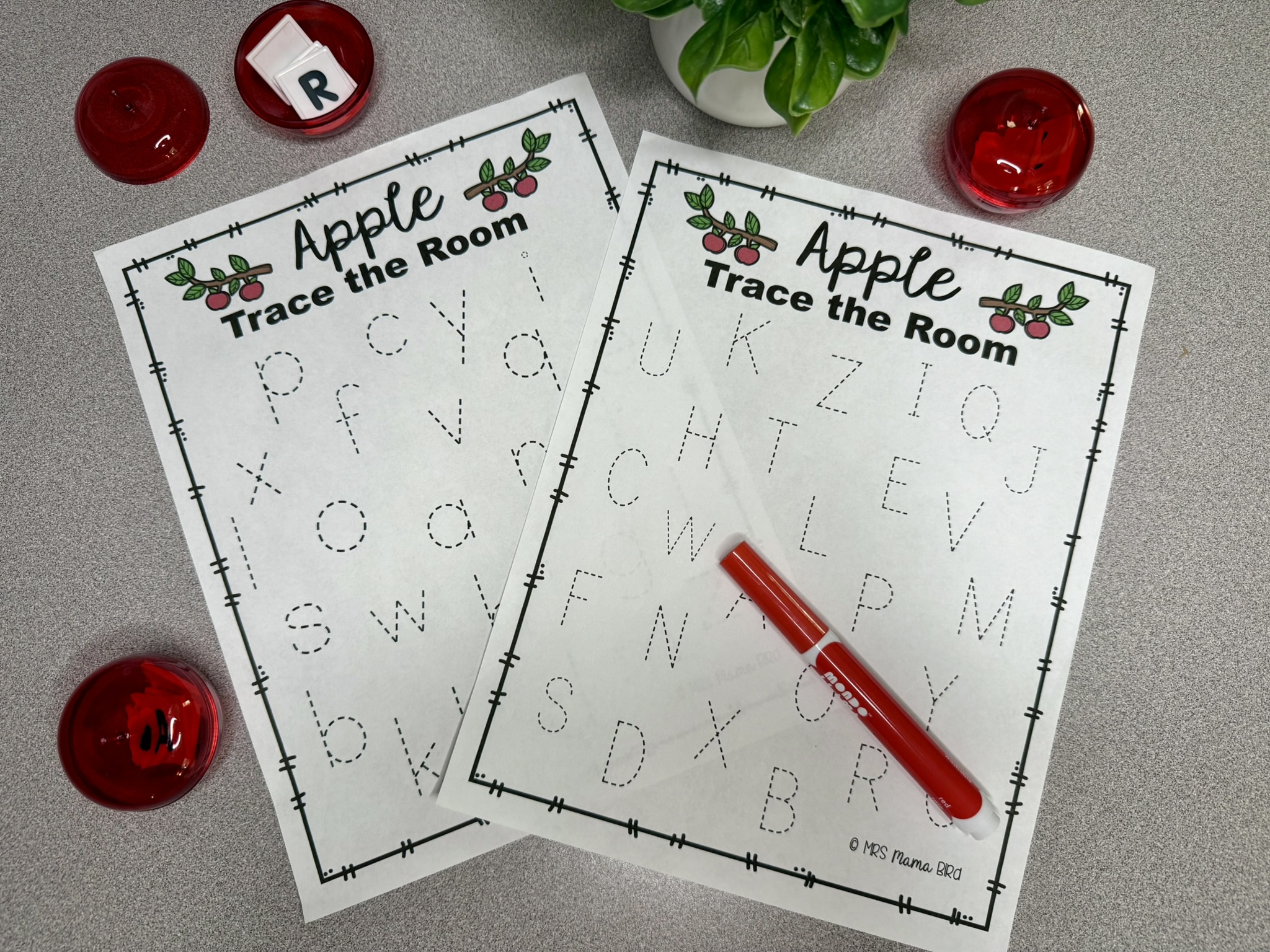
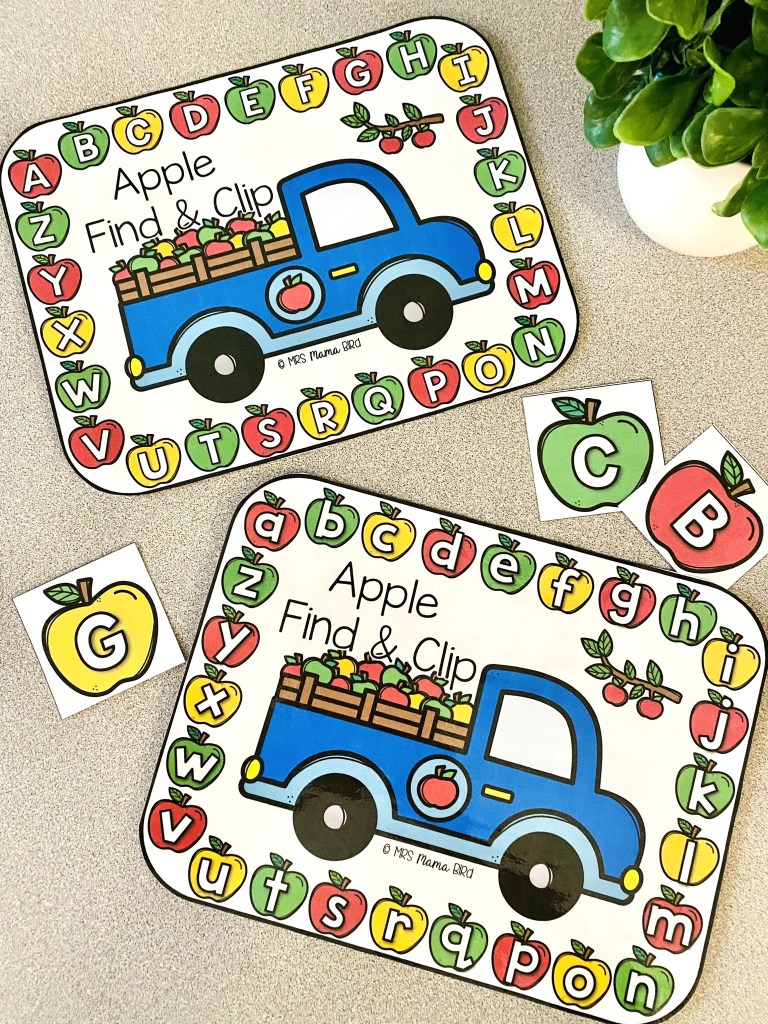
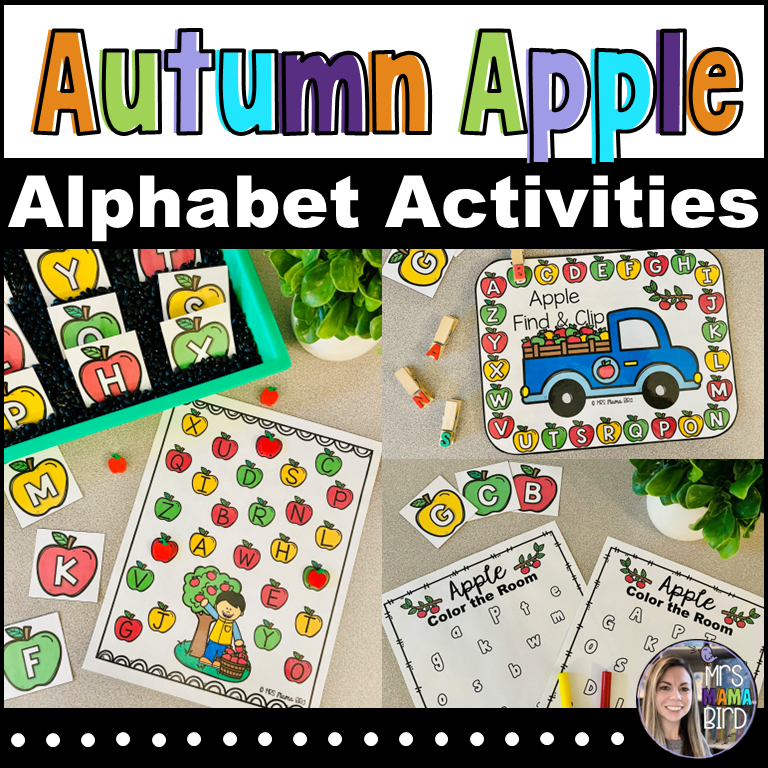
Of course I’ve included some letter practice in this Teaching Tote as well! These alphabet activities will have your preschooler identifying, naming and writing uppercase and lowercase letters. The Apple Find & Clip as well as the Apple Trace the Room are both included in the Apple Alphabet Activities resource in my TpT shop.

I love getting preschoolers excited about learning letters by adding a little movement into the activity. With this Trace the Room, I hid letter tiles (about 3) in small plastic apple containers. Simply set the apple containers around the room and challenge your preschooler to find one, open it, say the letters inside and trace them on their recording sheet. Continue until all the letters are found. Click the photo for a direct link to the apple containers!

Clip activities are such a fun way to practice fine motor skills! With this Apple Find & Clip, have your preschooler find a letter card and clip the matching letter on the Find & Clip Mat. You can choose to practice with uppercase or lowercase letters. Both of these alphabet activities are part of the Apple Activities resource in my TpT. Click the photo to check it out!

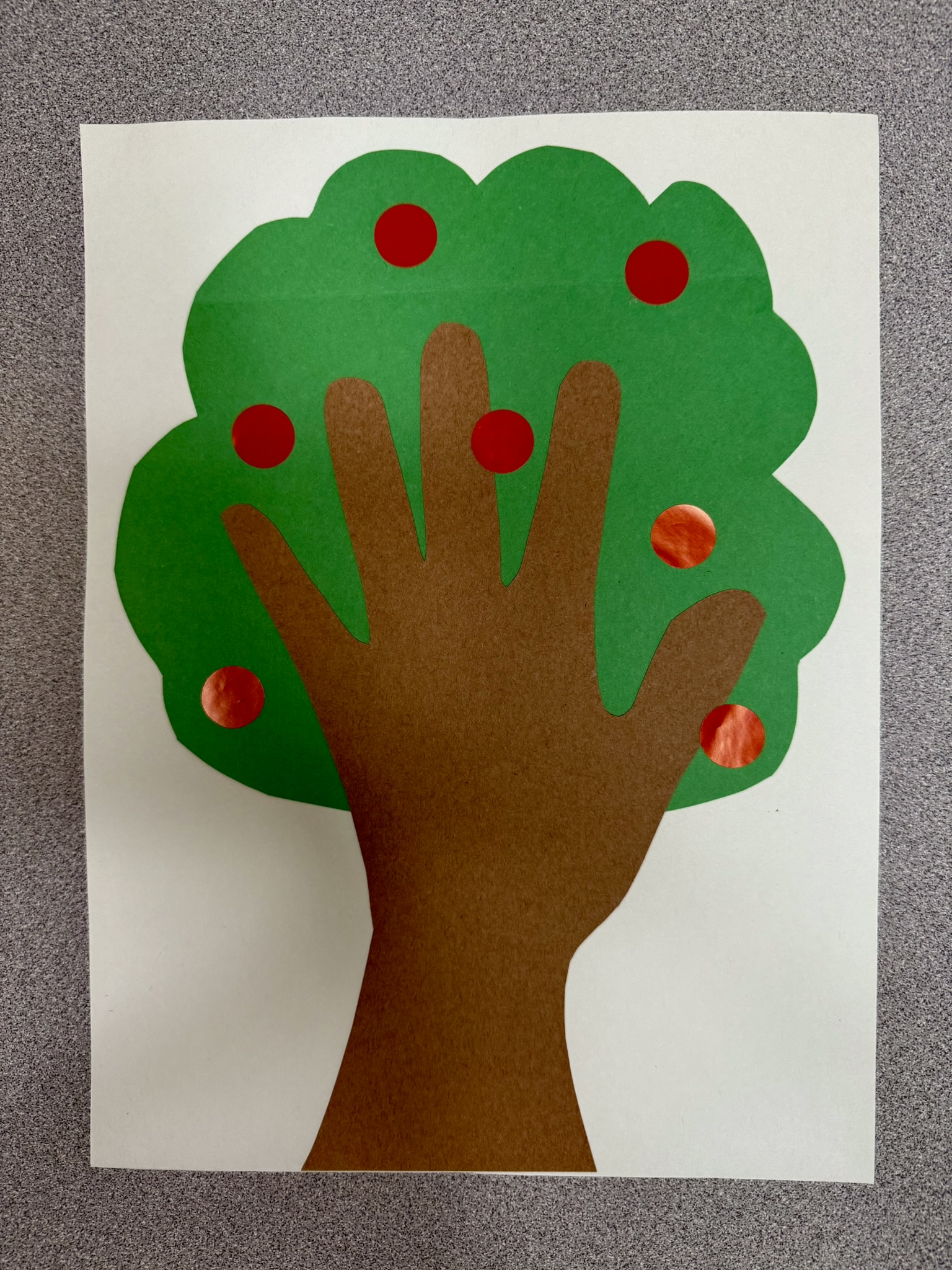
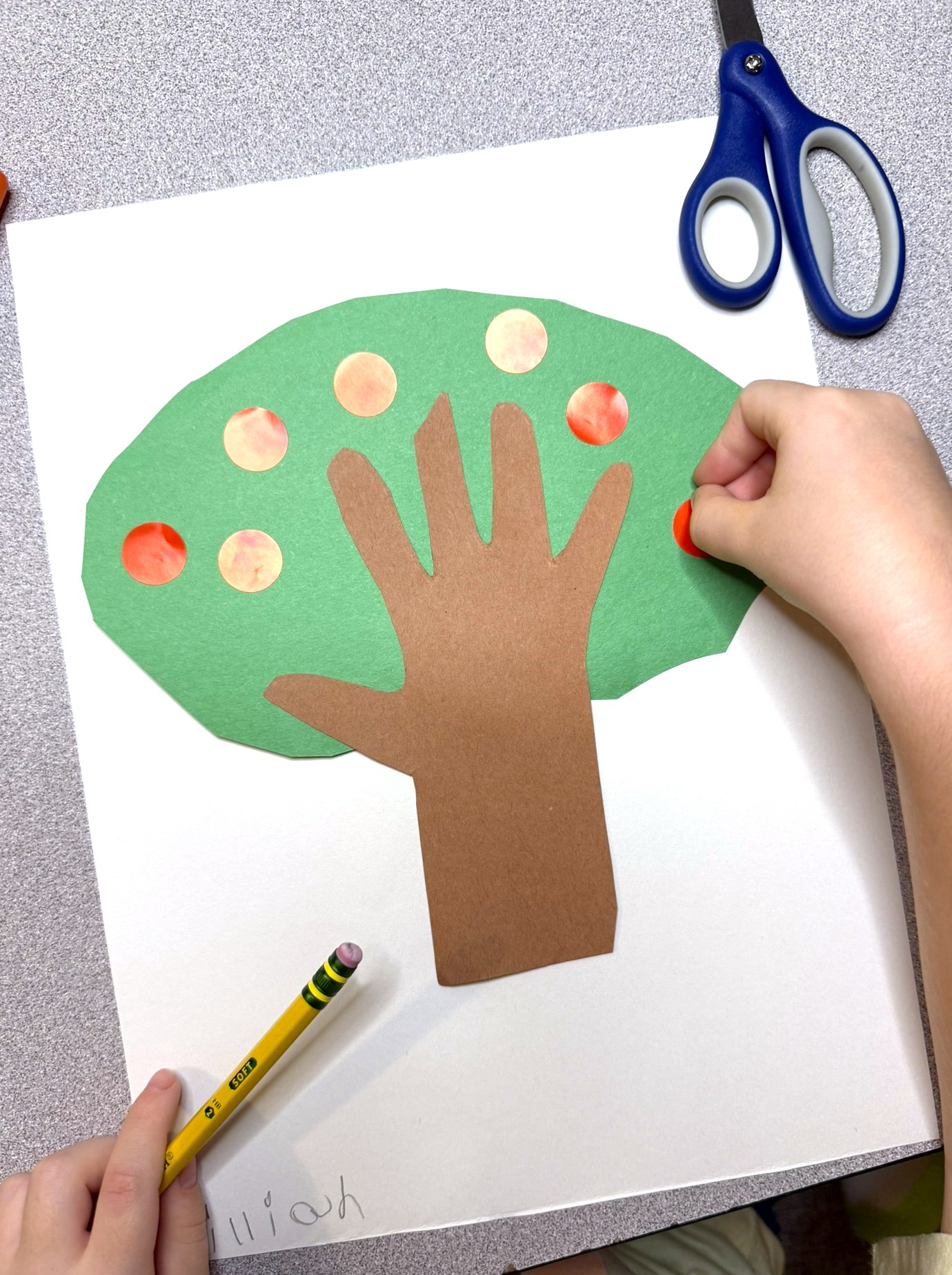
I want to end this blog post with an explanation of this adorable apple tree craft that is included in the Apple Teaching Tote. This craft makes an cute hand keepsake and classroom display and it’s super easy to prepare! Just have your preschooler trace their hand on brown paper and draw a tree leaf shape for the leaves (I explained it by saying it looks like a cloud). Glue these pieces to form a tree on a separate sheet of paper. Add apple color dot stickers (red, yellow and/or green) to the tree and Voila! You have a sweet craft to display proudly for your little learner.

I hope this post was helpful to you! If you’re local to the Mount Airy, MD area and you are interested in renting all of these fun items, please click the Teaching Totes icon to visit my Teaching Totes website and contact me for booking!

If you would like more information about the learning activities featured in this blog post, click the icons below! Happy playing!!
Apples, Fall, Sensory Play

Apple Activities For Preschool *FREE Download*

It’s apple picking season once again so I thought I’d share some more fun, hands-on activities you can do with your preschoolers to get them excited about apples. This post includes apple book inspiration, sensory play ideas, and some dramatic play inspiration, including a free download for your apples dramatic play center.

Whenever I am planning a new theme for the playroom, I always start with the children’s literature. I have grown a pretty big personal library over the years, but still scour the library for themed titles as well when there is a particular one that I want. If you’d like to see my full collection of apple books, click the Instagram link below.

There are so many fun apple themed books to choose from, so it’s hard to narrow it down to a few favorites. But I chose four titles to highlight in this post so that you can narrow down your search as well.

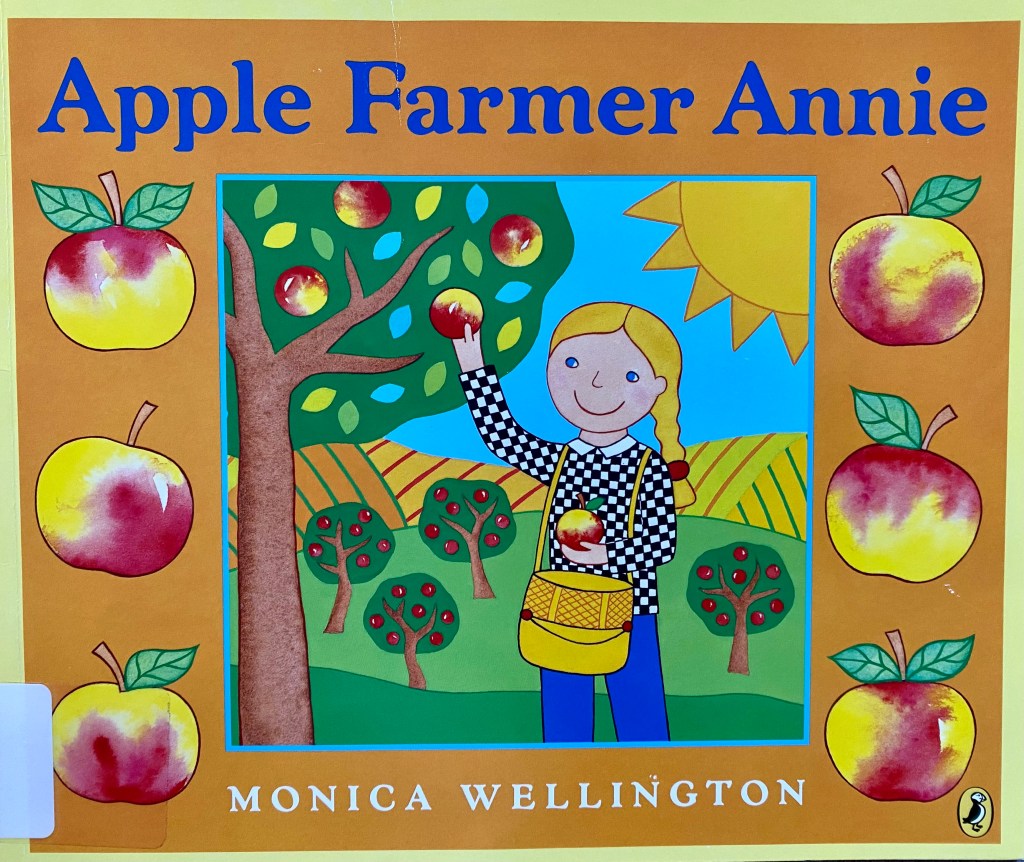
Apple Farmer Annie, by Monica Wellington, is a simple story about a farmer, Annie, who prepares her apples and apple products for a market in the city. The illustrations are vibrant and engaging. The text is straightforward and well suited to hold the attention of a preschooler.

Tap the Magic Apple Tree, by Christie Matheson is an interactive book about the cycle of an apple tree through the seasons. The really fun thing about this book is that each page asks the reader to do an action (i.e. tap the book, rub the leaves, blow on the leaves, ect.) and the kids love it! Each page reveals a new development from flower buds, to apples, to falling leaves. This one gets picked up off our shelf over and over.

Ten Apples Up On Top, by Dr. Seuss, is an apple book classic. Of course, the clever rhyme schemes in this story make it fun and silly. Because it follows three animals competing to see who can balance apples on their heads while doing different activities, it also lends itself to counting practice (Another post on counting apples activities soon!).

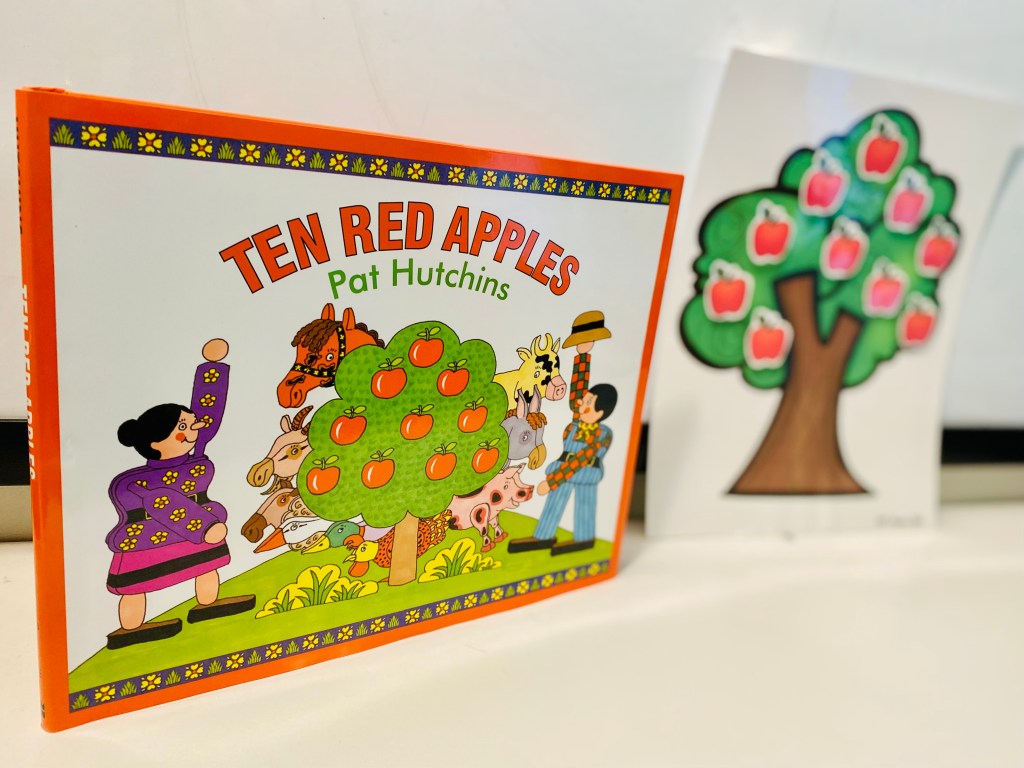
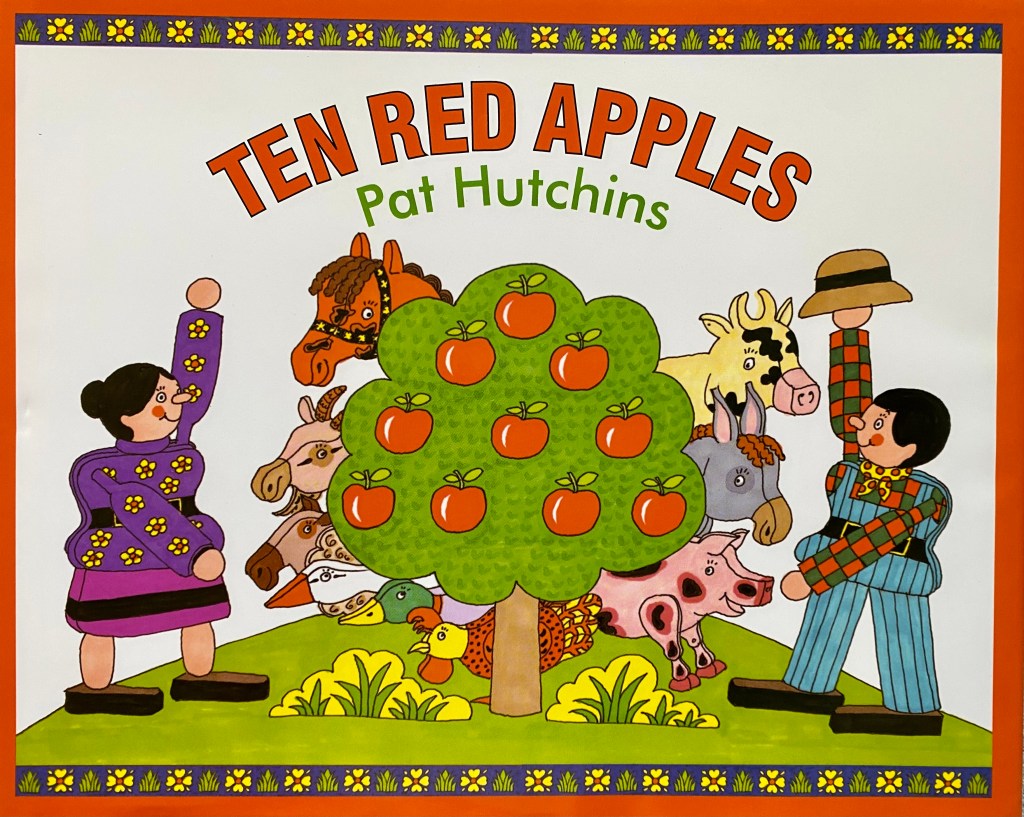
Ted Red Apples, by Pat Hutchins is also another favorite that tells the story of a farmer whose farm animals keep eating the apples on his apple tree. The story counts down from 10 as each new animal takes an apple. This book has sing-song verse that kids love and lends itself very well to teaching sequence of events as well as counting.

Sensory play is always a must when introducing a new theme. I like to make sensory bins for the playroom and alternate them every week. I also like to KEEP IT SIMPLE. Sensory bins don’t have to cost a fortune to be fun, most teachers and moms are on a budget. I totally get that! I keep several sensory bin bases on hand to use and reuse. Black beans are probably my favorite sensory bin base because I love how they make the other colors pop. I chose black beans for the apple sensory bin because they resemble apple seeds. I added red, green, and yellow pom poms which I already had on hand. The red and green scoops were a free giveaway from another teacher cleaning out her classroom (I will keep them handy for Christmas time too!) and the wooden bowls are from my kitchen. The only thing I purchased were the small foam apples (Amazon) and the cost was well worth it because that was several years ago and I use them all the time.

Play doh trays are another fun way to incorporate sensory play into your apple theme. This apple play doh tray invited my little learners to create apple trees with the materials. I offered green play doh, small sticks, red, yellow, and green buttons, and play doh rollers. The preschoolers got right to it, making a sweet little apple orchard. This activity allowed for conversation about colors, counting, and size comparison.

Dot stickers and butcher paper activities are a favorite here and when you put them together- wow!!! My preschoolers were very excited to decorate the apple trees on this butcher paper. I started by drawing the outline of three large trees. Then I gave them each a sheet of red, yellow and green stickers. I left this open ended, they could decide where to put the stickers. But you could easily make this a color sorting activity by labeling each tree with a certain color. If you draw the trees smaller and label them with numbers, this could become a counting game as well!

When it comes to dramatic play, I like to change out this Melissa and Doug Grocery Stand about every month or so. If you can get ahold of this exact stand, it is the best for small spaces in my opinion! I was able to grab one off of Facebook Marketplace for our playroom and it fits very well in the corner of our playroom. I love how versatile the compartments are in the front. 9 empty bins ready to be transformed! This stand does come with 9 chalkboard labels that hang on the front, but I actually never use those. When it comes to labeling the dramatic play area, there are so many fun and engaging sets out there that you can use. Because we have a small space dedicated to dramatic play, I prefer to just make my own labels using photographs of our actual space. The pictures on each bin label are actual photographs of the bins themselves. This helps preschoolers know exactly how to put things away when it’s time to clean up. Especially because so many components can easily get strewn about!

Our apple stand has lots of apple products for little customers to buy. There’s unopened apple juice bottles, faux apples (from At Home), mini pie tins (Amazon), felt pie crust, and red and green pom poms for the pie filler. The bushel basket is from Michael’s and I honestly wish I would have purchased at least two. The kids absolutely love filling the basket with apples then emptying it again.

If you would like to use the apples banner or any of the apple stand labels for your dramatic play area, you can download them for FREE by clicking the button below. The file is editable, so you can add your own photographs and text onto the labels.

You may also be interested in these apple resources from my shop!

Counting, Fall, Halloween

Halloween Counting Activities for Preschool and Kindergarten *FREEBIE*

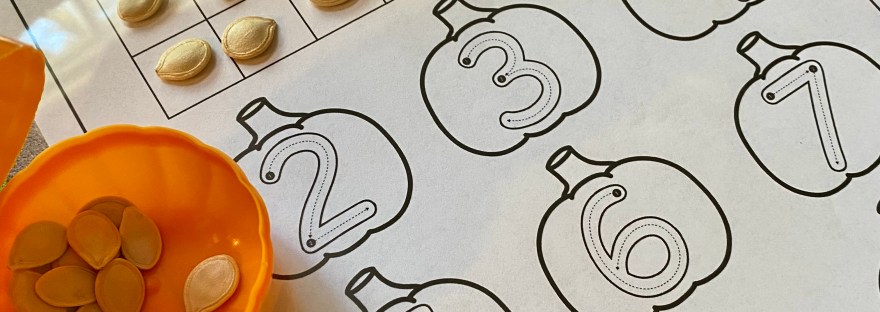
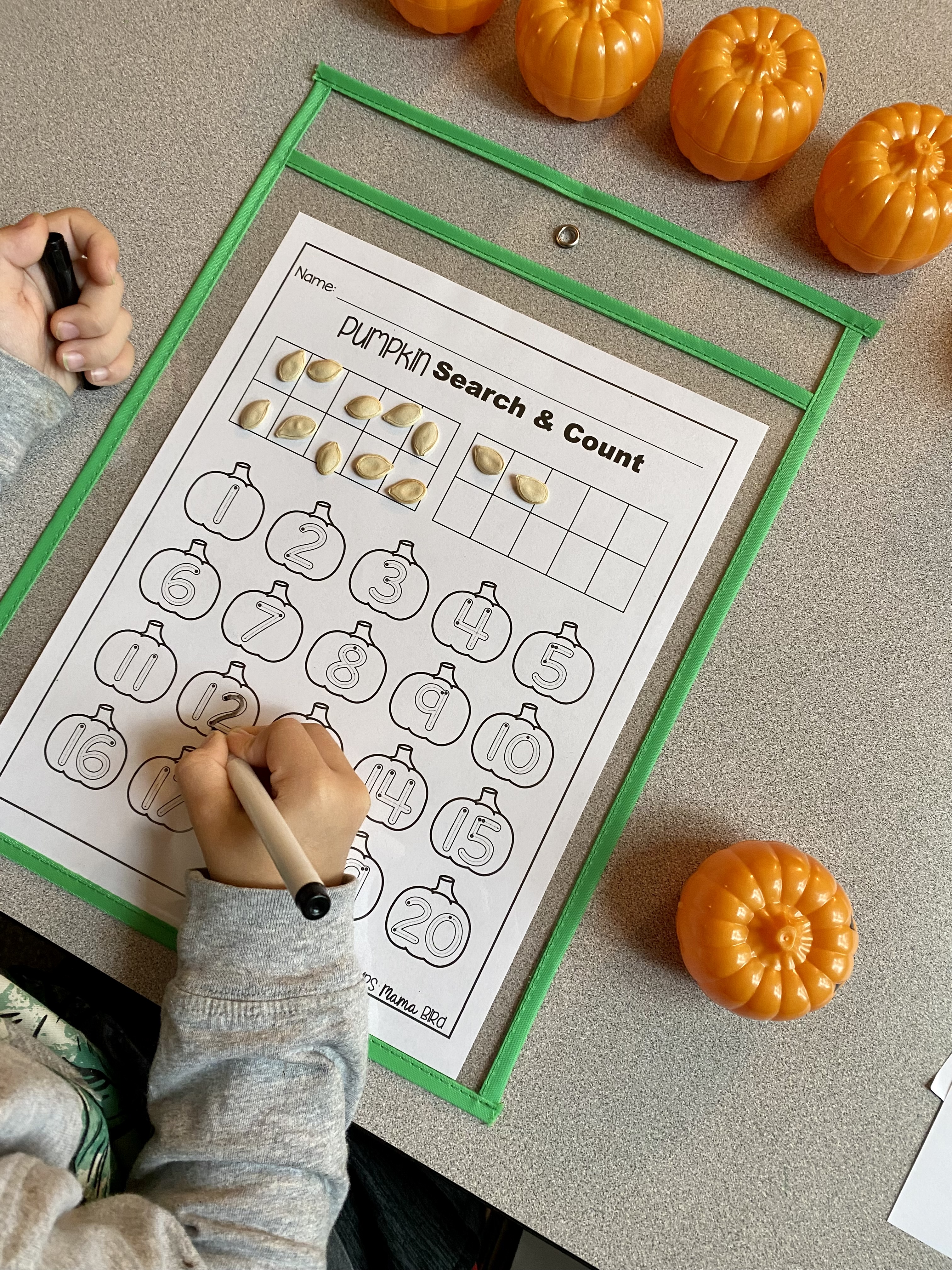
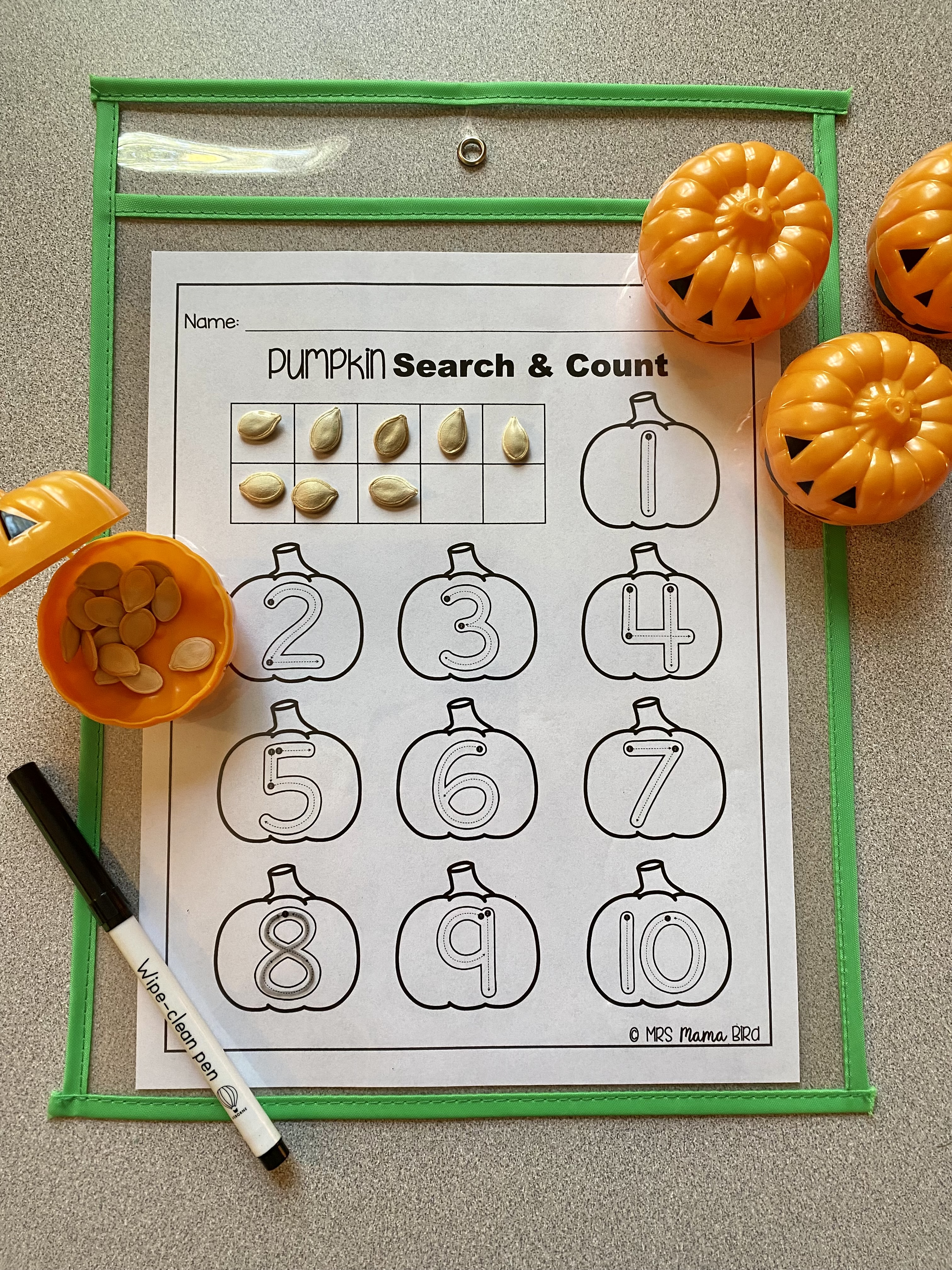
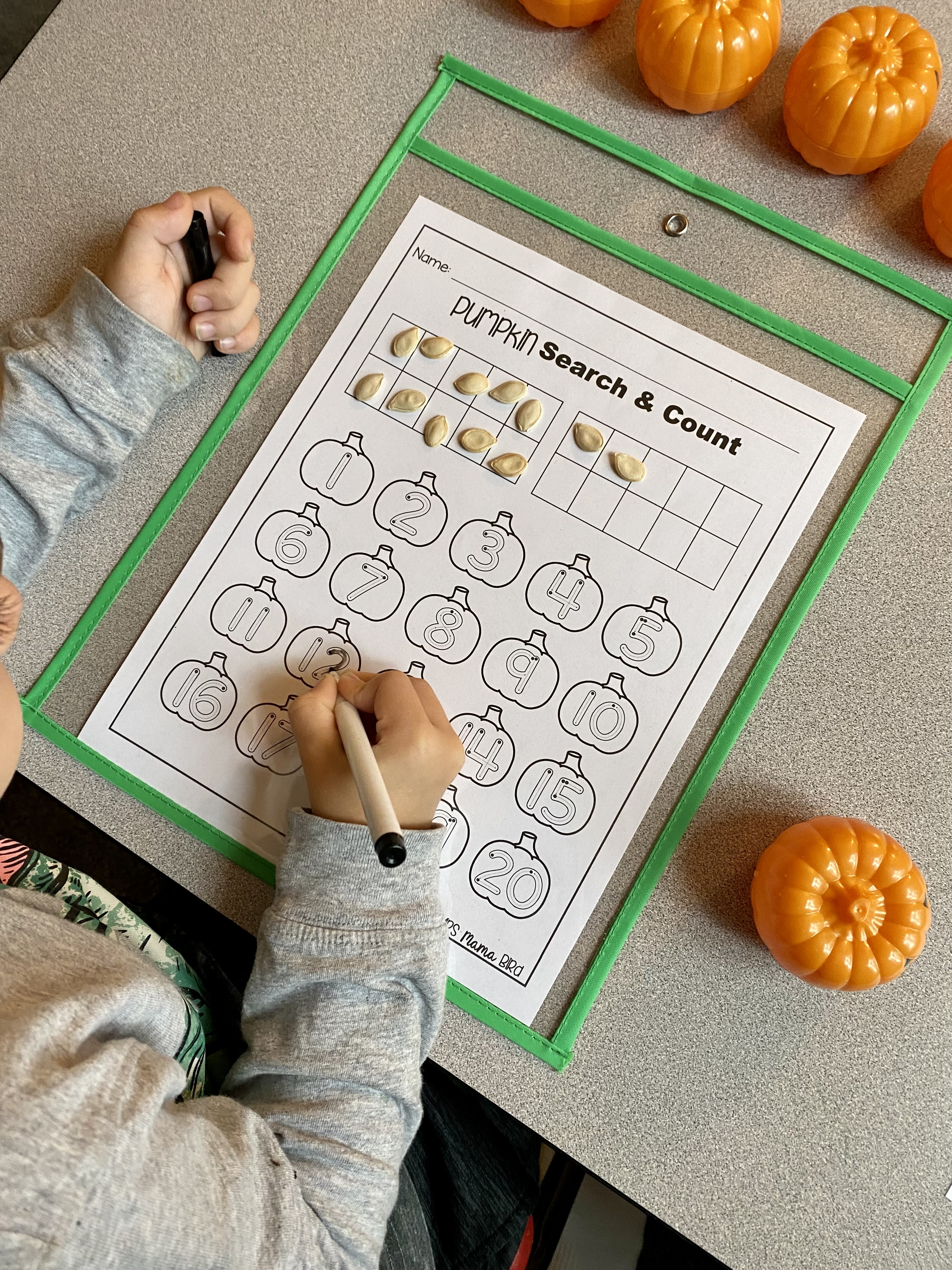
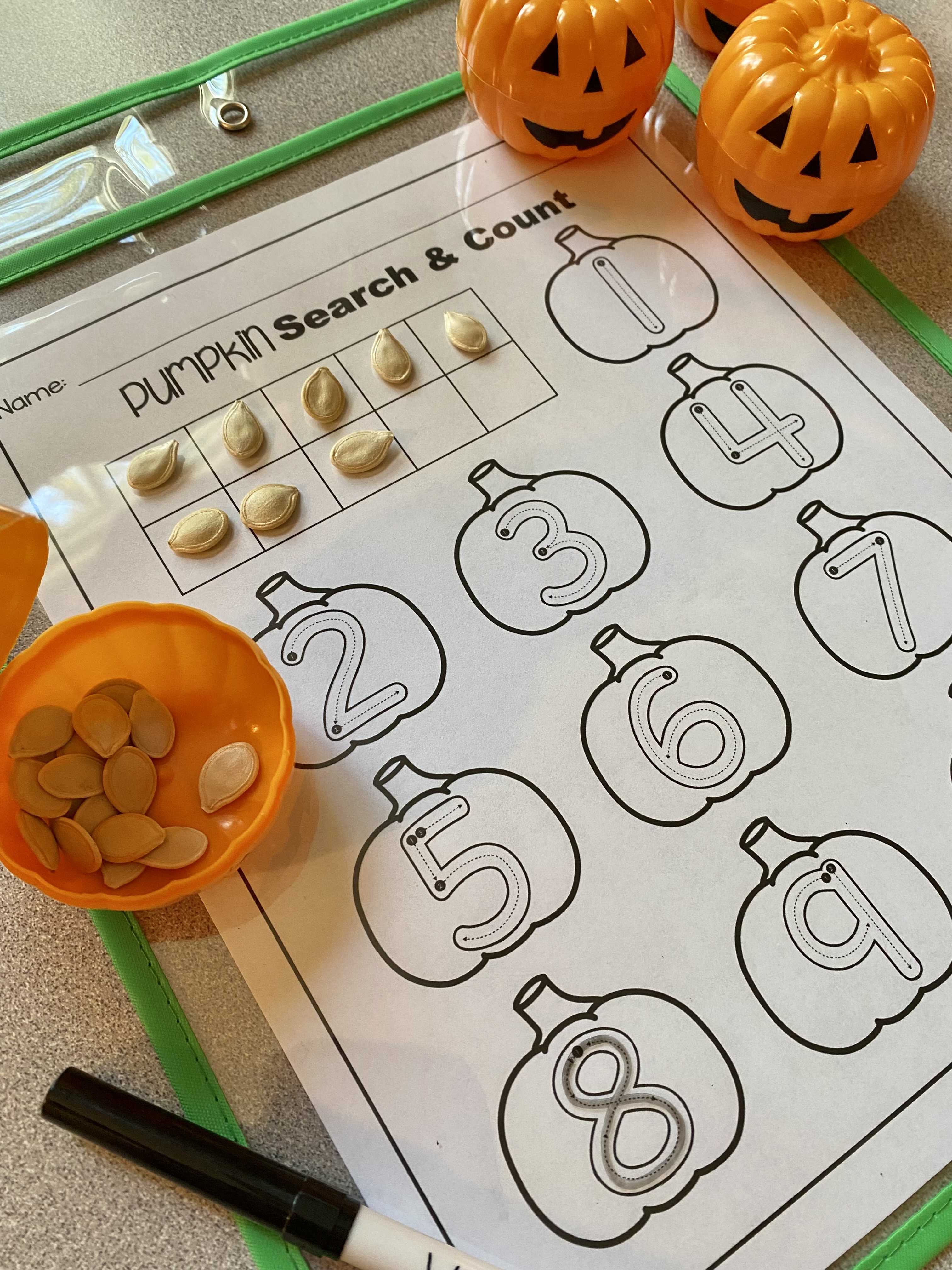
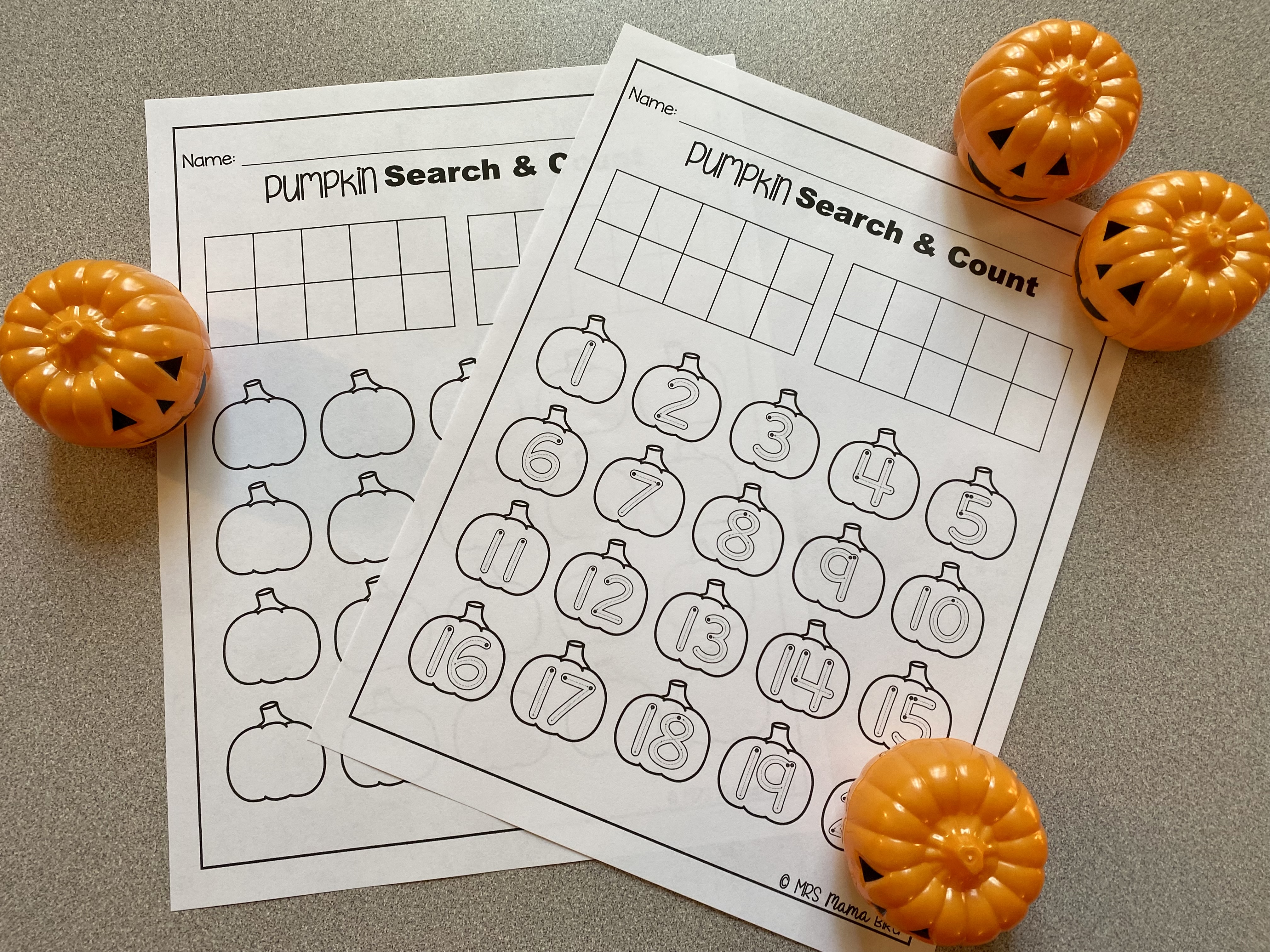
Looking for a counting activity for fall or Halloween?? Stop here! After our pumpkin investigation last week, I washed and dried all the pumpkin seeds with the intention of making this counting game. I formatted the pumpkins with traceable numbers, got it all set up, and decided I didn’t like it!! So, I got back on my computer, tweaked the recording sheet a bit, and got it ready for you as fast as I could.

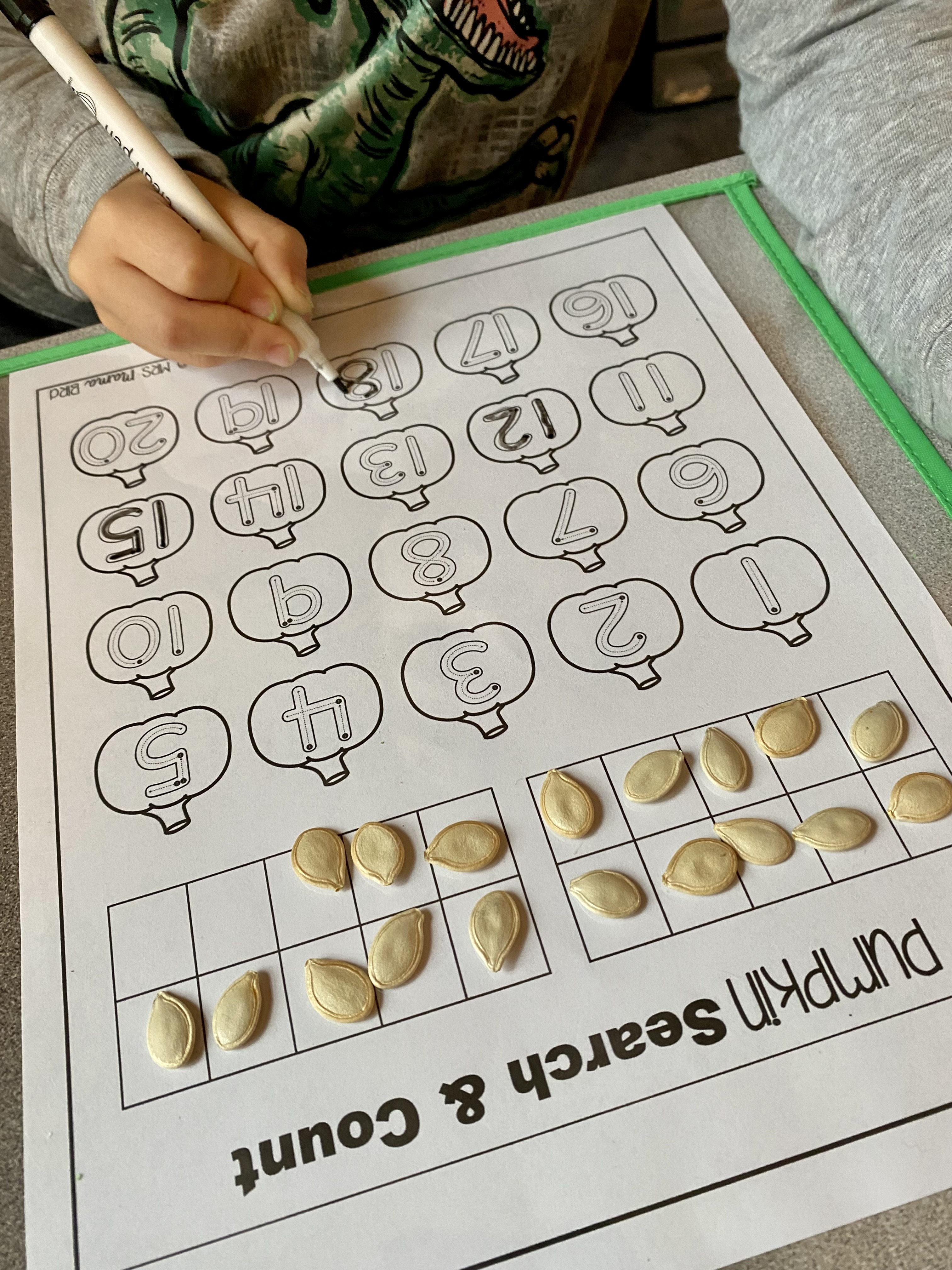
Now the recording sheet includes a tens frame so that kids can keep their pumpkin seeds organized as they count. This helped my now five year old, Emmett, so much. I slipped the recording sheet into a wipe clean sleeve, but you can print and copy if you prefer. I counted out pumpkin seeds ahead of time and put them in these adorable plastic jack-o-lanterns from Target. You could also use orange Easter eggs or even plastic bags to hold your manipulatives.

I chose to give Emmett the 1 – 20 version of the game. He was able to lay the seeds out in the tens frames correctly. He even was able to recognize that when the seeds filled up one tens frame, he could count up from ten to find out the total count. This could be extended into introducing the concept that teen numbers are always equal to 10 plus a number. We didn’t go there this time, but maybe next time!
I designed three different variations of the counting game for you. The first one is 1 – 10, the second one is 11 – 20 and the third one is 1 – 20. Each variation comes with traceable numbers in the pumpkins or blank pumpkins. This allows you to decide if you want your preschoolers or kindergarteners to compose the numbers on their own or with guidance. You can download the file by clicking on the button below.

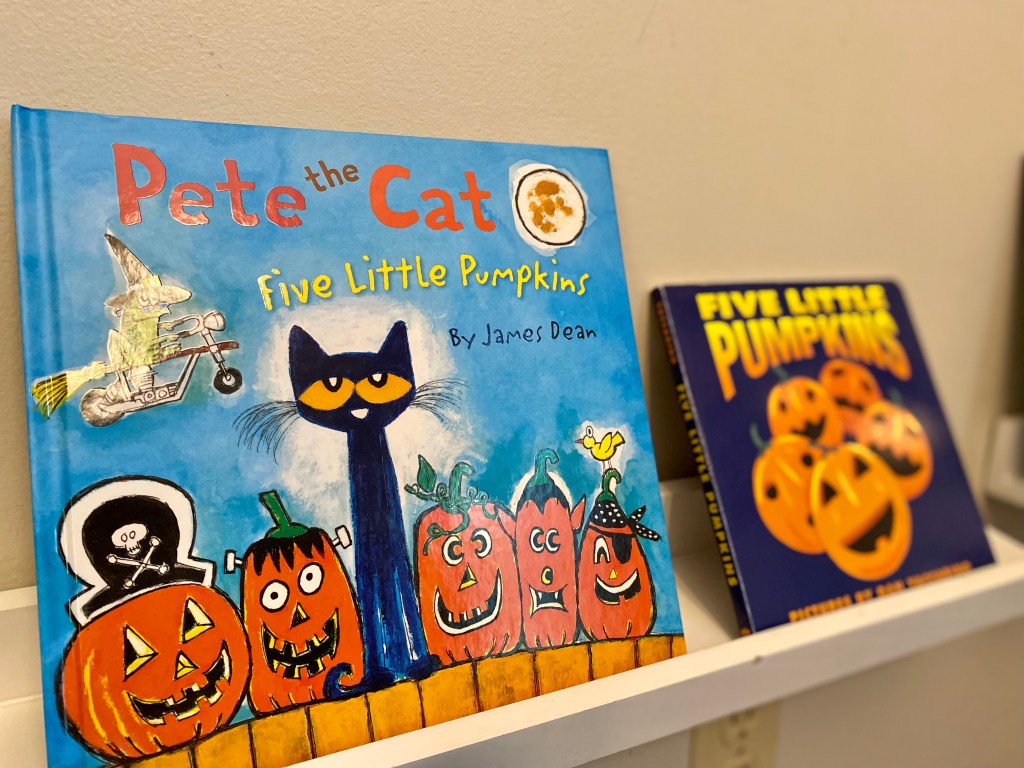
If you’re interested in pairing this activity with a book, Five Little Pumpkins is an obvious choice. Emmett loves Pete the Cat so he chose that version to read.

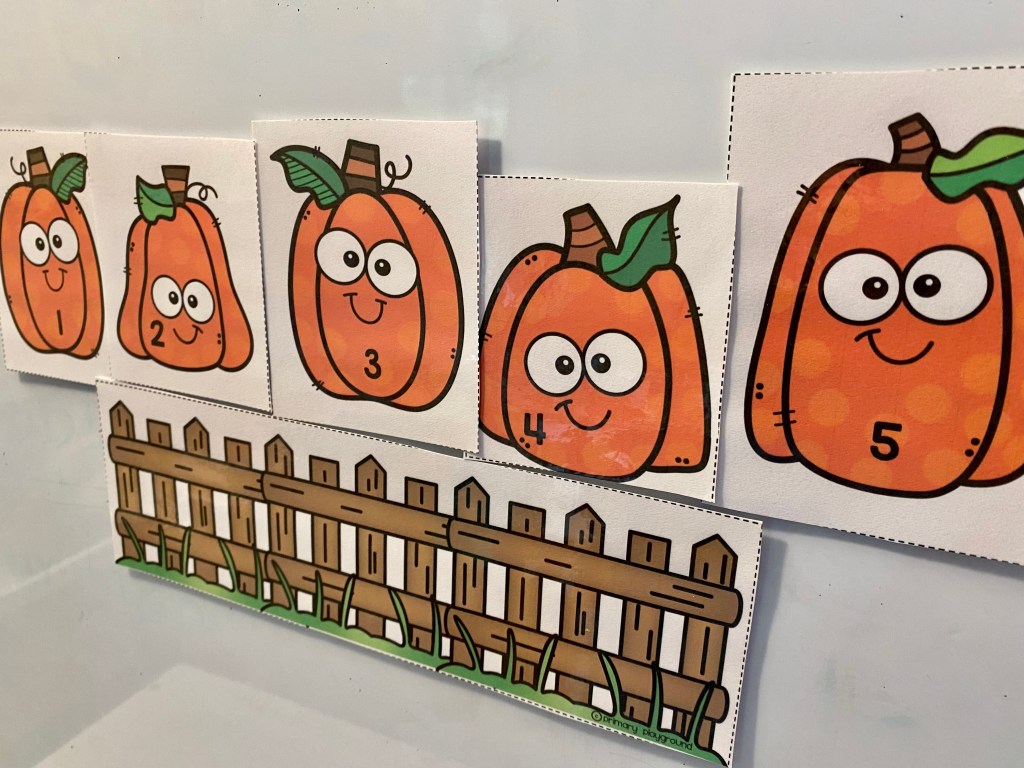
Of course, I wanted storyboard elements to go along with the rhyme, so I scoured the internet for a resource that matched what I had in mind. Luckily, I found another talented educator that had already created exactly what I was looking for. AND she was offering it for free on her blog, Primary Playground. Perfect!

You can snag your own set HERE. There’s also a color and cut activity available too if you’re interested!

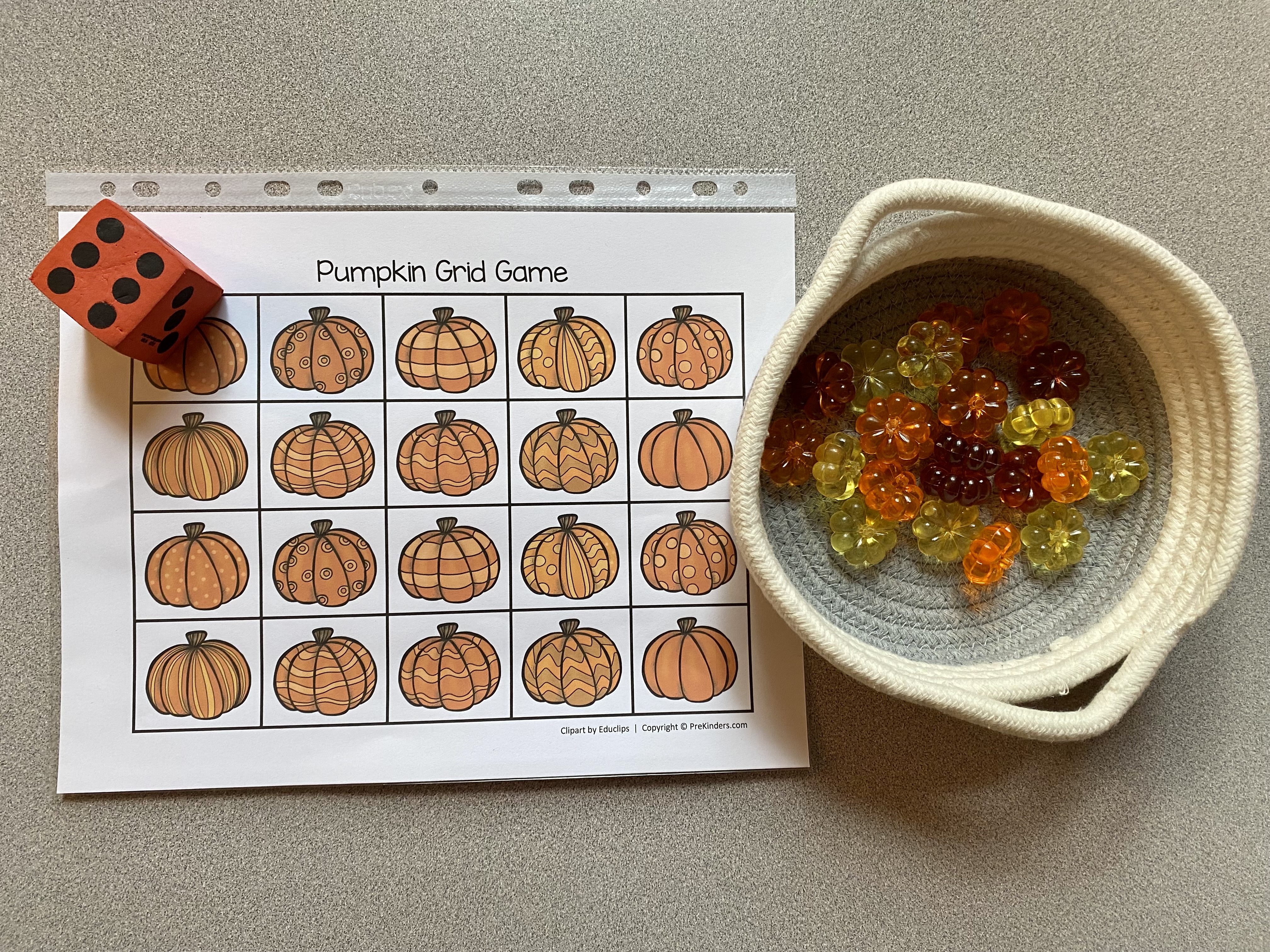
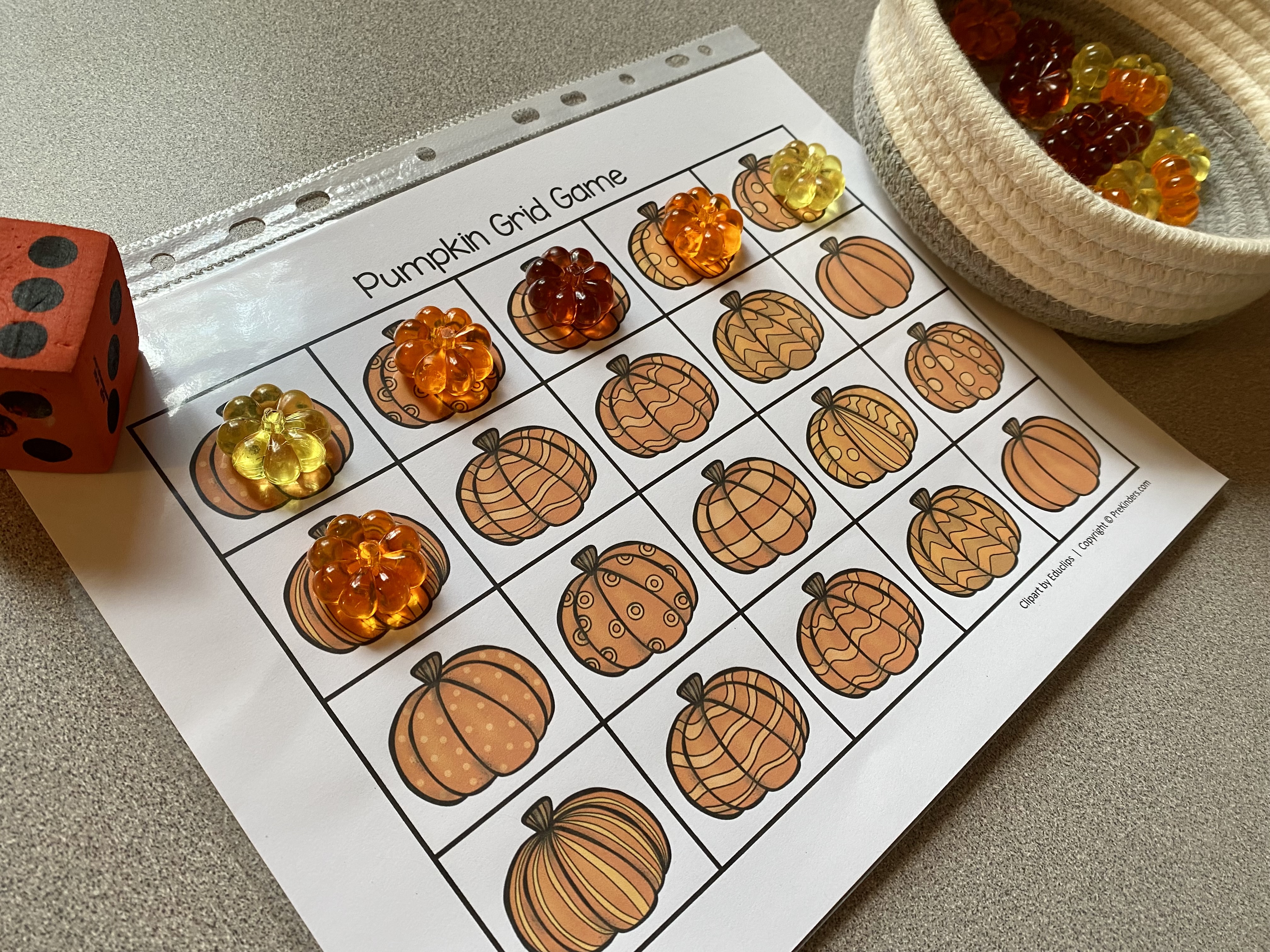
I used this Grid Game to reinforce Emmett’s counting skills. He was able to do this independently while I worked with his older brother for a little while. This came from Prekinders and you can find it HERE. This is a website I often go to first when I am planning a new theme or skill. I love Karen’s style!

I hope your preschoolers and kindergarteners enjoy counting with the help of these fun activities! If you decide to share on Instagram, don’t forget to tag me @mrsmamabird and include my hashtag #learnwithmrsmamabird. Thank you!!

You May Also Like

Fall

Pumpkin Patch Letter Sound Match *FREE Download*

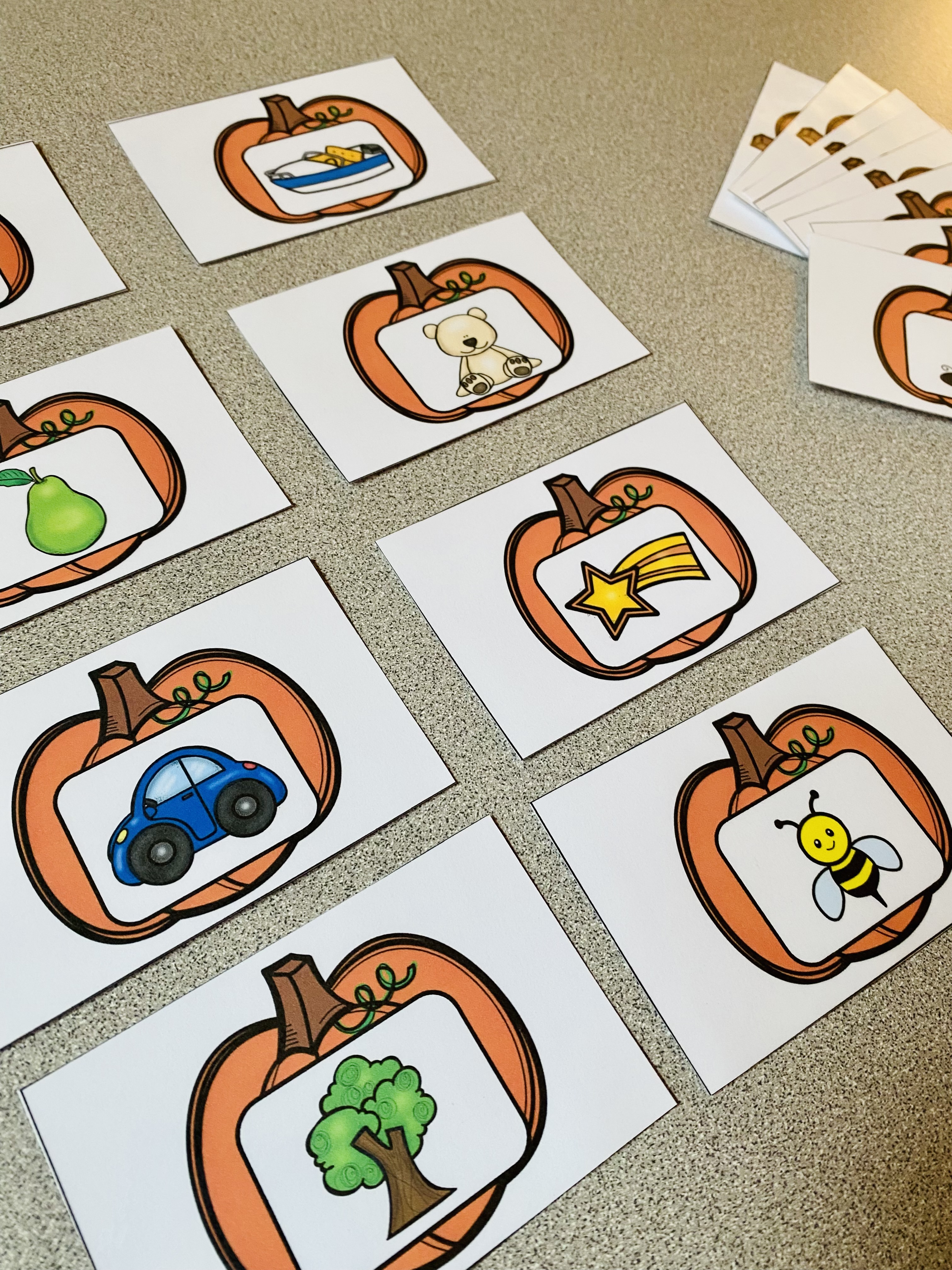
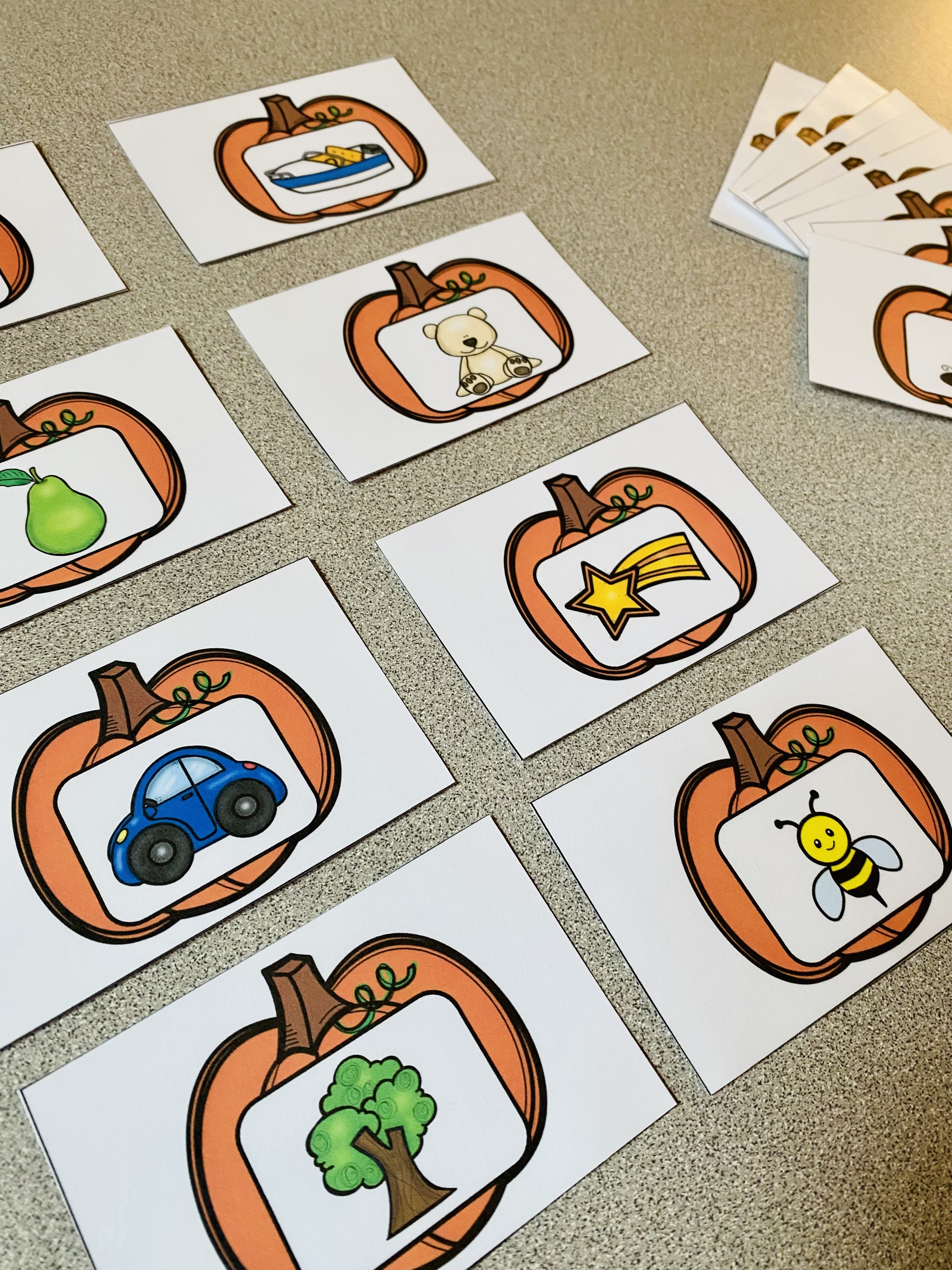
Are you visiting the pumpkin patch with your kiddos this fall?? Here’s a fun way to help them practice beginning letter sounds while pretending they are “picking pumpkins” in a pumpkin patch. This activity is perfect for introducing phonological awareness in preschool or strengthening those skills in kindergarten.

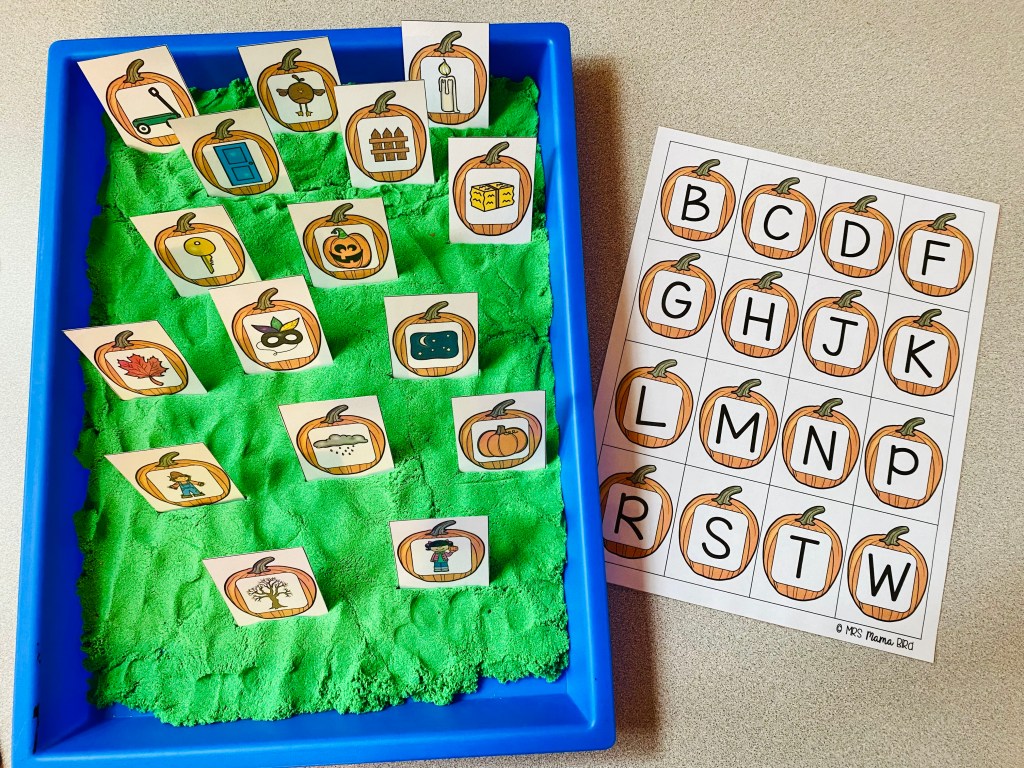
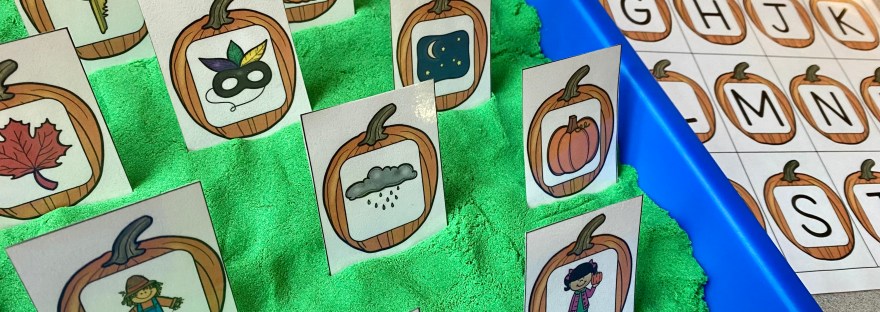
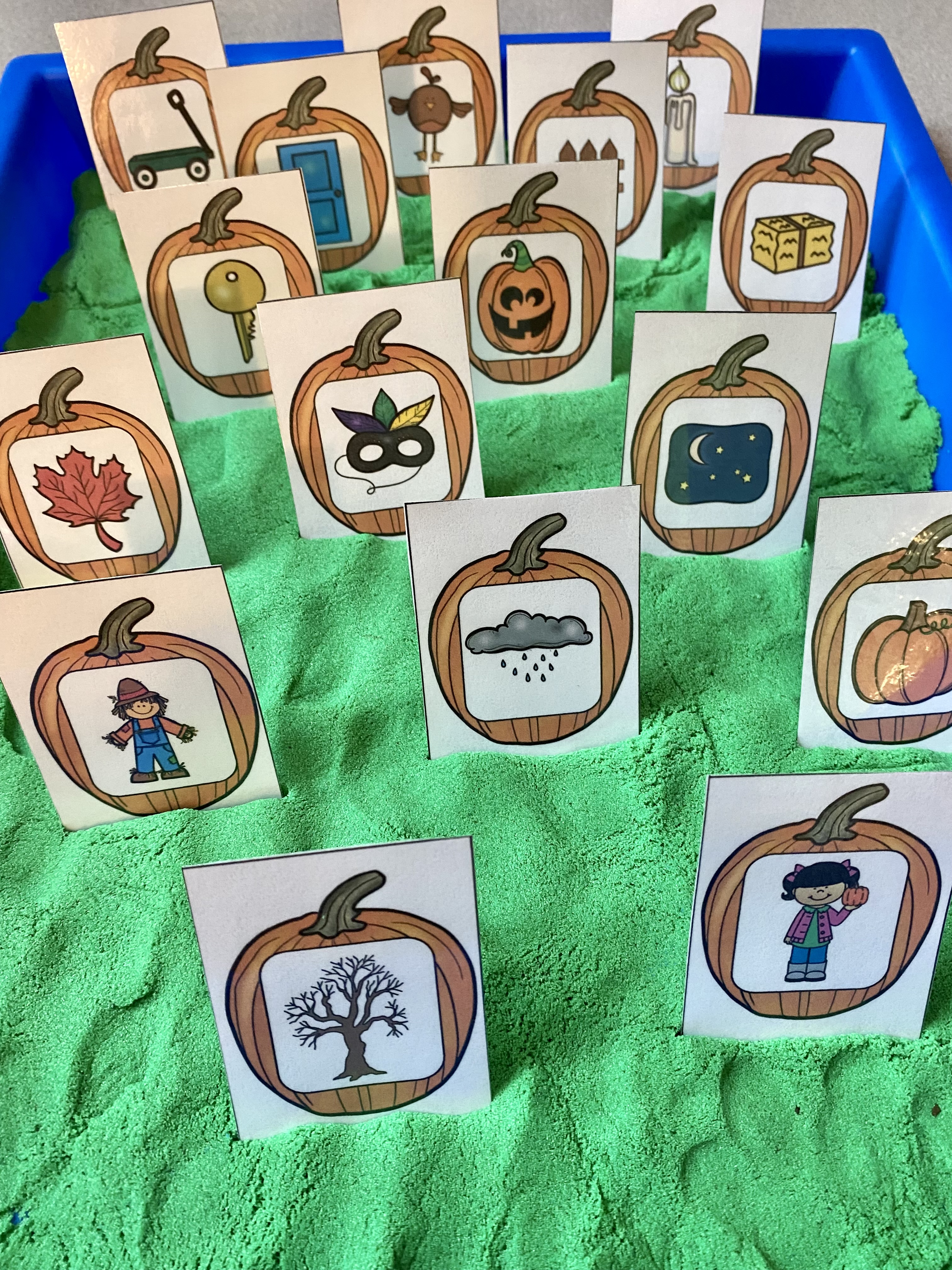
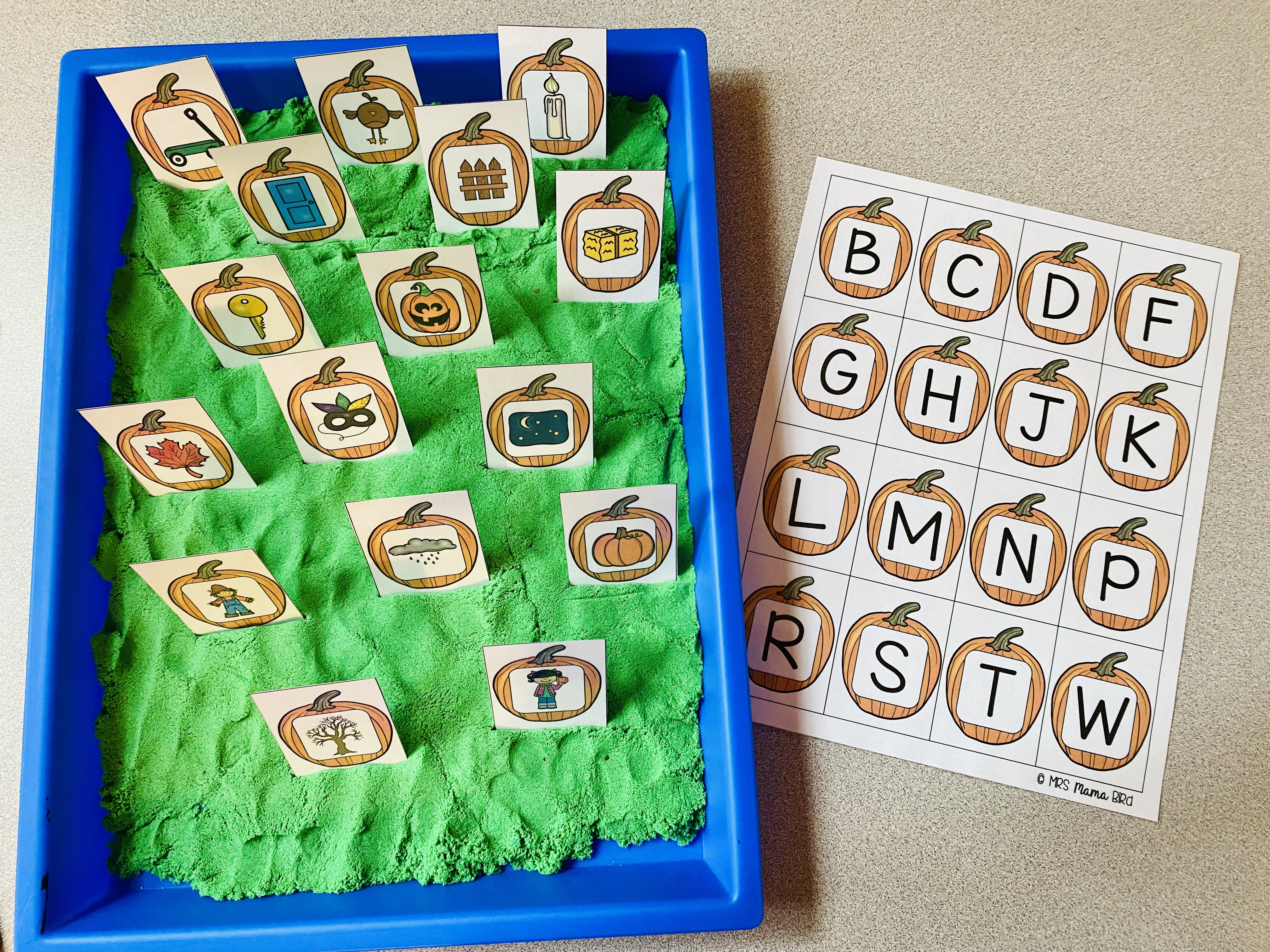
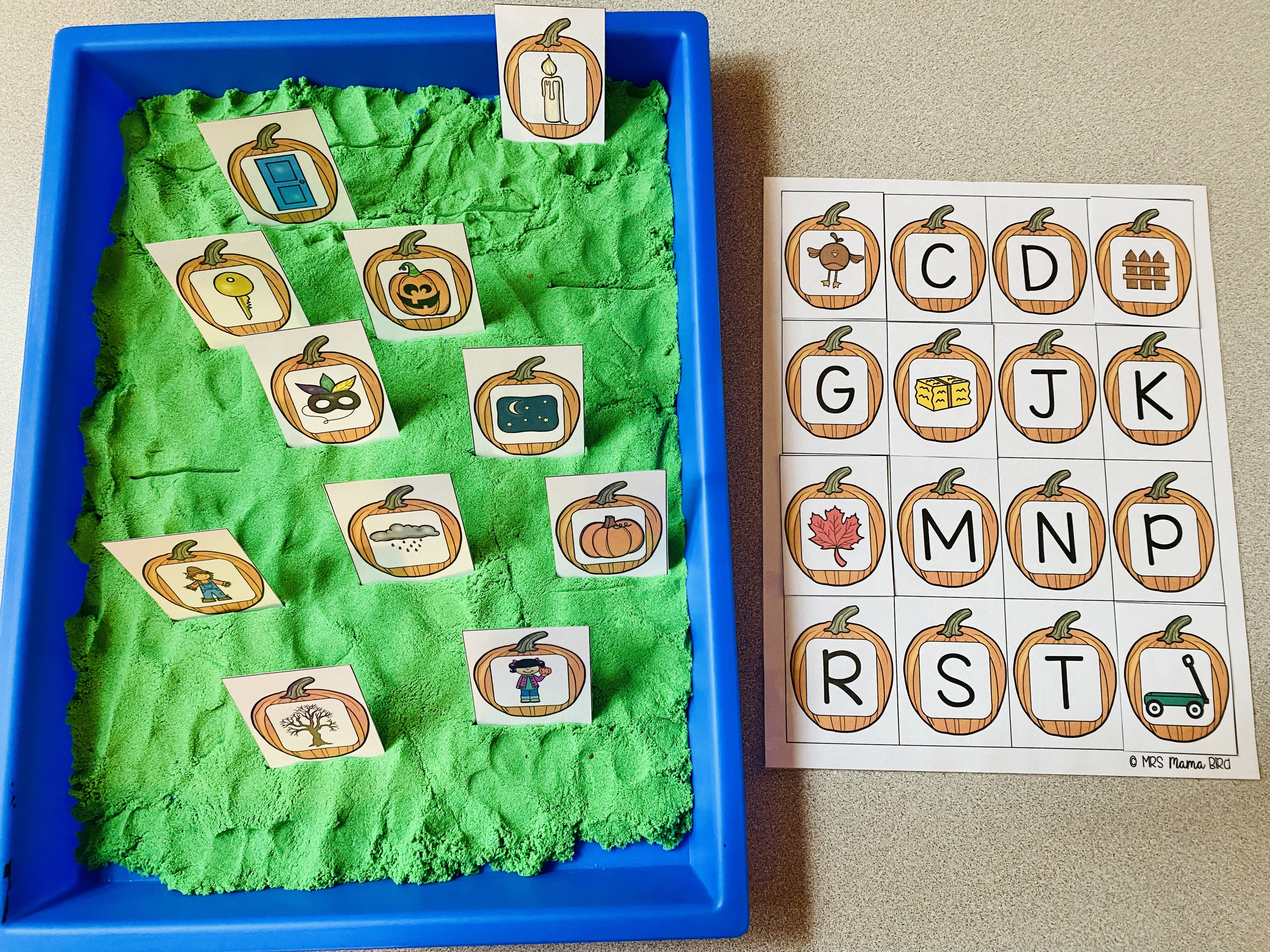
I decided to set this letter sound match center up like a pumpkin patch. I used kinetic sand as the ground and spread it evenly in a deep plastic tray that I purchased at Michaels. Kinetic sand is one of my favorite sensory activity mediums because it isn’t sticky!!! It doesn’t dry up if you leave it out. And if it does fall on the floor, it vacuums or sweeps right up. Kids love it too which is really the most important part.

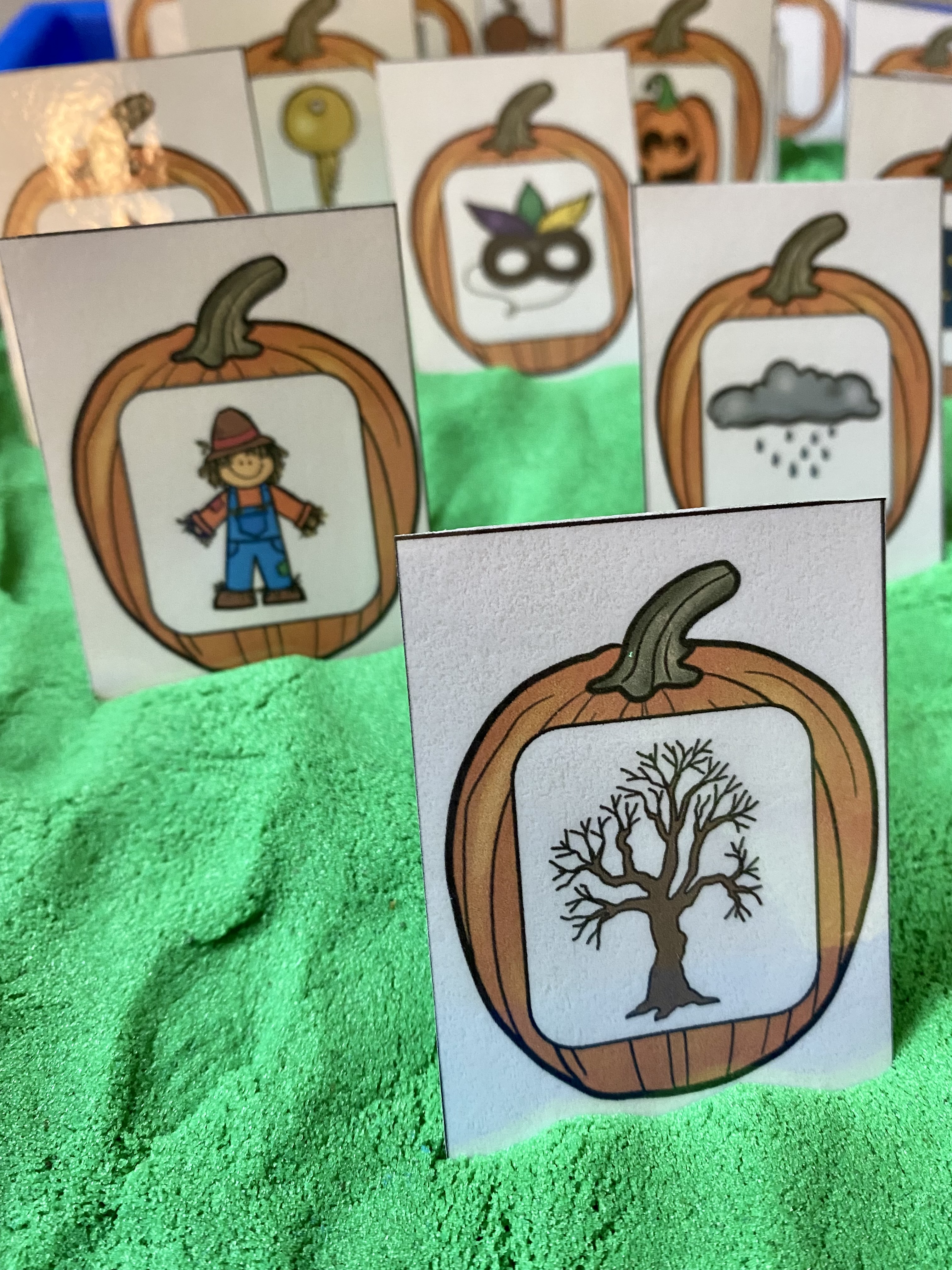
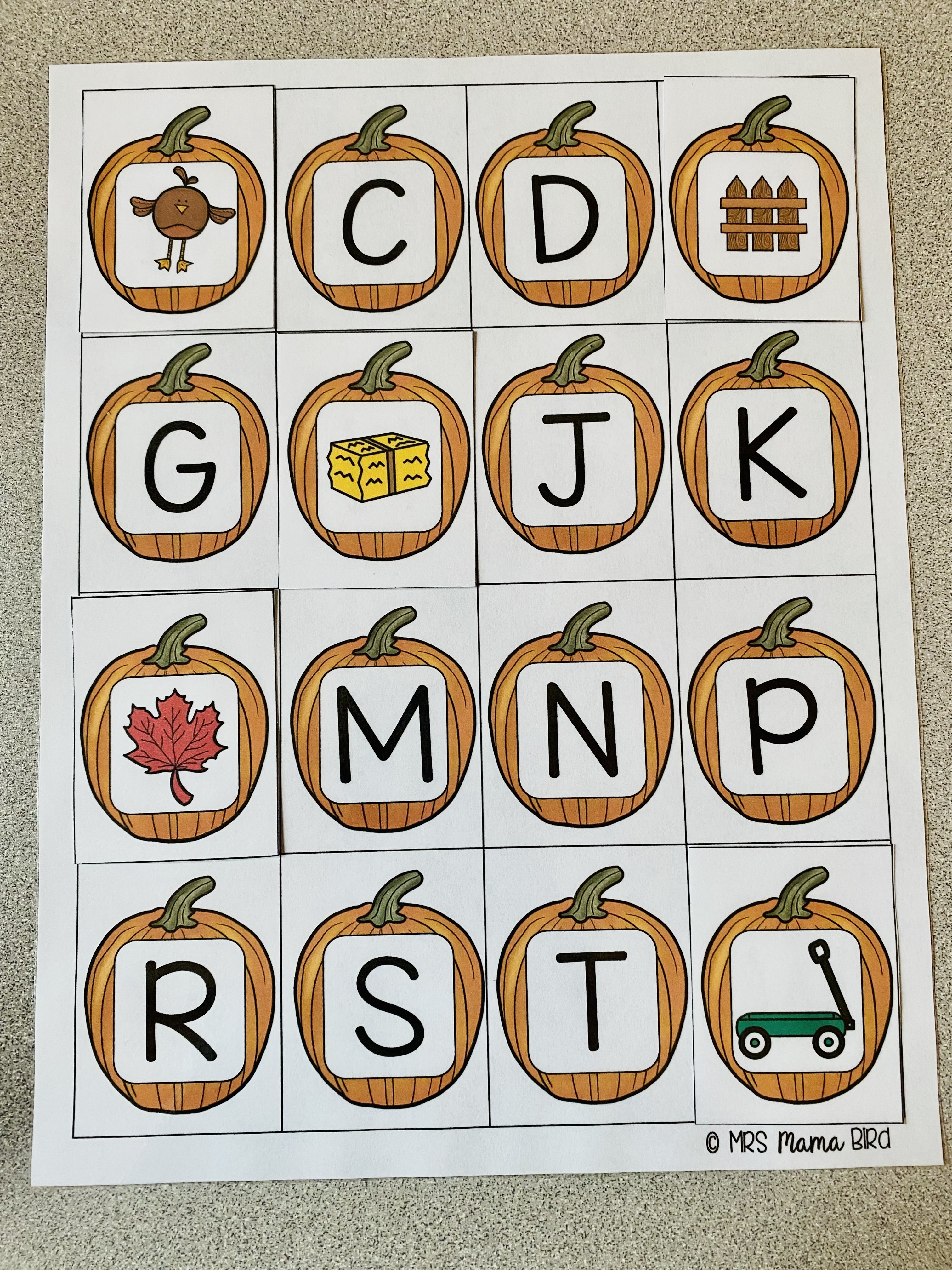
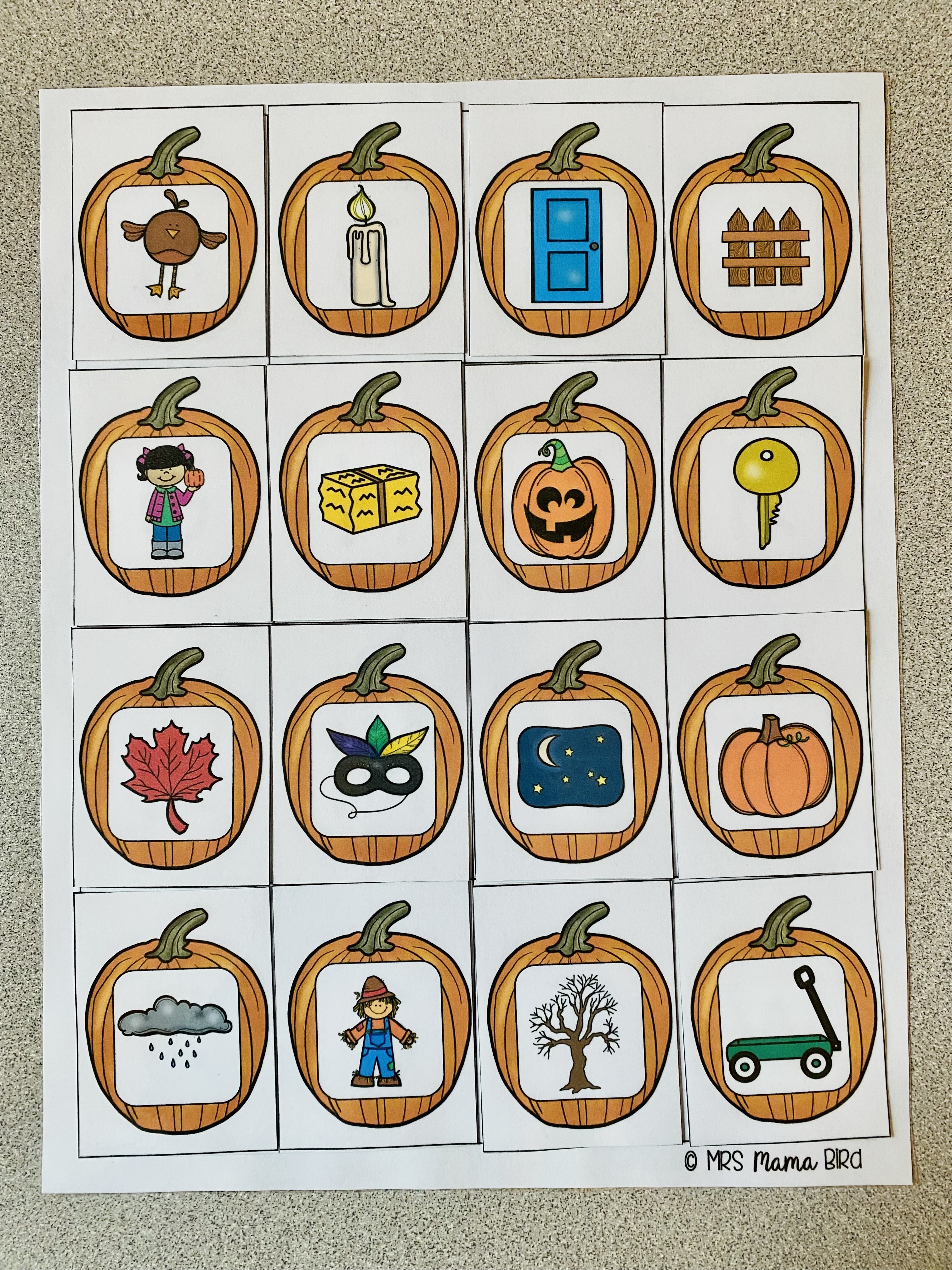
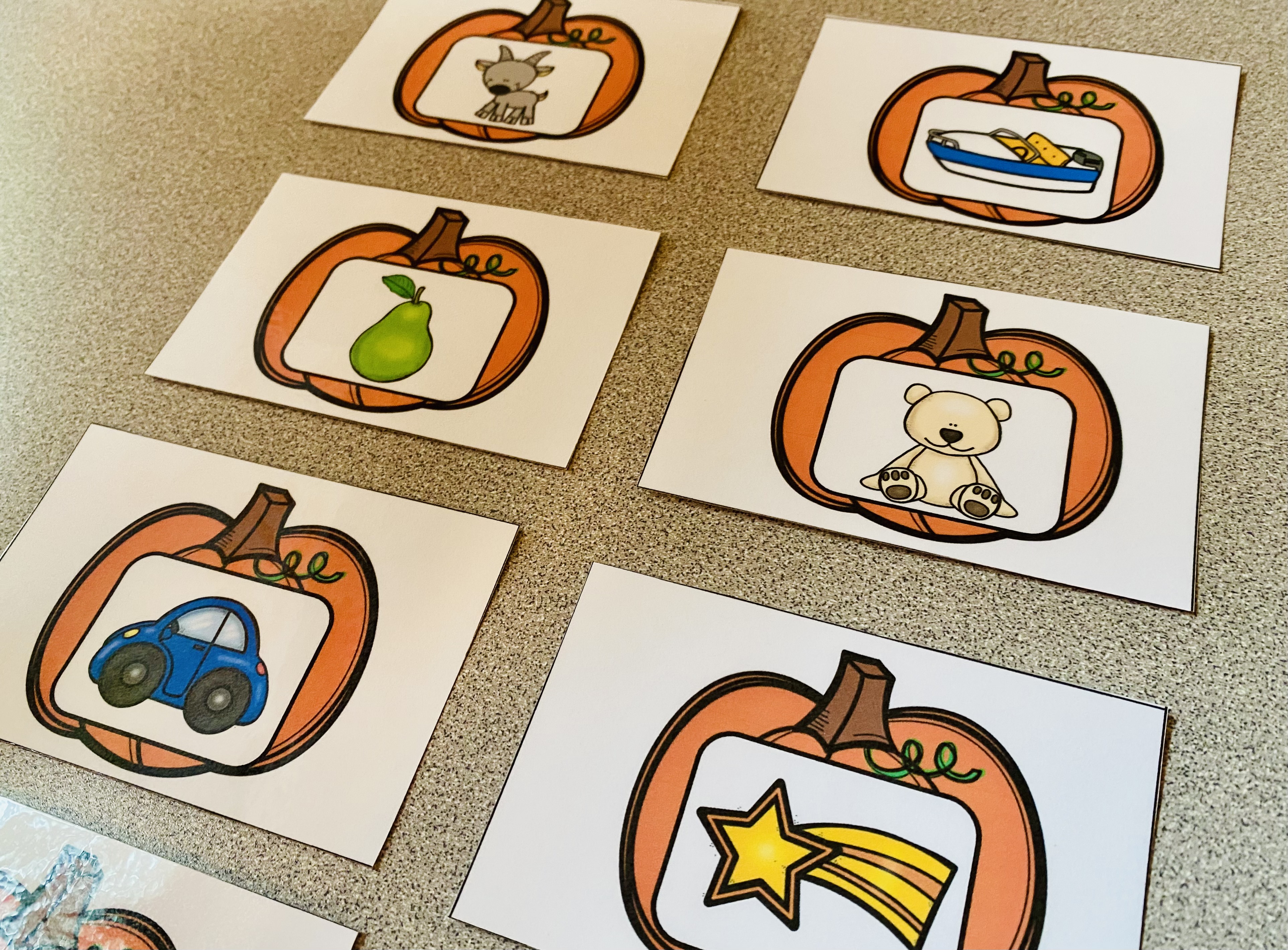
Next, I cut apart the pumpkin sound cards and positioned them in the “ground” as if they were growing in a pumpkin patch. They are staggered so that they are easy to view for the child sitting at the center. Each card depicts a pumpkin with a different picture in the middle. This activity focused on the beginning sound of each picture. In order for my preschooler, Emmett, to keep track of the letter sounds he found, I printed the letter mat and set it next to the “pumpkin patch” of pumpkin sound cards. This kept Emmett’s sound cards organized as he picked each pumpkin and identified the beginning sound of the picture.

As you can see, the letter mat does not include all 26 letters of the alphabet. I decided to include 16 of the most frequently used consonants in this activity. This is simply because Emmett just started learning letter sounds last month and I did not want to overwhelm him with the whole alphabet. We worked on this activity together as a pair by taking turns. If he came across a picture card that he wasn’t sure about, we talked it out together. On my turn, I purposely picked cards that I knew he would be less familiar with and modeled how to make the beginning sound and match it to the corresponding letter. I also kept his Alphabet Linking Chart handy so that he could refer to it as he worked. He frequently confused the letter sounds with the beginning sound a letter makes when you say it (i.e. He said M makes a short e sound). Having that linking chart handy was very helpful to him!! If you need an alphabet linking chart, click the button below to grab one from my shop. It’s FREE!!!

After we were finished picking all the “pumpkins” from the “pumpkin patch” we took a moment to look back over our finished sound mat. We said the pictures and their beginning sounds aloud again to reiterate the matches. Emmett was very pleased with his success and continued to play with the kinetic sand for another half hour or so.

If you have little learners who are still working on letter identification and are not quite ready for a letter sound matching activity, you can simply print the letter cards twice and have your kiddos match the letters to each other.

Speaking of letter identification and sound activities, you may also be interested in the pumpkin themed literacy activities for preschool and kindergarten from a previous post. These activities focus on phonemic awareness, alphabet knowledge and beginning writing. Plus they are super fun and adorable!!

Wait!! Don’t forget to download your copy of the Pumpkin Patch Letter Sound Match Activity for FREE. Just click the button below and it is yours. As always, thank you for stopping by! I appreciate your interest and would love to hear what your kiddos thought of the Pumpkin Patch Letter Sound Match activity when they are done!!

Fall, Seasons

Pumpkin Literacy Activities for Preschool

It’s finally October and I am so excited to share these new pumpkin centers with you!! Usually, I like to blog about my preschool activities after I’ve used them. But I am planning on using these one or two at a time all throughout the month and want to get them to you ASAP. So hot of the press, here are 7 pumpkin themed literacy centers to enhance your students’ phonemic awareness, alphabet knowledge, and handwriting skills.

Phonemic Awareness

I’ve noticed early literacy teachers are always on the lookout for phonemic awareness materials WITHOUT print. I designed two activities with this in mind: Pumpkin Rhyming Cards and Pumpkin Syllable Count Clip Cards.

The rhyming cards include 8 sets of rhyming picture cards. Students can use these to play a game of Concentration. For my youngest players, I like to adapt the game by allowing them to leave their cards face up in their place. On the very first turn, the player flips two cards, and every turn after the players flip one card, collecting matches as they are discovered. This allows students to focus solely on the task of rhyming and not worry so much about remembering where the matches actually are.

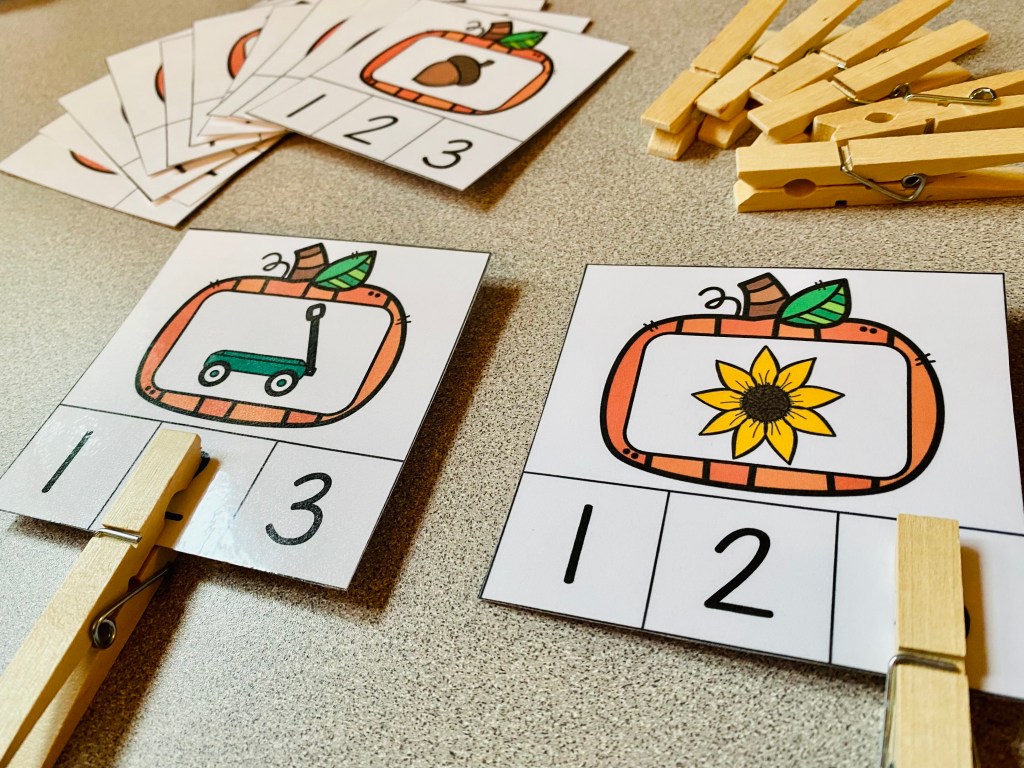
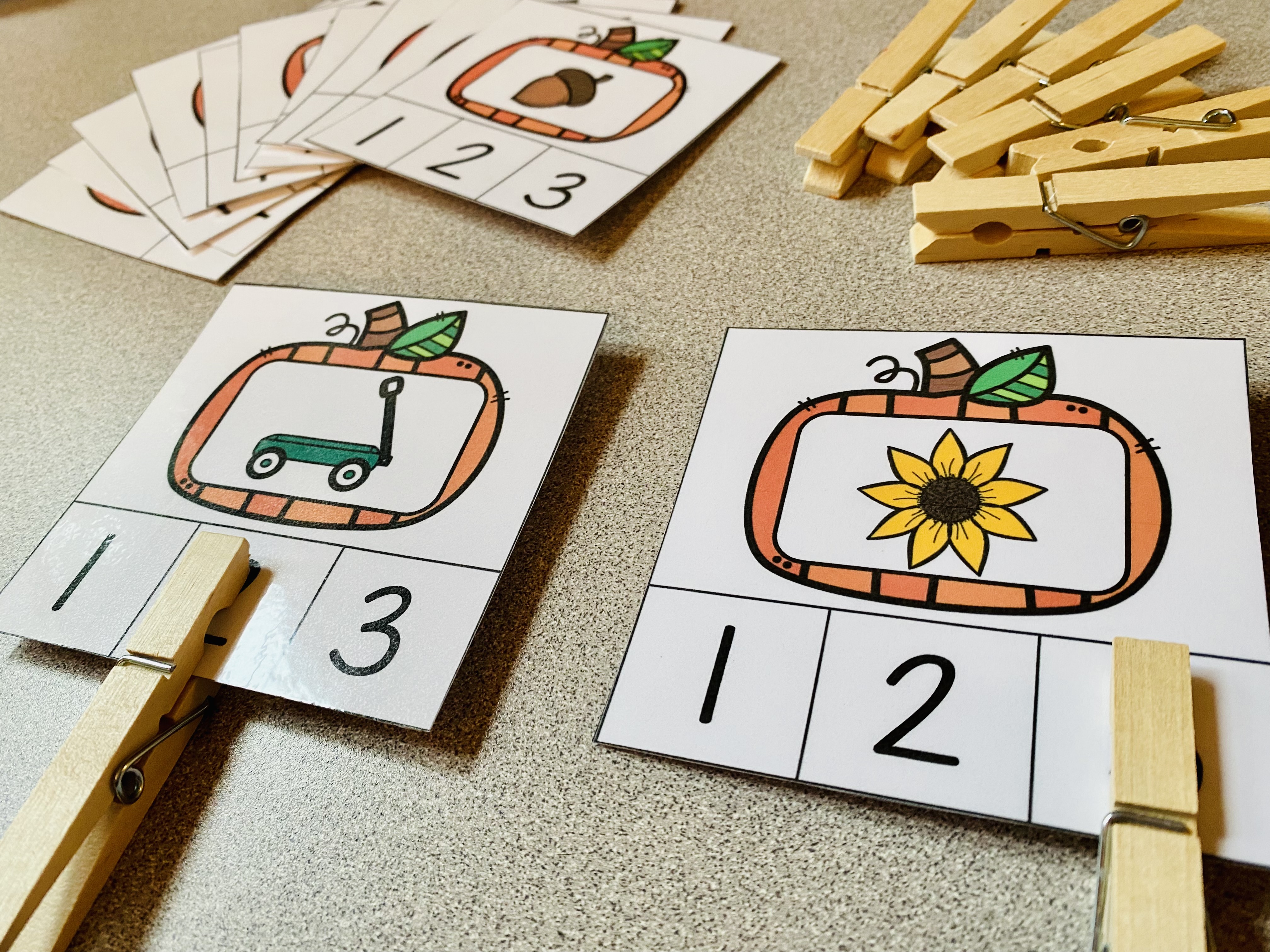
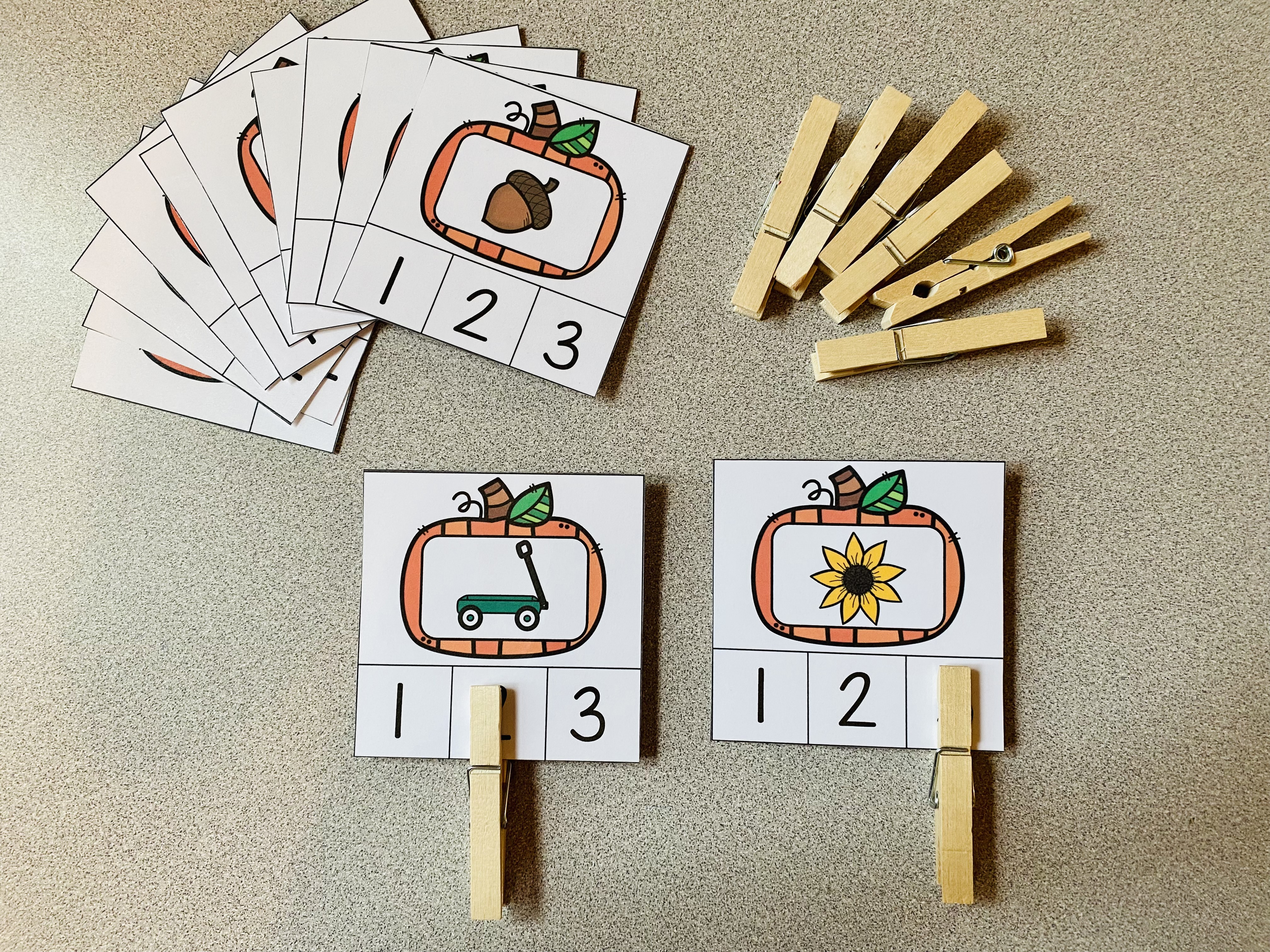
The syllable clip cards also have only pictures for students to say aloud and count the syllables as they say them. Once they’ve determined the number of syllables in the word, they can clip the corresponding number on the card. Then continue on through the cards until each one is complete. If students are having trouble counting out syllables, challenge them to say the word without opening their mouth and count how many times their air tries to “escape.” You can also have them put their hand in front of their mouth and notice the breath hitting their hand as they talk.

Alphabet Knowledge

A lot of parents assume that learning the alphabet is an “easy” task for kids and figure that they should catch on quickly because the alphabet is so basic. Well, if you think about it, learning the alphabet requires the ability to recognize uppercase and lowercase letters as well as recall the phonetic sound that each letter makes (and several letters make more than one). Added up, learning your ABC’s actually involves retaining 96 pieces of information. That is a tall order for little people!! Luckily, kids are like sponges, and when you make it fun, they soak it right up.

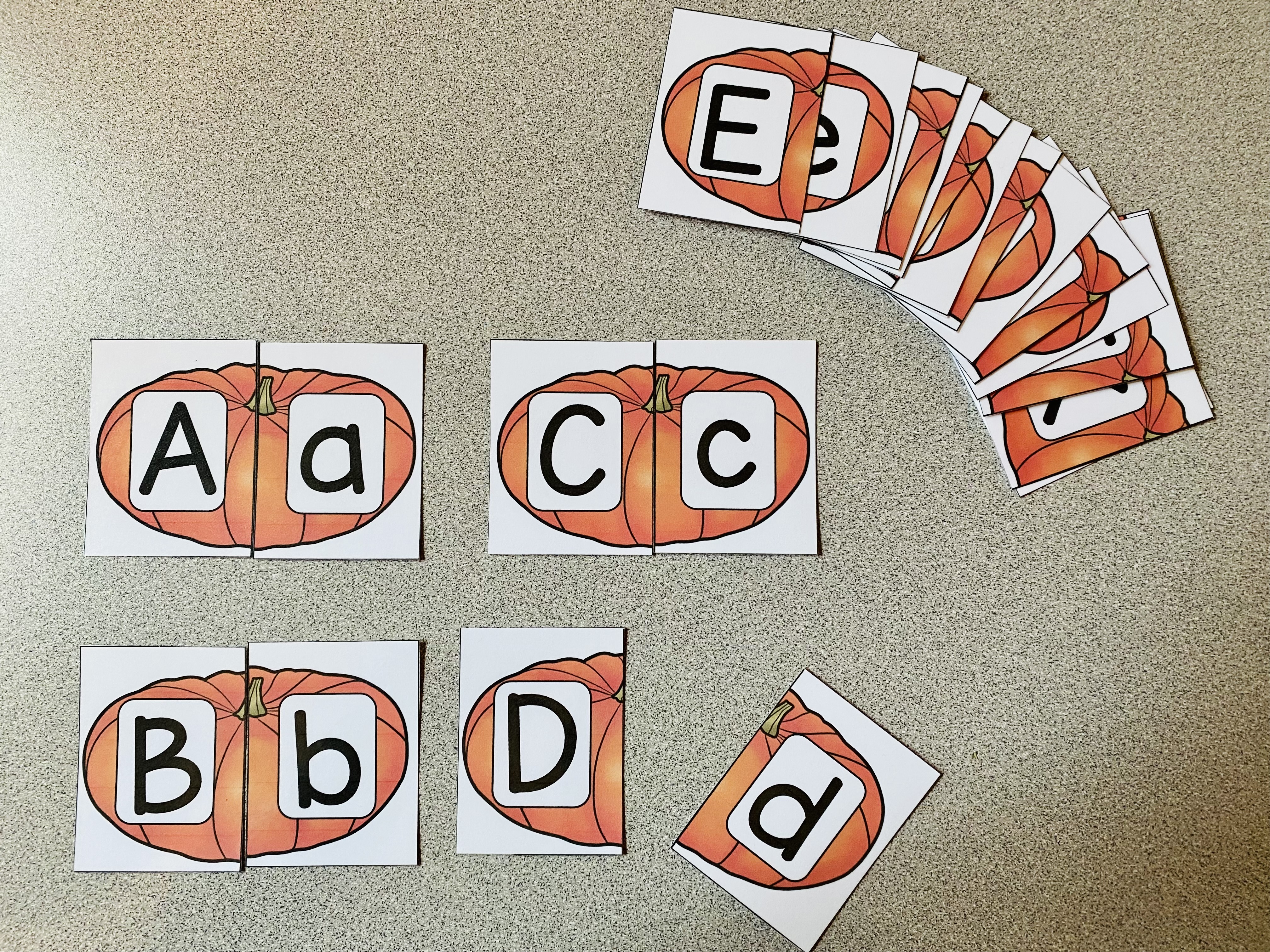
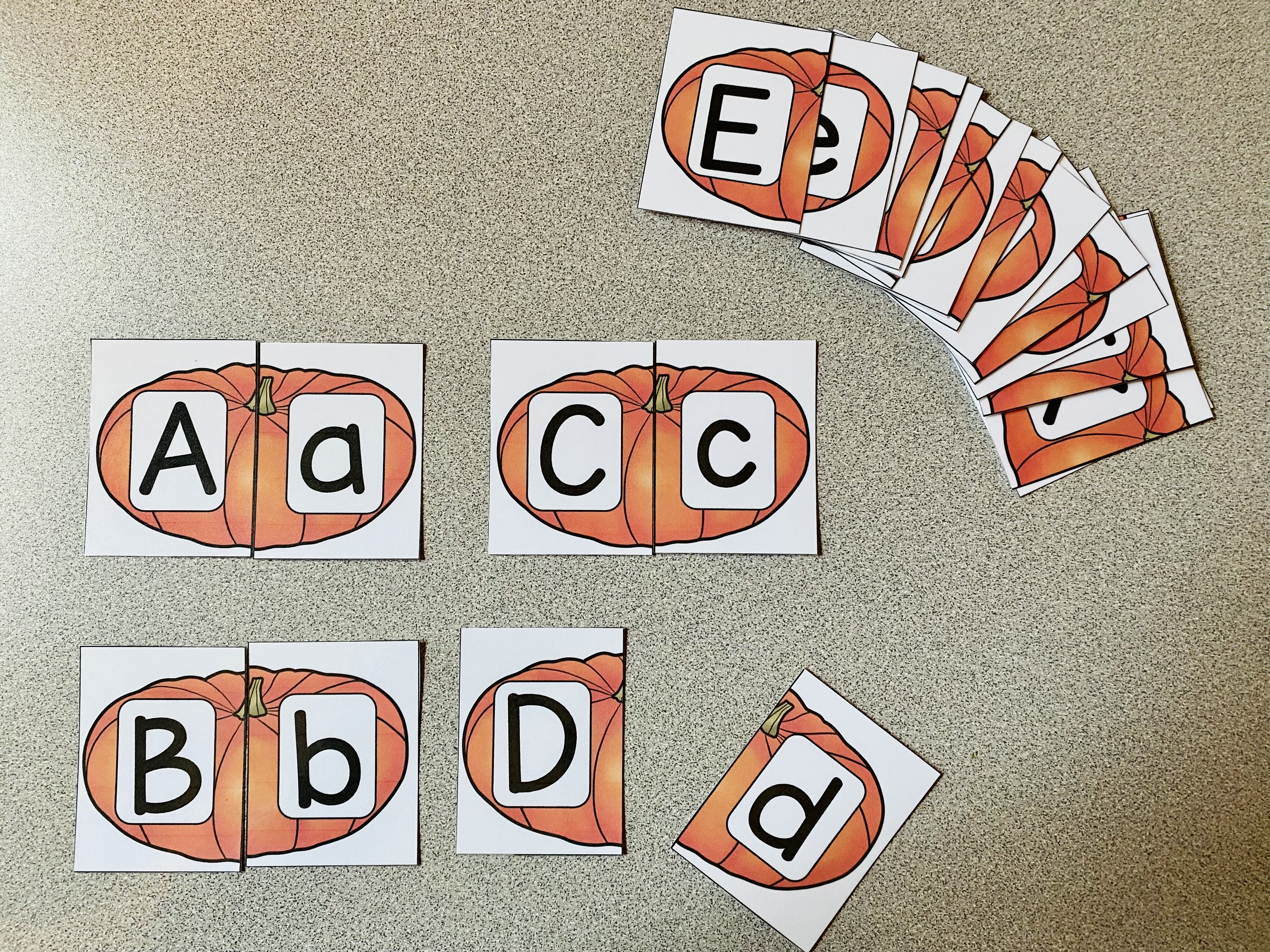
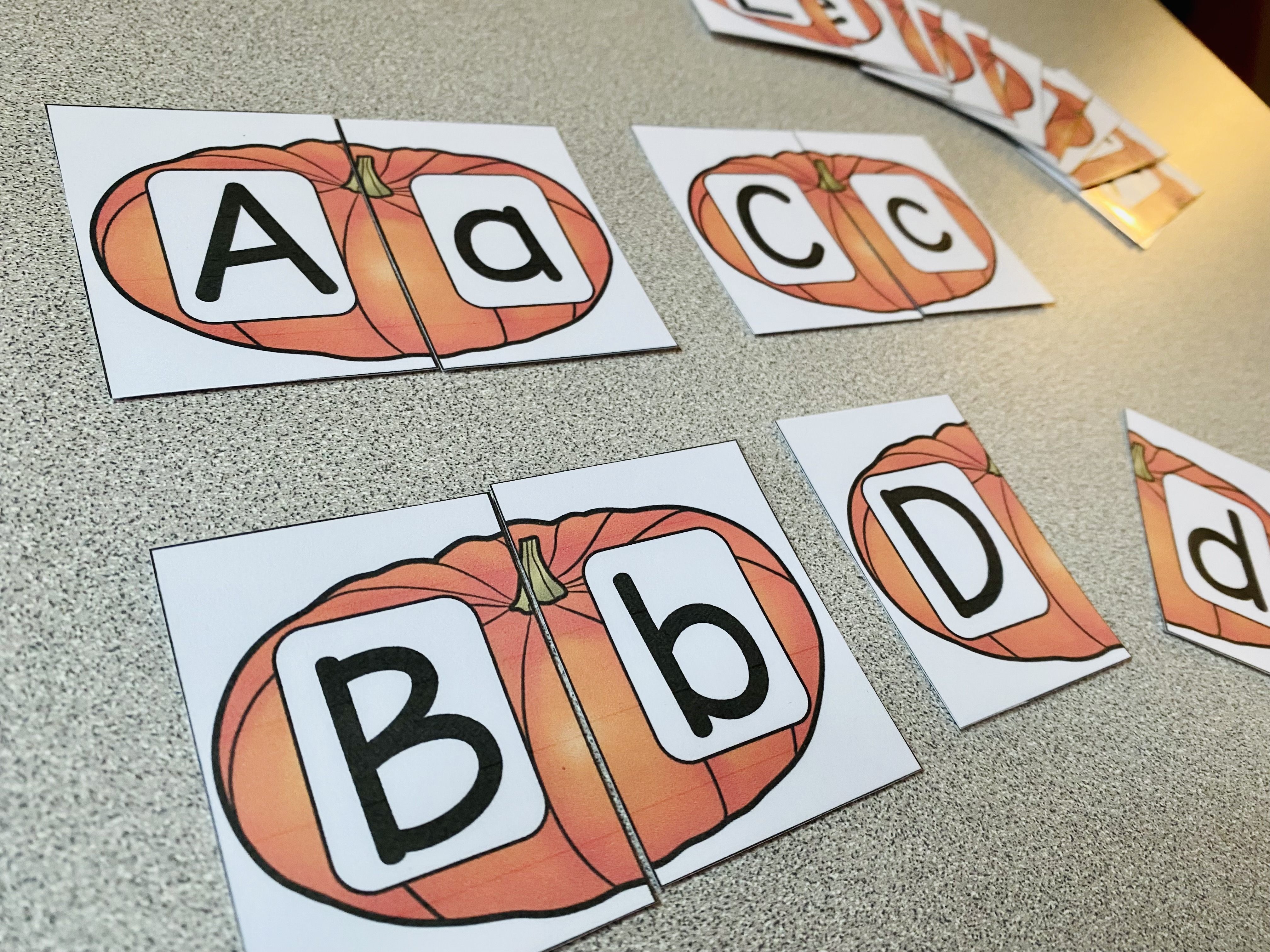
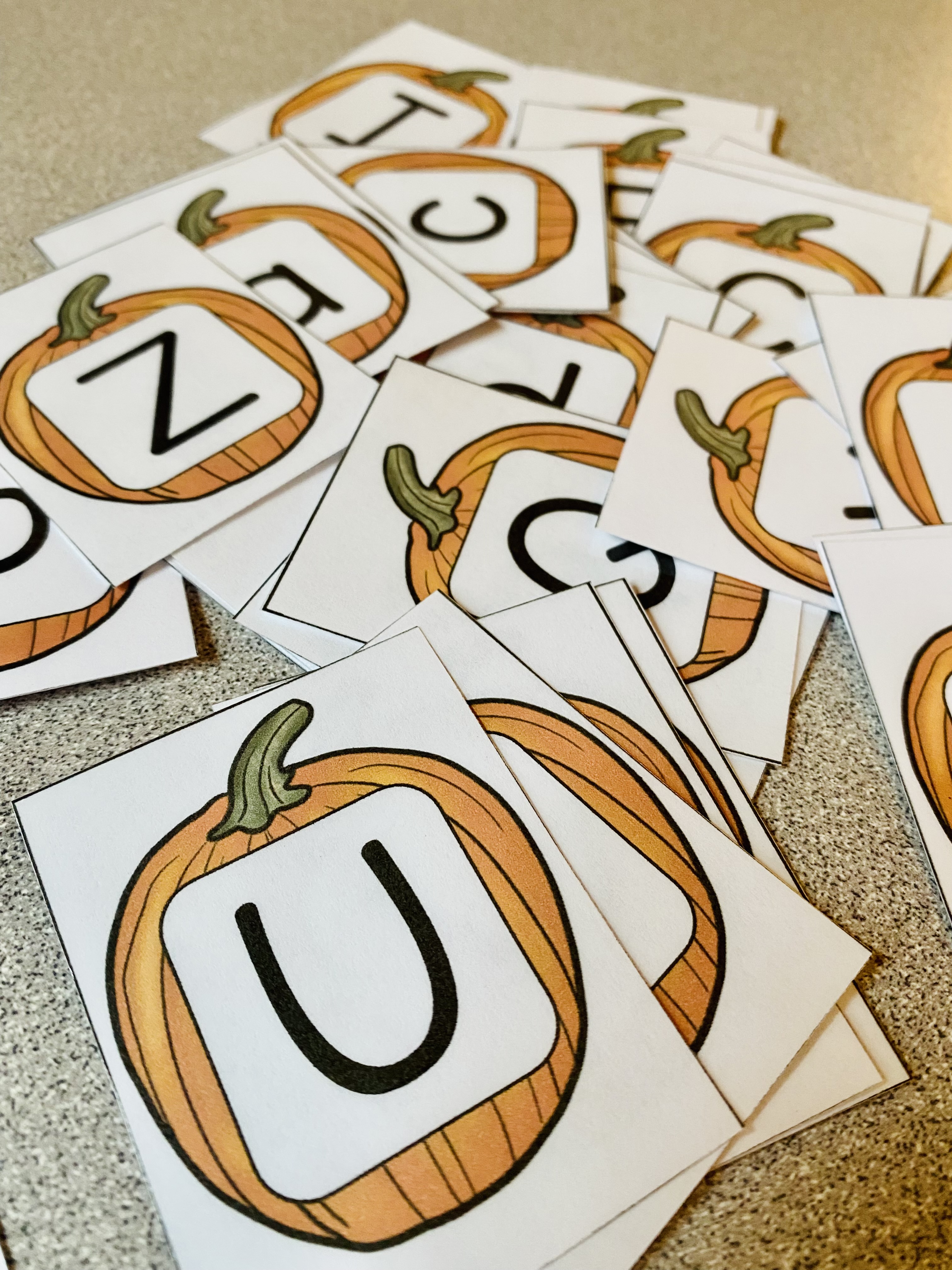
These Pumpkin Alphabet Puzzles allow kids to connect uppercase and lowercase letters to make the pumpkins whole again. When I use these, I am mindful of how many letter puzzles I use at a time. I rarely use all 26 together because 52 little cards is just too much to manipulate. I usually choose the most recent 5 or 6 letters that we are still learning then add in another 5 or 6 letters that my preschooler has mastered. Keeping a high ratio of cards that your students have mastered in the game will actually help them retain the few that they encounter and are still trying to get right.

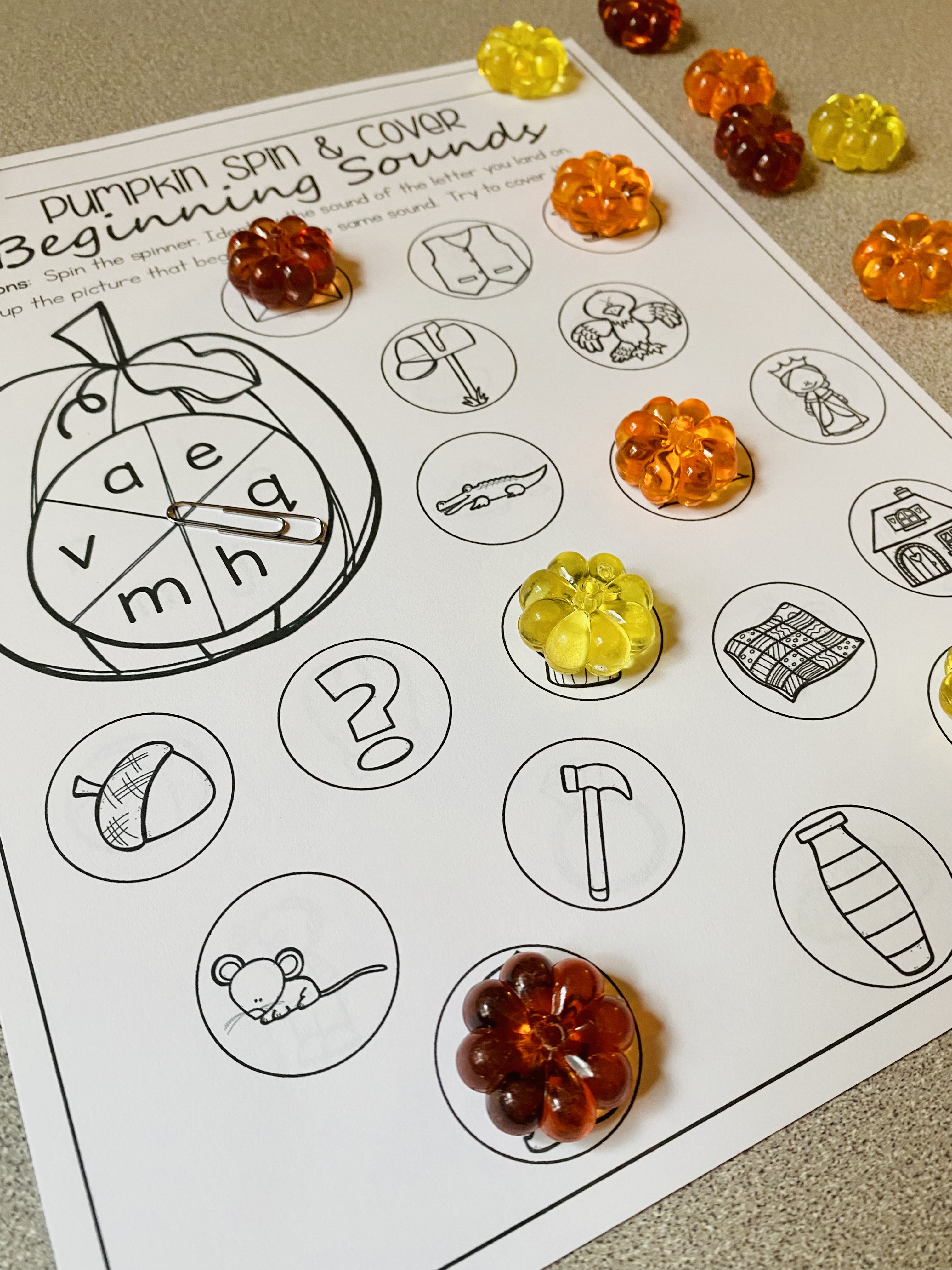
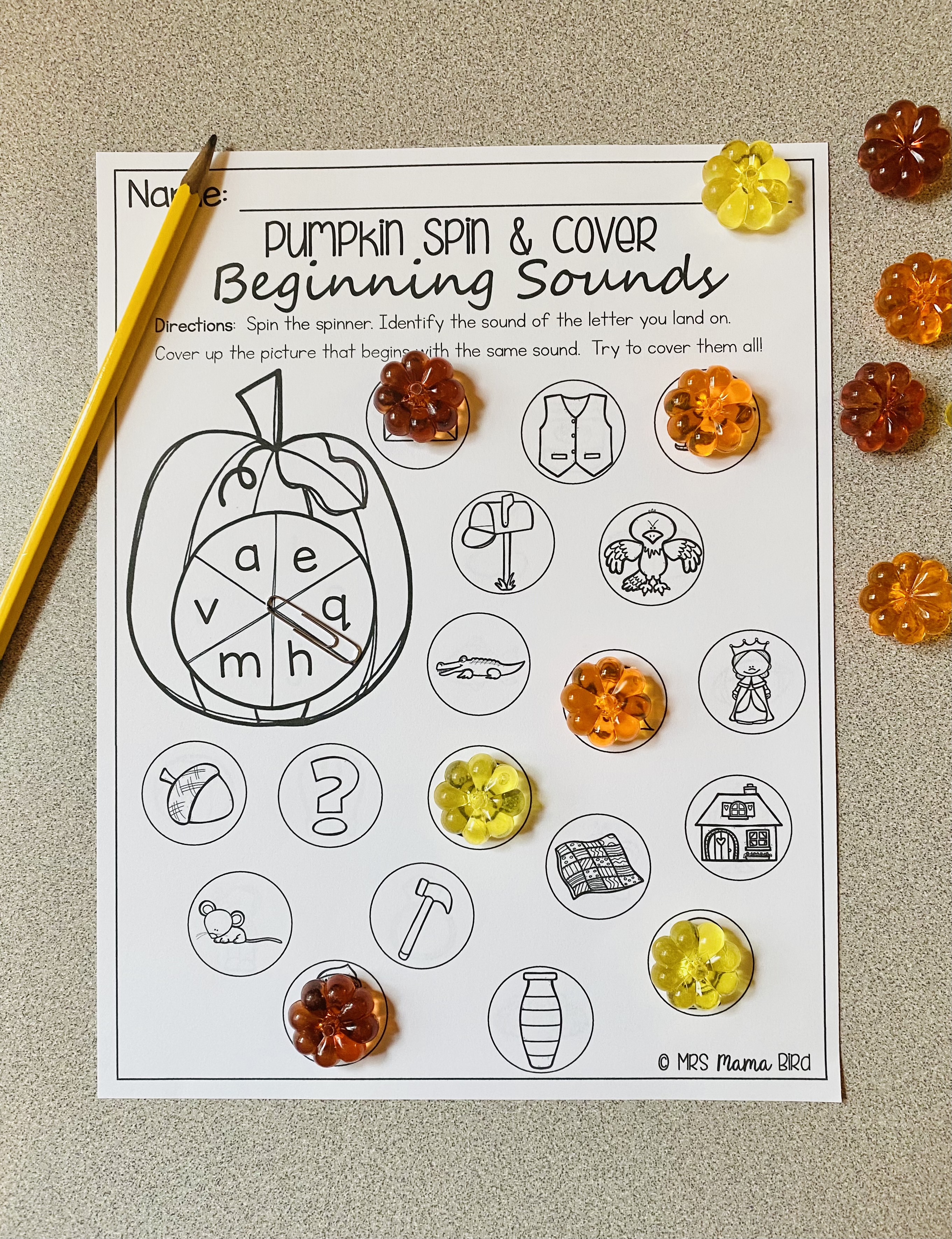
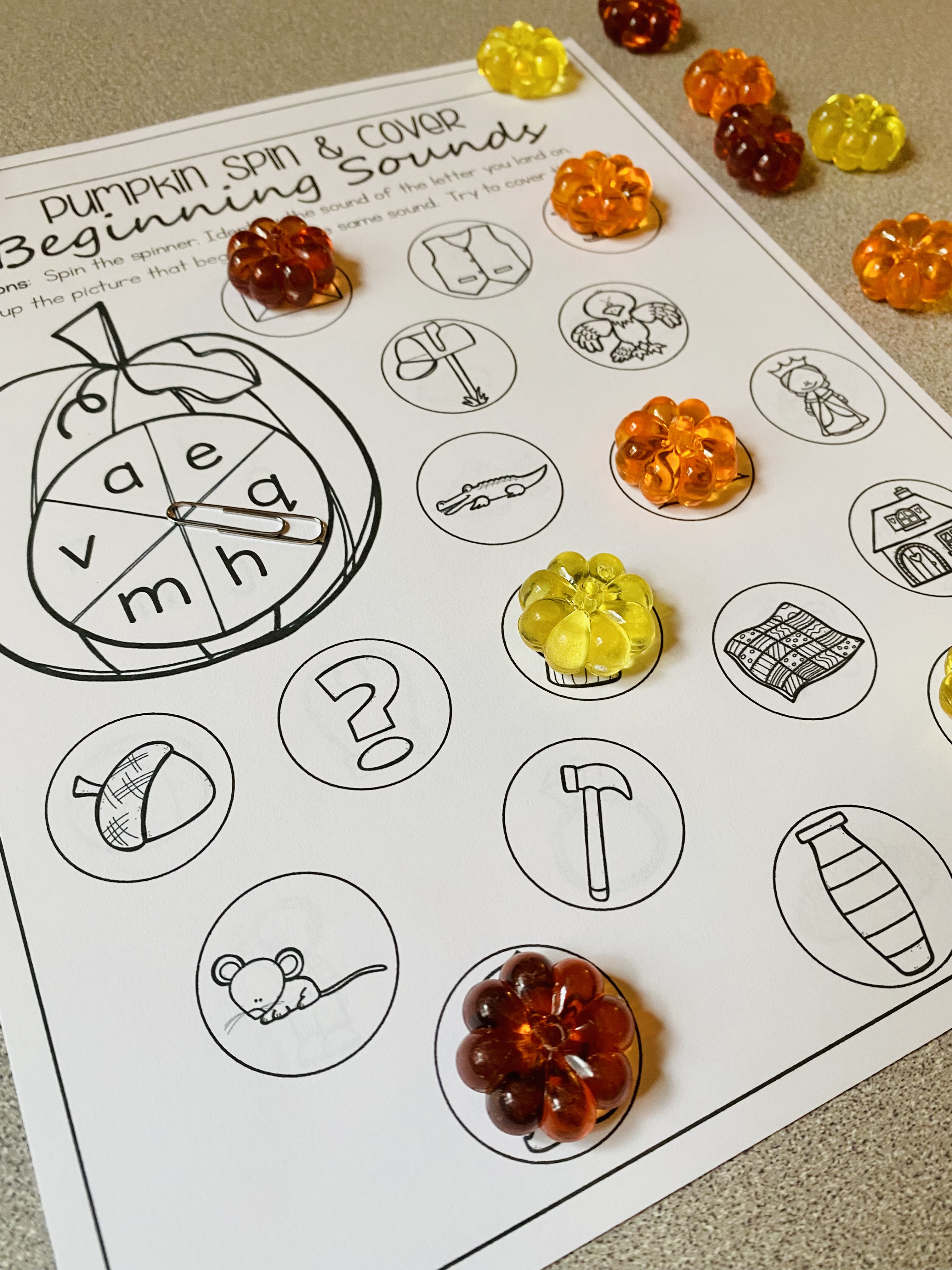
For those kiddos who are ready to practice their letter sounds, I created the Pumpkin Spin & Cover Beginning Sounds game. There are four variations of this printable, each with 6 different letter sounds to practice. All you need to do is print and gather something to cover up the corresponding pictures with. I used acrylic pumpkins that I found at the dollar store, but mini erasers, dot markers, crayons, or BINGO chips would also work perfectly. Students just take turns spinning the pumpkin spinner, identifying the letter sound, and covering up a picture that begins with the same sound.

Handwriting Skills

In my experience, handwriting is one of those things that kids either love or hate. Trying to compose the letters perfectly within the lines is intimidating and requires a lot of hard work. I designed three handwriting activities to help make writing more fun.

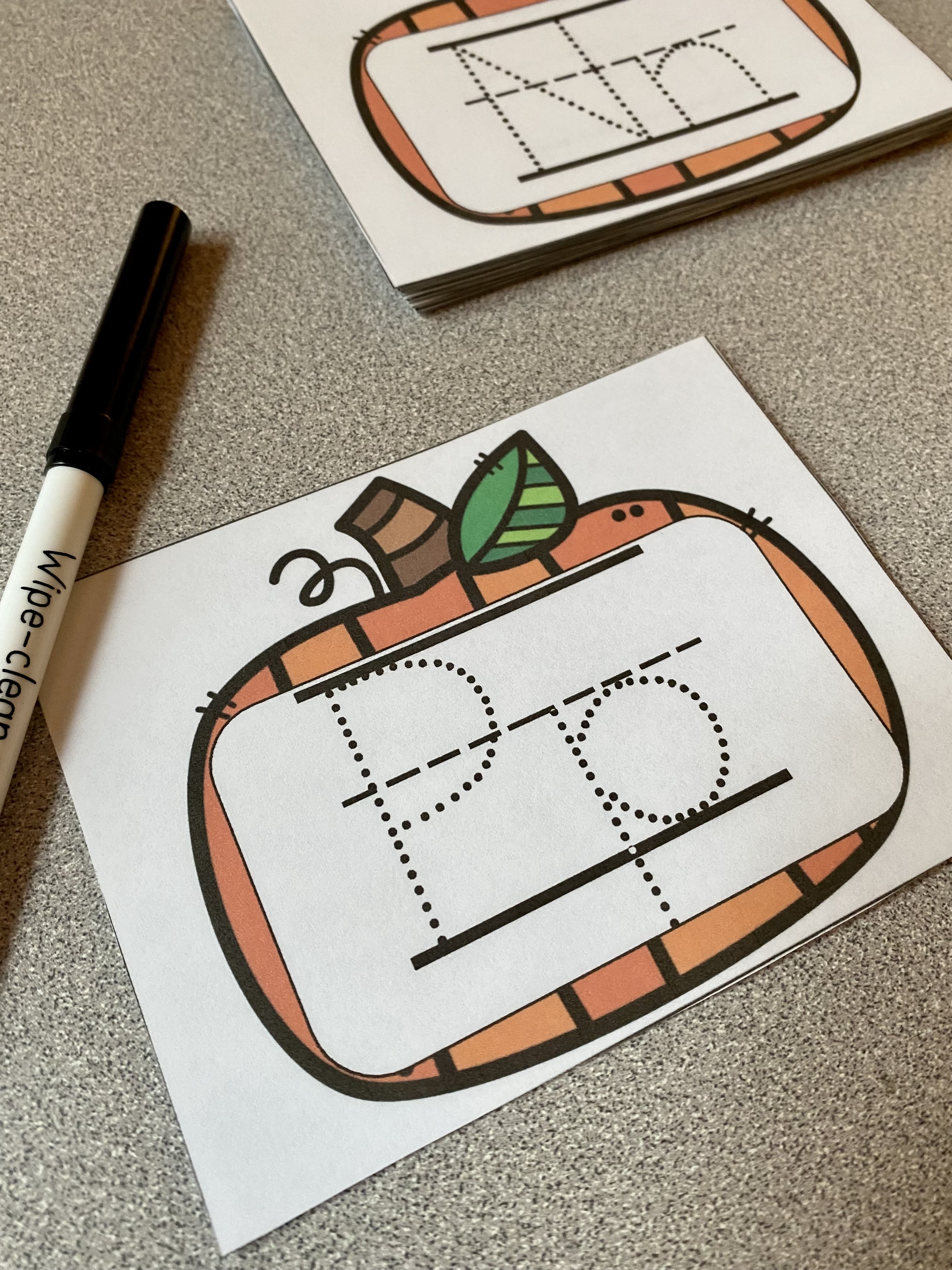
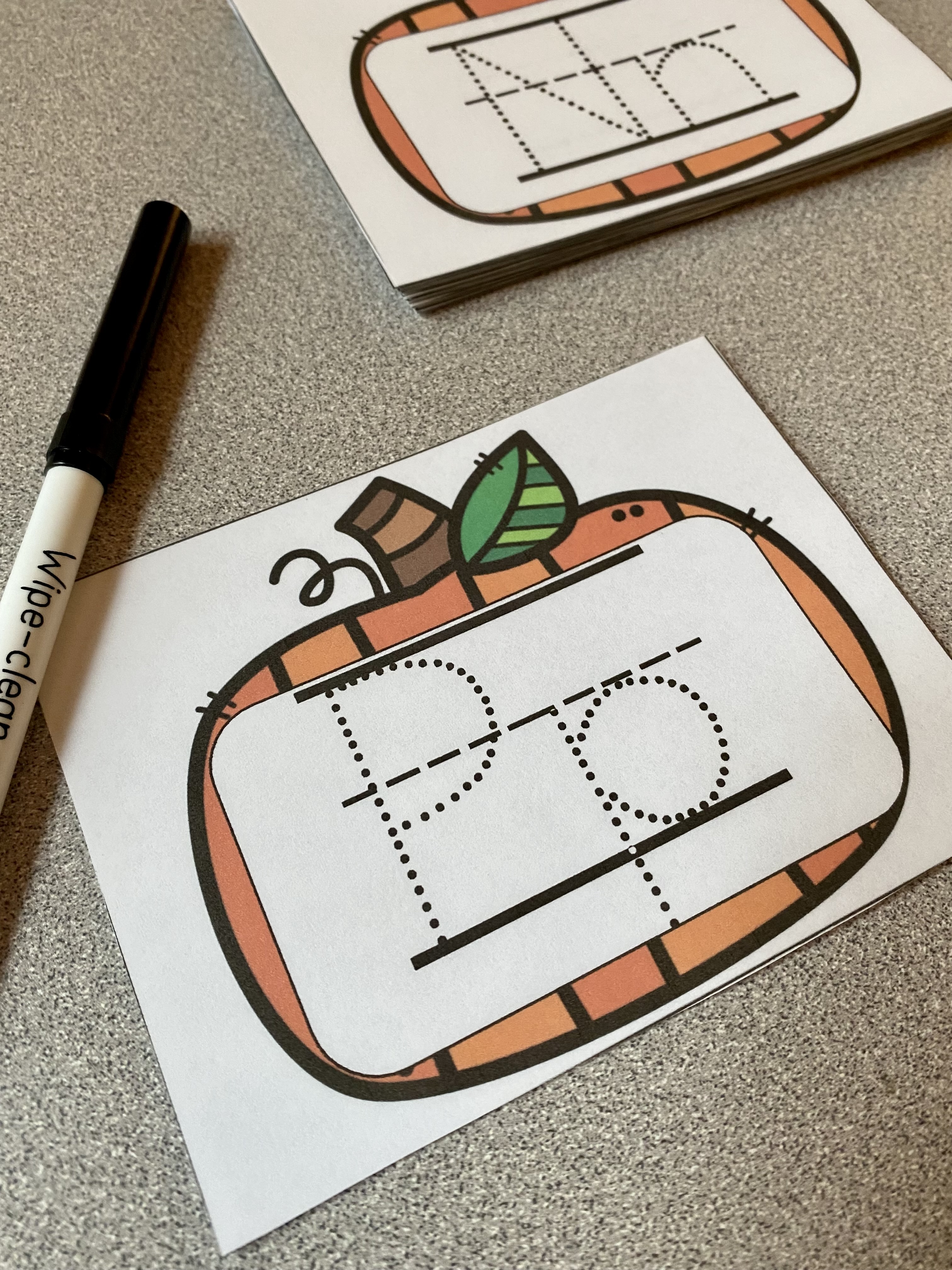
These Pumpkin Alphabet Tracing Cards are simple and can be used with dry erase markers after they are laminated. Kids can very quickly see their progress as they flip through and trace the given letters on each card. And the pumpkins are so cute!!

The Pumpkin Letter Draw activity can be very easily individualized depending on your students’ needs. As I said above, I wouldn’t choose to use every single alphabet card at one time. There is a set of uppercase and lowercase cards that you can choose from or pick just a few individual letters if you want your student to practice the same few letters more in depth. Have the students lay the cards face down in a draw pile then take turns picking one card at a time and recording it in the boxes on their recording sheet. It can be cooperative by filling up the board together or competitive by seeing who can fill their board first.

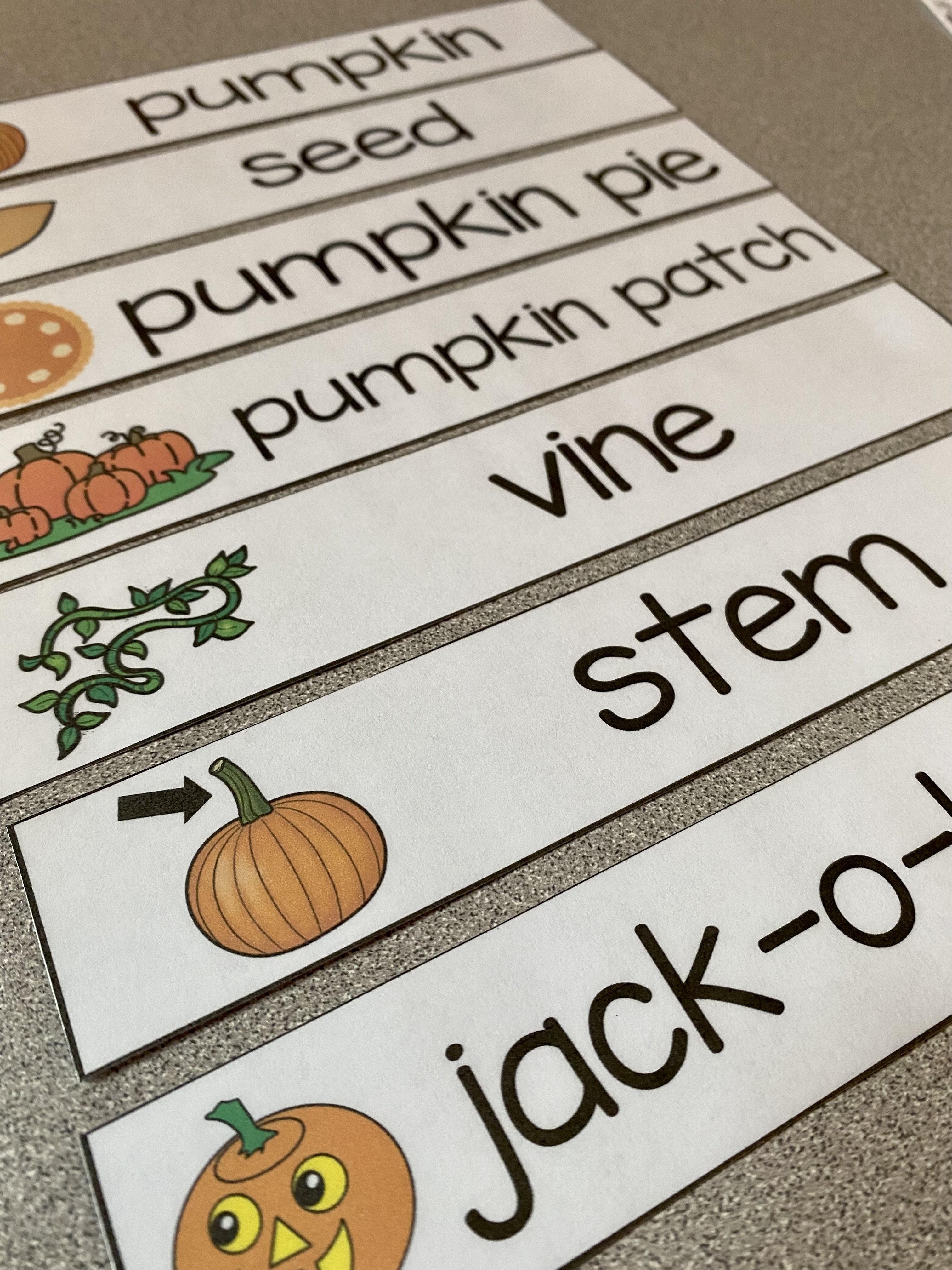
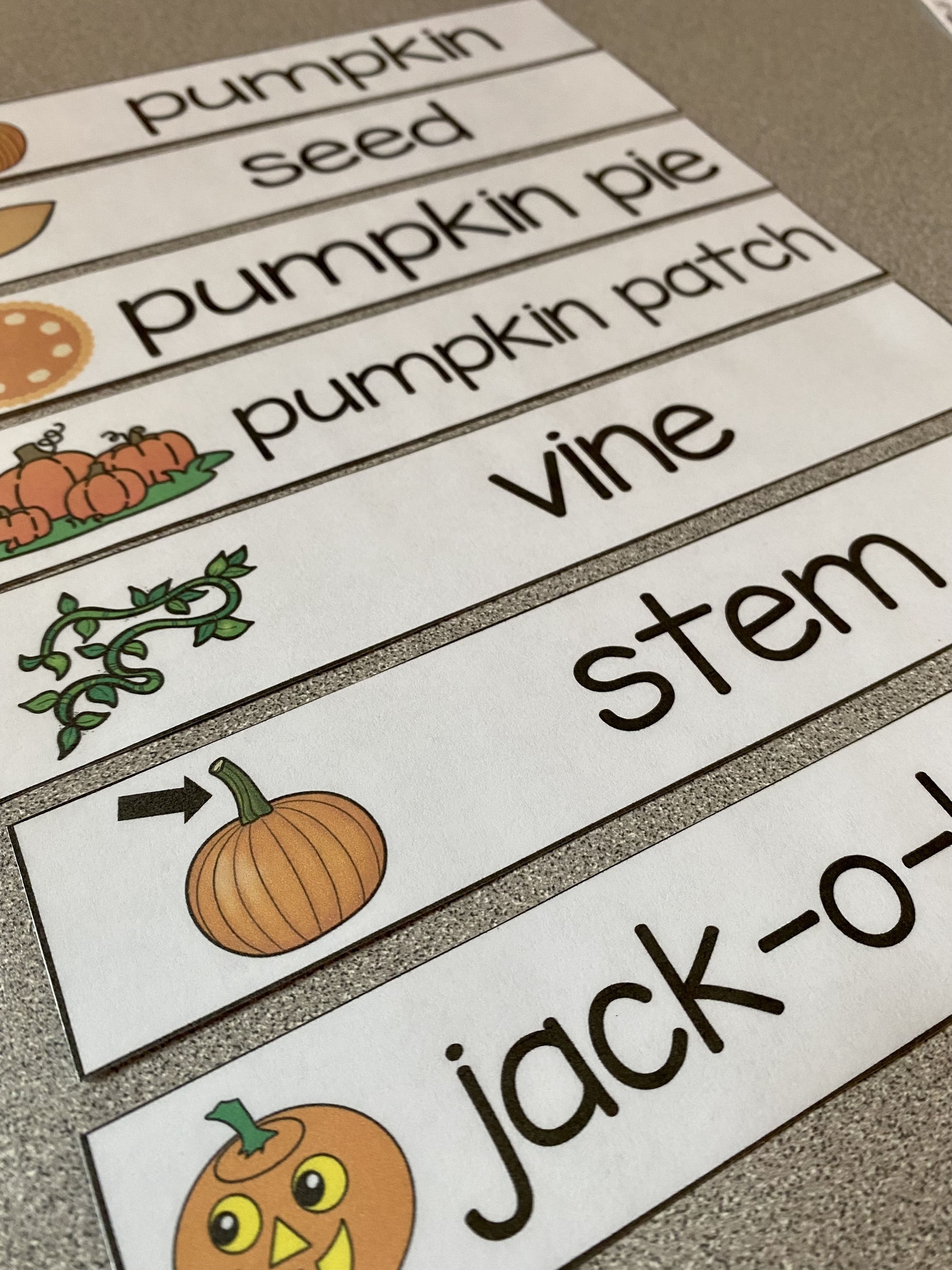
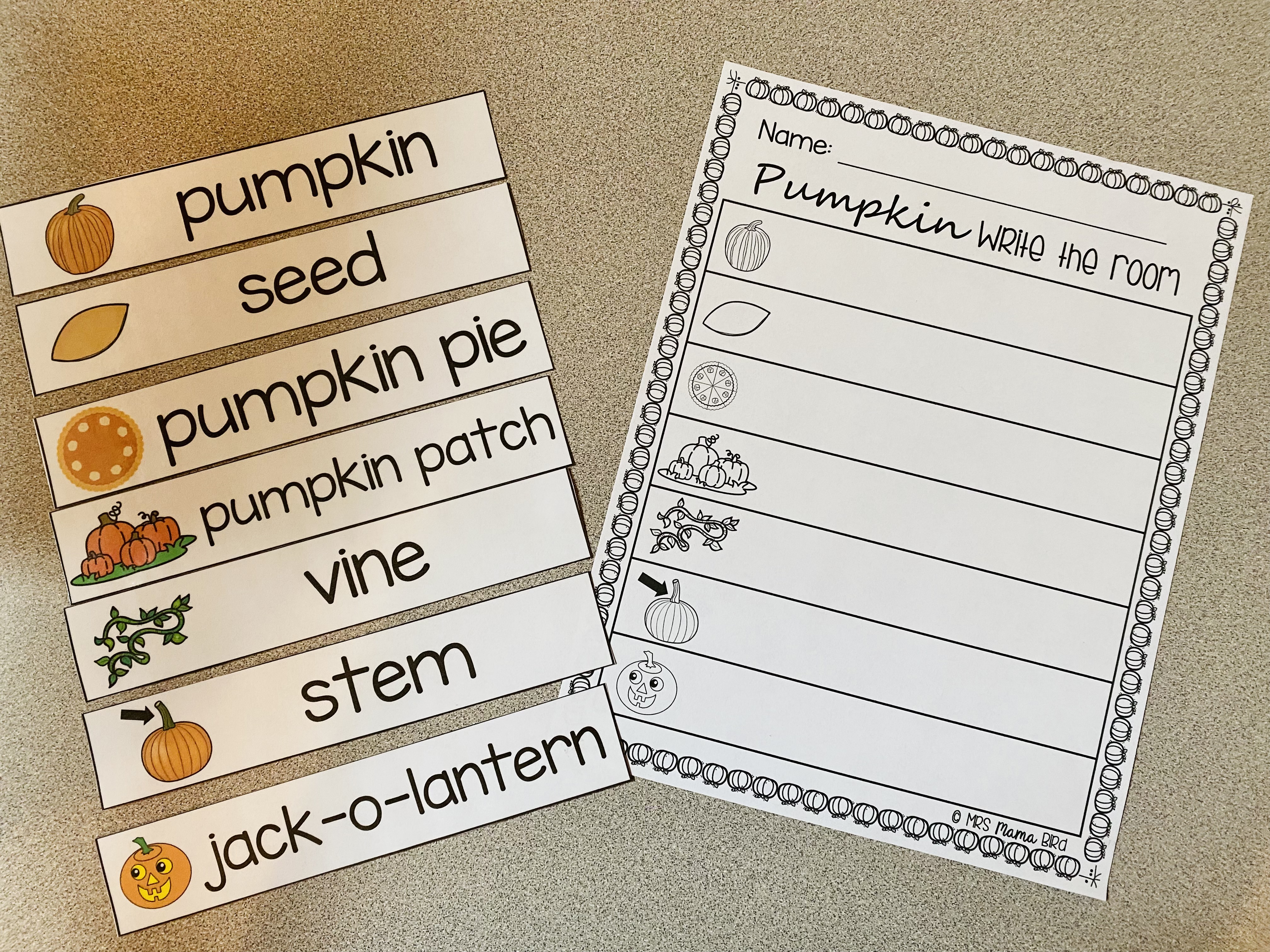
If your preschooler is ready to write words, the Pumpkin Write the Room activity is a perfect place to start. Simply hang the word cards throughout the room and have your students match the icons on the word cards to their recording sheet and write the corresponding word. You can display the pumpkin words in a pocket chart afterwards or leave them available to refer to in your writing corner.

If you are interested in adding these Pumpkin Literacy Centers to your collection click the button below. Have fun learning with Mrs Mama Bird!!

More Fall Activities

Fall, Fine Motor Skills

Apple Tree Spinner Game **Free Download**

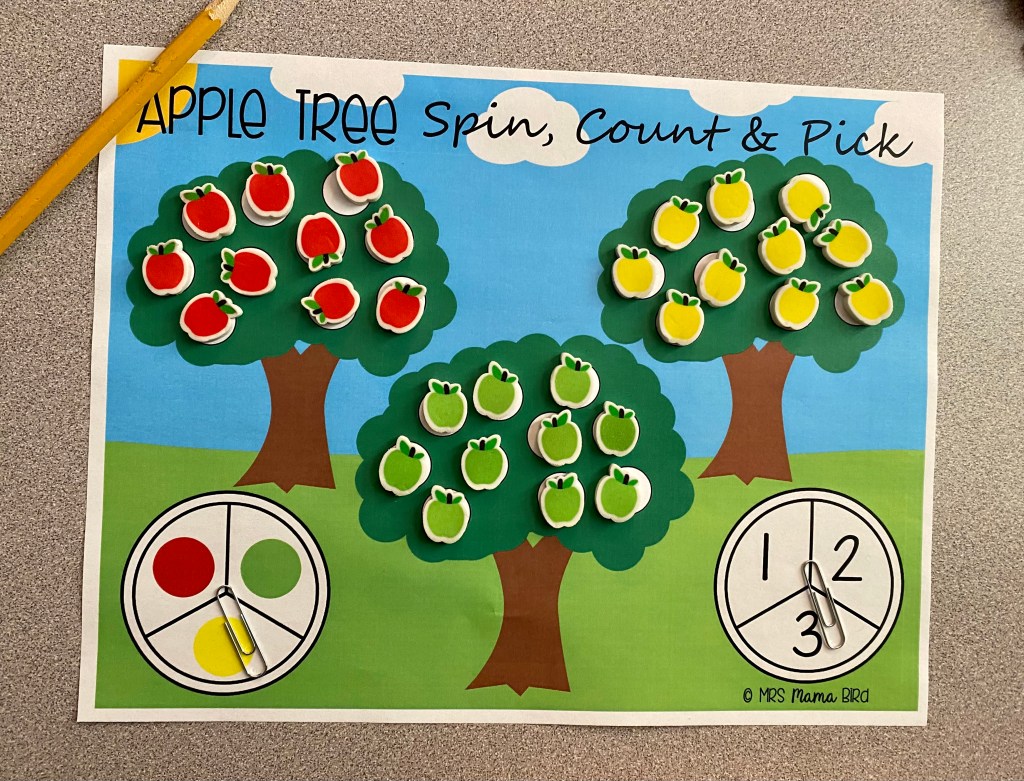
As September comes to a close, I want to sneak in one last FREE apple game for you!! Don’t pack up your apple unit without adding this to your file. It’s super easy to play and my preschooler had a blast with it.

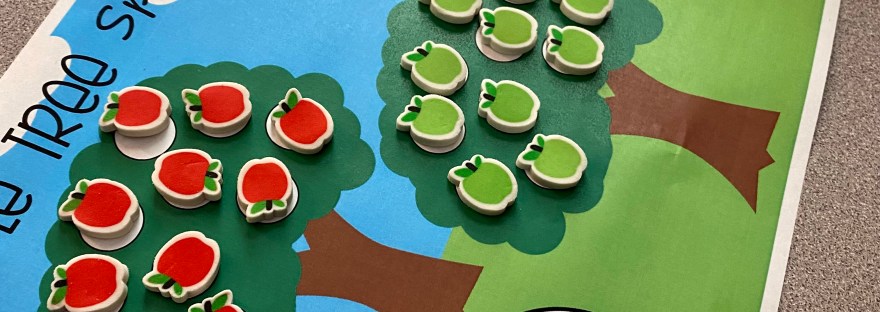
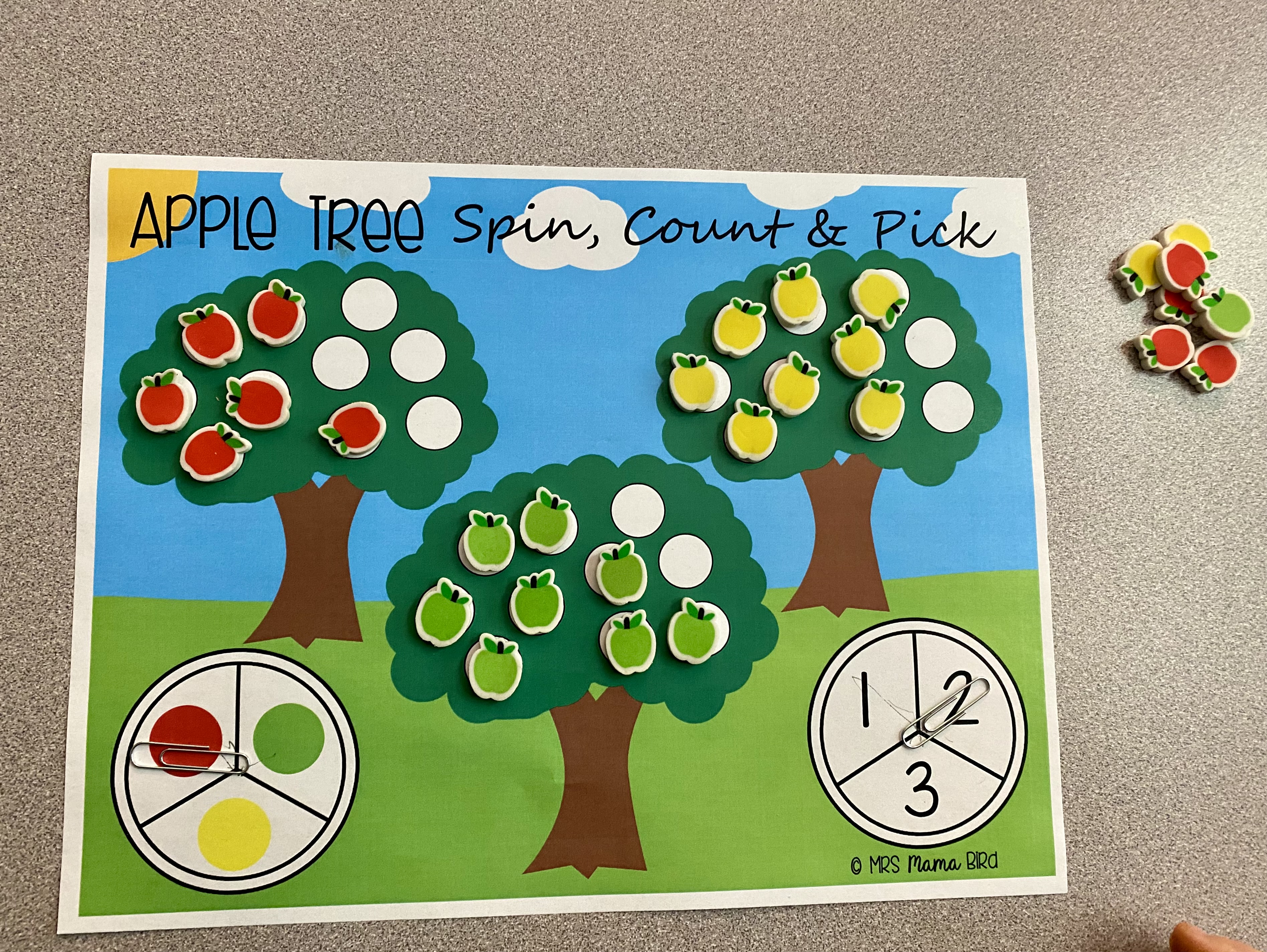
As I was rummaging through my fall box of goodies, I found these adorable mini apple erasers in red, green and yellow. I realized I hadn’t used them for anything yet and wanted to create something for them before September was gone! Of course, you don’t have to have these exact mini erasers to play the game. Any manipulatives can be used as long as you have some red, yellow and green. Things like buttons, flat marbles, BINGO chips, or poms poms will work perfectly.

How to Play

Gather your materials:

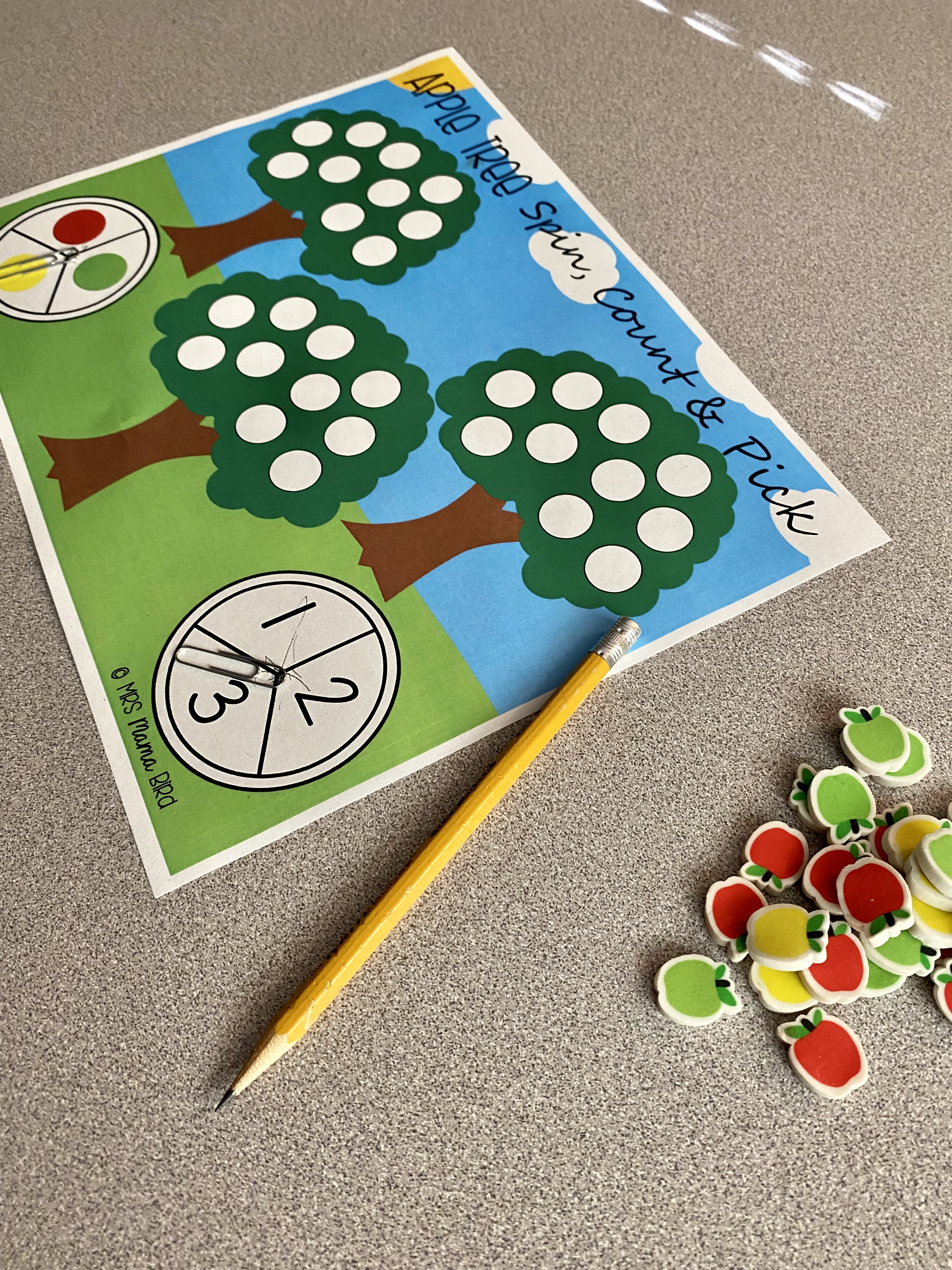
  • Apple Tree Game Board
  • Manipulatives (10 red, 10 green and 10 yellow)
  • 2 paper clips
  • pencil

Directions:

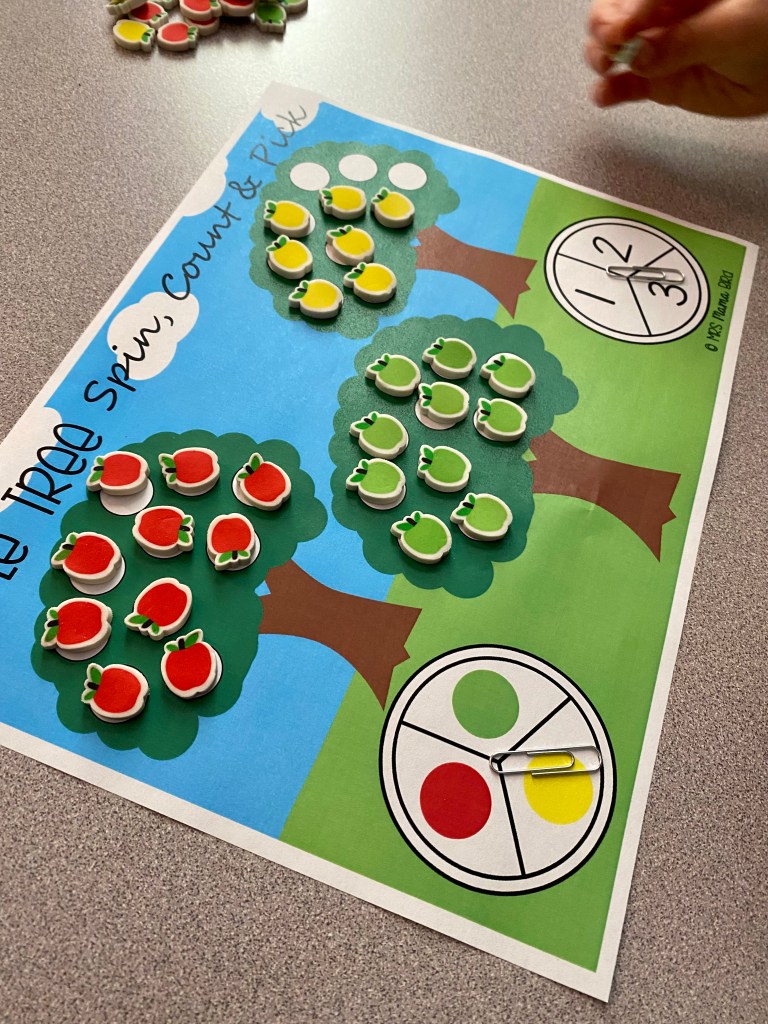
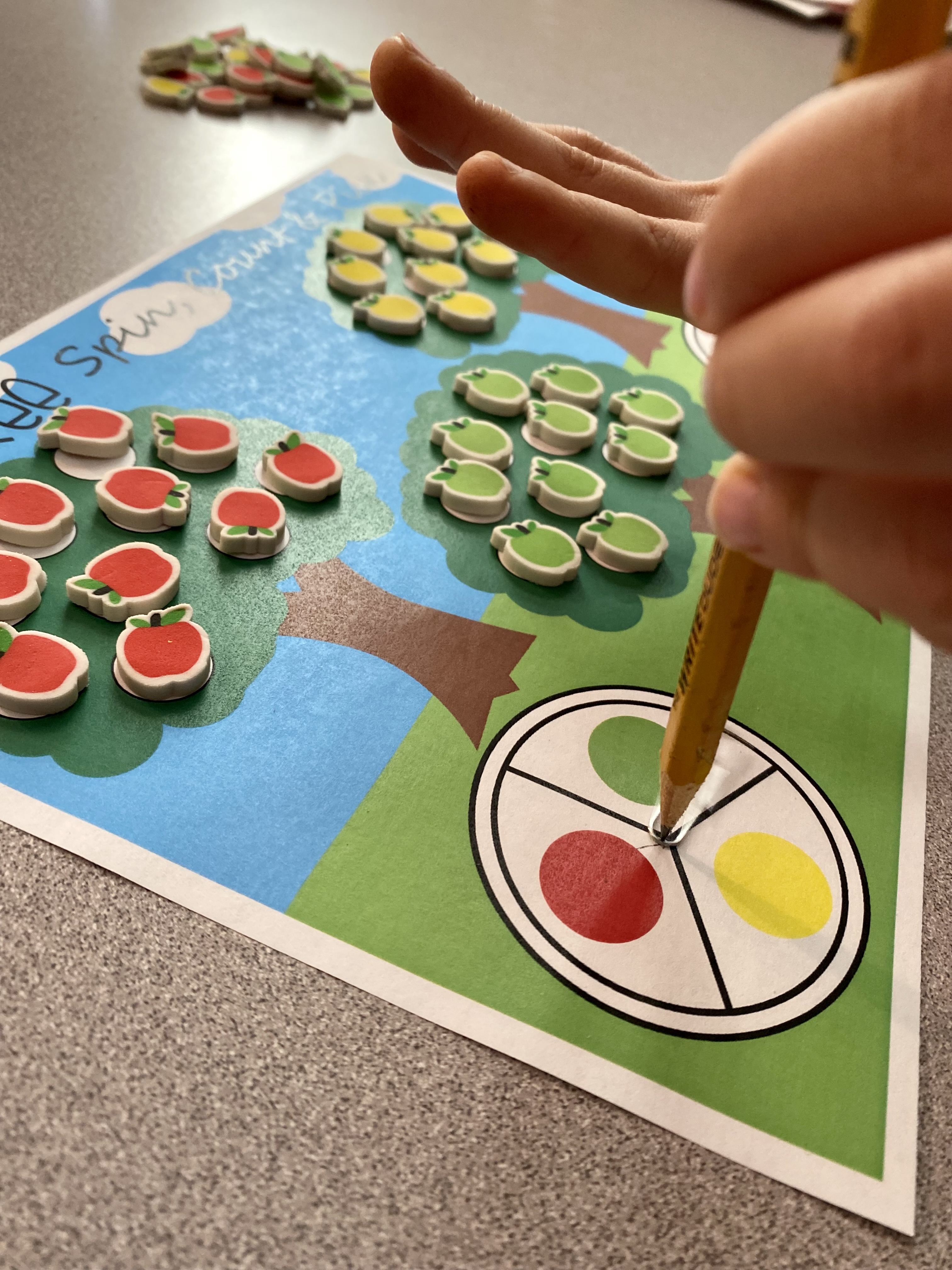
Students can play the game independently or with a partner. Give each student or pair of students a game board. Instruct them to place 10 red “apples” on the first tree, 10 green “apples” on the second tree and 10 yellow “apples” on the third tree so that all the circles on the trees have “apples” in them. Have your kiddos spin both spinners and remember what color and what number they land on (i.e. red 3). Then instruct them to remove that particular amount of apples from that certain color tree (i.e. Pick 3 red apples). Have students take turns “picking apples” until the game board is clear. Students can work together to pick all the apples as a team or they can compete to see who picks the most apples in the end.

Hint: If your students get 2 trees empty and only have one remaining color, you can tell them to just use the numbers spinner.

I had fun making this game really colorful and eye-catching, but I know printing several color copies can be detrimental to your ink supply. So I also took the time to create an ink-friendly, black and white version of the game. The students can simply color in the circles on the spinner before they get started.

That’s it!! If you’d like to add this fun Apple Tree Spinner Game to your collection of apple activities, just click the button below for your FREE download. Also, I love to hear from you, so please leave any questions or comments below!

Do you need more ideas for you apple unit?? You may also enjoy these resources!!

Fall, Fine Motor Skills, Seasons

5 Ways to Use Do A Dot Pages Without Do A Dot Markers **FREE Download**

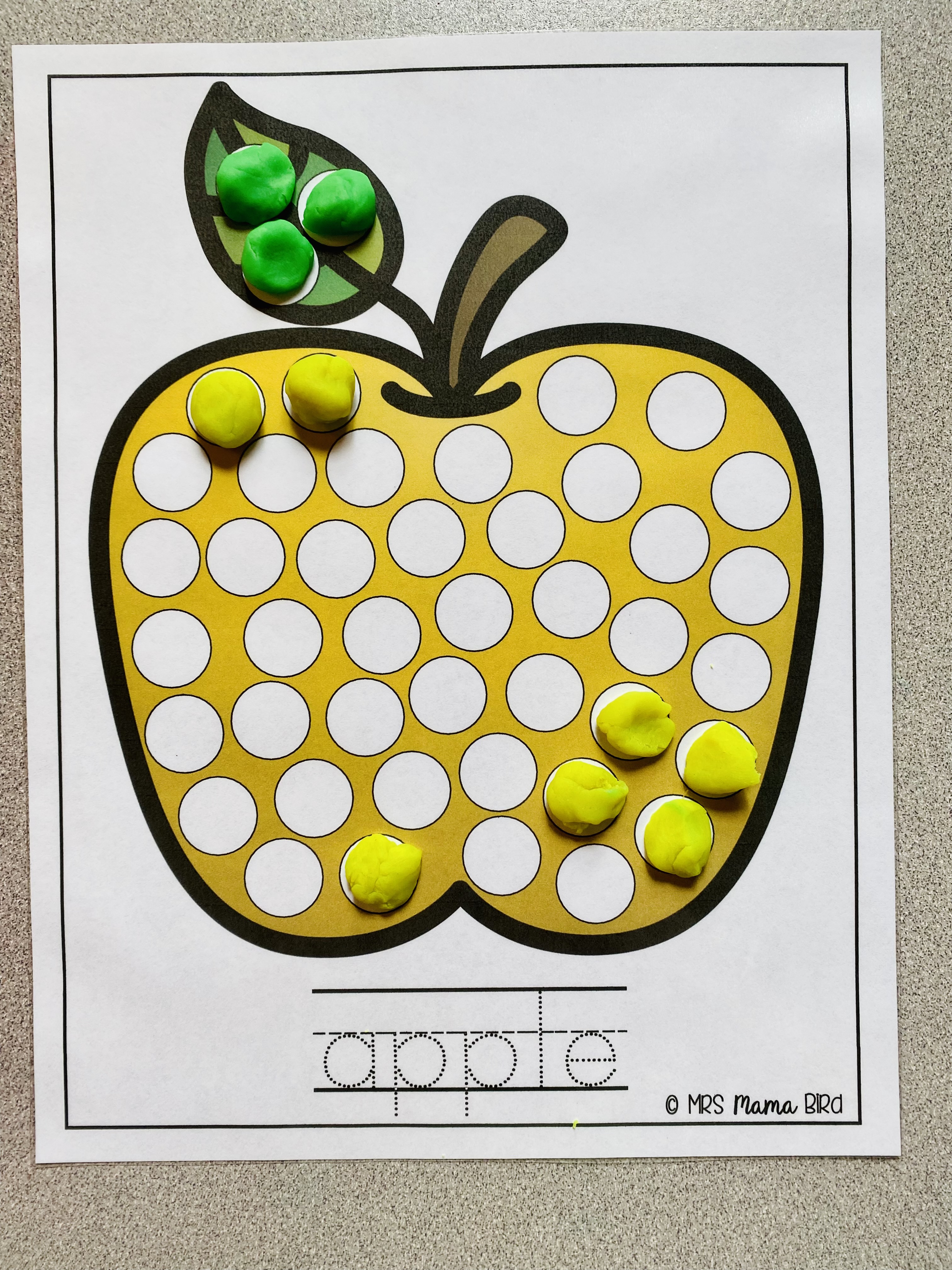
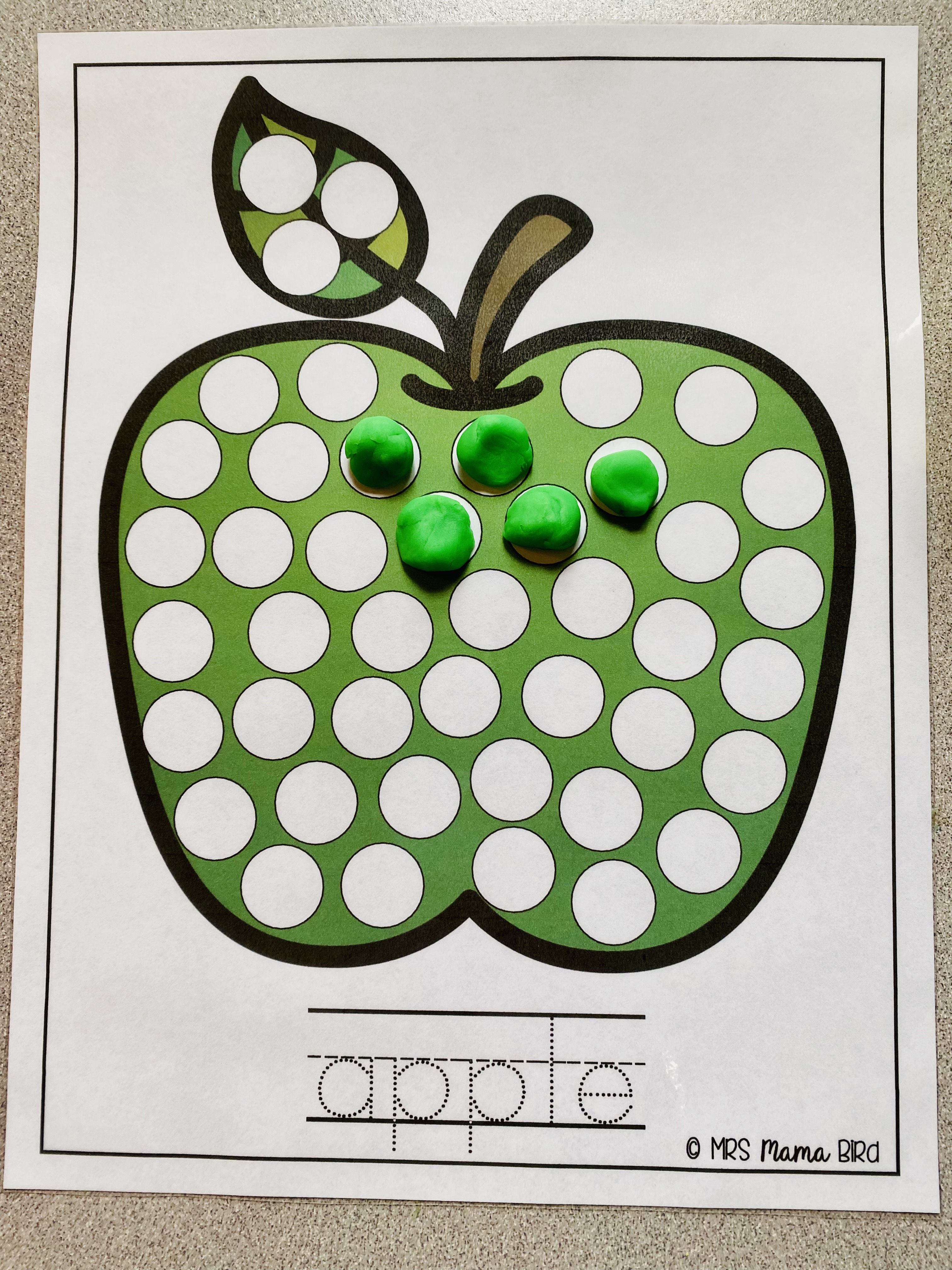
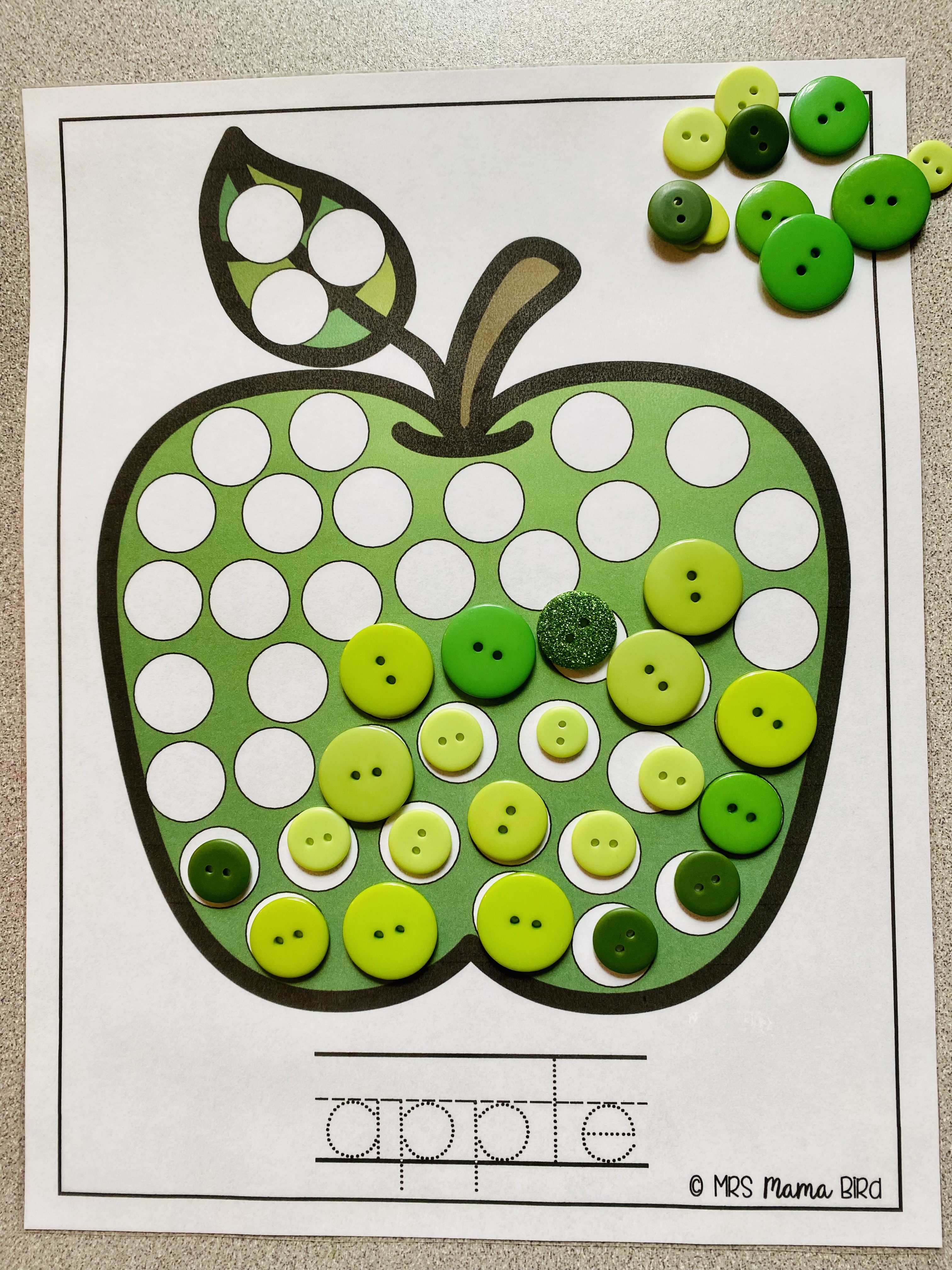
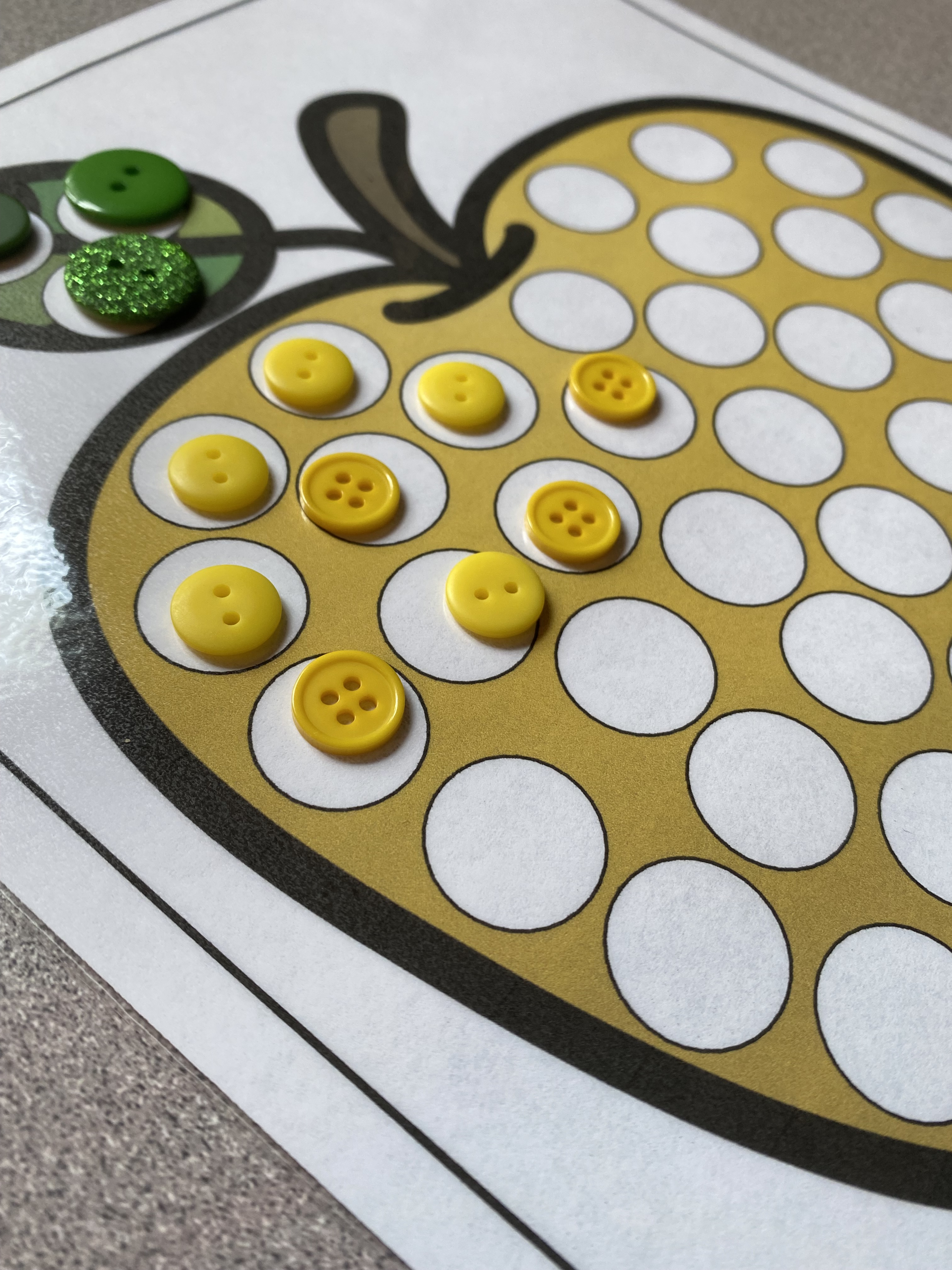
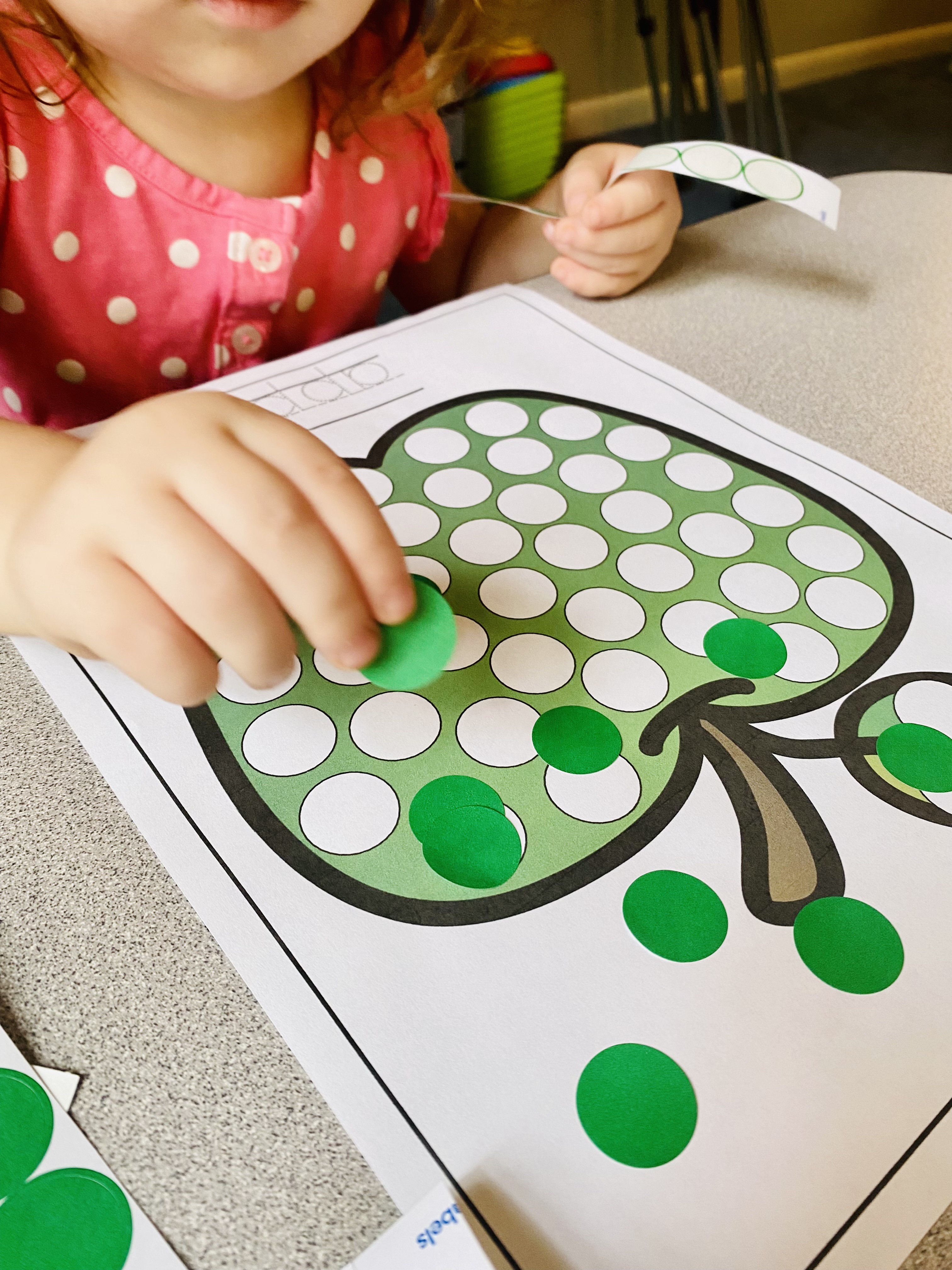
Teachers and parents are always short on time. If I can get multiple uses out of the same resource, I consider that a major WIN. Do A Dot printables are so fun and there are an abundance of free resources available online that you can download and print. My kids absolutely love using the dot markers to decorate their artwork. But, truth be told, sometimes I’m reluctant to get the markers out for them to use. My toddler loves to dot herself and her clothes and my preschooler can finish dot art pages pretty quickly with the markers. It often turns into a huge mess in a very short amount of time. In an effort to make Do A Dot printables more worth their while, I brainstormed and tested a few new ways to use them.

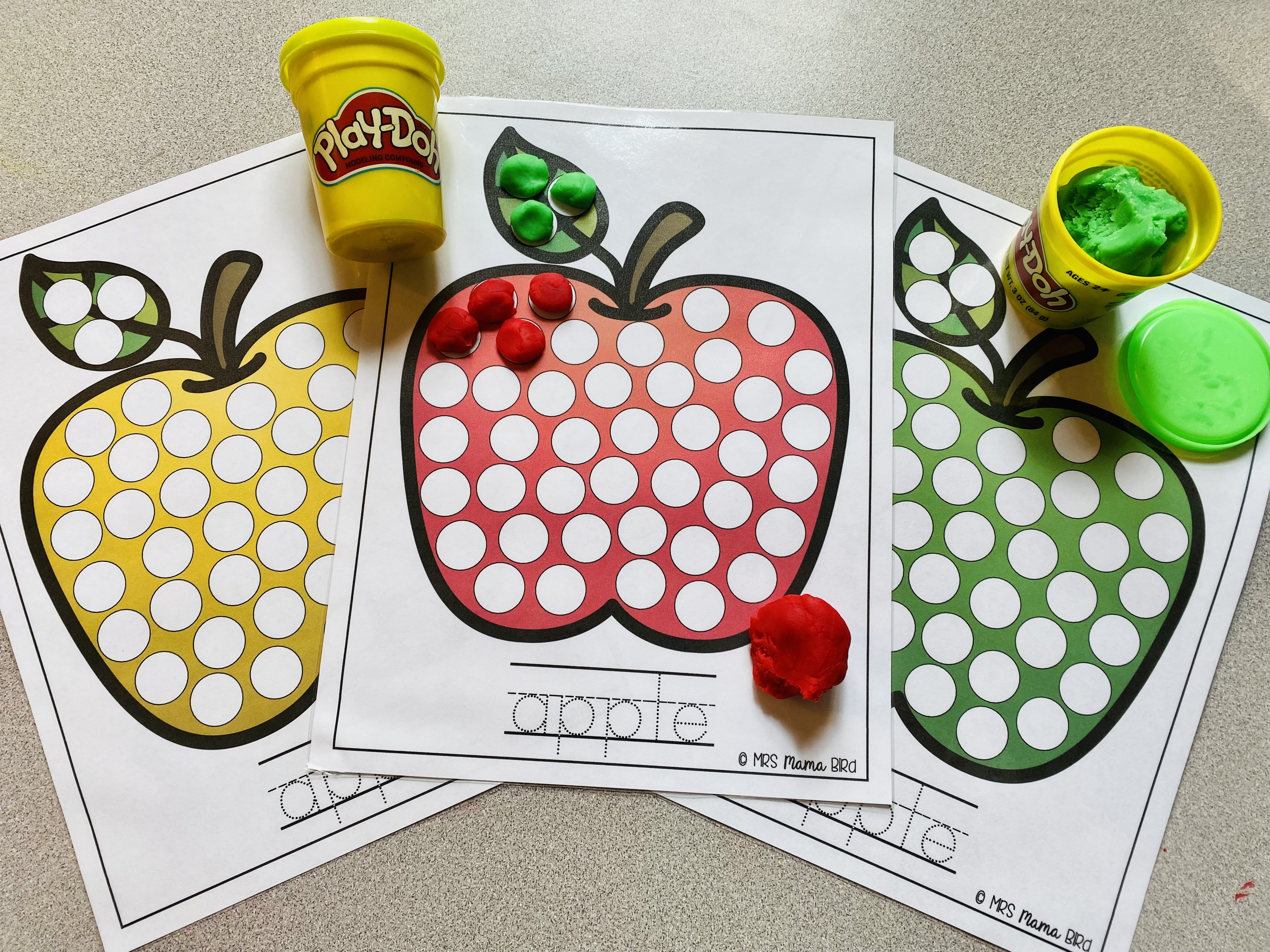
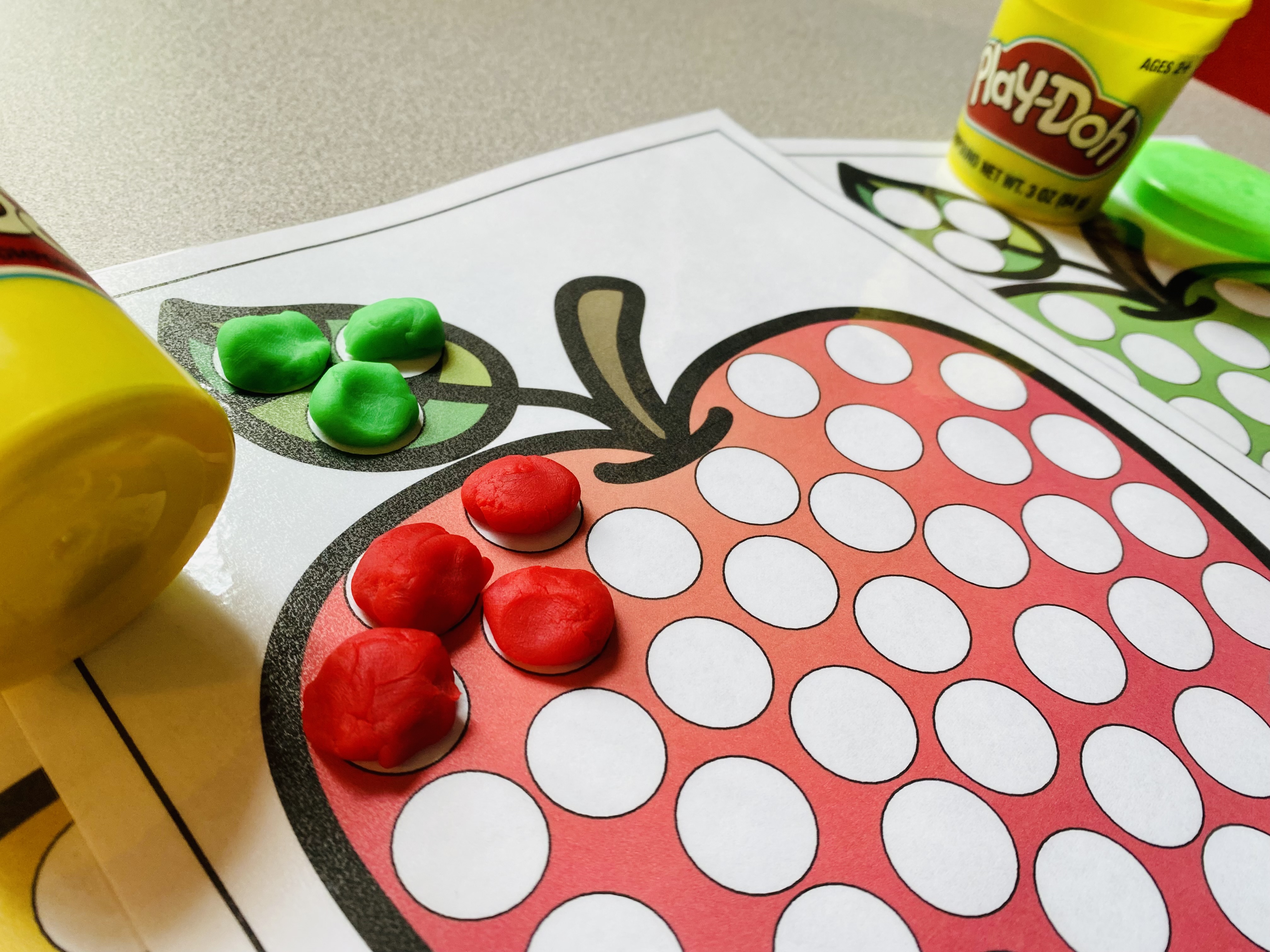
Do A Dot Play-Doh

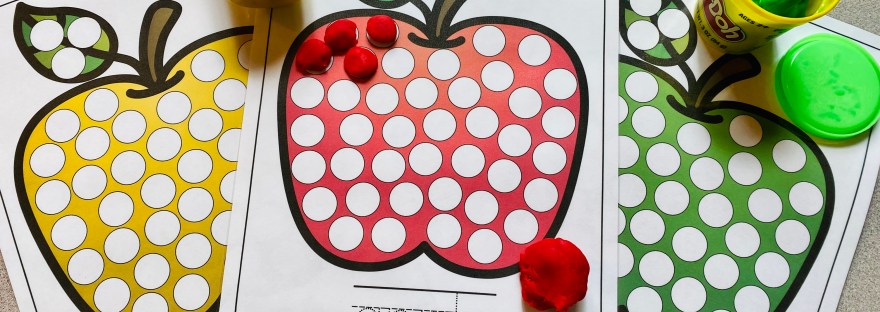
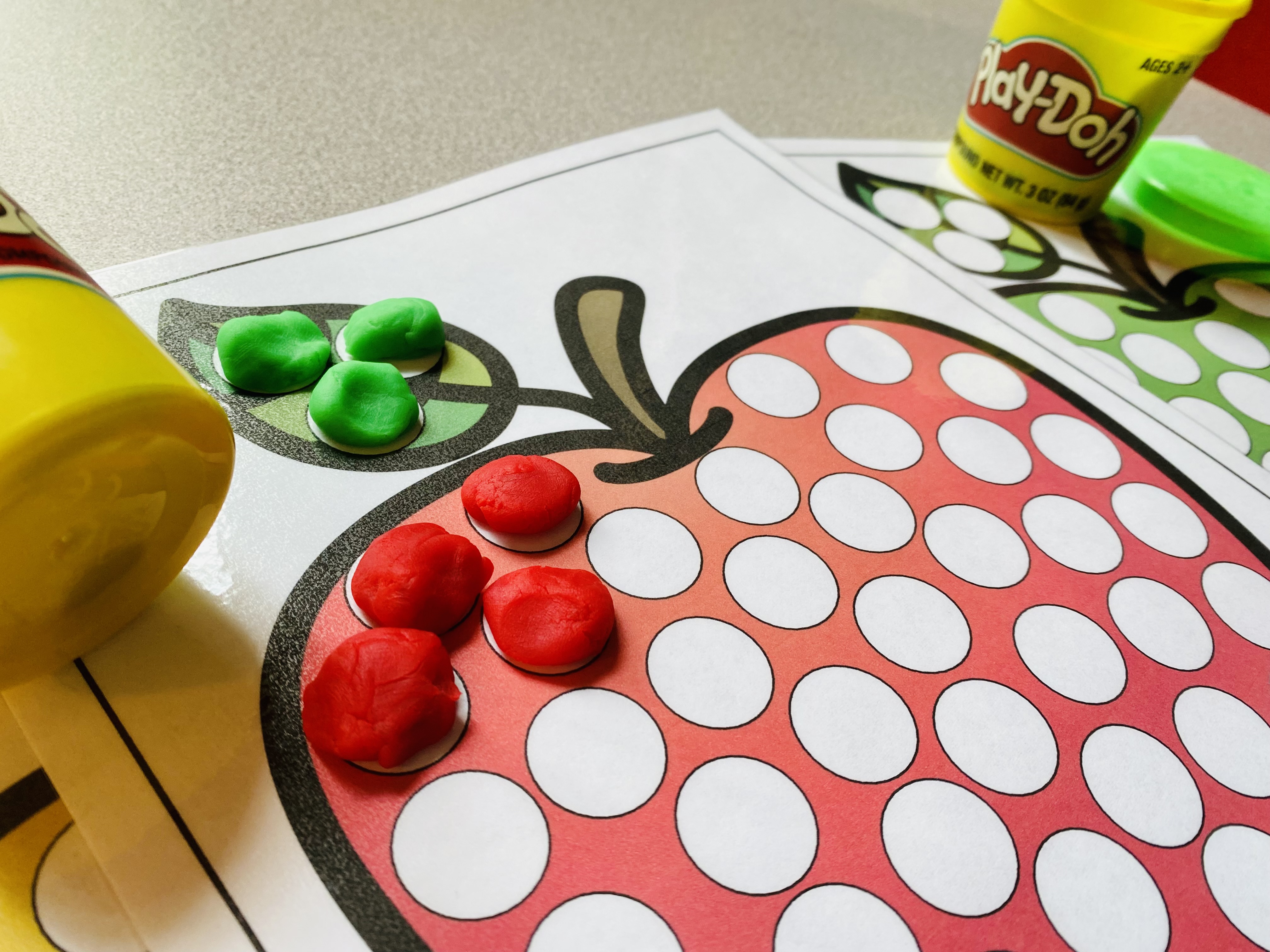
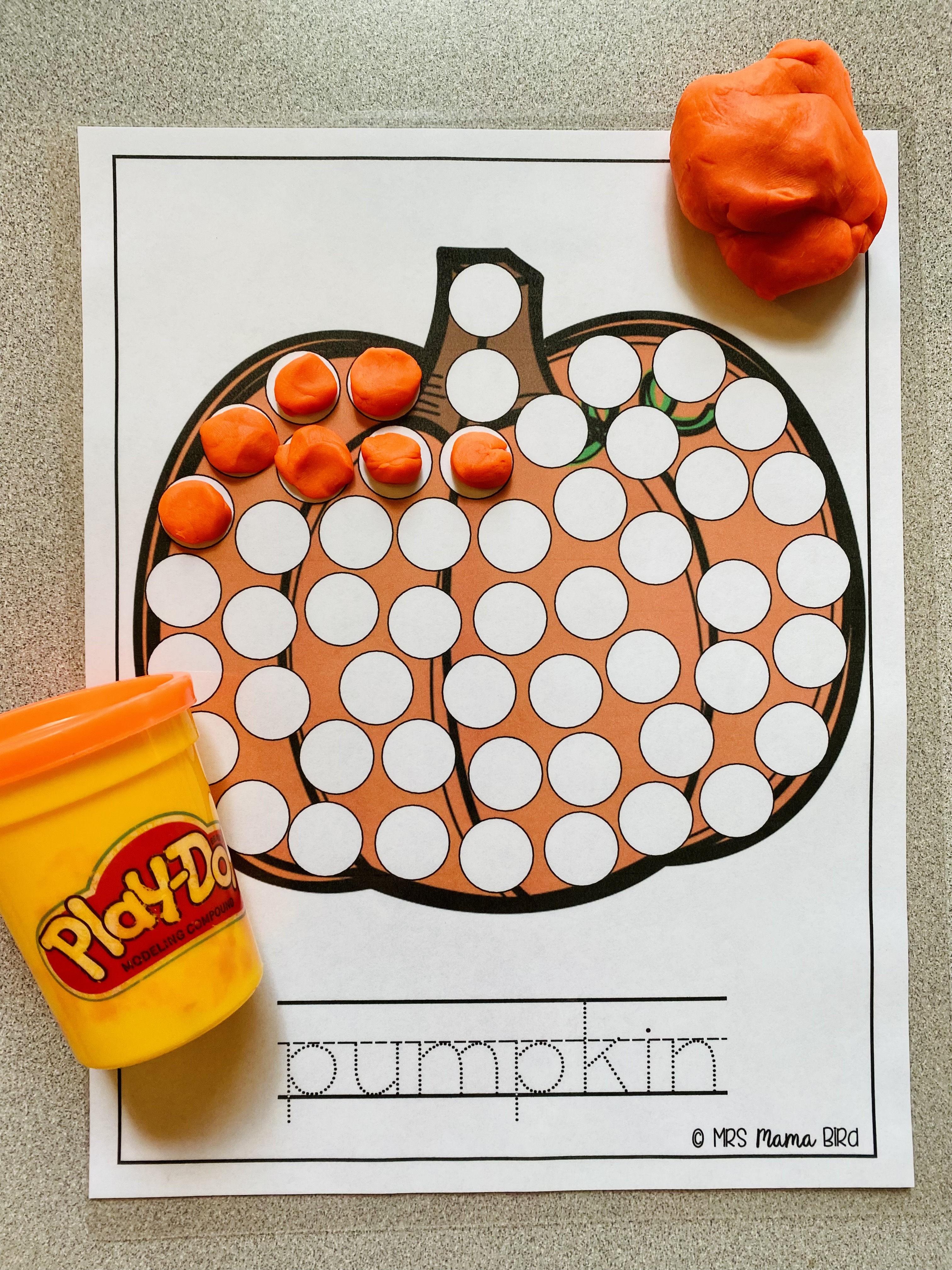
If you find Do A Dot printables available in color, grab them for your stash!!! I designed 4 versions of this printable, specifically with the playdough idea in mind. My preschooler chose his favorite color to work on. It was a great way to practice manipulating dough and identifying colors. Make sure you laminate your pages so that you can use and reuse them without the Play Doh ruining the color.

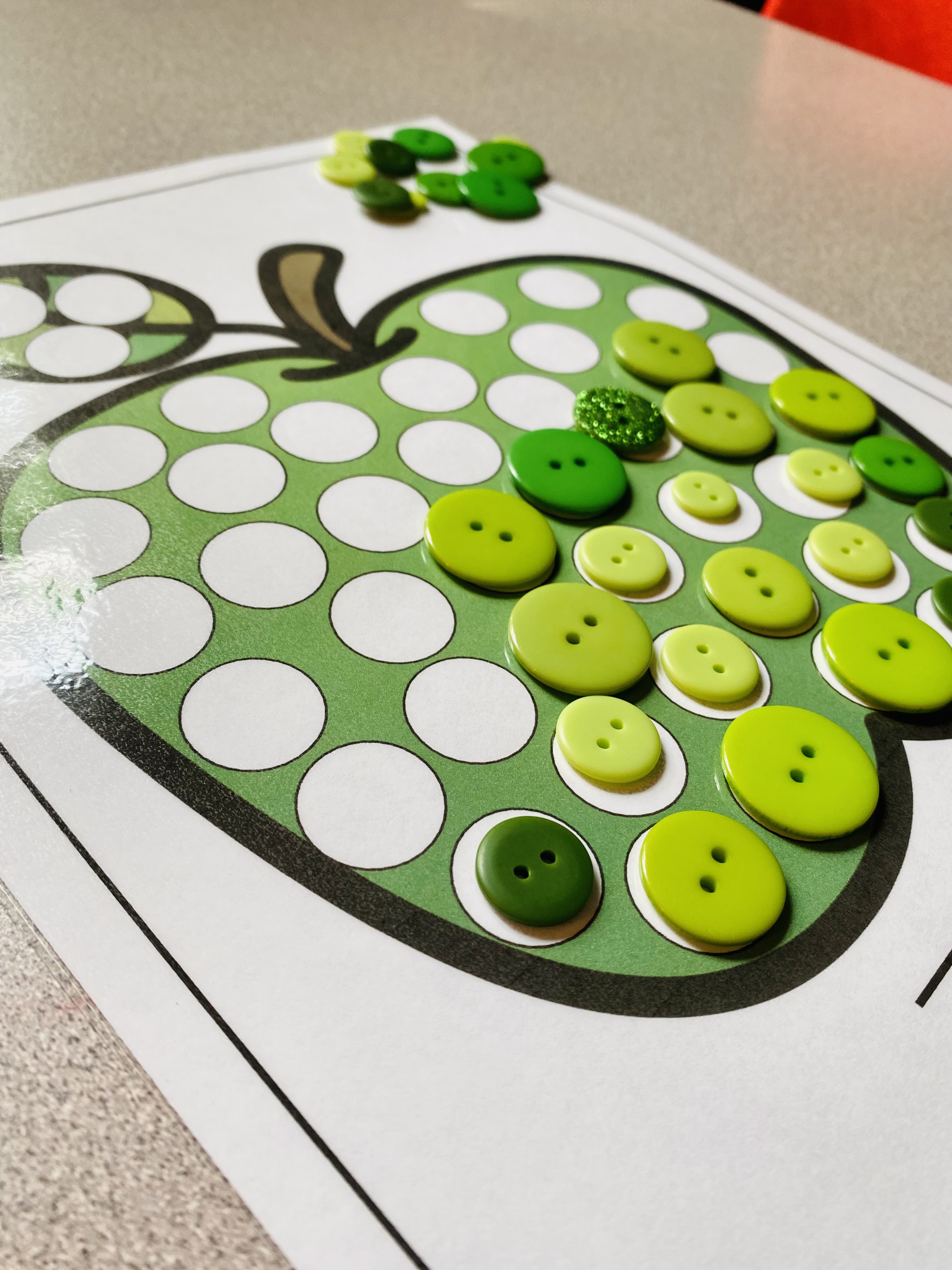
Do A Dot Buttons

I am the type of person who saves craft supplies for all eternity and I found these buttons stashed away in a jar in my cabinet. They worked perfectly for this fine motor activity. My preschooler chose the red apple to complete this time. My buttons had a bit of variation among their size and color, which sparked some meaningful conversation. Best of all, when we were finished, we could curl up the page and slide the buttons right back into the jar. No mess!!!

Do A Dot Flat Marbles

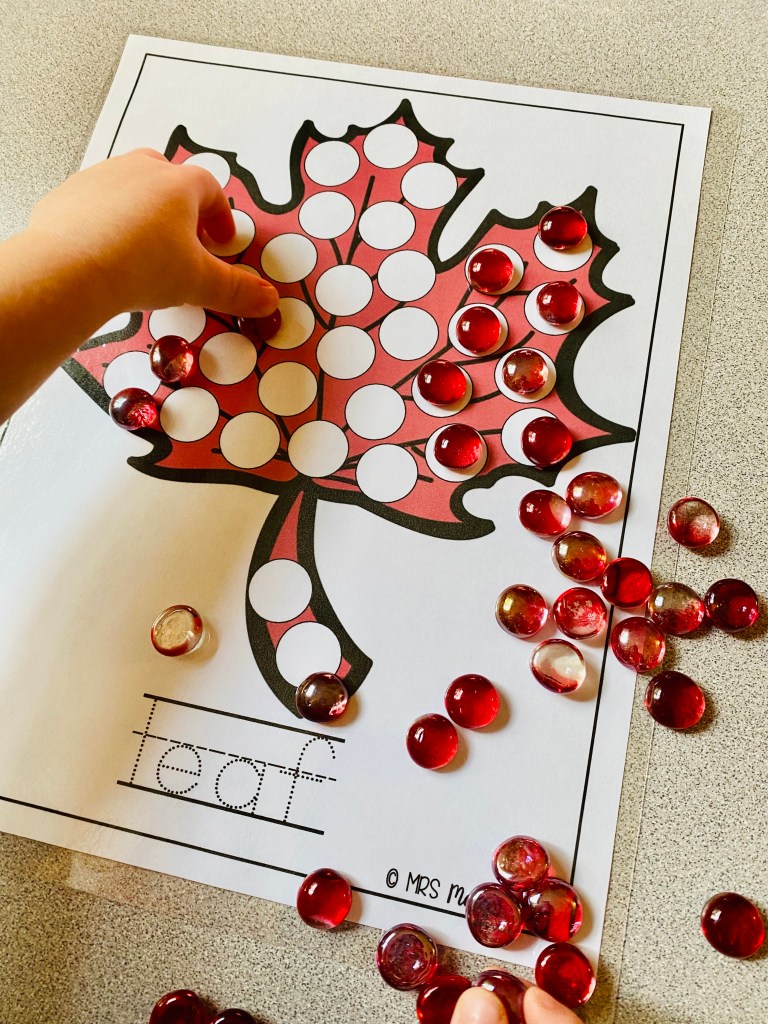
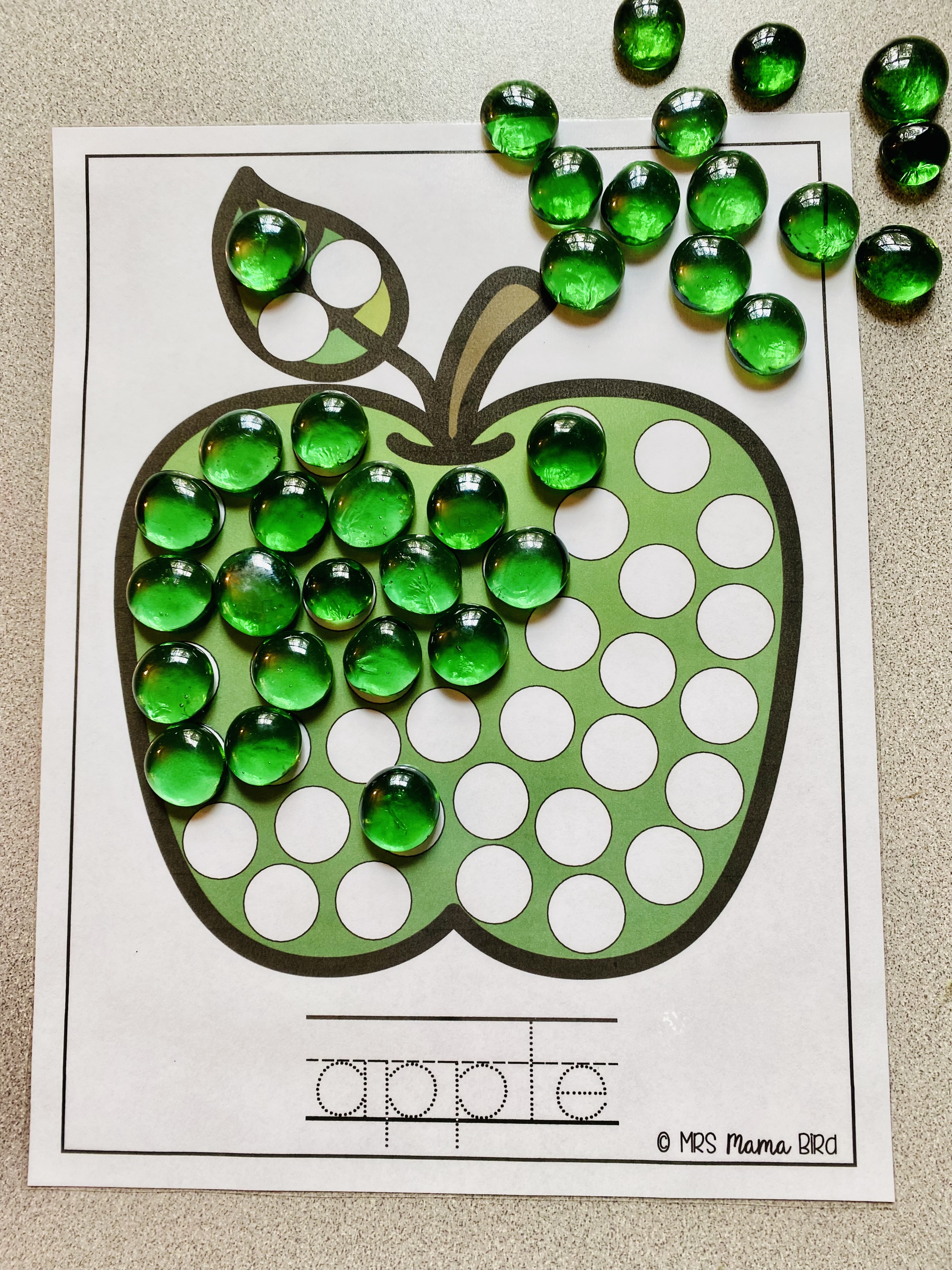
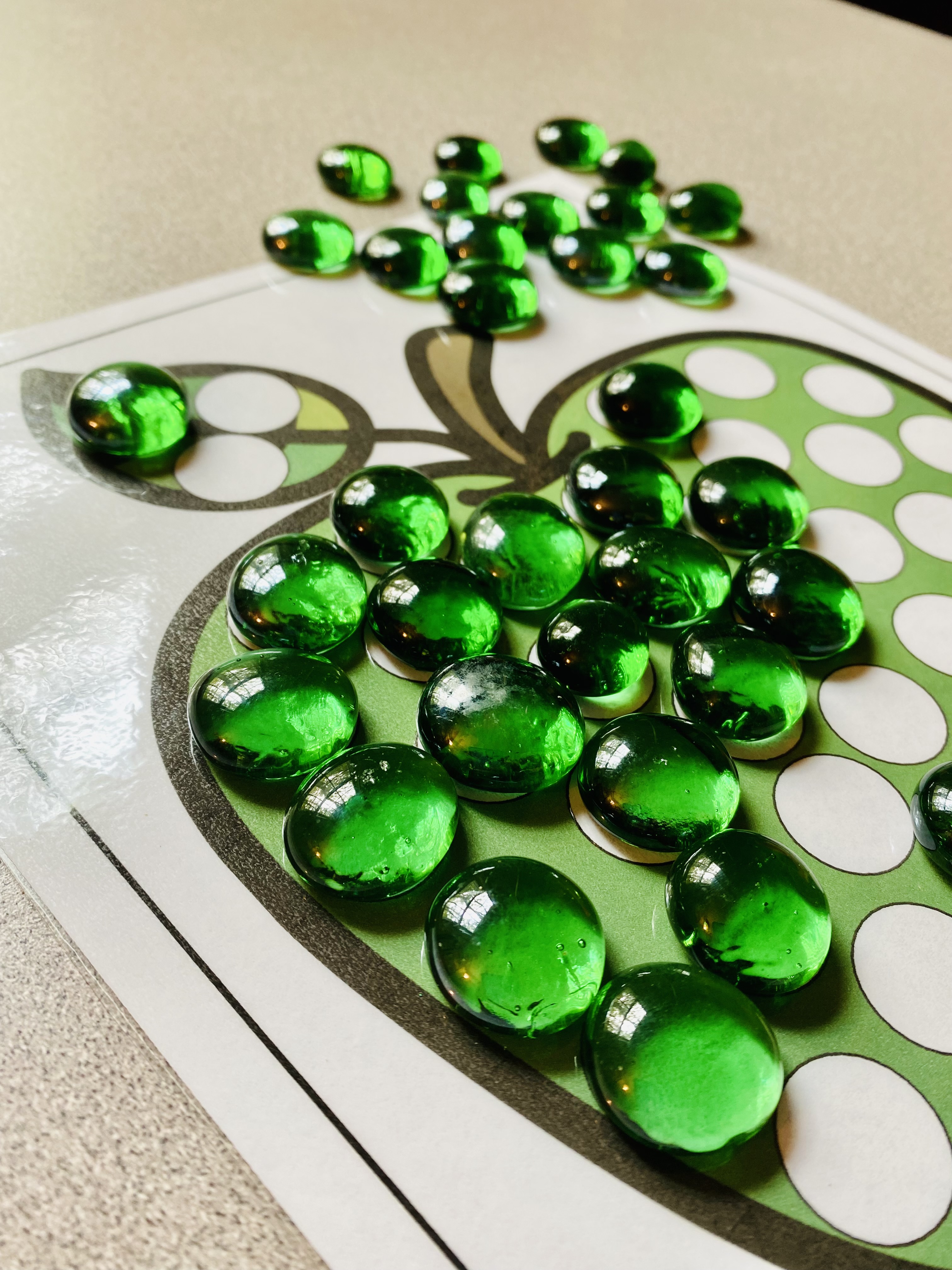
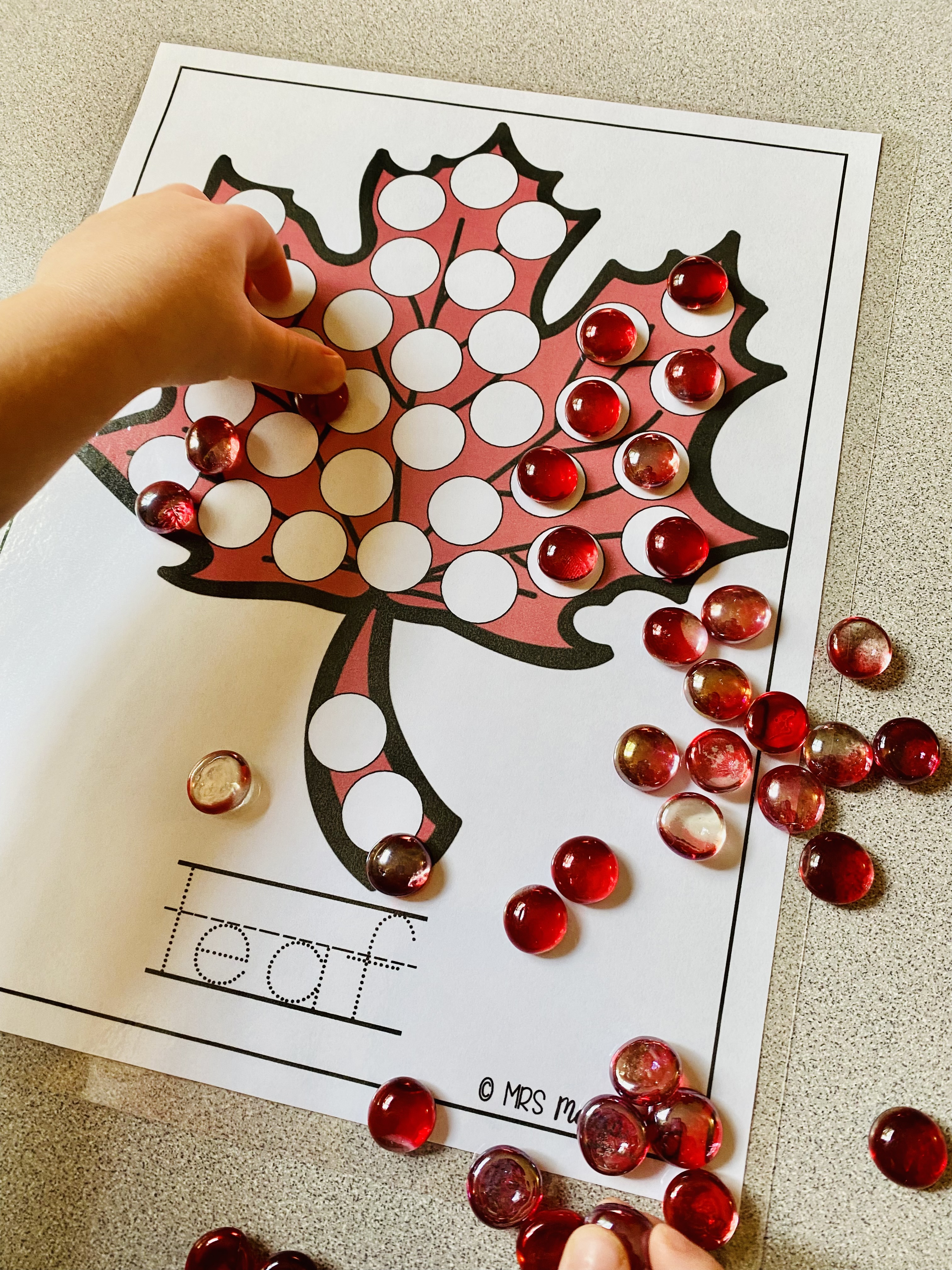
Adding flat marbles to the Do A Dot pages was a hit!! My preschooler spent the most time with this fine motor center. The flat marbles are smooth and heavy enough to sit still on the pages where you place them. Not to mention, they are shiny and see through!! This option was very engaging for my kids. Flat marbles, also called glass vase filler, can be found at any craft supply store. If you are lucky, you can find the color you need at a dollar store and save some money.

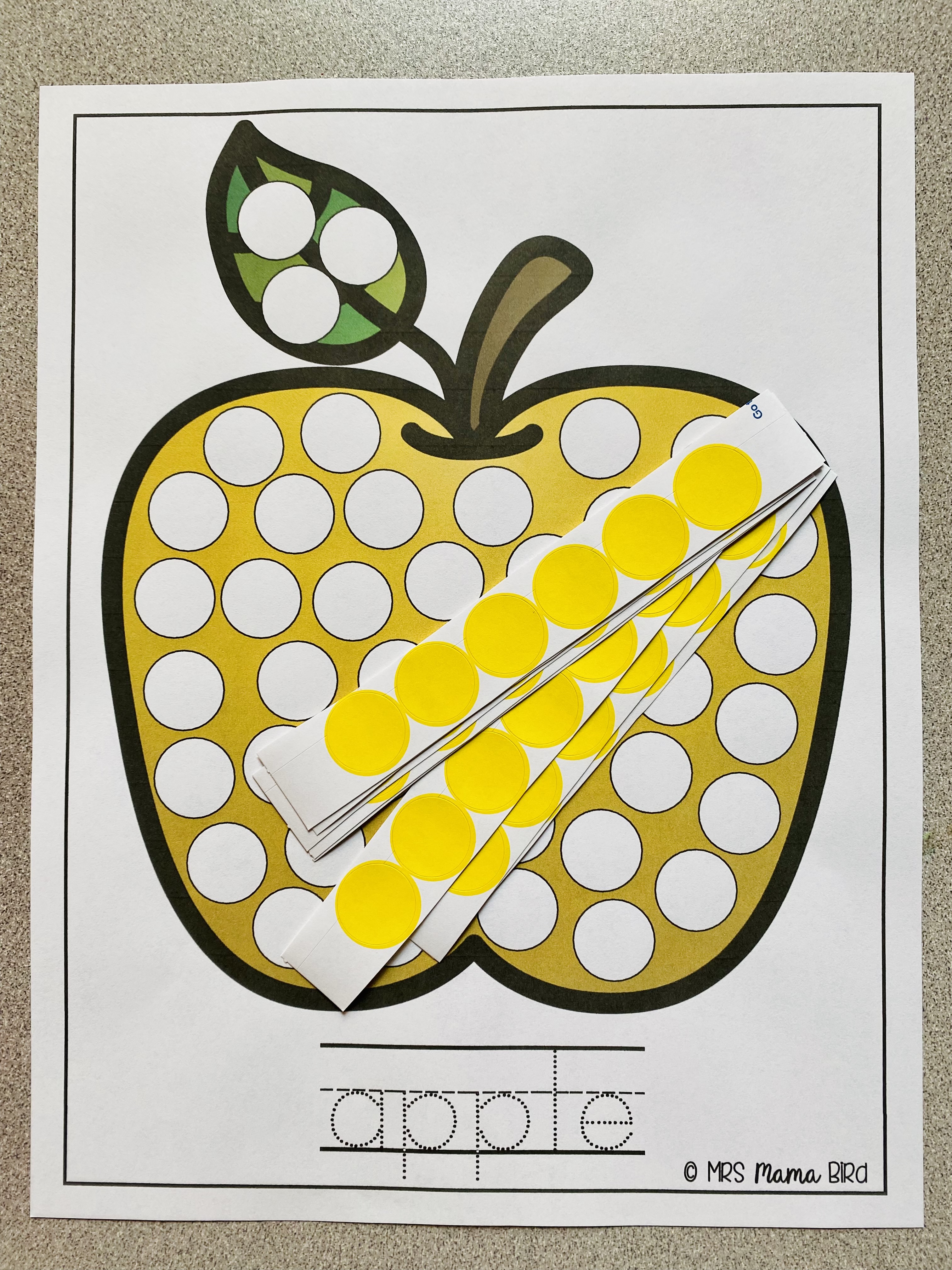
Do A Dot Circle Labels

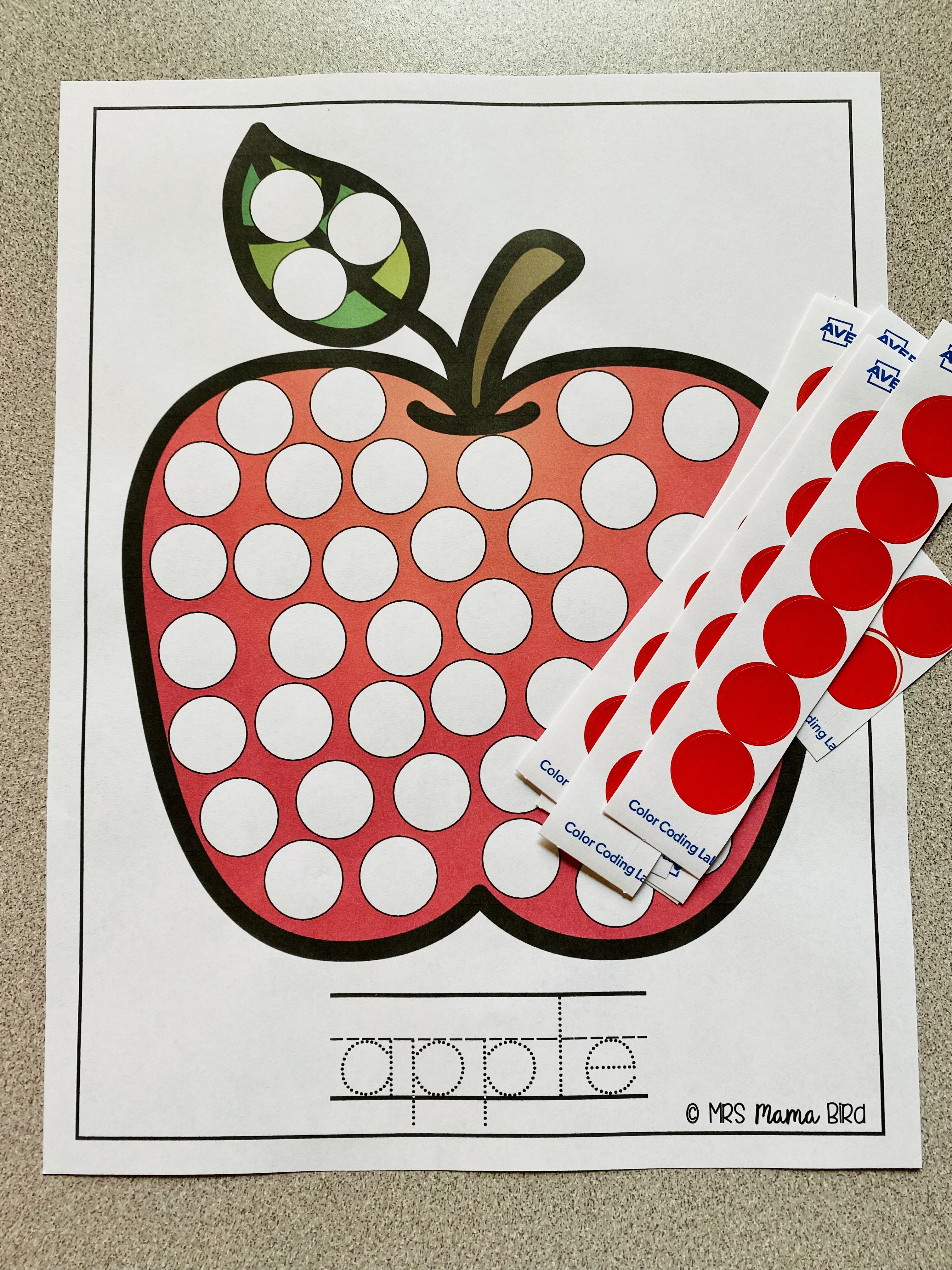
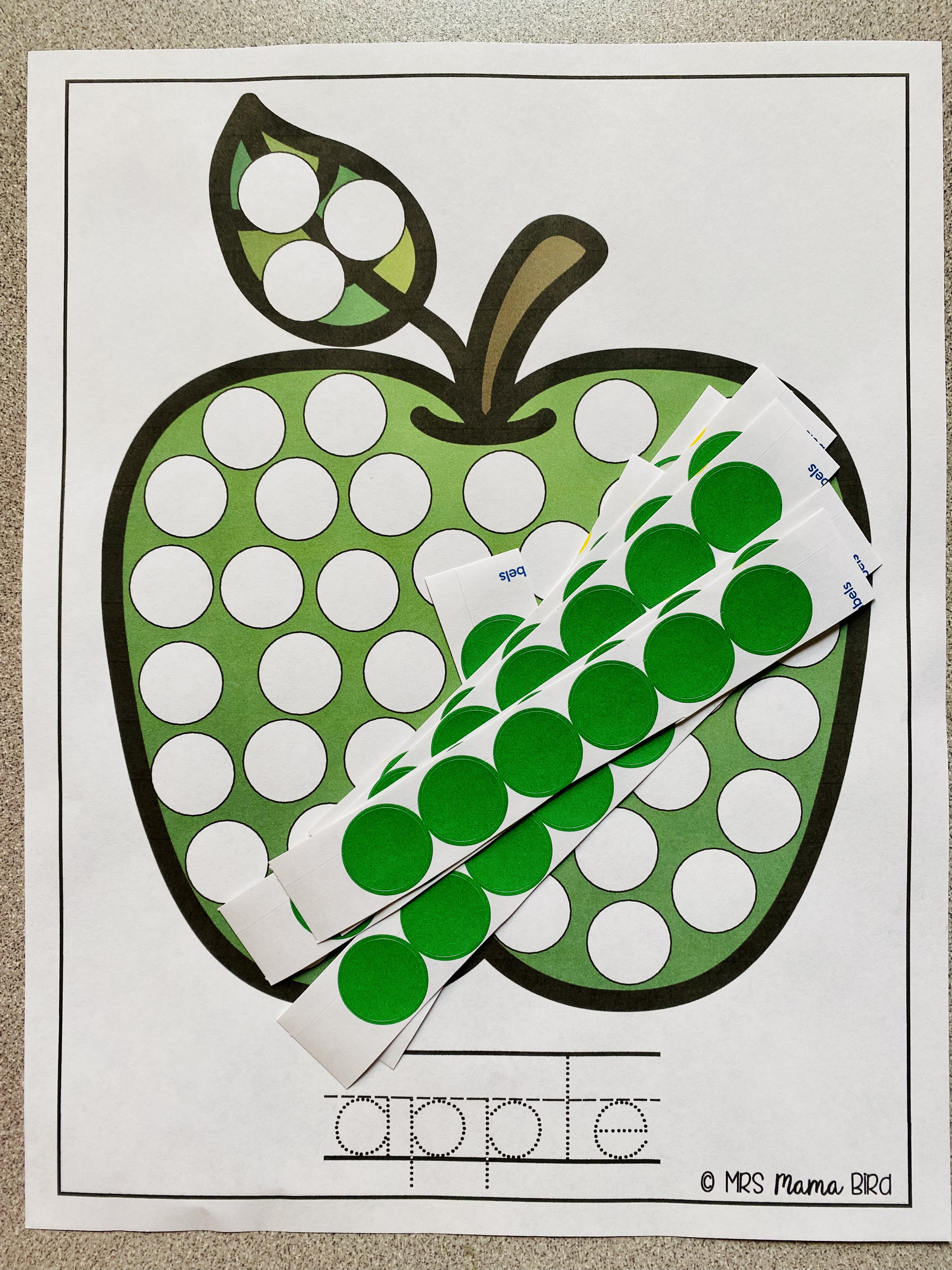
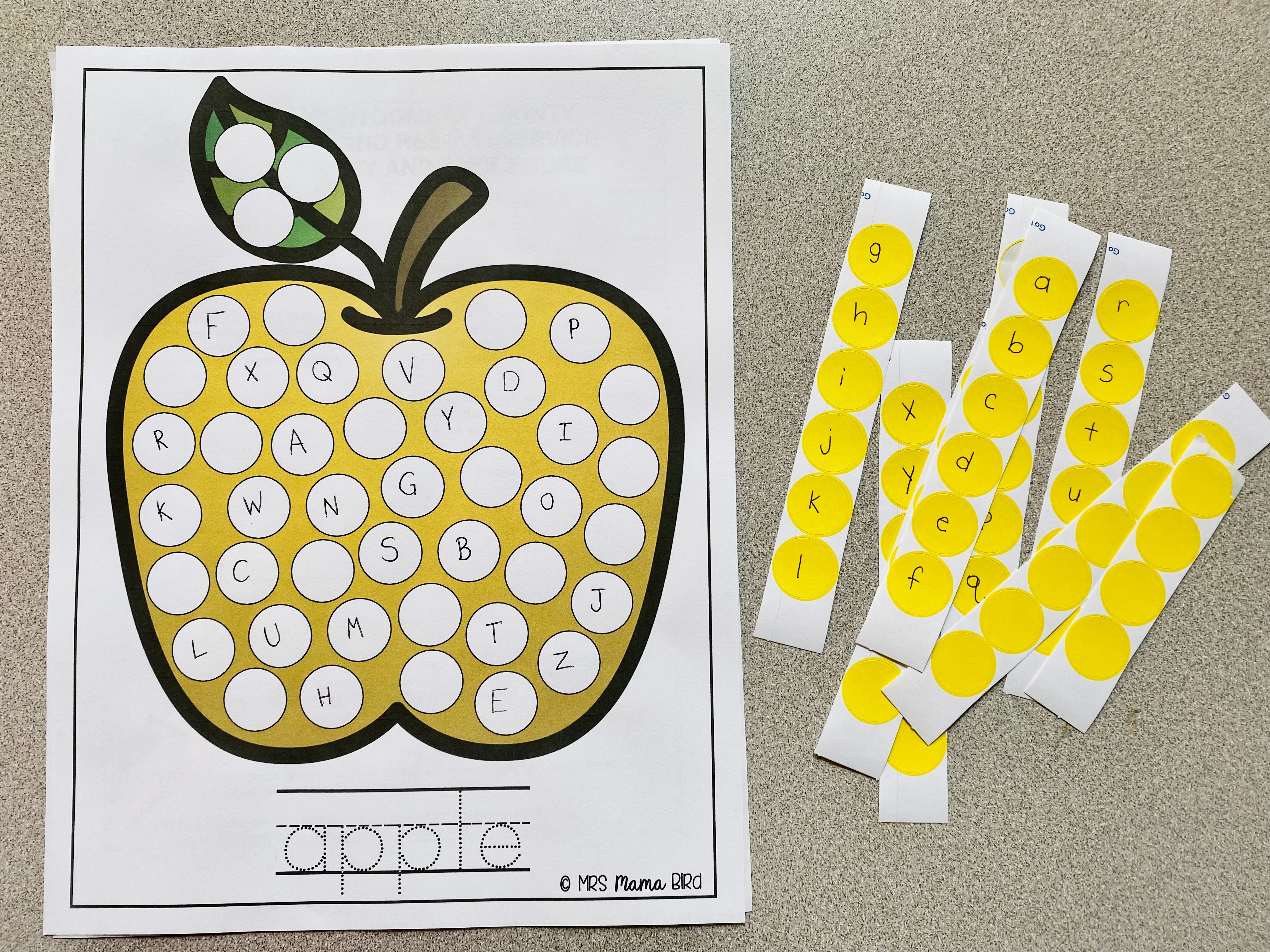
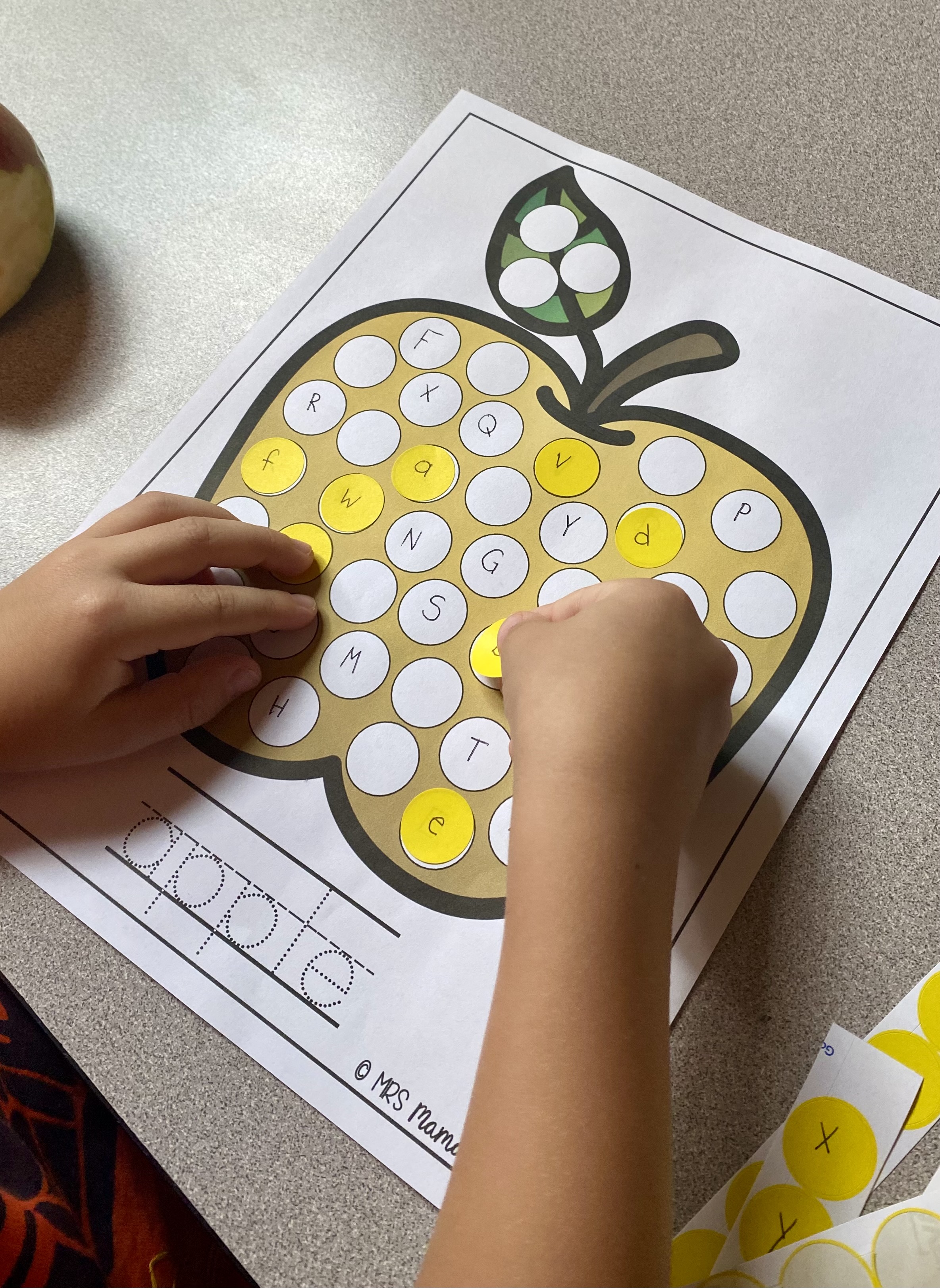
The Do A Dot Circle Label option can be used in color or black and white. I chose to use color this time, but it would be just as fun letting the kids decide which color stickers to use on their creation. Using circle labels gave me a chance to do a little differentiation with my kids. I left the labels blank for my toddler and added letters on the labels for my preschooler. I wrote upper case letters on the apple and lower case letters on the labels. My toddler was able to develop her fine motor skills and hand eye coordination while my preschooler practiced identifying letters. You can even use these labels to match sight words or numbers as well.

Do A Dot Light Box Exploration

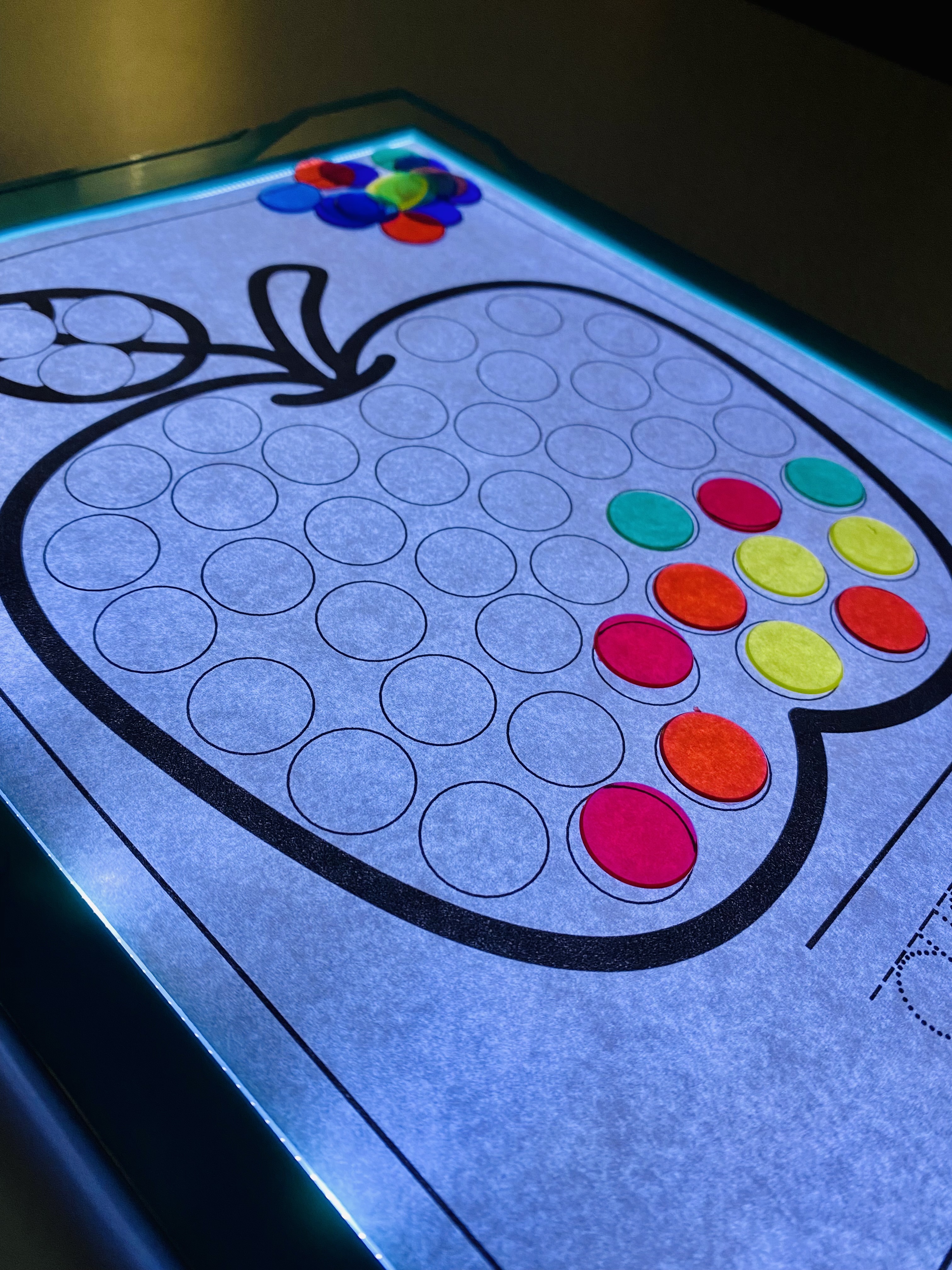
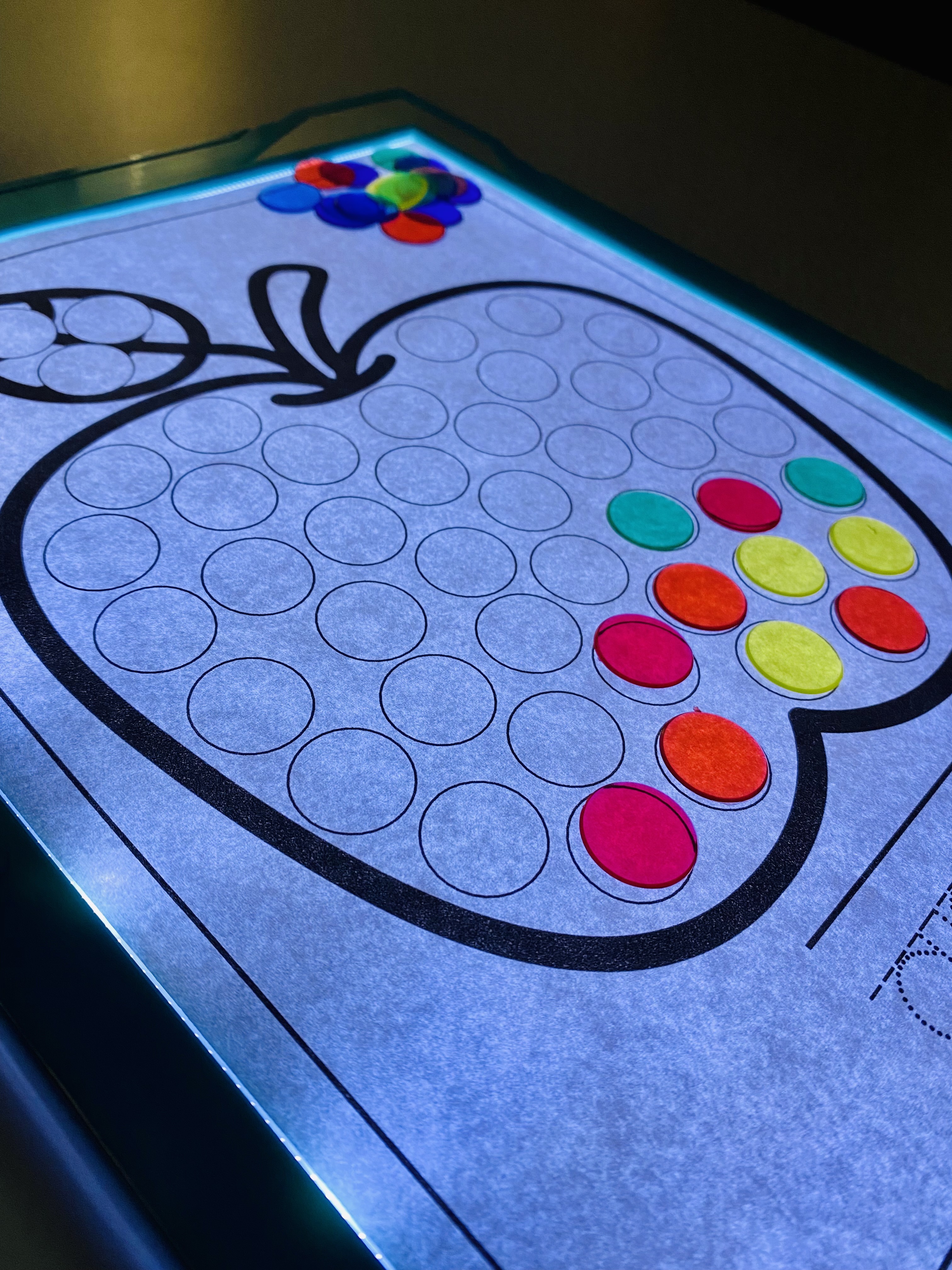
In order to use the Do A Dot pages for a light box exploration, you will need to print the black and white version. I used regular printer paper and the light shone through just fine, but if you have transparency paper, that would work even better. I am currently in a home setting, so I don’t actually have a light box. But whenever I plan fun light box activities, my son’s tracing tablet will do the trick. The circular chips that we used to place into the circles are transparent, so they looked really bright up against the light. My toddler absolutely loved this activity. She attended to it for at least 15 minutes, which is a lot of time for her to do just one thing, considering she’s not even two (I will also mention, I monitored her the entire time as these pieces can be choking hazards).

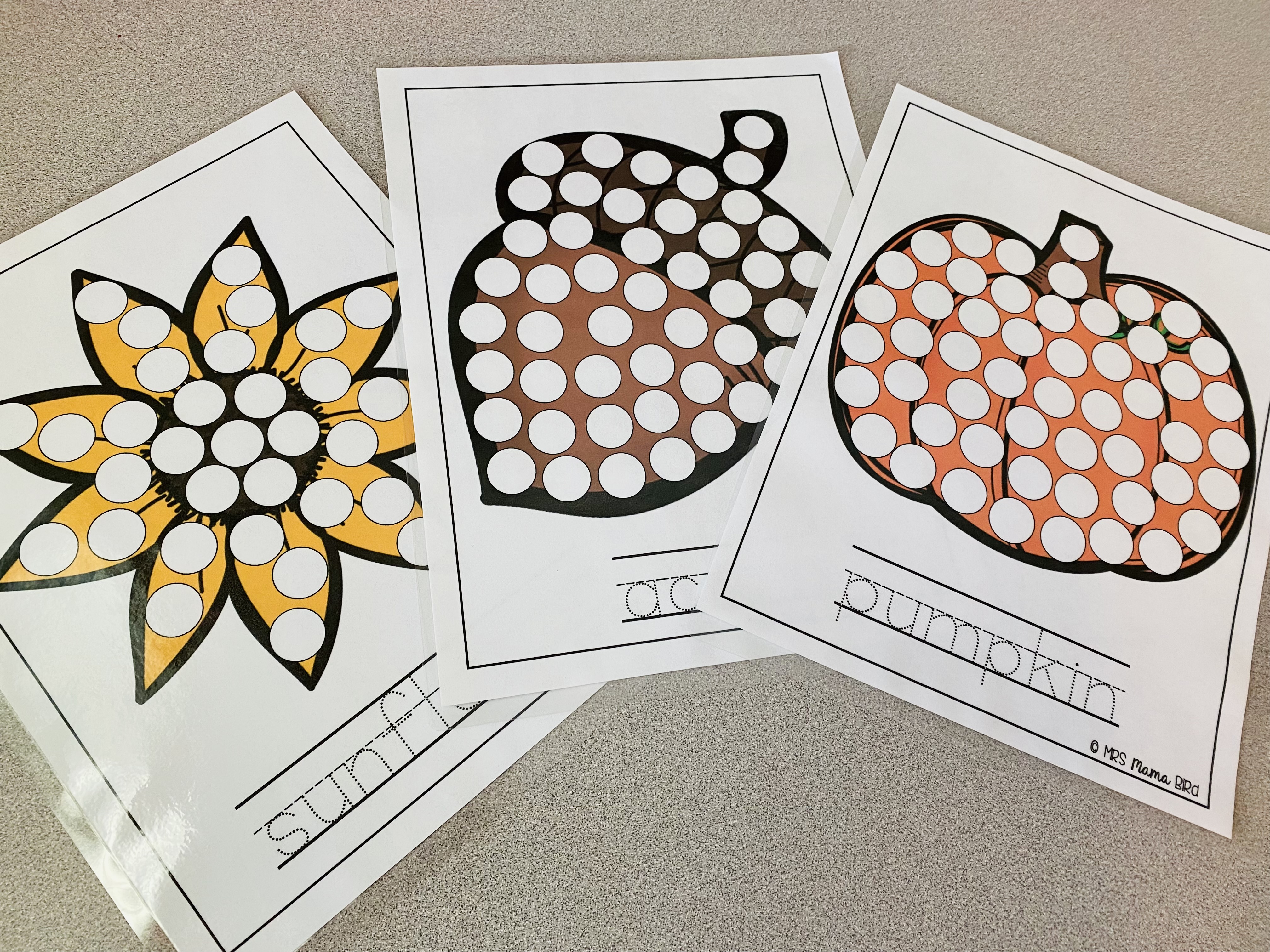
There are so many Do A Dot printables available on the internet, many for free. If you need help narrowing down the options, feel free to follow me on Pinterest (Click the Pinterest icon at the top of this page). I will only pin quality links so you won’t have to waste your time figuring out if the downloads work. They will!! If you like the apple Do A Dot printables that were featured in this post, download them for FREE by clicking the button below. And please don’t forget to comment below if you saw something you loved!! I love to see and hear about my resources in action. Thank you!!

Do you need MORE Do a Dot Printables for your collection?? Click the button below to discover more Fall Themed Do a Dot Printables for your fall centers.

Fall, Seasons

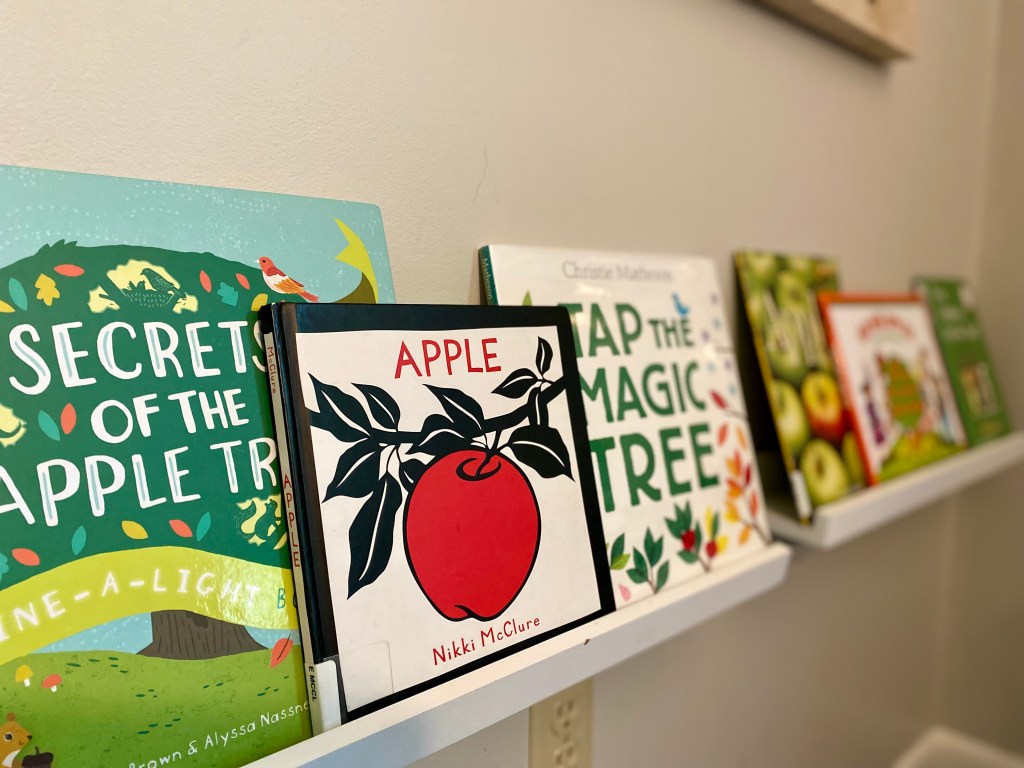
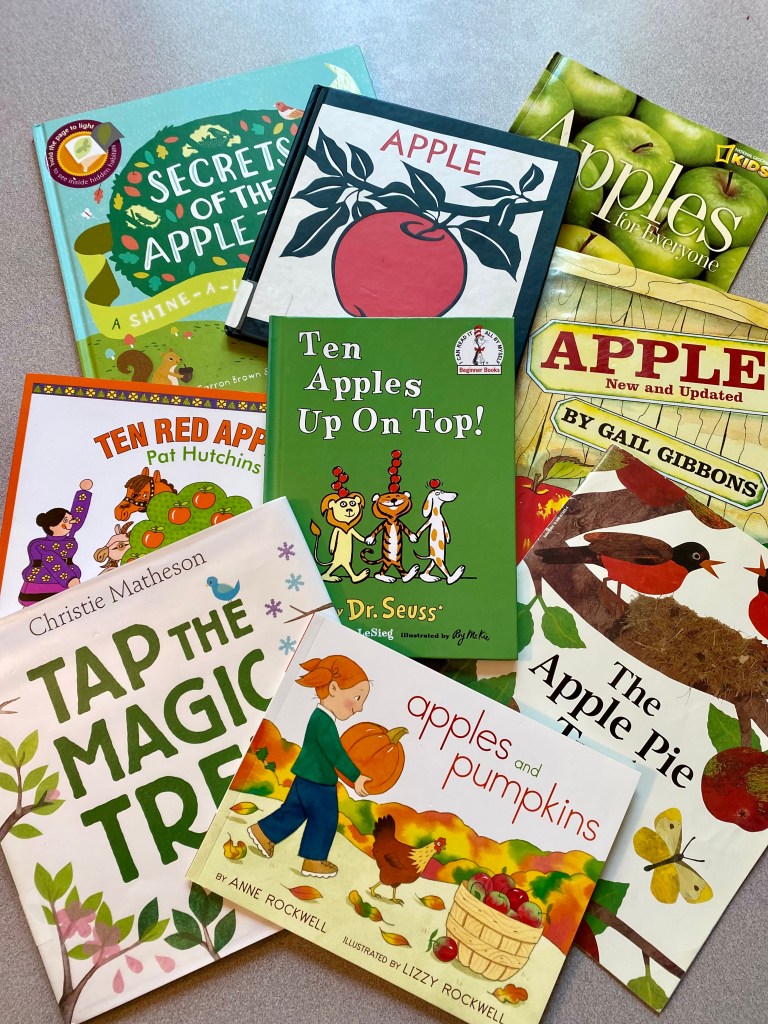
10 Favorite Books About Apples for Preschool

Sometimes, one of the most daunting things about being a teacher is sorting through the plethora of resources available and deciding which ones to use. This is especially true when it comes to books for preschoolers. There are so many good options out there, how do you decide??? Hopefully, I can be of some help here. I’ve sifted through other blog posts and raided my local library to help you narrow your search. Below you will find my 10 favorite books about apples for preschoolers (in no particular order).

Before I give you my first selection, I want to mention that when choosing books to use with my kids, I make sure to include both fiction and nonfiction. I, as many other teachers probably do, tend to gravitate towards fiction. I love to share a good story with kids, whether it depicts a relatable situation that’s easy to connect to or an unfamiliar story that expands kids’ understanding and perception of the world. Stories are the best!! But the truth is, kids, especially my oldest boy, are very curious and love to learn facts. Exposing kids to the structure of nonfiction text, as well as the realistic depiction of things through photography is just as important.

So without further ado, my ten favorite preschool books about apples:

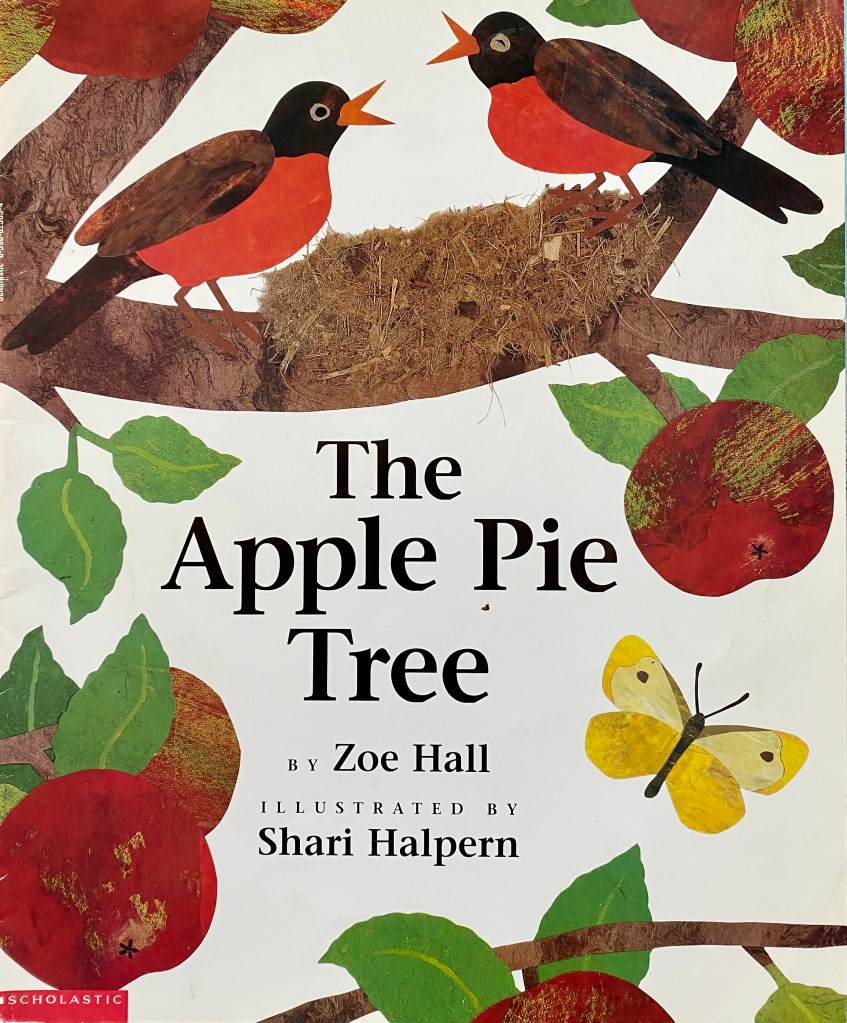
The Apple Pie Tree By Zoe Hall

The Apple Pie Tree, By Zoe Hall is a staple in most apple units. I continue to use it for two reasons. I love the illustrations. This book uses a collage format to depict an apple tree in its different stages: dormant, buds, blossoms, leaves, and apples. Most of the collages are displayed against a white background, which tends to hold the attention of my younger kids. Another reason why I continue to choose this book is because of its strong connection to the cycle of the seasons. This book could be referred back to when learning about the four seasons or used to introduce the four seasons.

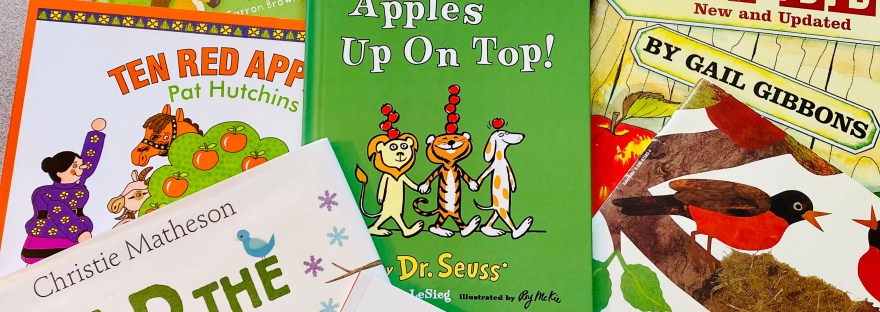
Ten Red Apples Up On Top By Dr. Seuss

Ten Red Apples Up On Top, by Dr. Seuss doesn’t veer from Dr. Seuss’ fun, silly, rhyming style. This book follows three characters, a tiger, lion and dog, as they compete to balance the most apples on their heads while doing ridiculous things. Kids always laugh out loud at this one, as they point out the impossible ways that the animals manage to keep apples balanced on top of their heads. Another reason why I love this book is the very clear connection to math. After reading this story, it is a perfect opportunity to set up apple themed counting centers.

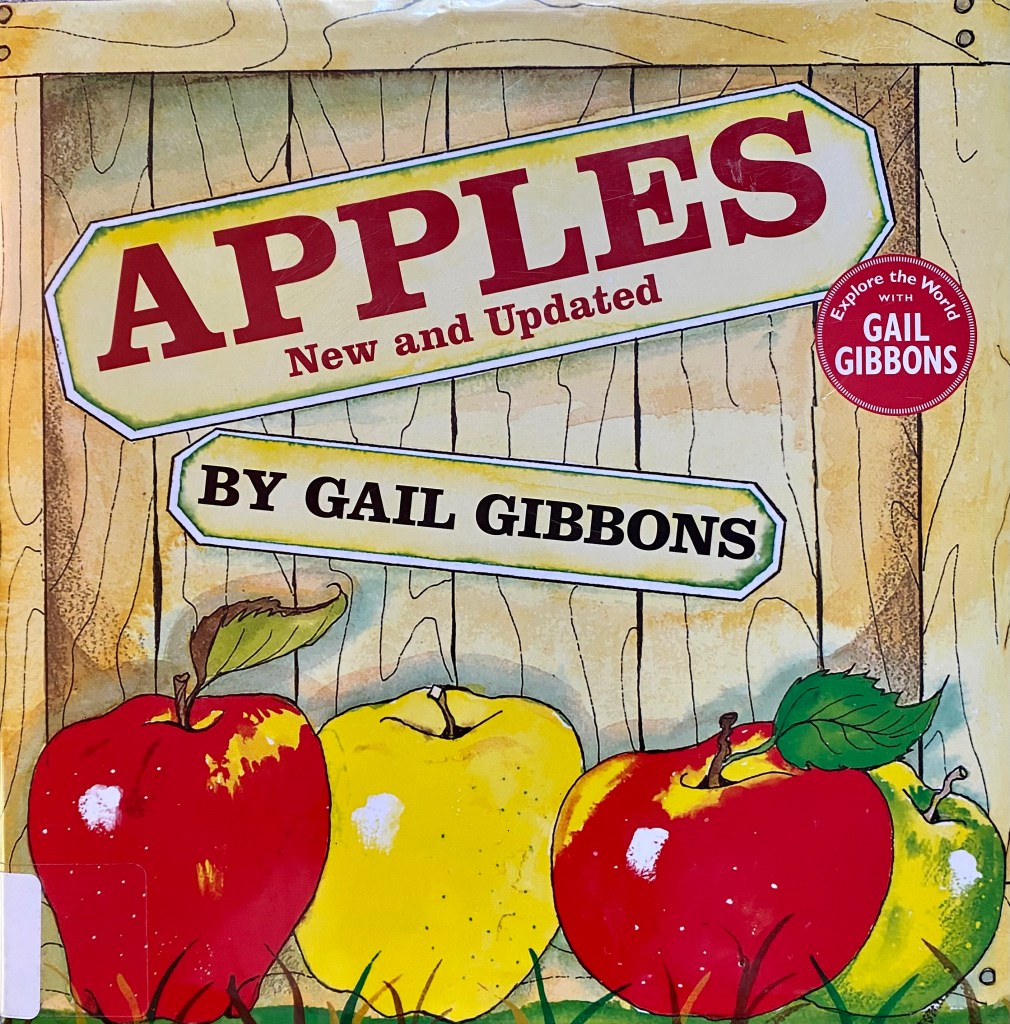
Apples By Gail Gibbons

Gail Gibbons is a guru when it comes to non fiction books for young kids. Although I probably would not be able to read this book from start to finish to my younger preschoolers, kids in prekindergarten or kindergarten would be able to attend to the words and pictures of this nonfiction selection. Apples, by Gail Gibbons, touches on many aspects of apples, including where they come from, Johnny Appleseed, how they grow, parts of an apple, pollination, harvesting apples, what people do with apples and even types of an apple. Teachers can easily use this book to showcase one or two pages to introduce some of these more specific concepts. Or simply introduce the book to the kids and set it on the shelf for them to look through when they get the chance.

Apple Farmer Annie By Monica Wellington

Apple Farmer Annie By Monica Wellington tells the story of apple farming through the eyes of a farmer named Annie. The very simple text and colorful illustrations show readers what it’s like to harvest apples and what to do with them after they’ve been picked. The story focuses less on the cycles of an apple tree and more on what to do with the actual apple. Farmer Annie bakes all kinds of goodies and sells them, along with fresh apples, at the farmer’s market. At the end of the story, Farmer Annie shares some yummy recipes. This book may just inspire your little reader to make and try something new!

Apples and Pumpkins By Anne Rockwell

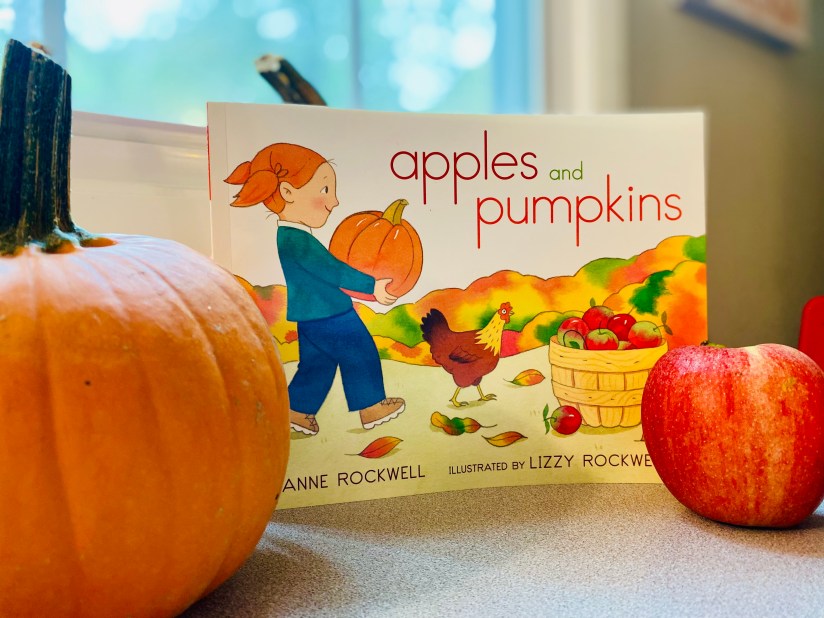
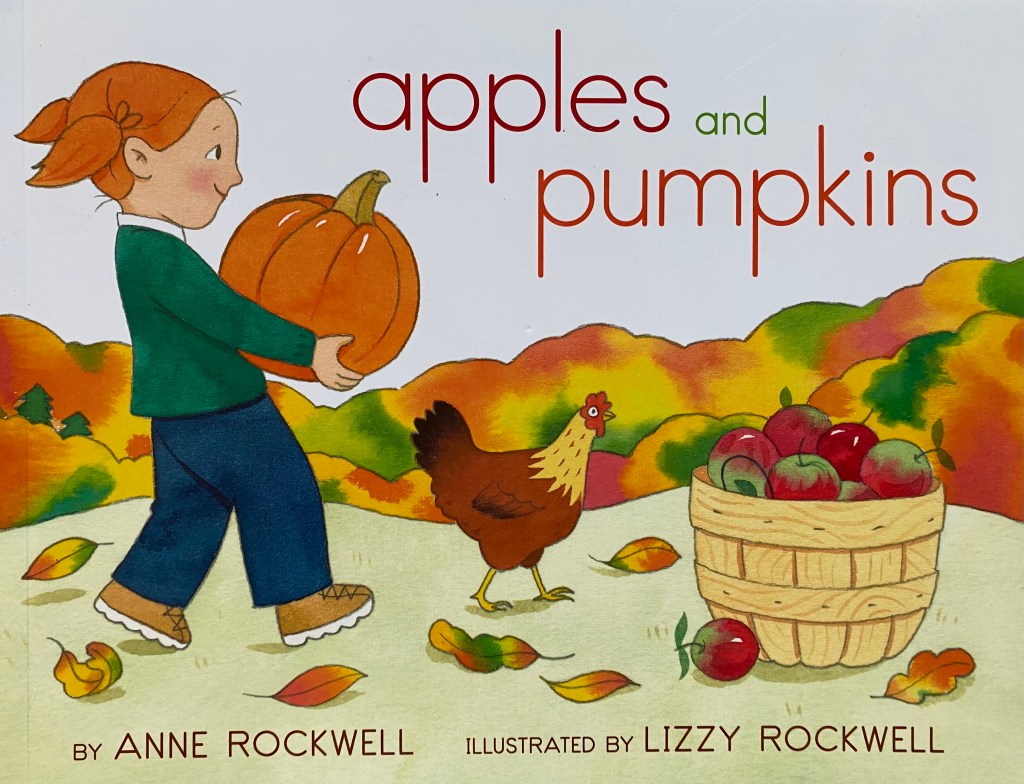
Apples and Pumpkins By Anne Rockwell is a simple story about a little girl who visits a local farm to pick apples and pumpkins. It is narrated in the first person, from the perspective of the little girl, whose name is not mentioned. She talks about the farm animals that follow her to the orchard and her hunt to find the perfect pumpkin. At the end, she carves a jack o lantern and goes trick or treating. I love this story because it is told the way a child would tell it. It is simple and relatable and sure to spark all kinds of connections with young readers.

Apples for Everyone By Jill Esbaum

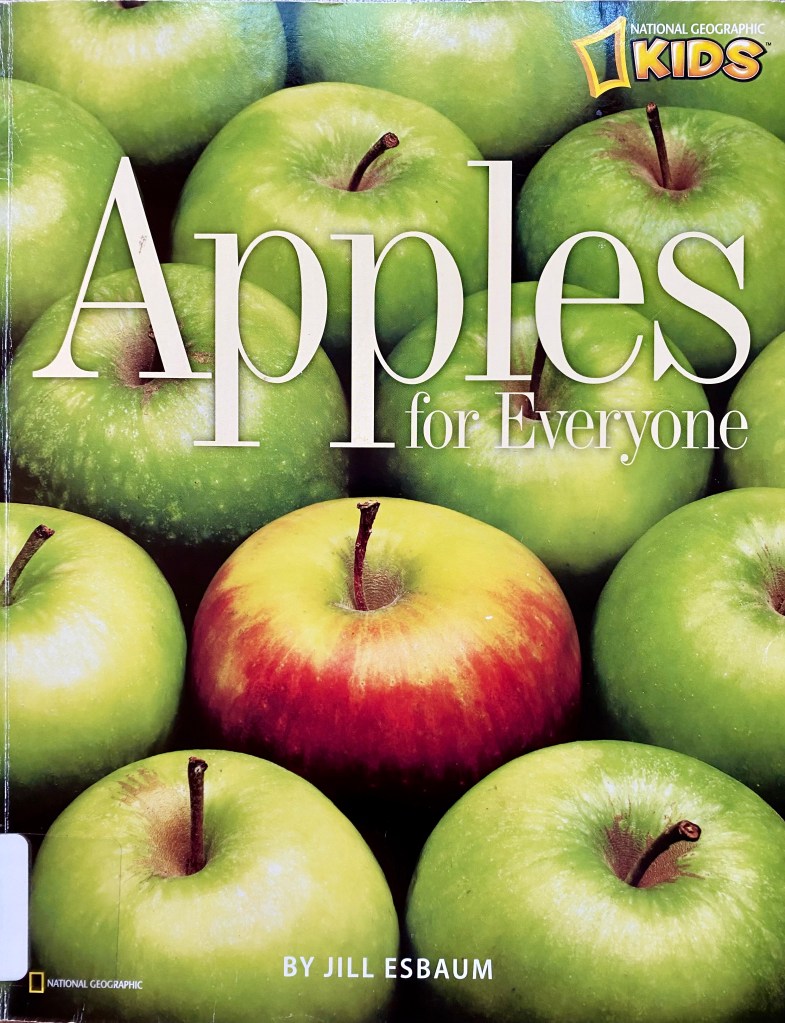
Another non-fiction selection, Apples for Everyone By Jill Esbaum made my list of favorites because of its eye-catching photographs. This text touches on growing apples, harvesting apples, how to enjoy apples, Johnny Appleseed and different types of apples. It is full of large photographs, many with kids included. It is the perfect book to emphasize what we can learn about apples and maybe even spark a few curiosities as well.

Ten Red Apples By Pat Hutchins

Pat Hutchins is another popular preschool author! Ten Red Apples is a folksy story about a farmer who is trying to harvest the apples on his apple tree. But every time he counts his apples, another farm animal comes by and eats one! I absolutely love the repetition and predictable text in this story. The colorful illustrations also allow readers to predict what animal is coming to eat an apple next. This book lends itself to math connections, including counting, less than/more than, and subtraction.

**If you’re looking for companion activities for this book, find the link below about my previous post!**

https://mrsmamabird.com/2021/08/18/tenredapples/

Tap the Magic Tree By Christie Matheson

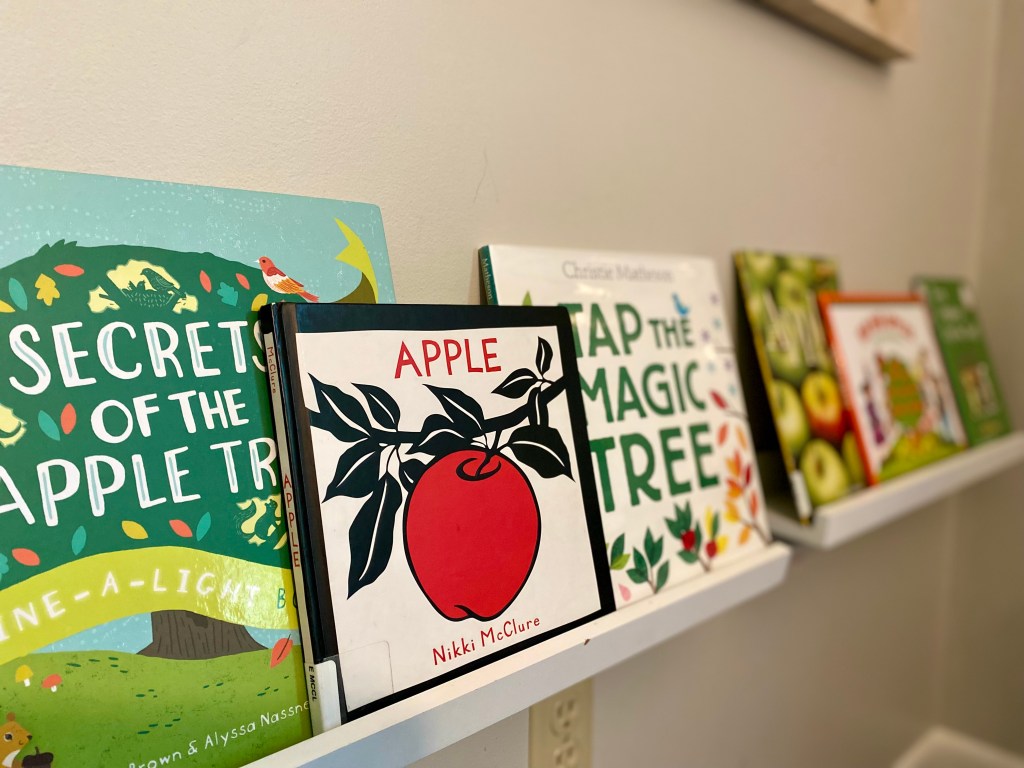
This book is so fun!! Once again, there is just something about illustrations against a stark white background that draws my kids in. This books takes readers through the process of growing apples on an apple tree. But they don’t just get to read about it. This story invites readers to tap the tree to create magical changes. From leaves to buds to blossoms to apples, readers can interact with each step. It can be used to emphasize the cycle that an apple tree endures or introduce the characteristics of each season, similar to The Apple Pie Tree.

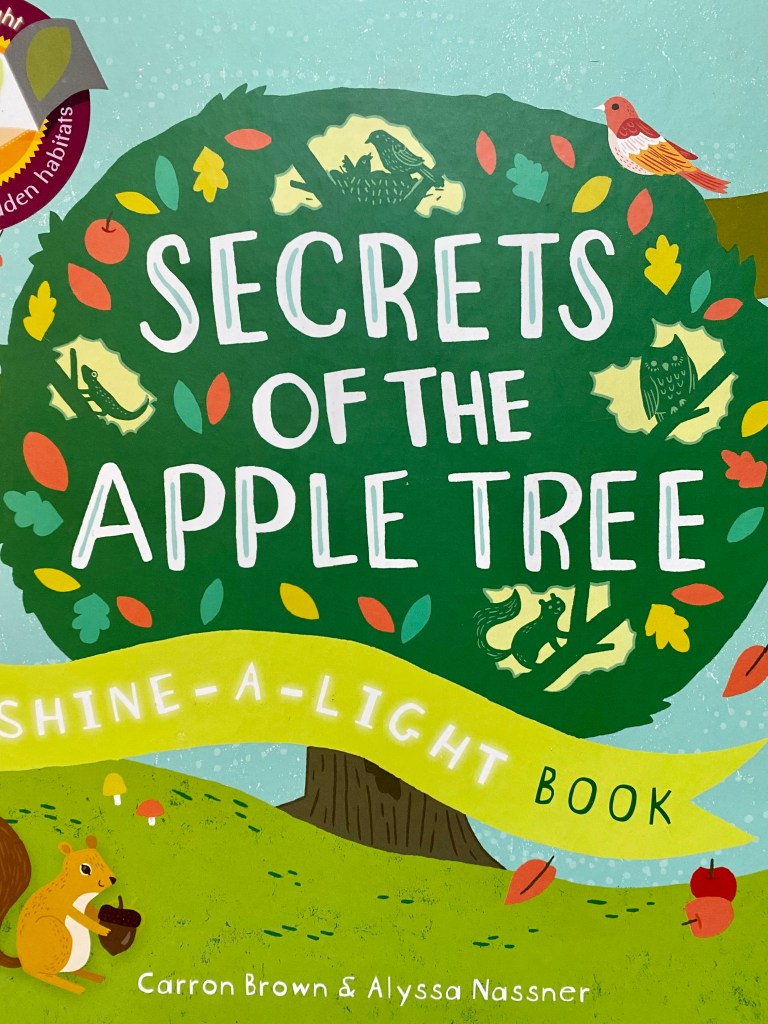
Secrets of the Apple Tree By Carron Brown & Alyssa Nassner

Secrets of the Apple Tree is an Usborne publication from the Shine-a-Light series. If you’re not familiar with these books, you’re in for a treat! These books are designed to be read with a flashlight. Each page is backed by a hidden image that appears when a flashlight is shone on the back of the page. My kids love these books! Secrets of the Apple Tree is one of my favorite books about apples because it gives kids a unique way to interact with text and learn about apple trees.

Apple By Nikki McClure

I went back and forth about including this book on my list for preschoolers because most teachers would agree this book appears to be geared more for babies and toddlers. In the end, I decided to include it because many of you might be trying to teach preschool with your babies and toddlers around. This book is perfect to include in a discovery basket for baby to flip through while you read to your preschooler. For those of you who are just teaching preschoolers, take a moment to appreciate this book with me. Each page depicts an event in the story with black, white and red illustrations. These illustrations are actually intricate paper cut outs of each image. The illustrations are also accompanied by one word on each page, a verb, the most important action taking place at that point in the story. Kids could easily use these words to practice sentence building and explain the story in their own words. Apple, by Nikki McClure is a versatile book about apples that could be used on many levels to engage kids.

Those are my ten favorites!! I hope you are able to use some or all of these wonderful books with your little learners. Do you agree with my selections? Feel free to leave a comment below about how you would use these books with kids!!!